Features
Old folks and human suffering

- /home/u249204778/domains/spectator.com.gh/public_html/wp-content/plugins/mvp-social-buttons/mvp-social-buttons.php on line 27
https://spectator.com.gh/wp-content/uploads/2024/09/The-aged.jpg&description= Old folks and human suffering', 'pinterestShare', 'width=750,height=350'); return false;" title="Pin This Post">
- Share
- Tweet /home/u249204778/domains/spectator.com.gh/public_html/wp-content/plugins/mvp-social-buttons/mvp-social-buttons.php on line 72
https://spectator.com.gh/wp-content/uploads/2024/09/The-aged.jpg&description= Old folks and human suffering', 'pinterestShare', 'width=750,height=350'); return false;" title="Pin This Post">
The aged
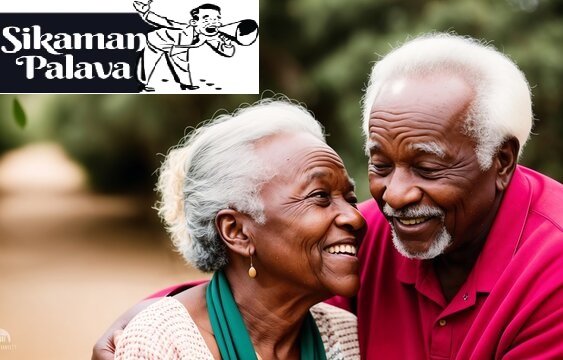
Grey hair is an honour from God, says my uncle, Kofi Jogolo, whose moustache the world admires. Unfortunately, his moustache is not grey. However, my dear, uncle who is a petty bourgeoisie is greying at the temples, which according to him is a sign of wisdom, reverence and honour. To me, it is also an indication that he is gradually nearing ‘home’ to render a comprehensive account of his life to his Creator.
Indeed, the principles of accountability and probity transcend grey hairs and moustache, and wind up in St Peter’s Heaven.
Anyone who is getting close to the age of 60 can rightly claim the grey hair status. But in Sikaman for instance, to be a living member of the grey hair fraternity is a privilege and not a right. This is because the average life span of humans today is 49 years, and the average in Third World countries is much lower. Poverty alone can kill you at 27.
It is also of interest to note that journalists have the lowest average lifespan vis- a-vis other professional groups, according to a proven research.
In any case, the human species are better off than insects and animals. A mosquito lives for only six days and decides to call it quits. Most birds live for five years; and when a dog lives up to 10 years, it automatically becomes a liberal democrat. Why? Because it becomes so weak that it can no longer be a leftist watchdog of its master’s home. The poor dog becomes rather liberal to thieves and burglars.
So is it with human beings who clock 65 and above, especially when they have not eaten good for over six decades. According to the Bible, the human limit which has been divinely decreed is three score and 10, that is, 70. This appears discriminatory when we consider that Methuselah for instance lived for 969 years before agreeing to die.
CURSE
Back to Sikaman, anyone who flies past the age of 65 is considered an old- man (woman) whether he is well- nourished or takes ‘quarter’ on a regular basis.
To many, however, to be called an old person is rather a curse than a blessing. And of course nobody wants to be a pensioner for obvious reasons. So you see workers who are clearly over 70 years claiming to be 50 just to avoid retirement and its associated money palaver. But somehow, they are justified.
Fact is that, these days, nobody cares for the aged, and so they have to care for themselves. It was the quest to avoid this unfortunate situation that the HelpAge Ghana was formed last year as a voluntary organisation aimed at promoting the well-being of the aged and ageing in Sikaman.
When the second HelpAge Week was launched last weekend, I felt so sad to see on television, old men and women, some of whom could hardly work their rickety heels to help themselves about. Some really had to be assisted to walk.
HelpAge has come so timely, at a time when no one respects or cares for the aged. In times’ past, old folks were regarded as useful members of the society, imparting knowledge and wisdom to the younger generation, telling Ananse stories to enliven the evenings of little children.
But today, old people are regarded as nuisance. They are accused of being talkatives, always complaining of kooko, waist-pains, constipation, diarrhea, chronic catarrh and lack of good diet.
Their physical and mental infirmities associated with senescence, coupled with the high cost of fending for them, makes them unwanted in a rat-race society where man must live by sweet.
Some people really want their aged relatives to die quickly to relieve them of the burden of caring for them. They can’t afford to be feeding them every day like that! So unfortunate.
PROBLEMS
In the developed countries, however, because of problems that go with caring for the elderly in society, homes for the elderly are established in many communities, where the aged can live comfortably to enjoy their last days on earth. They are cared for, nourished and entertained.
In fact, there is a branch of medicine called GERONTOLOGY which is concerned with the processes of growing old, and there is what we call (GERIATRICS) which is the medical care of old people. Scholars are specialise in these fields because their society cares for the welfare of the aged.
HelpAge Ghana is a laudable idea and Sikaman natives must be awakened to their responsibility to the elderly. Those who also handle their pension claims must avoid the unnecessary delays. I remember, my old man had to go up and down for months before he was put on his rightful scale.
Now, instead of wishing our aged mothers, fathers and grand-parents to die so that we can get enough money to drink beer, let us contribute to HelpAge Ghana to get it firmly instituted.
That way when we are lucky to reach the three score and ten mark, we could also benefit from it. No one knows what the future has in store.
Sometime last year, I was privileged to attend a get-together of pensioners of UAC and management staff at the Ambassador Hotel. I am not a pensioner though. It was quite an interesting scene to see old men and women all over chatting animatedly, and reminiscing their good old days.
I was also quite impressed with how some of them attended to the gin, brandy and beer at the reception.
In contrast to this, it is so pathetic to see many old people in the capital of Sikaman begging for money to buy kenkey. They look dirty and unkempt carrying aloft their grey hairs. Let us find a means of helping out these elderly folks so that when our turn comes the good old Lord will have mercy upon us.
This article was first written was on Saturday October 6, 1990


The average modern Gold Coaster born and bred in Sikaman is an adventurous creature. Go to any part of the world and you’ll find Ghanaman diligently slugging it out either in the snow or in hot sweltering weather, earning a decent living.
Go to Guinea and see Ghanaman in the garb of a herbalist, curing the sick of various ailments. He makes the Guinean understand that not all diseases are caused by James Lucifer alias Jimmy Satan. On the contrary, most diseases are caused by kooko which can even attack the human nose and turn it upside down.
That kooko is also the cause of poverty and the internal bleeding of personal back-pocket economies. And that kooko can be cured using the chemistry underlying Sikaman herbal medicine which has been blessed by the gods of Larteh.
And before Ghanaman starts dispensing his herbal concoctions, he must attract the passing crowd with some Sıkaman-originated choreography, akin to a combination of adowa and agbadza, such that the dancer can easily dislocate a shoulder and start crying for his mother.
When the crowd is enough to form a quorum, Ghanaman must perform magic as a side-attraction, and proceed to sell his drugs. The drugs are genuinely made from potent herbs which the Pharmacy Board of Sikaman says it has no confidence in. Believe me, Ghanaian herbalists are practising in neighbouring countries like Guinea, Cote d’Ivoire, Sierra Leone and Benin, while we are discouraging them from practising in Sikaman.
Go to Las Palmas and see Ghanaman as a fisherman. He sails on Korean-owned boats and is forced to eat garlic and raw tuna for radiant health. The garlic is also supposed to protect him against witches. But sometimes, he is not good bedfellows with some Korean crew members, and once in a while a fight breaks out.
The typical Korean is a Kung Fu expert and before displaying a golden dragon data. He must first terrify Ghanaman with a Korean dance which consists of wild arms and leg throwing. But Ghanaman is usually not daunted. Why has he been eating cancer kenkey all years without developing cancer? It mean is a superhuman capable of countering Kun fu side-kicks to the ribs.
Anyhow Ghanaman’s most potent arsenal lies in his fists. If he is a southpaw, it mean left fist is probably insured and can cause damage. When Ghanaman lands a cassava blow and it lands on a Korean chest, it has the effect of a cruise missile. If there is no ceasefire a funeral cannot be ruled out.
Greenland
Go to Alaska and find Ghanaman there. Greenland, Iceland, Brazil, Argentina, Madagascar, everywhere and you’ll find him. He has become an international citizen and is generally lauded for his hardwork, sincerity and honesty.
However, some bad nuts are also condemned and despised.
The world and all its parts and corners are for the human race, and anyone can choose to live anywhere and earn a decent living so long as he doesn’t misconduct himself or become a social misfit and a law unto himself.
Sıkaman for instance accepts foreigners, and we are so liberal that people just come in through our borders and we welcome them with the best palmwine in town and goat light soup. Who cares about passports and visas? Our hospitality is, as it were legendary.
So we have Liberians, Nigerians, Sierra Leoneans, Togolese, Europeans, Americans, Scandinavians and Koreans in Sikaman. And some of them have misinterpreted our overzealous accommodation to mean “foolishness” and are misconducting themselves.
The newspapers carry stories of some unscrupulous Nigerians stealing, defrauding and collaborating with their Sikaman counterparts to rob people. You’ll find some good and law-abiding Liberians around but some other Liberians are in the business of fraud, robbery, money printing, money doubling, anything criminal.
Ghanaian hospitality can no longer be extended to such people. I do not think Ghanaians will be treated kindly either, when they misbehave anywhere in the world. Those who come from outside with the intention of bringing down their evil deeds and to practise them here professionally must be getting ready because Ghanaians are getting fed up with the menace.
These days, you’ll find strange people following you as soon as you emerge from a bank. If you are not careful, they’ll wrestle your briefcase from you and speed away in a waiting taxi.
Someone was just saying that many foreign criminals are flocking to Ghana because in their countries, they are enable to operate either because they are being looked for by the police for offences committed or fear instant justice at the hands of mobs. Ghanaians, it is said, are humanitarian in dealing with criminals.
Well, in some African countries, a thief who is being chased runs directly to the police station in his own interest and begs the officer at the counter to lock him up. Otherwise he’ll be lynched or be burnt to death. In Ghana, it is the opposite. The thieves run far away from the cop stations.
The criminals must reform and stay peacefully in Sikaman or quit. No court case!
This article was first published on Saturday September 5, 1998
The human condition is defined by two absolute, biological bookends: the commencement of complex cellular animation and its ultimate, irreversible cessation.
For centuries, medicine treated life and death as strictly separate states. Today, modern pathology and molecular biology reveal a more profound truth: the mechanisms that allow us to live are the exact same mechanisms that dictate how we die.
Understanding this relationship is no longer just a philosophical pursuit. It is a clinical necessity for managing public health in the 21st century.
Part I: How we live – The mechanics of animation
At its core, biological life is a continuous, high-stakes battle against entropy (the natural tendency of systems to degrade into disorder). To maintain form, consciousness, and function, the human body relies on three fundamental pillars:
1. Cellular respiration and energy production
Every second of human life is powered by the conversion of oxygen and glucose into Adenosine Triphosphate (ATP), the universal energy currency of our cells. This process occurs within the mitochondria.
Without a constant supply of ATP, the microscopic pumps that maintain electrical gradients across our cell membranes fail, causing cellular collapse within minutes.
2. Homeostasis: The balancing act
To survive, the internal environment of the body must remain incredibly stable, regardless of external chaos. This balancing act, known as homeostasis, regulates:
Blood pH: Strictly maintained between 7.35 and 7.45.
Core Temperature: Ideally kept around 37°C (98.6°F).
Electrolyte Balance: Precise ratios of sodium, potassium, and calcium that allow nerves to fire and muscles to contract.
3. The Autonomic Nervous System (ANS)
The ANS acts as the invisible conductor of life, split into two complementary branches:
Part II: How we die – The path of cessation
Death is rarely a singular event; it is a progressive biological cascade. Whether caused by old age, chronic illness, or sudden trauma, the final pathways of mortality generally follow a predictable trajectory.
1. The cellular horizon: Senescence and Apoptosis
Every time a human cell divides, the protective caps at the ends of its chromosomes-telomeres-shorten. Eventually, telomeres become so depleted that the cell can no longer divide safely. It enters senescence (a state of permanent arrest) or triggers apoptosis (programmed cell death). This gradual, systemic loss of cellular renewal is the underlying engine of aging.
2. The clinical cascade of somatic death
When the body can no longer maintain homeostasis, somatic death (the death of the organism as a whole) begins. This occurs in a distinct sequence:
1
Clinical Death
Zero to four minutes
The heart stops pumping blood, and respiration ceases. While breathing and circulation have ended, the body’s tissues still contain residual oxygen and cellular energy reserves. At this stage, resuscitation is often still possible.
2
Brain Death (Infarction)
Four to six minutes
Deprived of fresh oxygenated blood, the brain’s highly sensitive neurons begin to starve. Lacking ATP, the brain cells lose their electrical charge, swell, and begin to burst. Permanent, irreversible neurological damage occurs within minutes.
3
Biological Death
Hours to days
The organs fail entirely. Without central control or blood flow, individual cells throughout the body consume their final energy reserves. Enzymes that once aided digestion begin to break down the body’s own tissues from the inside out, a process known as autolysis.
Part III: The modern collision of life and death
In the modern era, the boundary between how we live and how we die has blurred. Historically, humanity died primarily from infectious diseases and acute trauma. Today, global mortality is dominated by non-communicable, chronic lifestyle diseases.
Modern Pathology: How we live (the cause) how we die (the result)
Cardiovascular disease, chronic stress, poor diet, and lack of sleep keep the sympathetic nervous system hyper-activated, damaging blood vessels .Occlusion of coronary arteries leads to myocardial infarction (heart attack) or ischemic stroke.
Metabolic syndrome over nutrition and physical inactivity overwhelm cellular mitochondria, leading to systemic insulin resistance. Multi-organ failure, chronic kidney disease, and severe vascular complications.
Neurodegenerative Disorders Chronic systemic inflammation and sleep deprivation prevent the brain from clearing metabolic waste. Gradual loss of synaptic connections, leading to dementia and the eventual loss of basic autonomic functions.
Conclusion: The unified theory of health
Ultimately, how we live directly shapes the path of how we die. The micro-choices of daily existence-how we manage emotional stress, the quality of our rest, our communal connections, and our nutrition-either preserve the integrity of our homeostatic systems or accelerate their decline.
True medical advancement is shifting away from merely extending the final, frail stages of biological death. Instead, the focus is turning toward optimising our living years-ensuring that the intricate, beautiful machinery of human animation runs smoothly until its natural, quiet conclusion.
By Robert Ekow Grimmond-Thompson