Hot!
How to be a supportive partner during difficult times (Part 2)


- /home/u249204778/domains/spectator.com.gh/public_html/wp-content/plugins/mvp-social-buttons/mvp-social-buttons.php on line 27
https://spectator.com.gh/wp-content/uploads/2020/10/Supporting-your-partner-in-trying-times-is-key-to-peaceful-relationship.jpg&description=How to be a supportive partner during difficult times (Part 2)', 'pinterestShare', 'width=750,height=350'); return false;" title="Pin This Post">
- Share
- Tweet /home/u249204778/domains/spectator.com.gh/public_html/wp-content/plugins/mvp-social-buttons/mvp-social-buttons.php on line 72
https://spectator.com.gh/wp-content/uploads/2020/10/Supporting-your-partner-in-trying-times-is-key-to-peaceful-relationship.jpg&description=How to be a supportive partner during difficult times (Part 2)', 'pinterestShare', 'width=750,height=350'); return false;" title="Pin This Post">
In our previous two editions, we highlighted some tips when your partner is coping with difficult issues either at work or in other aspects of life. Let’s wrap up where we left off.
Be an encouragement
When your man is beaten down to the ground, you may be the only person who can lift his spirits. As committed partners, you should be each other’s biggest fan and cheerleader. Sincere encouragement can go a long way when your lover feels like he’s a loser, and everything is his fault.
Find helpful ways to offer words of praise and encouragement that are genuine and specific. Remind him of his vast talents and past achievements, and how you’ve overcome obstacles victoriously in the past. It may boost his spirits enough to realise that nothing is forever, even problems.
Choose your battles
One of the most natural emotions to display is anger, especially for guys. In reality, anger is a formidable mask to cover fear and powerlessness. It’s not easy to be supportive when your partner is taking his anger and frustration out on you.
In these cases, you can take so much until you feel like snapping. Although it’s easier said than done, try to step back and be an objective observer. When people are hurting, they usually lash out at the ones they love who are trying to help.
If your lady doesn’t feel like talking, just let her know you’ll be there to listen when she’s ready. Please resist the urge to be an armchair counsellor and try to pull the issues out of her. She will probably end up feeling resentful of you, and she will shut down any conversation in the future.
When you are your lover’s safe place, she feels free and safe to display anger and say what’s on her mind. However, that doesn’t give anyone the right to abuse you verbally or physically.
If your man is feeling grumpy about everything you say or do, refuse to be taken into his dark mood. You’ll probably find that something is on his mind, and he will apologise for taking it out on you.
Find a source of strength together
You and your partner are composed of body, mind, and spirit. These work in tandem for your total well-being. If any aspect is askew, your entire being will be affected. Being supportive doesn’t mean you have all the answers or strength.
When your mate is going through a hard time, learn to draw from your spiritual strength. Look to your Higher Power together as you both perceive it. Whether your religious traditions involve prayer, meditation, or other spiritual connections, empowering your spirit can help each other when life’s storms are overwhelming.
Know when to ask for help
Even with your best efforts to be supportive, some problems are too much for you two to handle. If this is the case, don’t be afraid to ask for help from a mental health professional. There is no shame in seeking counseling when you need it.
Many people seek counselling from their trusted spiritual leader. You can always feel free to talk to your primary healthcare provider to refer you to a licensed therapist. Perhaps the problem is a mental health issue that has yet to be diagnosed.
Be sure that your partner is a willing participant, and you see counselling as a strength, not a weakness. She may choose to go alone or ask you to join for moral support. Choose an experienced counsellor who makes her feel comfortable, so she can freely discuss the issues that are happening in her life.
Conclusion
When a couple is in a loving relationship, they are empathetic, even in the worst of times. In trying situations, be the first hand that reaches out to him or her in a nonjudgmental way to form a stronger partnership. A time may come when you’ll reach out to him or her in your hour of need, and they will be there.

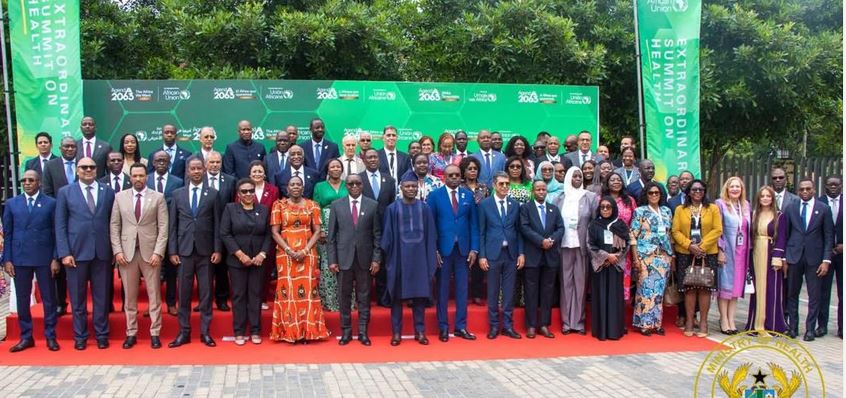
African leaders have been urged to strengthen political commitment and domestic investment to end preventable maternal deaths and AIDS by 2030.
The call comes as African health ministers and policymakers meet in Accra to deliberate on health financing, health security and universal health coverage across the continent.
Mr Edouard Bizimana, Burundi’s Minister of Foreign Affairs, Regional Integration and Development Cooperation, made the call on Tuesday at the opening of the African Union’s (AU) 25th Extraordinary Summit on Health in Accra.
He said Africa needed increased domestic investment to build resilient health systems as it continued to grapple with infectious diseases and the growing burden of non-communicable diseases (NCDs).
Mr Bizimana, who is also Chairperson of the AU Executive Council, said although Africa accounted for nearly 17 per cent of the world’s population, it bore 24 per cent of the global disease burden while having less than three per cent of the global health workforce and only one per cent of global health expenditure.
“Despite maternal mortality declining by nearly 40 per cent since 2000, Africa still accounts for about 70 per cent of maternal deaths globally, while almost two-thirds of people living with HIV reside on the continent,” he said.
Mr Bizimana said the growing burden of NCDs was placing additional pressure on already stretched health systems.
“These figures are not merely statistics. They represent painful human realities, preventable losses and unacceptable inequalities, they remind us that health is not an expense it is a strategic investment and a prerequisite for our sovereignty and development. “he said.
Mr Bizimana said recent global health emergencies had exposed Africa’s vulnerability and underscored the need to expand local production of medicines and vaccines, strengthen the health workforce and improve emergency preparedness.
“Our citizens expect resilient health systems where every mother can give birth safely, every child has access to essential healthcare and every African enjoys quality health services regardless of where they live,” he said.
The two-day summit, being held ahead of the 20th Extraordinary Session of the AU Assembly of Heads of State and Government, has brought together health ministers, policymakers and health stakeholders to identify solutions to Africa’s health financing and security challenges.
Madam Florence Samizi, Tanzania’s Deputy Health Minister, called for stronger collaboration among AU Member States to accelerate progress towards universal health coverage.
The summit is being held on the theme: “Advancing Justice, Equality and Universal Health Coverage: Ending AIDS, Tuberculosis, Improving Maternal Health, Addressing Endemic Non-Communicable and Neglected Tropical Diseases in Africa.”
The meeting is expected to adopt the Accra Declaration, a roadmap to strengthen Africa’s health systems and advance health sovereignty by 2030. -GNA


Senior Lecturer at the University of Ghana’s Department of Political Science, Dr. Joshua Jebuntie Zaato says the imprisonment of the Ashanti Regional Chairman of the New Patriotic Party (NPP), Bernard Antwi Boasiako, popularly known as Chairman Wontumi, will have little meaning unless it leads to a broader crackdown on illegal mining.
In a post on his Facebook page on the July 21, 2026, Dr. Zaato said the judgment should mark the beginning of efforts to completely eradicate galamsey and hold all those involved accountable, regardless of their political affiliation.
He said the country must work towards restoring polluted rivers, protecting forests and ensuring that people implicated in illegal mining activities are prosecuted.
According to him, those the President has publicly acknowledged to be involved in galamsey should face prosecution.
He called for the prosecution of district chief executives (DCEs), members of Parliament (MPs) and senior political party officials who have been accused of engaging in or supporting illegal mining.
Dr. Zaato further urged the government to take decisive action to end the destruction of the country’s forests caused by galamsey.
He maintained that the imprisonment of Chairman Wontumi would only have a lasting impact if it results in a comprehensive and impartial fight against illegal mining across the country.
By: Jacob Aggrey