Hot!
Greater Co-Operation key to safeguarding Maritime Domain – Pres Akufo-Addo

- /home/u249204778/domains/spectator.com.gh/public_html/wp-content/plugins/mvp-social-buttons/mvp-social-buttons.php on line 27
https://spectator.com.gh/wp-content/uploads/2024/05/WhatsApp-Image-2024-05-02-at-1.30.52-PM.jpeg&description=Greater Co-Operation key to safeguarding Maritime Domain – Pres Akufo-Addo', 'pinterestShare', 'width=750,height=350'); return false;" title="Pin This Post">
- Share
- Tweet /home/u249204778/domains/spectator.com.gh/public_html/wp-content/plugins/mvp-social-buttons/mvp-social-buttons.php on line 72
https://spectator.com.gh/wp-content/uploads/2024/05/WhatsApp-Image-2024-05-02-at-1.30.52-PM.jpeg&description=Greater Co-Operation key to safeguarding Maritime Domain – Pres Akufo-Addo', 'pinterestShare', 'width=750,height=350'); return false;" title="Pin This Post">
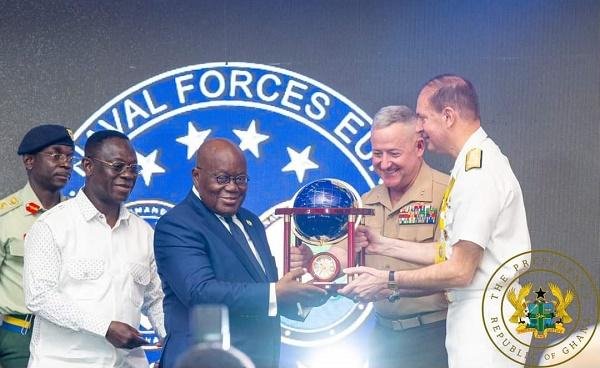
The President of the Republic, Nana Addo Dankwa Akufo-Addo, has called for greater levels of co-operation and collaboration amongst the broad spectrum of global maritime stakeholders.
“No nation can afford to do it alone. Ghana, being cognizant of her responsibilities as a coastal state, is playing her part in collaborating with the international maritime community towards enhancing maritime security in the region and on the entire African continent,” he said.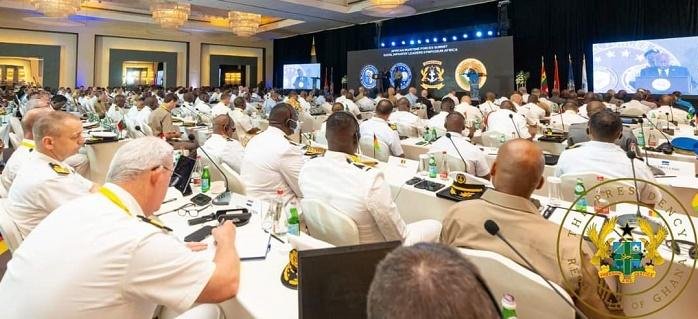
That is why, “the African Maritime Forces Summit and Naval Infantry Leaders Symposium, thus, provide us with a unique opportunity to strengthen our partnerships, and enhance our collective capabilities.”
President Akufo-Addo said this at the opening of the second African Maritime Forces Summit and third Naval Infantry Leadership Symposium Africa in Accra on Tuesday, April 30, 2024.
Held under the theme, “Cooperation at Sea: Safeguarding African Maritime Security”, President the African Maritime Forces Summit and Naval Infantry Leaders Symposium, provide us with a unique opportunity to strengthen our partnerships, and enhance our collective capabilities through constructive dialogue, exchange of best practices, and exploring innovative solutions to the maritime security challenges facing our continent.”
Recognising the Gulf of Guinea region as a key route for international trade that connects all the major continents, from the Middle East and Asia to Europe and the Americas and the growing investments in the region, especially in offshore oil and gas infrastructures, he said the coastal trading and maritime traffic are bound to increase and with this growing wealth and geo-strategic relevance, the region has to cope with both traditional and emerging maritime security threats.
Whilst recognising that these transnational crimes do not only threaten national and regional peace and stability, but also come at a great cost to the economies of both coastal and non-coastal states, he was happy to note that, “piracy and armed robbery at sea, which are the most visible symptoms of insecurity in the Gulf of Guinea, have, as a result of the co-ordination of efforts of the Nigerian and Ghanaian navies, been appreciably suppressed” and though they still remain important threats to national and regional maritime activities.
It is in lieu of this, he continued, that is why it is “imperative that we foster greater co-operation and collaboration amongst African maritime forces. By working together, sharing intelligence, and coordinating our efforts, we can address effectively maritime security threats, and safeguard our maritime domain.”
He noted that, to this end, several collaborative efforts have been advanced by African countries which included regional collaborations between neighbouring countries to improve the approach to dealing with maritime crimes such as the operationalisation of the Yaoundé Code of Conduct to deal with maritime crimes and the revision of the Gulf of Guinea Commission, which had been moribund for some time, to contribute to securing the peace and stability of the Gulf of Guinea.
On the part of Ghana, he pointed out government’s commitment towards the retooling of the Ghana Navy and the Ghana Armed Forces, amply demonstrated in the commissioning of some twenty vessels for the Navy with the process of acquiring two Offshore Patrol Vessels for the Navy also far advanced as well as the building of a new Naval Base in the Western Region which is also nearly completed.
“These investments would help safeguard the security of our maritime space, and lead to an accelerated growth of our blue economy. Other African countries have shown similar commitments, and collaboration with our key partners have ensured the significant improvement in the security of Africa’s maritime domain,” he said.


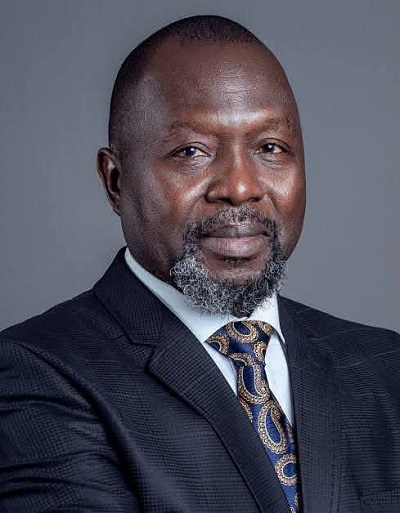
Attorney General and Minister for Justice, Dr. Dominic Ayine, has announced that the government has accepted the recommendation to abolish the death penalty and replace it with life imprisonment as part of the constitutional review process.
He said the proposed amendment would affect Articles 3, 13, 19 and 72 of the 1992 Constitution, with offences that previously attracted the death penalty instead carrying life imprisonment.
Dr. Ayine made the announcement on July 30, 2026, at the Jubilee House in Accra during the Government Accountability Series while outlining the government’s position on the final recommendations of the Constitution Review Committee.
According to him, the government believes the death penalty is inconsistent with the constitutional right to life and Ghana’s international human rights obligations.
He explained that the recommendation forms part of broader proposals aimed at strengthening the protection of fundamental human rights under the Constitution.
Dr. Ayine said the government had also accepted the spirit of several recommendations to expand rights relating to women, children, persons with disabilities, older persons and the youth.
He added that a comprehensive Human Rights Act would be introduced to protect these rights and provide detailed enforcement mechanisms instead of amending the entrenched provisions of the Constitution through a national referendum.
By: Jacob Aggrey
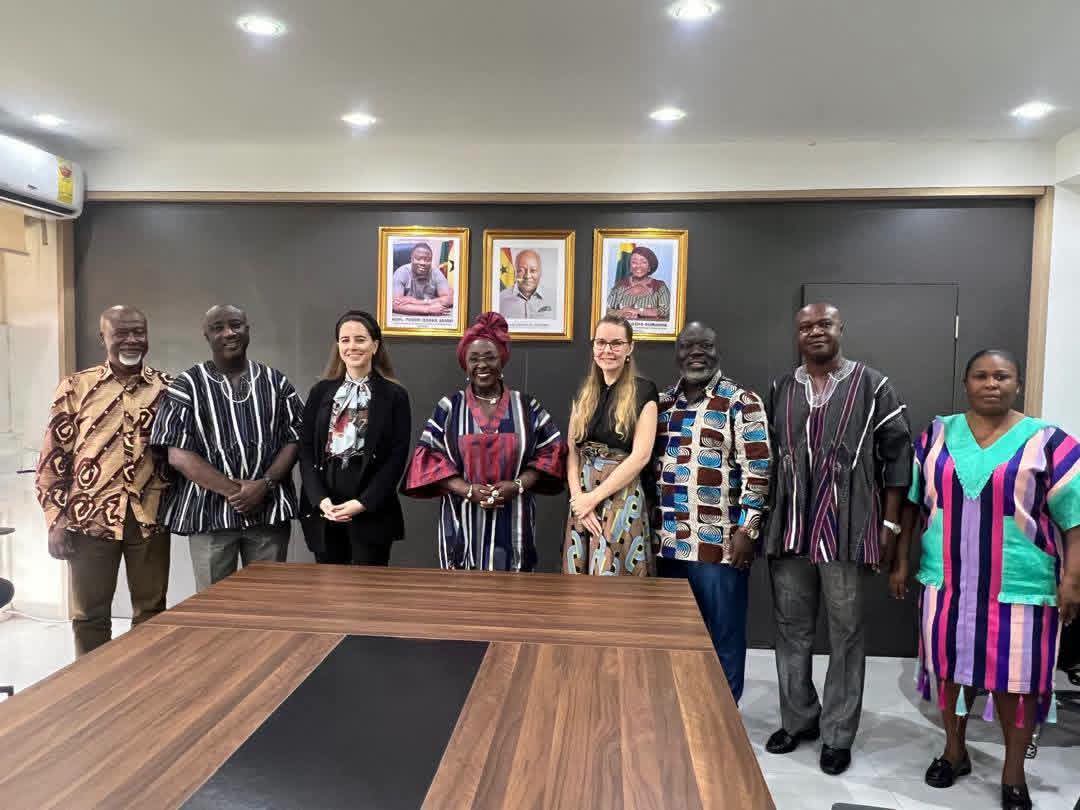
Minister for Tourism, Culture and Creative Arts, Abla Dzifa Gomashie, has called on both local and international investors to tap into opportunities in Ghana’s tourism, hospitality and creative industries.
Speaking in an interview yesterday with World Media USA Today, the Minister said government is committed to creating a conducive investment environment to support growth in the sector.
She highlighted key investment areas including hotels, fashion, music, film production, and tourism infrastructure.
Dzifa Gomashie also encouraged Ghanaians to invest in domestic tourism to help boost the local economy.
According to her, strategic investment in tourism and the creative economy will drive economic transformation, create jobs, and position Ghana as Africa’s gateway for heritage, culture, business and investment.
“Ghana has vast opportunities across tourism, hospitality and the creative industries. We are ready and open for business,” she stated.
The Minister’s remarks come as government intensifies efforts to leverage culture and tourism as drivers of economic growth and job creation.
By Edem Mensah-Tsotorme