Hot!
Govt’s silence on ‘Dumsor’ deafening – Armah Buah

- /home/u249204778/domains/spectator.com.gh/public_html/wp-content/plugins/mvp-social-buttons/mvp-social-buttons.php on line 27
https://spectator.com.gh/wp-content/uploads/2024/01/787ad423-55dc-47b7-8e83-a292afffb0ea.jpeg&description=Govt’s silence on ‘Dumsor’ deafening – Armah Buah', 'pinterestShare', 'width=750,height=350'); return false;" title="Pin This Post">
- Share
- Tweet /home/u249204778/domains/spectator.com.gh/public_html/wp-content/plugins/mvp-social-buttons/mvp-social-buttons.php on line 72
https://spectator.com.gh/wp-content/uploads/2024/01/787ad423-55dc-47b7-8e83-a292afffb0ea.jpeg&description=Govt’s silence on ‘Dumsor’ deafening – Armah Buah', 'pinterestShare', 'width=750,height=350'); return false;" title="Pin This Post">
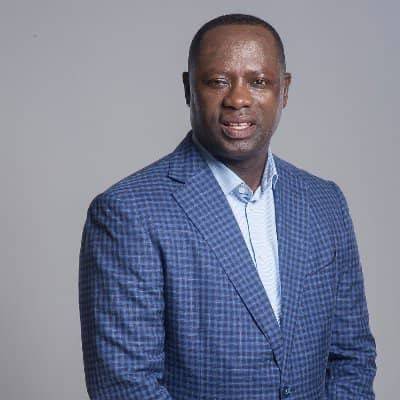
The Deputy Minority Leader, Emmanuel Armah-Kofi Buah, has strongly criticized the government in the wake of recent power outages, describing its apparent silence on the matter as deafening.
Some areas in Accra on Tuesday, January 9, 2024, experienced intermittent power supply, while other areas have also been experiencing a similar fate for months.
Reacting to the disturbing occurrence, the MP for Ellembele, expressed displeasure at the government’s failure to give Ghanaians an explanation of the situation.
He called on the Ghana Grid Company (GRIDCo) to issue a load-shedding timetable to allow households and businesses to plan.
“Compounding the situation is the absence of a load-shedding timetable, which hampers households and businesses from planning accordingly. The lack of transparency and communication regarding the power outage schedule only adds to the frustration and inconvenience experienced by the affected population.
“It is worth highlighting that even during the worst periods of Dumsor in the past, the power outage never reached the 500 megawatts threshold currently being shed yet the media associated with the NPP interestingly see this as no “Dumsor.” Their loud silence on the current situation is deafening.”
Read the statement by Emmanuel Armah-Kofi Buah below
Ghana is currently grappling with a severe case of Load Shedding, commonly known as Dumsor.
The situation is evidently clear, with 500 MW of load being shed as of tonight, January 9th, 2024.
Numerous areas have been plunged into darkness due to the unavailability of gas to fuel thermal plants within the Tema enclave which can be attributed to financial constraints.
Specifically, the Ghana National Petroleum Corporation (GNPC) is currently unable to fulfil its payment obligations to the West African Gas Pipeline, which is responsible for transporting gas from Takoradi to Tema for power generation. You can also track the ultimate problem to the weakest link in the value chain -ECG’s inability to pay off-takers.
Compounding the situation is the absence of a load-shedding timetable, which hampers households and businesses from planning accordingly.
The lack of transparency and communication regarding the power outage schedule only adds to the frustration and inconvenience experienced by the affected population.
It is worth highlighting that even during the worst periods of Dumsor in the past, the power outage never reached the 500 megawatts threshold currently being shed yet the media associated with the NPP interestingly see this as no “Dumsor.”
Their loud silence on the current situation is deafening.
The Ghana Grid Company must, as a matter of urgency, come out with a load-shedding timetable to allow households and businesses to plan better.
HON.EMMANUEL ARMAH-KOFI BUAH
(DEPUTY MINORITY LEADER – MP,ELLEMBELE)
Credit: Citinewsroom.com


General Secretary of the New Patriotic Party (NPP), Justin Kodua Frimpong, has filed his nomination to contest the position of General Secretary again as the party begins its rebuilding efforts ahead of the 2028 general elections.
He was accompanied by party stalwarts and supporters who were in high spirits, expressing confidence that he is the right person to hold the position.
Speaking after filing his nomination, Mr Kodua Frimpong assured the rank and file of the party that he would not disappoint them.
“I can assure you that the faith the rank and file of the party have had in me, I will never disappoint them,” he said.
He also pledged to run a clean campaign devoid of personal attacks.
“I can assure you that our internal campaign will be devoid of personal attacks,” he told his fellow contestants and the rank and file of the party as he seeks to retain his position.
His tenure has seen the party through the 2024 general elections, where the NPP lost power to the National Democratic Congress (NDC) after eight years in government.
The party is currently in a rebuilding phase, with internal elections scheduled to elect new national executives to lead its reorganization towards the 2028 polls.
The General Secretary position is considered one of the most influential in the party’s administrative structure, responsible for the day-to-day running of the party secretariat and implementation of party decisions.
By Edem Mensah-Tsotorme

The University of Ghana Medical Centre (UGMC) has disputed claims made on social media by comedian Michael Blackson concerning the treatment given to his late mother, saying a review found that the allegations did not accurately reflect what happened during her stay at the hospital.
In a statement issued in Accra on August 5, 2026, the management of UGMC expressed condolences to Mr. Blackson and his family over the death of his 83-year-old mother, who died at the facility on July 16, 2026.
The hospital said it had taken the concerns raised by Mr. Blackson seriously and conducted a thorough review in line with its clinical and administrative procedures.
According to the statement, the facts presented by Mr. Blackson on social media contained “numerous inaccuracies” and did not accurately reflect the medical care provided to his mother.
UGMC explained that she was referred to the facility from another hospital and received treatment there from May 27 to July 16, 2026, a period of about eight weeks.
The hospital stated that it would not release details of her diagnosis, treatment, medical records or other aspects of her care because it had a duty to protect patient confidentiality, even after death.
It said the decision was intended to respect the dignity of the deceased and the privacy of her family.
UGMC further stated that all clinical decisions at the facility are made by qualified healthcare professionals based on medical judgment, established standards of care and the best interests of the patient.
The statement added that such decisions are made in consultation with authorised family representatives where necessary and that billing and financial procedures are governed by institutional policies and are separate from clinical decision-making.
The hospital noted that it values feedback from patients and their families and considers both positive and negative comments important for improving the quality of care.
Mr. Blackson had earlier used social media to criticise the care his mother received at UGMC, prompting the hospital’s response.
By: Jacob Aggrey