Hot!
Food prices drop, but consumers still overpaying due to middlemen – Agric Minister

- /home/u249204778/domains/spectator.com.gh/public_html/wp-content/plugins/mvp-social-buttons/mvp-social-buttons.php on line 27
https://spectator.com.gh/wp-content/uploads/2023/11/bryan-acheampong-at-vetting.jpg&description=Food prices drop, but consumers still overpaying due to middlemen – Agric Minister', 'pinterestShare', 'width=750,height=350'); return false;" title="Pin This Post">
- Share
- Tweet /home/u249204778/domains/spectator.com.gh/public_html/wp-content/plugins/mvp-social-buttons/mvp-social-buttons.php on line 72
https://spectator.com.gh/wp-content/uploads/2023/11/bryan-acheampong-at-vetting.jpg&description=Food prices drop, but consumers still overpaying due to middlemen – Agric Minister', 'pinterestShare', 'width=750,height=350'); return false;" title="Pin This Post">
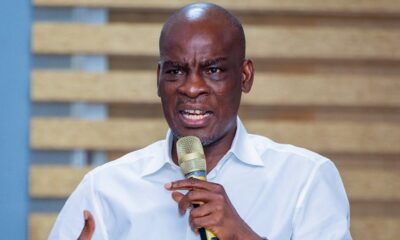
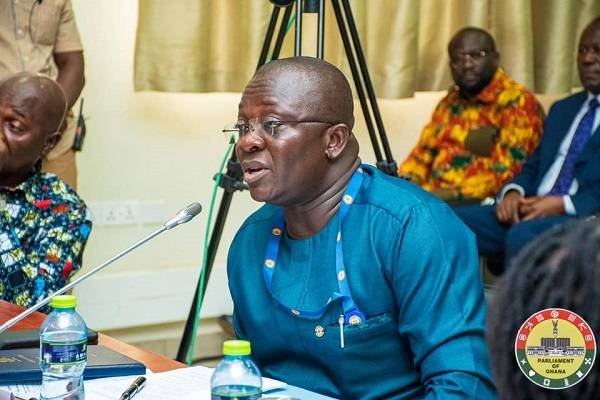
The Minister of Food and Agriculture (MoFA), Dr. Bryan Acheampong, says food prices in Ghana have drastically reduced within the last few months.
He attributes this reduction to the prudent measures implemented by the government which he says is yielding positive results.
Speaking to journalists in Accra on the sidelines of the Agric Fair at the premises of the Ministry, Dr. Acheampong noted that prices of food products have decreased, but consumers still pay high in some instances because of exercise profiteering by middlemen.
“We have been able to bring the price of maize down by 50%. And it is not just the maize. With regard to a lot of the cereals, the prices are dropping. Maize that used to sell at the same time last year at GH¢300 for 50kg bag now is GH¢148, the maximum that you get is GH¢150 which means that there is a 50% drop in the price of maize.”
“But nobody is talking about it because you don’t see it translate into the price of a ball of kenkey. It means that there’s someone in the middle who is pocketing the profit,” he stated.
Meanwhile, new evidence shows that weak competition may be causing unfair food prices for consumers in Ghana, as retail prices rise significantly faster than wholesale prices.
Food products such as onions, gari, and sorghum are flagged as key markets of concern; national authorities are urged to investigate and act.
Experts in Ghana and globally are warning that some market actors are making record profits in this time of a food crisis, at the expense of overcharged consumers and underpaid farmers.
A new tool created by consumer organizations has highlighted the risk of unfair food prices in Ghana, driven by insufficient competition in national and global food supply chains.
The Fair Food Price Monitor warns how rising prices for Ghanaian consumers are potentially being caused not only by factors such as increased fuel costs and currency depreciation but also by dominant market actors taking advantage of this crisis to increase prices excessively.
The tool, developed by Consumers International (representing consumers worldwide) and the Ghanaian organization Consumer Advocacy Centre (based at Laweh University College), uses data from sources such as the UN World Food Programme (WFP) and UN Food and Agriculture Organization (FAO) to track the relationship between food prices at different stages of the supply chain in Ghana and to highlight where investigation and action may be needed from the government.
Source: Citinewsroom.com


The University of Ghana Medical Centre (UGMC) has disputed claims made on social media by comedian Michael Blackson concerning the treatment given to his late mother, saying a review found that the allegations did not accurately reflect what happened during her stay at the hospital.
In a statement issued in Accra on August 5, 2026, the management of UGMC expressed condolences to Mr. Blackson and his family over the death of his 83-year-old mother, who died at the facility on July 16, 2026.
The hospital said it had taken the concerns raised by Mr. Blackson seriously and conducted a thorough review in line with its clinical and administrative procedures.
According to the statement, the facts presented by Mr. Blackson on social media contained “numerous inaccuracies” and did not accurately reflect the medical care provided to his mother.
UGMC explained that she was referred to the facility from another hospital and received treatment there from May 27 to July 16, 2026, a period of about eight weeks.
The hospital stated that it would not release details of her diagnosis, treatment, medical records or other aspects of her care because it had a duty to protect patient confidentiality, even after death.
It said the decision was intended to respect the dignity of the deceased and the privacy of her family.
UGMC further stated that all clinical decisions at the facility are made by qualified healthcare professionals based on medical judgment, established standards of care and the best interests of the patient.
The statement added that such decisions are made in consultation with authorised family representatives where necessary and that billing and financial procedures are governed by institutional policies and are separate from clinical decision-making.
The hospital noted that it values feedback from patients and their families and considers both positive and negative comments important for improving the quality of care.
Mr. Blackson had earlier used social media to criticise the care his mother received at UGMC, prompting the hospital’s response.
By: Jacob Aggrey

The New Patriotic Party (NPP) has directed all aspirants campaigning in the Greater Accra Region to suspend their campaign activities on August 5 and 6 and instead mobilise supporters for the party’s planned “Democracy Under Attack” demonstration.
The directive was issued by the party’s National Steering Committee in a statement signed by the NPP General Secretary, Justin Kodua Frimpong, on Tuesday.
According to the statement, the decision forms part of efforts to ensure a strong turnout for the demonstration, which is scheduled for Thursday, August 6, 2026.
The party said the protest would begin at 5:00 a.m., with participants expected to gather at the Supreme Court in Accra.
It further directed Regional, Constituency and Polling Station Executives in Greater Accra to work closely to mobilise members and supporters for the event.
“The National Steering Committee is calling on all aspirants currently campaigning across the Greater Accra Region to temporarily suspend their campaign activities on the 5th and 6th of August and join in mobilising support for the upcoming demonstration,” the statement noted.
The NPP appealed to party members and supporters to remain peaceful, disciplined and orderly throughout the protest.
The demonstration forms part of the party’s response to concerns it has raised over issues relating to Ghana’s democratic governance and the justice system.
The NPP leadership expressed confidence that party members would cooperate fully to ensure a successful and peaceful event.
By: Jacob Aggrey