Features
Striping the unripe for marriage

- /home/u249204778/domains/spectator.com.gh/public_html/wp-content/plugins/mvp-social-buttons/mvp-social-buttons.php on line 27
https://spectator.com.gh/wp-content/uploads/2023/11/stop-child.jpg&description=Striping the unripe for marriage', 'pinterestShare', 'width=750,height=350'); return false;" title="Pin This Post">
- Share
- Tweet /home/u249204778/domains/spectator.com.gh/public_html/wp-content/plugins/mvp-social-buttons/mvp-social-buttons.php on line 72
https://spectator.com.gh/wp-content/uploads/2023/11/stop-child.jpg&description=Striping the unripe for marriage', 'pinterestShare', 'width=750,height=350'); return false;" title="Pin This Post">
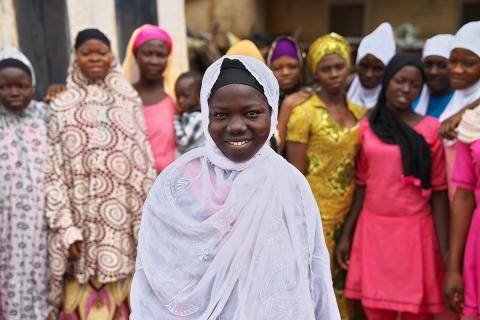
It was early morning as already planned and scheduled for the Ayorogo family (not real names) to give out their 15-year-old girl to be married off according to the Islamic marriage ceremony for the Ayinbono family. It was in Nangodi in the Upper East Region.
Prior to the marriage, arrangements for the ‘Leefi,’ usually consisting of clothing, sandals, personal care, and other items for the bride (Amaria), termed usually in the Hausa parlance, were all set.
Displeasure
Though the family had consented to the marriage, comments from schoolmates of the bride-to-be, school club members, teachers, and the community scorned at the premature marriage plans of the young girl and the decision taken by the family to marry off the girl despite the fact that child marriage was widely viewed as child abuse.
Through an advocacy men’s groups in the region and concerned community members, the marriage was suddenly halted with combined efforts of the Domestic Violence and Victim Support Unit (DOVVSU), the Department of Gender, and members of the public despite the girl’s refusal to go to school. The young girl’s preference is to learn a trade instead.
Drivers of Early
Marriages
Some of the driving factors behind girls entering into early marriages include economic, social, and cultural elements. Families, often in dire need, seek to collect dowries from suitors and marry off their daughters to alleviate financial problems, sometimes without the girl’s consent.
The anticipated Muslim marriage ceremony that was annulled in the Upper East Region is just one example of many child marriage incidents that continue to affect villages in Ghana, especially in the northern regions.
Child marriage brings with it numerous challenges, including health implications, withdrawal from school, reduced employment opportunities, and limitations on the personal development of young girls.
Health experts indicate that the major causes of death among youths aged 15 to 17 are related to unsafe abortion and complications in pregnancy and delivery. Additionally, teenagers are more likely to die from complications such as ectopic pregnancy, recto vaginal fistula, and secondary infertility.
Moreover, around half a million women die every year worldwide due to pregnancy and childbirth-related complications, with most of these deaths occurring in high risk categories such as women who are too young, too old, or ill.
While Ghana is making efforts to promote girls’ education, skill development, and providing employment opportunities through government policies, the fact that brides as young as 15 are married is a significant concern and necessitates accelerated action to end child marriages, not only in Ghana or Africa but globally.
Statistics
Globally, 15,000,000 girls are married before their 18th birthday. In fact, every minute, 28 girls get married, and in every second, one girl gets married. It is also anticipated that 150 million more girls will be married by 2030 if efforts to curb the trend are not intensified.
In Ghana alone, one in five girls aged 20 to 24 years is married before the age of 18. Regional data from the 2014 Demographic Health Survey revealed that regions of the north recorded 39.6 per cent of child marriages, the Upper West Region recorded 37.3 per cent, the Upper East 36.1 per cent, Eastern Region 27.5 per cent, Western Region 32.9 per cent, Central Region 29.5 per cent, Ashanti Region 25.9 per cent, Volta Region 25.9 per cent, Brong Ahafo Region 23.9 per cent, and Greater Accra Region 18.5 per cent.
Child Protection Act
The 1992 Constitution of Ghana prohibits any person under the age of 18 from marrying or being given in marriage. The Children Act 1998 (Act 560), amended as the Children Act 937 (2016), stipulates also that no person shall force a child to be betrothed, subject to a dowry transaction, or married.
Governments worldwide are working towards ending child marriage by 2030 under the Sustainable Development Goal (SG) with target 5.3 which specifically aims to eliminate all harmful practices such as child, early and forced marriage and female genital mutilation (FGM).
There is therefore an urgent need to expedite these efforts in the remaining seven years as the clock ticks to 2030.
Interventions and
Beneficiaries
The United Nations Population Fund (UNFPA) is supporting its partners in Ghana for the third phase of the Global Programme to end child marriage.
As part of that, regional interventions in the Upper East Region involving collaboration between the Regional Coordinating Council and the Department of Gender is working closely with some ambassadors in six districts, including the Builsa South District, Kassena Nankana West District, Talensi District, Nabdam District, Bongo, and Bawku West Districts.
These efforts focus on engaging men and boys as ambassadors to encourage each other to end child marriage.
Ms. Yvonne Wonchua, Assistant Director of the Upper East Regional Coordinating Council, noted that child marriage in the Upper East region has evolved from betrothing a girl to a man for marriage to pregnancy-induced child marriages. She emphasised that once a girl becomes pregnant, cultural norms often push her to marry the man who impregnated her.
The male advocacy network in the region works with community members, Assembly members, traditional authorities, and religious leaders to educate them about child marriage, gender-based violence, and the consequences of these practices.
Mr. James Twene, Upper East Regional Director of the Department of Gender, discussed the interventions in the region, highlighting the formation of men’s and boys’ advocacy clubs in six districts. These clubs have been trained to address child marriages and gender-based violence in communities.
The focus is on training men and boys to understand basic gender concepts and recognise child marriage as a crime with severe consequences. The programme also emphasises how to respond to child marriage cases when they arise in communities.
For communication and reporting on rising child marriage cases, a social media platform has been created for stakeholders to share emerging issues.
Traditional authorities, as custodians of culture, are also being empowered to address child marriages, and workshops and engagements are organised to help them address the problem.
As the fight against child marriage continues, it is crucial to collaborate with existing structures, leadership, and stakeholders such as chiefs, opinion leaders, and assembly members. This collaborative approach is essential to prevent child marriage effectively.
Mr. Twene noted that strong networks within the districts are key to addressing child marriage. However, more districts should be covered to reach every part of the region.
Currently, a total of 720 men and boys in the six districts have had their capacity built, and a Parent Advocacy Movement (PAM) has been created to engage parents, particularly women, to support their adolescent children.
Recommendations
The current UNFPA-supported intervention programmes in six districts should be extended to cover all districts.
Traditional authorities, who have significant decision-making roles in their communities, should also be supported to curtail child marriages.
The Department of Gender should receive support to upscale its intervention efforts to reach districts that have not yet been covered.
This unified approach is vital to eliminating gender-based violence and early marriages, as emphasised in the SDG, target 5.3.
Role of Media and Communication Advocacy Network (MCAN)
The media plays a significant role in promoting health and social development. Media and Communication Advocacy Network (MCAN) is working with partners to advocate against child marriage in Ghana.
The writer, Fatima
Anafu-Astanga is the Upper East regional correspondent of the Ghana News Agency (GNA)

The emotional lives of women are deep and complex. They are shaped by biology, the brain, and how women interact with the world around them. While everyone feels emotions, science shows unique patterns in how women process and express them.
1. How the brain and body work
Emotions are not just feelings in the mind. They are physical processes controlled by the brain and body:
Connected brain halves: Studies show that women often have strong connections between the left and right sides of the brain. This helps women link logic with intuition and feelings very quickly.
Strong memories: The brain’s emotional centre helps women remember emotional events with vivid detail. This builds strong gut feelings and helps women learn from past experiences.
Hormone changes: Hormones like estrogen and progesterone change throughout the month. Estrogen can boost good moods and energy, while progesterone can cause calmness or quiet reflection. These shifts are natural physical responses.
2. Empathy and connection
Women often show high levels of empathy and social skill:
Mirror neurons: People have brain cells called mirror neurons that let us feel what others feel. Research suggests these networks help women deeply sense and understand the emotions of people around them.
The “Tend-and-Befriend” Response: When stressed, men often react with fight or flight. Women often use a “tend-and-befriend” response. Driven by bonding hormones, women are wired to care for others and seek support from friends and community during hard times.
3. Society and expectations
Society also shapes how women express their feelings:
Different rules: Girls are often taught to be nurturing and expressive. However, society sometimes judges women harshly if they show anger or act too assertive at work. This forces women to balance their true feelings with outside expectations.
Emotional labor: Women often carry the weight of keeping families and workplaces happy. While this builds strong bonds, it can also lead to tiredness if they do not take time for themselves.
4. Resilience and Intuition
These biological and social factors give women great emotional strength:
The Power of Sharing: Many women are good at processing sadness, joy, and love by talking with others. This helps them heal and grow.
Listening to intuition: “Woman’s intuition” is real. It is not magic; it is the brain quickly putting together past experiences, physical clues, and deep observations into a clear gut feeling.
Conclusion
Women’s emotions are a powerful and sophisticated system. They are driven by brain science, body chemistry, and deep empathy. Understanding these systems helps us see the vital role women play in building strong relationships and communities.
By Robert Ekow Grimmond-Thompson
Features
Confronting newborn abandonment in Ghana: When a cry for help is heard in a dustbin – Part 2

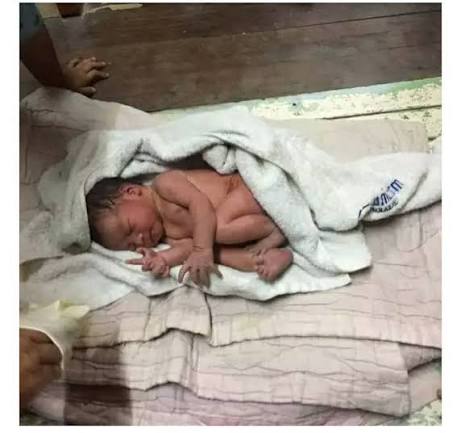
The root causes: It is never just one reason
My years of counselling at CPAC show me abandonment is rarely an act of malice. It is the tragic endpoint of seven overwhelming distresses:
1. Severe maternal mental illness —The hidden emergency
a) Clinical Postpartum Depression (PPD): This is far beyond “baby blues.” It is a severe mood disorder that can appear weeks to months after birth. Due to a massive drop in hormones, extreme sleep deprivation, and emotional exhaustion, the mother feels deep sadness, worthlessness, and complete emotional numbness towards her baby. Picture: A new mother sits by her bed all day, staring blankly. Her baby cries for hours, but she cannot lift her hands to carry the baby. She whispers, “This baby would be better off without me.” She does not hate the baby; she feels she has completely failed as a mother.
b) Peripartum Psychosis (Postpartum Psychosis): This is a psychiatric emergency. Rare but extremely dangerous, appearing suddenly within the first 2-3 weeks after delivery. The mother completely loses touch with reality. She hears commanding voices telling her to abandon the baby, or believes the baby is possessed by an evil spirit or is a “spirit child” who will bring a curse. Picture: A mother genuinely believes she heard a voice saying, “Leave this child at the crossroads at midnight or your family will die.” She abandons the baby not out of hatred, but because her broken mind believes she is obeying a higher spiritual order to save her family.
c) Pre-existing untreated Schizophrenia: This is a chronic, severe mental disorder that existed before the pregnancy. The stress of pregnancy and labour shatters her fragile coping. She suffers from paranoid delusions — believing people want to poison her and the baby — flat affect (zero facial expression), and grossly disorganised thinking, making it impossible to plan how to feed or clean a baby. Picture: A young woman whose family called her illness “spiritual attack” instead of taking her for medication wanders away after delivery, completely forgetting she even gave birth, leaving the infant behind.
2. Extreme socio-economic deprivation: For many girls in some parts of Ghana such as Kasoa, Madina, or Bekwai, poverty is not a statistic; it is a daily panic. No money for antenatal care, no money for hospital delivery, no money for baby diapers or formula. When a mother cannot feed herself, the thought of feeding another mouth feels impossible. Some mothers say, “I left her where someone richer would find her, because I could not watch her starve to death in my hands.” It is a distorted act of survival.
3. Intense societal stigma and shame: In Ghana, pregnancy outside marriage, teenage pregnancy, or pregnancy from rape can bring extreme family rejection. The girl is called “spoilt,” beaten, banned from church, or sacked from school. The fear of bringing shame to the family name is heavier than the fear of police. So she hides the pregnancy for 9 months, delivers alone, and abandons in secret to protect her family’s “honour.”
4. Paternal abandonment — The Man Who Ran Away: Behind almost every abandoned baby is a man who vanished. He says, “It is not mine,” or “Abort it,” and switches off his phone. The mother is left utterly isolated — no emotional, financial, or social support. She is criminalised alone, but the abandonment started with him. Psychological research shows paternal denial is one of the strongest predictors of maternal panic and newborn abandonment.
5. Substance abuse disorders: Alcohol, tramadol, and other drug addiction impair the brain’s executive functioning — the ability to plan, judge consequences, and process emotions. A mother struggling with addiction may give birth in a highly intoxicated or withdrawal state, unable to comprehend the needs of the newborn, leading to neglect and eventual abandonment.
6. The spirit child cultural phenomenon and superstition: In some remote pockets of Northern Ghana and even in few parts of Central and Ashanti regions, public health research shows babies born with congenital deformities, severe disabilities, or whose mothers die in childbirth are branded as “spirit children” or cursed. In extreme instances, families, under cultural pressure, mandate that such babies be exposed or abandoned at shrines or bushes. This is not mental illness, but a harmful cultural belief system that still kills.
The invisible wounds
On the baby: Risk of death from hypothermia, sepsis, and infection. Survivors suffer Anaclitic Depression and Failure to Thrive due to lack of touch. As adults, they battle Reactive Attachment Disorder, chronic mistrust, and identity crisis — “Why did my mother leave me in a dustbin?”
On the mother: Lifelong hidden grief, intense guilt, chronic PTSD, depression, and elevated suicide risk. A prison cell does not heal this.
On the nation: Overburdened orphanages like Osu Children’s Home, draining health budgets, and overworked Social Welfare officers.
SKIP THE QUEUE, TAP THE NEWS

You can now read the Ghanaian Times and The Spectator newspapers from the comfort of your device via TimesNewsPlus.
Join our WhatsApp Channel: https://whatsapp.com/channel/0029VbBElzjInlqHhl1aTU27