Editorial
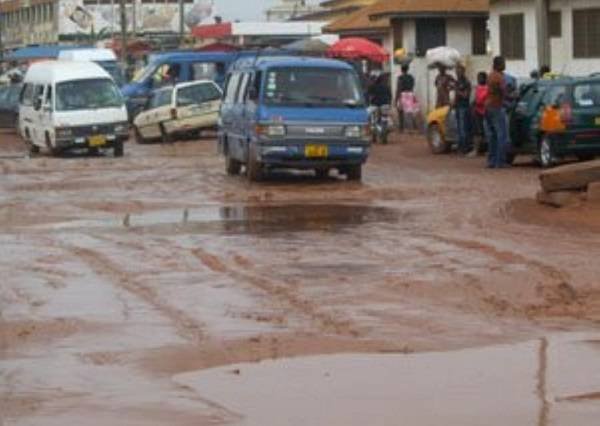
Government must fix bad roads in Ashaiman

- /home/u249204778/domains/spectator.com.gh/public_html/wp-content/plugins/mvp-social-buttons/mvp-social-buttons.php on line 27
https://spectator.com.gh/wp-content/uploads/2023/10/Ashaiman-road.jpg&description=Government must fix bad roads in Ashaiman', 'pinterestShare', 'width=750,height=350'); return false;" title="Pin This Post">
- Share
- Tweet /home/u249204778/domains/spectator.com.gh/public_html/wp-content/plugins/mvp-social-buttons/mvp-social-buttons.php on line 72
https://spectator.com.gh/wp-content/uploads/2023/10/Ashaiman-road.jpg&description=Government must fix bad roads in Ashaiman', 'pinterestShare', 'width=750,height=350'); return false;" title="Pin This Post">
Ashaiman road
Dear Editor,
I write to express my deepest concern regarding the deteriorating road infrastructure in our beloved country, particularly in the capital, Accra.
The dire situation of our roads, exemplified by the alarming condition of the Tema-Motorway, has prompted this urgent appeal for action.
First and foremost, I must commend the government for its responsiveness in addressing the deplorable state of the Tema-Motorway. It is heartening to see that our leaders are attuned to the concerns of the populace and are taking steps to rectify the situation.
However, this is but a single thread in the larger tapestry of road-related challenges that our nation faces.
The Tema-Motorway serves as a microcosm of the issues plaguing our road network.
The very word “motorway” implies a high-speed and efficient route of transportation. Yet, the reality is far from this idyllic image.
Instead, commuters are subjected to a jumble of potholes, cracks, and crumbling asphalt that do not only endanger lives but also impede economic activities.
This dilapidation paints a bleak picture for both the residents of Accra and the countless individuals who rely on this crucial artery for their daily commute.
Moreover, the recent protest by the resilient citizens of Ashaiman on Tuesday, October 3, underscores the widespread anguish caused by our crumbling roads.
These brave individuals took to the streets, in a figurative and literal sense, to voice their discontent. They rightly demand urgent intervention to rehabilitate the road networks that have languished in disrepair for far too long.
The phrase “the squeaky wheel gets the grease” aptly applies here.
It is time for the government to heed the calls of its citizens and address the woeful condition of roads across our nation. Failing to do so would be akin to turning a blind eye to a wildfire that threatens to engulf our collective mobility and economic progress.
I implore the government to consider these concerns with the seriousness they deserve. It is not merely about fixing roads; it is about facilitating the movement of people, goods, and ideas.
Our roads should be the bedrock upon which progress is built, not the stumbling blocks that hinder it. Let us invest in a future where the phrase “bad roads” becomes a relic of the past and where our nation’s infrastructure is a source of pride rather than dismay.
George Obeng Osei, Ashaiman


Following the decision to reintroduce the Regional Diary, it has become necessary to provide clear editorial direction on the modalities and content focus for each edition.
To make the Regional Diary more compelling, engaging and reflective of developments in the regions, the Editorial Conference has agreed that the first edition for each region should feature an exclusive interview with the political head of the region—the Regional Minister.
To this end it is expected that the interview will be anchored on the broader government agenda of “Resetting,” with particular emphasis on the administration’s performance nearly two years into its tenure.
The interview should provide an opportunity to assess the government’s interventions in the region, while allowing the Regional Minister to articulate the administration’s successes, challenges and priorities for the years ahead.
Among other things, the interview should explore:
- Key achievements and major interventions since the administration assumed office;
- The impact of government policies and programmes on the people of the region;
- Major challenges confronting the region and how the Regional Coordinating Council is addressing them;
- The status of major development projects and initiatives; Job creation, investment and economic opportunities within the region;
- The Minister’s priorities for the remainder of the administration’s tenure; and Other pressing issues of interest to the people of the region.
Each correspondent is encouraged to approach the interviews with depth and journalistic excellence, asking direct and substantive questions that elicit specific responses and go beyond political rhetoric.
This initiative presents an important opportunity for us to strengthen the Ghanaian Times’ presence and relevance in the regions, reclaim our position as a leading national daily and deepen our relationship with regional authorities and other key stakeholders.
I am confident that, with our collective commitment and professionalism, the Regional Diary can become a distinctive and influential component of the Ghanaian Times’ coverage.
I remain available for further discussions and welcome ideas and suggestions that will help improve the initiative.
Counting on your cooperation.
Thank you.
ACTING NEWS EDITOR
SKIP THE QUEUE, TAP THE NEWS

You can now read the Ghanaian Times and The Spectator newspapers from the comfort of your device via TimesNewsPlus.
Join our WhatsApp Channel: https://whatsapp.com/channel/0029VbBElzjInlqHhl1aTU27
Dear Editor,
Going viral can make someone famous overnight, but fame alone cannot build a sustainable entertainment industry.
Ghana is blessed with talented musicians, actors, comedians, content creators and other creative professionals. Social media has also created opportunities for young people to showcase their talents to audiences beyond Ghana.
However, we must ask whether we are building lasting careers or simply celebrating the next person to trend online.
Today, a song, skit or video can become popular within hours and disappear from public attention just as quickly. This culture of virality can create the impression that numbers, followers and online attention are the only measures of success.
Our creative industry needs to go beyond that. Young creative need proper management, business knowledge, financial literacy, education and opportunities to develop their skills. They also need structures that can help them turn talent into sustainable careers.
Ghana has the talent to become a major force in Africa’s creative economy. But talent without investment, structure and professional development can easily be wasted
Let us therefore stop asking only, “Who is trending?”, and begin asking, “Who is building a lasting career?” Our creative deserves more than temporary applause, they deserve an industry capable of turning Ghanaian talent into sustainable success.
From Elijah Arkoh
Kaneshie.
SKIP THE QUEUE, TAP THE NEWS
You can now read the Ghanaian Times and The Spectator newspapers from the comfort of your device via TimesNewsPlus.
Join our WhatsApp Channel: https://whatsapp.com/channel/0029VbBElzjInlqHhl1aTU27