News
Political interference discourages rail sector investment–GRWU

- /home/u249204778/domains/spectator.com.gh/public_html/wp-content/plugins/mvp-social-buttons/mvp-social-buttons.php on line 27
https://spectator.com.gh/wp-content/uploads/2020/06/Mr-Godwill-Ntarmah-inset-addressing-the-delegates-at-the-conference-.jpg&description=Political interference discourages rail sector investment–GRWU', 'pinterestShare', 'width=750,height=350'); return false;" title="Pin This Post">
- Share
- Tweet /home/u249204778/domains/spectator.com.gh/public_html/wp-content/plugins/mvp-social-buttons/mvp-social-buttons.php on line 72
https://spectator.com.gh/wp-content/uploads/2020/06/Mr-Godwill-Ntarmah-inset-addressing-the-delegates-at-the-conference-.jpg&description=Political interference discourages rail sector investment–GRWU', 'pinterestShare', 'width=750,height=350'); return false;" title="Pin This Post">
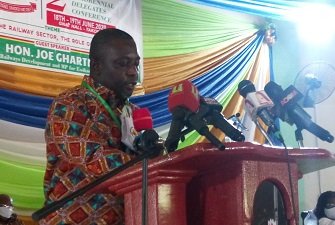
Political interference discourages vital investors for the railways sector, the General Secretary of Ghana Railway Workers Union (GRWU), Mr Godwill Ntarmah, has observed.
He believed the trend, over the years had been one major factor which had affected the development and fortunes of railway subsector of the economy of Ghana.
Mr Ntarmah expressed these concerns at the second quadrennial delegate conference of the GRWU which ended at Fijai, in Takoradi, on Friday on the theme ‘Revamping the railway sector, the role of stakeholders’.
“It is important to state that in the past, unnecessary political interference and influence did not allow potential investors to succeed in the quest to revamp the railway sector.” he stressed.
The GRWU Secretary General declared: “The ongoing construction of the Akosombo to Mpakadan railway line has really raised the appetite of Ghanaians for more railway construction and we cannot afford to fail them.”
Mr Ntarmah told the conference that another major challenge facing the railway industry was the view held by most railway workers and observers that owners of the bulk road vehicles and the very influential in the society were“behind the non-revamping of the Western Railway line to Awaso.”
He said, such observers wondered why there was no contract for the revamping to reach Awaso, especially when the current government had shown the commitment to revamp the railway sector.
“The benefits that the nation will get by hauling bauxite and other minerals by rail far outweigh the benefits any individual will get. It is our belief that in the not too distant future our cry to get to Awaso will receive the needed response it deserves for us to have our jobs secured.” Ntarmah mentioned.
He reported that from December 2019 to April 2020, Ghana Manganese Company’s decision to stop the haulage manganese to Takoradi Port, had affected the operations of GRCL which now rely on Central Government for total payment of salaries of railway workers.
The General Secretary indicated that the situation could have been avoided if the GRCL had diversified its operation to include the haulage of bauxite and cocoa.
Mr Ntarmah, however, noted some positive interventions including the rehabilitation of the existing narrow-gauge line from Kojokrom to Tarkwa that has ensured resumption of passenger services, rehabilitation of the existing narrow gauge from Accra to Nsawam and the award of contract to M/S AMANDI for the construction of standard gauge railway line from Kojokrom to Huni Valley.
Despite the positive initiatives, the GRCL, he added, was currently faced with challenges of old locomotive engines, inadequate rolling stock and lack of spare parts for the old locomotives and rolling stock available.
He called for an effective collaboration and cooperation of all stakeholders in the railway sector based on transparency and trust, to revamp the railway sector.
Source: Ghanaian Times


Over 20 structures built within the 50-metre buffer zone of the Kpeshie Lagoon at the Laboma Beach Resort in the La Dade-Kotopon Municipality were on Sunday demolished by the Greater Accra Regional Coordinating Council (GARCC).
Buildings such as single-unit semi-detached under construction and completed chalets at the resort were pulled down while portions of a newly constructed perimeter wall were also demolished. Read More
SKIP THE QUEUE, TAP THE NEWS
You can now read the Ghanaian Times and The Spectator newspapers from the comfort of your device via TimesNewsPlus.
Join our WhatsApp Channel: https://whatsapp.com/channel/0029VbBElzjInlqHhl1aTU27

About 120 golfers from clubs across Ghana participated in an 18-hole competition, dubbed ‘MTN 30th Anniversary CEO Invitational Golf Tournament’ held at the Achimota Golf Club on Saturday.
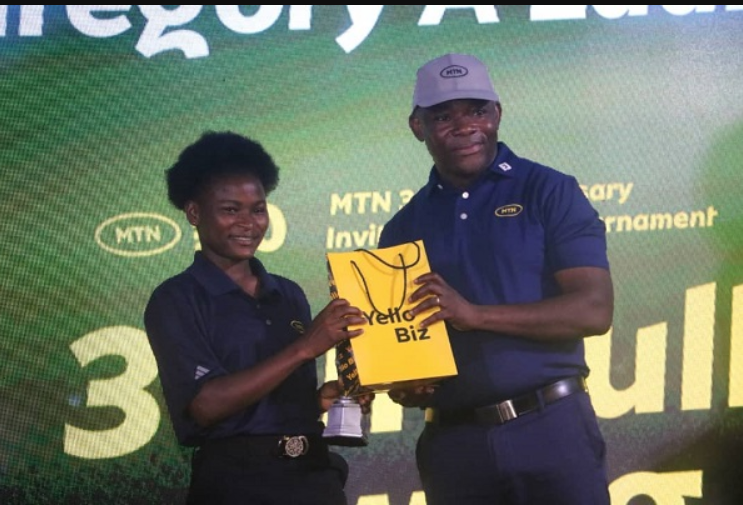
At the end of the hectic day, Frederick Semenu Duvor won the Men’s Group A event with 39 points, while Julienne Afi claimed the Ladies’ Group A title with the same score.
Yaw Mireku Jnr. won the Men’s Group B with an impressive 45 points, while Kous Louanges Mang took the Ladies’ Group B title with 38 points.
Kofi Mangesi won Men’s Group C with 40 points while Elorm R. Akuash Bonney claimed the Ladies’ version with 42 points.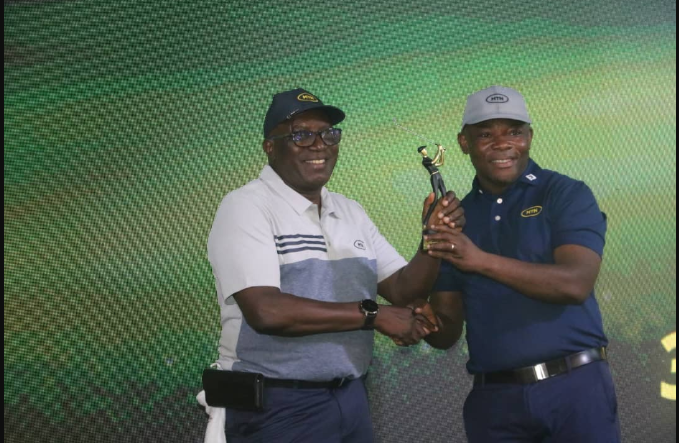
In the Seniors Division, Jan Vogel emerged winner of the men’s category with 39 gross, while Helen Appah topped the ladies’ category with 44 gross.
Addressing participants, the company’s Board Chairman, Mr Ishmael Yamson, urged the company to approach its next phase with the same resilience, discipline and determination that have defined its success over the past three decades.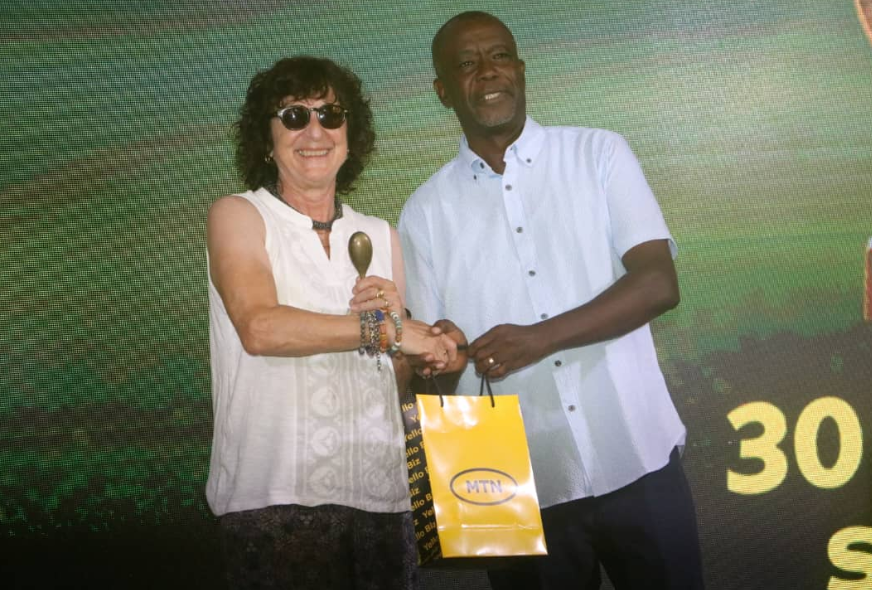
He drew a striking parallel between the game of golf and MTN Ghana’s three-decade journey, describing both as long games in which success depends less on one spectacular moment than on consistency, patience, judgment and the ability to recover from setbacks.
He said, golf had taught him a lesson that extended far beyond the fairways, thus, a round cannot be won on the first hole.
In golfing terms, he said, MTN Ghana had encountered its share of regulatory bunkers, competitive hazards and unexpected storms that had forced the company to pause, reassess and change its approach.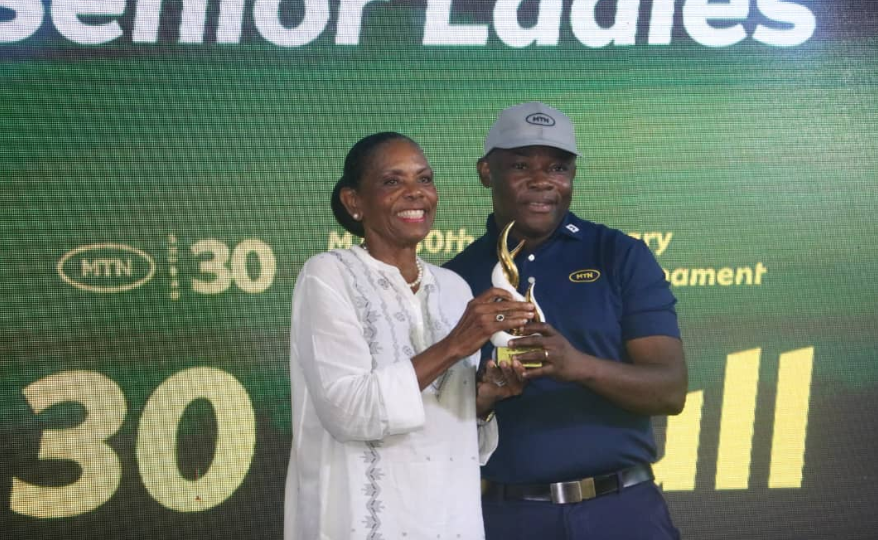
But those challenges, he suggested, were part of the journey rather than reasons to abandon it.
By Andrew Nortey
SKIP THE QUEUE, TAP THE NEWS
You can now read the Ghanaian Times and The Spectator newspapers from the comfort of your device via TimesNewsPlus.
Join our WhatsApp Channel: https://whatsapp.com/channel/0029VbBElzjInlqHhl1aTU27

 Entertainment1 week ago
Fiifi Coleman Productions adapt ‘I Told You So’ stage play into feature film
- News6 days ago
48 Engineer Regiment to be major sub-contractor on Accra-Kumasi Expressway, $2bn ready- Prez Mahama
- Entertainment5 days ago
Rhythms On Da Runway returns November 28 with 16th edition themed ‘Unbound’