News
NBSSI detects 5,200 fraud alerts on CAP


- /home/u249204778/domains/spectator.com.gh/public_html/wp-content/plugins/mvp-social-buttons/mvp-social-buttons.php on line 27
https://spectator.com.gh/wp-content/uploads/2020/06/Fraud-Mrs-Kosi-Yankey-Ayeh-NBSSI-boss-.jpg&description=NBSSI detects 5,200 fraud alerts on CAP', 'pinterestShare', 'width=750,height=350'); return false;" title="Pin This Post">
- Share
- Tweet /home/u249204778/domains/spectator.com.gh/public_html/wp-content/plugins/mvp-social-buttons/mvp-social-buttons.php on line 72
https://spectator.com.gh/wp-content/uploads/2020/06/Fraud-Mrs-Kosi-Yankey-Ayeh-NBSSI-boss-.jpg&description=NBSSI detects 5,200 fraud alerts on CAP', 'pinterestShare', 'width=750,height=350'); return false;" title="Pin This Post">
An earlier attempt by the National Board for Small Scale Industries (NBSSI) to begin disbursement of funds to eligible businesses under government’ Coronavirus Alleviation Programme (CAP) has hit a snag due to fraudulent activities.
Executive Director, Mrs Kosi Yankey-Ayeh, who made the disclosure, said at least 5,200 fraud alerts had been detected on the Board’s online portal dedicated to the programme since it came on stream.
“The online portal has detected 5,200 fraud alerts representing multiple applications with same mobile money or bank account details and we are working to address that to ensure that the right people get the funds,’ she said at a news conference in Accra last Friday.
According to the Executive Director, there have been instances where “people have registered with same mobile money account number for about 100 people which is unacceptable and we are working with KPMG to conduct strong data analysis to detect these fraudulent activities and get the accurate data to commence payment soon.”
The NBSSI had scheduled June 12 to commence disbursement of funds to businesses adversely affected by the coronavirus pandemic.
“The whole process will be done on technology without any human involvement. So even if you apply on paper we will go into the IT platform to decide if you met the criteria, based on assumptions designed for the technology,” Mrs Yankey-Ayeh had said in a recent media interview.
Mrs Yankey-Ayeh pointed out that investigations were ongoing into the matter and “we have directed some of these issues to the National Security and the Ghana Police Service to help us address them.”
Meanwhile, the Executive Director submitted that as at Thursday, June 18, 2020, more than 450,000 applicants had registered unto the programme with 75 per cent of the number, having successfully completed their applications.
“Applicants who registered via the USSD code represent 58.8 per cent, the remaining 41.2 per cent represents registrations done directly on the web portal.”
As regards gender disaggregation, the Executive Director pointed out that females constitute 66 per cent of applications who requested for 47 per cent of total funds available with the males, representing 34 per cent, requesting 52.6 per cent of total value of funds.
President Akufo-Addo on May 19 launched the CAP business support scheme to provide support to micro, small and medium-scale enterprises (MSMEs negatively affected by the coronavirus pandemic.
Out of the GH¢1.2 billion earmarked for this programme, GH¢600 million will be disbursed as soft loans to MSMEs with up to a one-year moratorium and a two-year repayment period.
The rate of interest on government’s GH¢600 million facility is three per cent.
Additionally, selected participating banks will provide negotiated counterpart funding to the tune of GH¢400 million, making, in all, GH¢1 billion for disbursement under the scheme, expected to attract some 180,000 beneficiaries across the country.
Source: Ghanaian Times


Over 20 structures built within the 50-metre buffer zone of the Kpeshie Lagoon at the Laboma Beach Resort in the La Dade-Kotopon Municipality were on Sunday demolished by the Greater Accra Regional Coordinating Council (GARCC).
Buildings such as single-unit semi-detached under construction and completed chalets at the resort were pulled down while portions of a newly constructed perimeter wall were also demolished. Read More
SKIP THE QUEUE, TAP THE NEWS
You can now read the Ghanaian Times and The Spectator newspapers from the comfort of your device via TimesNewsPlus.
Join our WhatsApp Channel: https://whatsapp.com/channel/0029VbBElzjInlqHhl1aTU27

About 120 golfers from clubs across Ghana participated in an 18-hole competition, dubbed ‘MTN 30th Anniversary CEO Invitational Golf Tournament’ held at the Achimota Golf Club on Saturday.
At the end of the hectic day, Frederick Semenu Duvor won the Men’s Group A event with 39 points, while Julienne Afi claimed the Ladies’ Group A title with the same score.
Yaw Mireku Jnr. won the Men’s Group B with an impressive 45 points, while Kous Louanges Mang took the Ladies’ Group B title with 38 points.
Kofi Mangesi won Men’s Group C with 40 points while Elorm R. Akuash Bonney claimed the Ladies’ version with 42 points.
In the Seniors Division, Jan Vogel emerged winner of the men’s category with 39 gross, while Helen Appah topped the ladies’ category with 44 gross.
Addressing participants, the company’s Board Chairman, Mr Ishmael Yamson, urged the company to approach its next phase with the same resilience, discipline and determination that have defined its success over the past three decades.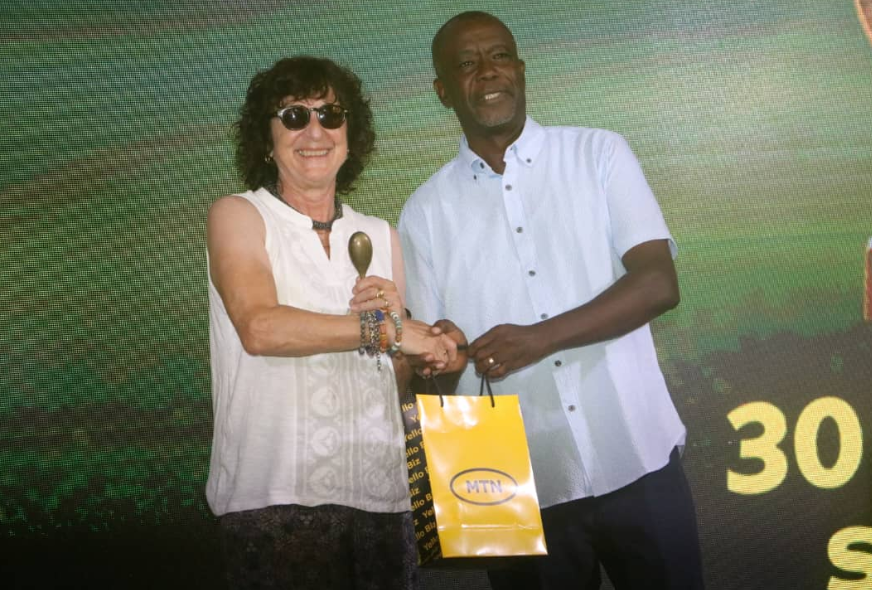
He drew a striking parallel between the game of golf and MTN Ghana’s three-decade journey, describing both as long games in which success depends less on one spectacular moment than on consistency, patience, judgment and the ability to recover from setbacks.
He said, golf had taught him a lesson that extended far beyond the fairways, thus, a round cannot be won on the first hole.

In golfing terms, he said, MTN Ghana had encountered its share of regulatory bunkers, competitive hazards and unexpected storms that had forced the company to pause, reassess and change its approach.
But those challenges, he suggested, were part of the journey rather than reasons to abandon it.
By Andrew Nortey
SKIP THE QUEUE, TAP THE NEWS
You can now read the Ghanaian Times and The Spectator newspapers from the comfort of your device via TimesNewsPlus.
Join our WhatsApp Channel: https://whatsapp.com/channel/0029VbBElzjInlqHhl1aTU27

 Entertainment1 week ago
Rhythms On Da Runway returns November 28 with 16th edition themed ‘Unbound’
- News1 week ago
48 Engineer Regiment to be major sub-contractor on Accra-Kumasi Expressway, $2bn ready- Prez Mahama
- Entertainment1 week ago
Ohemaa Mercy’s Tehillah Experience outfit was priestly regalia, not costume – Management clarifies