News
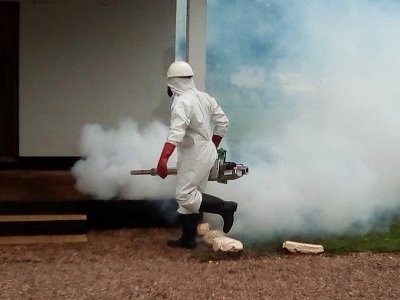
Zoomlion disinfects military barracks, schools in NR,VR

- /home/u249204778/domains/spectator.com.gh/public_html/wp-content/plugins/mvp-social-buttons/mvp-social-buttons.php on line 27
https://spectator.com.gh/wp-content/uploads/2020/06/Military-Barracks-1-Zoomlion-workers-disinfecting-military-barracks-in-the-Northern-Region.jpg&description=Zoomlion disinfects military barracks, schools in NR,VR', 'pinterestShare', 'width=750,height=350'); return false;" title="Pin This Post">
- Share
- Tweet /home/u249204778/domains/spectator.com.gh/public_html/wp-content/plugins/mvp-social-buttons/mvp-social-buttons.php on line 72
https://spectator.com.gh/wp-content/uploads/2020/06/Military-Barracks-1-Zoomlion-workers-disinfecting-military-barracks-in-the-Northern-Region.jpg&description=Zoomlion disinfects military barracks, schools in NR,VR', 'pinterestShare', 'width=750,height=350'); return false;" title="Pin This Post">
The Zoomlion Ghana Company Limited yesterday disinfected all military barracks in the Northern, Savannah and North East regions.
The Wednesday disinfection exercise covered offices, bungalows, stores and schools within the various barracks.
According to the Northern Regional Manager of the Savannah Waste Management, a subsidiary company of Zoomlion, Mr Peter Dawuni, the exercise formed part of the strategy to combat the spread of the coronavirus pandemic.
He stated that military institutions and installations were critical to development hence the urgent need for the disinfection exercise.
According to Mr Dawuni, military personnel needed to be protected thus the disinfection exercise within the barracks would protect them from the pandemic.
In a related development, GRACE SENAM KLAY, HO reports that the company on Tuesday started disinfecting military facilities, private and public basic schools and tertiary institutions in the Volta and Oti regions.
About 55 Military facilities, 2,654 private and public basic schools and 20 tertiary institutions were to be disinfected by June 30.
Speaking at a Press Conference yesterday at Ho, the Regional Minister, Dr Archibald Yao Letsa indicated that all Municipal and District Chief Executives had been directed to engage with their respective Directors of Education to monitor the exercise under their Jurisdiction.
He advised the public to abide the preventive measures and comply for the transmission chain to be broken.
“If COVID-19 is no more with us we won’t be spending money for these disinfection exercises”, he said.
The Volta Regional Director of Education, Madame Enyonam Afi Amafuga, noted that students who would resume school and classes would open for four hours.
She mentioned that they might not be given the one meal that they received every day from the school feeding programme.
“This is to avoid the risk of infecting students, that is why we are ensuring that they eat from the house before coming to school”, she added.
Ms Amafuga assured that the Ghana Education Service would have a monitoring system in the regions and districts to monitor activities in all schools.
On his part, Lt Col Bernard Baba Pantoah, the Commanding Officer of the 66 Artillery Regiment, disclosed that there would be a mass testing for over 400 military personnel and their families.
He mentioned that the regiment was collaborating with relevant stakeholders to ensure everybody did the right thing.
“It is not about the military enforcement, but it is for ourselves to know that all protocols put in place is for our own good”, he added.
From: Yakubu Abdul-Majeed, Tamale.

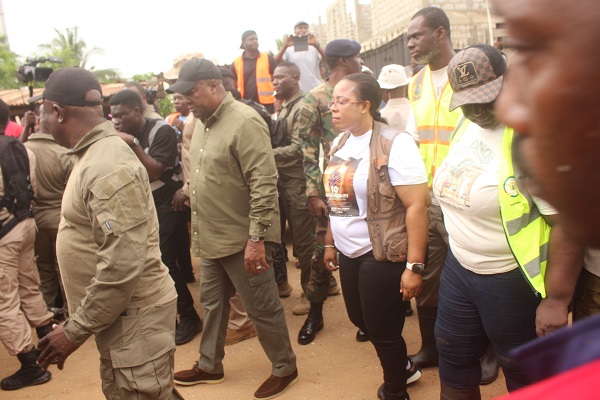
The Greater Accra Regional Minister, Mrs Linda Obenewaa Akweley Ocloo, expressed satisfaction with the outcome of the two-day nationwide cleanup exercise, describing it as a major step towards tackling flooding and poor sanitation, while warning that authorities would clamp down on persons who continued to pollute the environment and obstruct waterways.
The Minister made the remarks after touring some of the region’s worst flood-affected communities, including Nungua, Alajo, Tse Addo and Apenkwa on Friday, and Alajo, Madina and Abelemkpe on Saturday, to assess the progress of the nationwide sanitation campaign.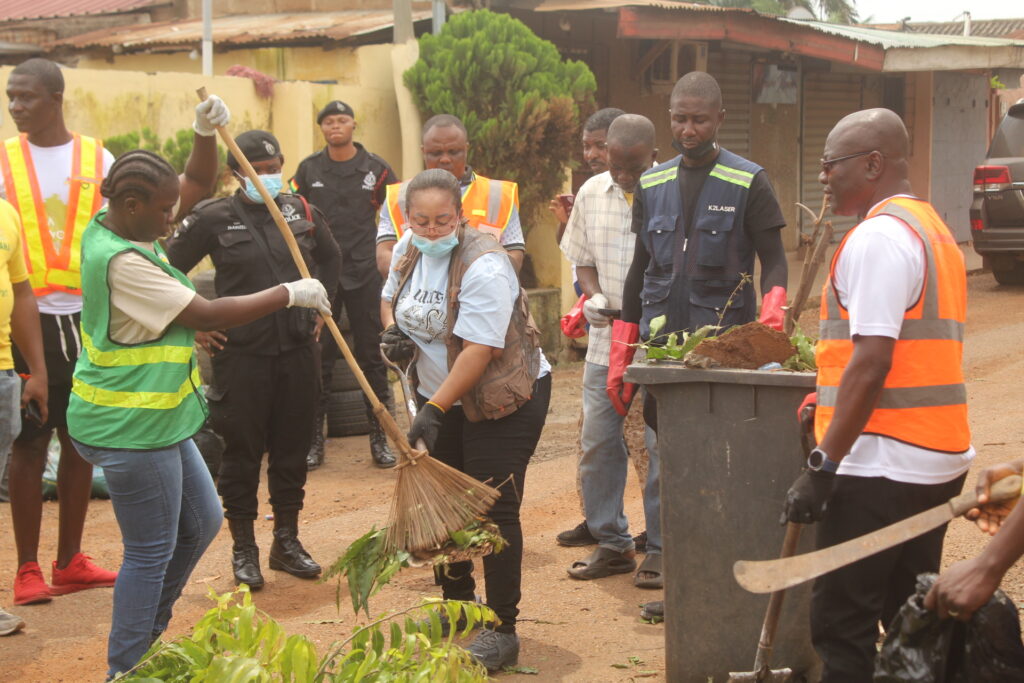
She said the exercise had significantly improved the condition of drains and waterways in the affected communities and demonstrated what could be achieved when government institutions and residents worked together towards a common goal.
Mrs Ocloo commended the Ghana Armed Forces, the Ghana Police Service, the Ghana National Fire Service, the Ghana Immigration Service, the National Cleanup Assistance Trust, Metropolitan, Municipal and District Assemblies (MMDAs), sanitation workers, volunteers and residents for their commitment and support throughout the exercise.
She said their collective efforts had contributed immensely to the successful removal of refuse, silt and other materials that had blocked drains and increased the risk of flooding in many parts of the region.
The Minister noted that the quantity of waste removed from drains and waterways had exceeded the expectations of the organisers, describing the situation as a reminder of the need for residents to adopt responsible waste disposal practices.
Mrs Ocloo stressed that environmental sanitation remained a shared responsibility and should not be left to government or the assemblies alone.
She urged residents to make cleanliness part of their daily lives by properly disposing of refuse, keeping drains free from waste and discouraging practices that degraded the environment.
The Minister cautioned that the Greater Accra Regional Coordinating Council, in collaboration with the MMDAs and the security agencies, would intensify the enforcement of sanitation regulations against individuals and businesses that dumped refuse into drains, built on waterways or engaged in activities that contributed to flooding.
She said authorities would also undertake targeted demolition exercises to remove structures that obstructed the natural flow of water where necessary, adding that such measures were essential to protecting lives and property.
Mrs Ocloo further warned traders and market operators against ignoring directives issued during sanitation exercises, stating that those who defied official instructions in future risked having their goods confiscated.
She disclosed that more than 300 additional trucks had been deployed during the exercise to transport the huge volumes of waste generated after the initial fleet proved inadequate for the scale of work across the region.
The Minister said relief items had already been distributed to all 27 flood-affected districts through the National Disaster Management Organisation (NADMO) and the Ministry of Local Government, Chieftaincy and Religious Affairs, while contingency funds approved by the President had supported ongoing desilting, dredging and other emergency interventions.
Mrs Ocloo assured residents that the Greater Accra Regional Coordinating Council would sustain the clean up campaign through continuous monitoring, public education and stricter enforcement of sanitation laws.
She appealed to residents to maintain the momentum created by the exercise, saying a cleaner, safer and flood-resilient Greater Accra could only be achieved if every citizen accepted responsibility for protecting the environment.
By Enoch Ntiamoah Siaw
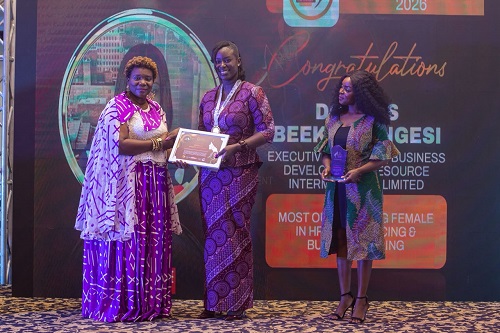
The Executive Director of Human Resource Intermediaries Ghana Limited, Dr Dorcas Beeko Mangesi, has been honoured as the Most Outstanding Female in HR Outsourcing and Business Easing at the 12th Feminine Ghana Achievement Awards 2026.
Receiving the award, Dr Mangesi expressed excitement over the recognition, describing it as an acknowledgement of her contributions to the human resource outsourcing industry.
She explained that Human Resource Intermediaries Ghana Limited is an HR outsourcing firm that manages workers on behalf of companies and also provides recruitment and training services.
According to her, the award reflects the impact of her work over the years and motivates her to do even more.
“I have contributed a lot to the industry and for me to be recognised at this level shows that the work I have done over the years has been recognised,” she said.
Dr Mangesi noted that this was her first time receiving such an award and also her first participation in the Feminine Ghana Achievement Awards.
She described the recognition as unique because it serves as a personal brand and highlights the achievements of women in leadership positions.
According to her, the award is also a symbol of women empowerment and should inspire young women to pursue their careers with determination.
She urged young girls to take their education seriously, remain focused and work hard despite the challenges women often face in the corporate world.
She observed that although men continue to dominate many areas of business, women who remain committed and give their best can rise through the ranks and earn recognition.
“I am an example. I am speaking from experience,” she said.
Dr Mangesi expressed appreciation to the organisers of the awards for recognising her work in the HR outsourcing industry.
She thanked her team members for their support, saying their efforts contributed to her success.
In addition, she expressed gratitude to her husband for his encouragement throughout her career and thanked everyone who has supported her journey.
By: Jacob Aggrey