News
Zipline hits over 500,000 medical delivery milestone

- /home/u249204778/domains/spectator.com.gh/public_html/wp-content/plugins/mvp-social-buttons/mvp-social-buttons.php on line 27
https://spectator.com.gh/wp-content/uploads/2024/03/PHOTO-2024-03-25-08-58-16.jpg&description=Zipline hits over 500,000 medical delivery milestone', 'pinterestShare', 'width=750,height=350'); return false;" title="Pin This Post">
- Share
- Tweet /home/u249204778/domains/spectator.com.gh/public_html/wp-content/plugins/mvp-social-buttons/mvp-social-buttons.php on line 72
https://spectator.com.gh/wp-content/uploads/2024/03/PHOTO-2024-03-25-08-58-16.jpg&description=Zipline hits over 500,000 medical delivery milestone', 'pinterestShare', 'width=750,height=350'); return false;" title="Pin This Post">
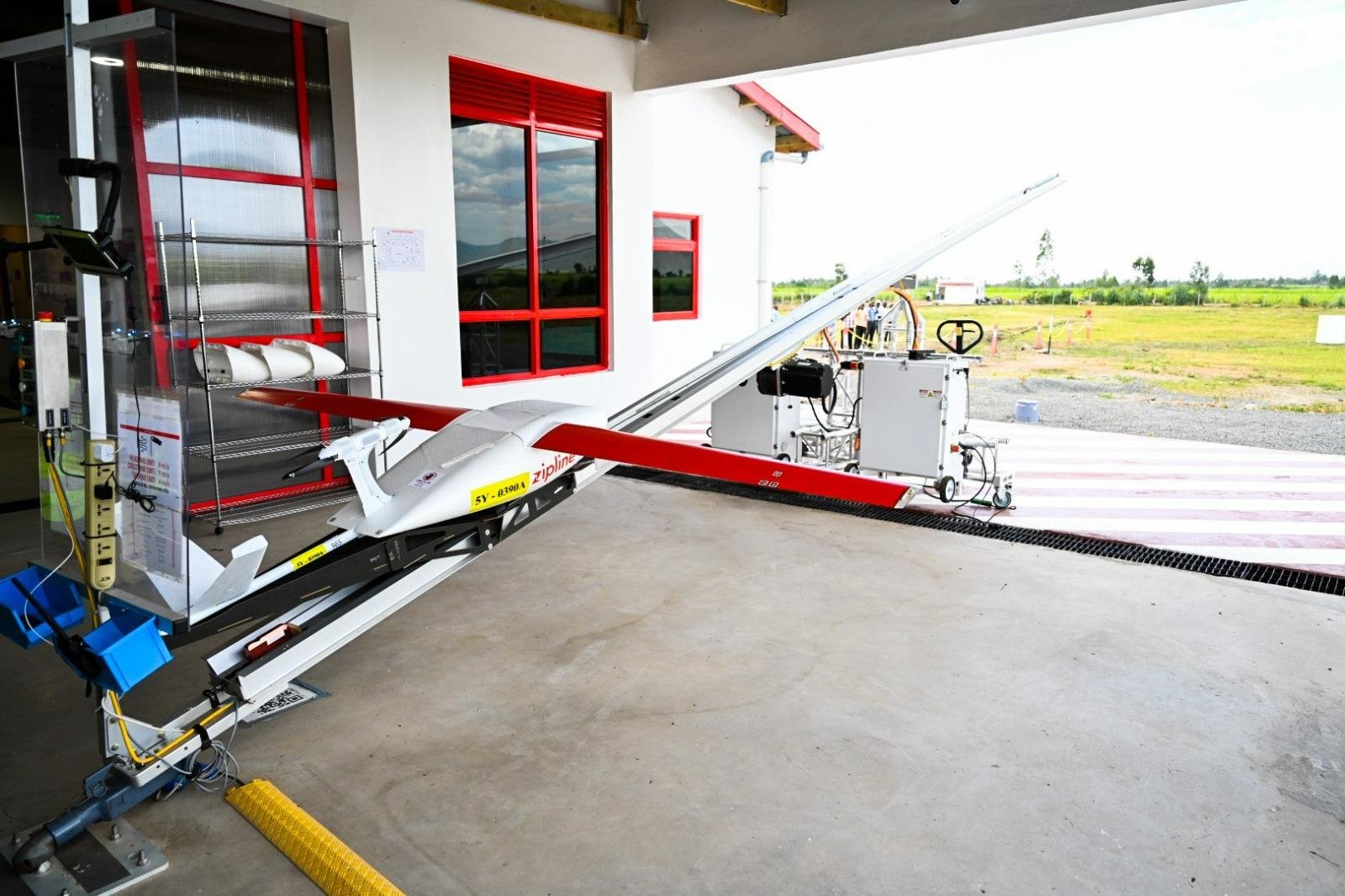
In a remarkable achievement for healthcare logistics, Zipline, the autonomous drone delivery service, has surpassed the half-million mark in delivering life-saving supplies to over 2,500 health facilities in Ghana.
The latest operational update provided by Zipline, reveals a significant milestone in the partnership with the Government of Ghana which has seen many health facilities gain access to prompt supplies of emergency medical products.
The deliveries, including blood products and anti-snake venom, have been instrumental in saving lives and improving health outcomes in communities across the country.
This underscores the critical role played by
Zipline’s drone delivery system in responding swiftly to emergencies and ensuring timely access to life-saving treatments, especially in remote and underserved areas across Ghana.
Samuel Akuffo, a Fulfillment Lead in Africa for Zipline, emphasised the importance of the partnership with the Government of Ghana in achieving this milestone.
“Our partnership has been instrumental in enabling us to fulfil our mission of leveraging technology to improve healthcare outcomes and save lives,” he remarked.
“Every life preserved through our emergency deliveries represents a testament to the power of innovation and collaboration in healthcare. Our goal is to continue innovating and collaborating to address the healthcare challenges facing our nation. Together, we can build a healthier, more resilient Ghana for generations to come,” he added.
In addition to emergency response, Zipline’s contributions to Ghana’s healthcare system extend to vaccination efforts, disease control, and agricultural health. The company has delivered over 12.2 million vaccine doses, including 2.8 million COVID-19 vaccines, significantly bolstering the nation’s immunisation drive.
Moreover, the company’s on-demand drone delivery model has enabled a 21 percent increase in vaccination coverage, resulting in a 44 percent reduction in missed opportunities to vaccinate and potentially save 727 lives due to improved vaccination coverage.
The completion of six Zipline distribution centres strategically located across Ghana has further strengthened the company’s reach, serving 17 million Ghanaians across 13 regions with on-demand drone delivery.
These distribution centres located in Omenako, Ashanti Mampong, Vobsi, Sefwi Wiawso, Anum, and Kete Krachi, each with a 110km delivery radius, ensure equitable access to essential medical supplies for communities nationwide.
Interventions during public health crises have also been crucial in mitigating the spread of diseases and safeguarding both human and animal populations.
In response to the deadly Anthrax outbreak in Northern Ghana in 2023, Zipline enabled the vaccination of 104,000 cattle, thereby protecting livelihoods and preserving the health of communities.
Additional support for Ghana’s agricultural health has also seen the completion of drone deliveries of 10.4 million doses of poultry vaccines for diseases such as Newcastle disease, Fowl pox, and Gumboro to poultry farmers across the country.
Since its launch, Zipline has completed over 519,000 drone delivery flights across Ghana, delivering a wide range of medical products, including 3,566,500 units of vaccines, 2,825,210 units of medical products, 14,807 units of blood products, and 18,289 units of animal health products.
According to Zipline they remain dedicated to their mission of expanding access to quality healthcare for every Ghanaian.
As the partnership between Zipline and the Government of Ghana continues to flourish, the future of healthcare delivery in the nation looks brighter than ever.



A nine-member board for the New Times Corporation (NTC), publishers of The Ghanaian Times and The Spectator newspapers was sworn into office on Thursday with a call to strengthen the governance of the Corporation.![Dr. Binka (seated second from right) with Dr Okpoti [right] the board and Management of NTC photos Okai Elizabeth.](https://spectator.com.gh/wp-content/uploads/2026/08/Dr.-Binka-seated-second-from-right-with-Dr-Okpoti-right-the-board-and-Management-of-NTC-photos-Okai-Elizabeth-1024x683.jpg)
The new NTC board is chaired by Dr Charity Binka and has Very Rev. Helena Amma Serwah Opoku-Sarkodie, Mr Tito Kojo Voegborlo Esq and Naana Aklerh Amenyah Kubi I as members. Read More
SKIP THE QUEUE, TAP THE NEWS
You can now read the Ghanaian Times and The Spectator newspapers from the comfort of your device via TimesNewsPlus.
Join our WhatsApp Channel: https://whatsapp.com/channel/0029VbBElzjInlqHhl1aTU27

Christians have been urged to demonstrate a living faith in Jesus Christ by allowing their confession of Him as Lord and Saviour to reflect in their daily lives.
According to the Kaneshie District Pastor of the Evangelical Presbyterian Church, Ghana (EPCG), Rev. Dzidzor Nathaniel Affram, a genuine Christian’s confession should go beyond words and be demonstrated through obedience to God, love for others and service to the Church.
He made the call at the 40th anniversary remembrance service for the late Wesley Kwasi Kwadzo at the Evangelical Presbyterian Church, Ghana, Maranatha Congregation at Awudome Avenui in the Volta Region.
Speaking on the theme, “The Church Built on a Living Confession,” Rev. Affram said life would continually present challenges capable of testing Christians’ faith, making it necessary for believers to hold firmly to their confession that Jesus Christ is Lord.
He explained that accepting Jesus Christ as Lord and Saviour required Christians to live according to His teachings, stressing that their faith must be evident in their conduct.
“A living confession listens to God and not man,” he said, urging Christians to remain obedient to God even when faced with difficulties and pressures.
Rev. Affram further encouraged the congregation to care for vulnerable people and demonstrate concern for others, adding that such acts were practical expressions of Christian faith.
He also urged Christians to identify and use their God-given gifts to build the Church.
He said every member of the Church had a role to play and cautioned Christians against looking down on others because of their status or abilities.
The remembrance service brought together family members, friends, members of the congregation and sympathisers to commemorate the 40th anniversary of the late Wesley Kwasi Kwadzo.
By Lizzy Okai