Features
Where is that vital respect for the elderly gone?

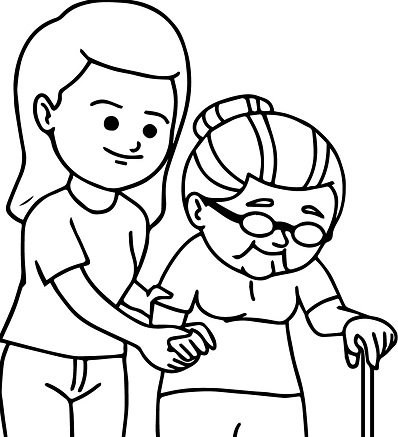
The Holy Bible says in Ephesians 6: 1-3 that, “Children, obey your parents in the Lord for this is right. Honour your father and mother that it may go well with you and that you may live long in the land”. Then 1 Peter 2:7, it says, “Honour all men, love the brotherhood, fear God, honour the King”.
This shows that the Holy Scriptures acknowledge that respect for one another, especially the elderly is so crucial and important in all schemes of affairs on this earth.
RESPECT AND WHAT IT MEANS
Respect in clear terms means that you accept somebody or persons for who they are even when they are different from you or you don’t agree with them. Receiving respect from others is important because it helps us to feel safe and to express ourselves well. Respect in relationship, therefore, builds feelings of trust, safety and well-being.
Though the definition of respect may vary, it usually centres on character, experience and ethics. Respect often starts from an early age and continues to develop over time. Growing up, our parents usually taught us to show respect to people and things from different backgrounds. We were taught to respect authority, such as teachers, the security apparatus and more importantly our elders and senior citizens. Many of us were also taught to show respect to our dear country or the national flag which is the identity of the nation. Sometimes we respect a position not necessarily the person who occupies that position which is not healthy and the best option.
WHY IS RESPECT IMPORTANT?
Someone may ask why is respect important? The answer is very simple and straightforward. It is an essential qualification for a successful career and is sought after your progress through various stages of leadership and responsibility. Simply put, it is something that you want to earn and something you want to bestow. Wherever you are on your career path, it is never too late to focus on recognising those who deserve respect and for you to broaden your efforts to earn the respect of business associates.
It is important to note that these days, respect for one another, especially respecting the elderly by the youth has become a major problem in this beautiful country of ours called Ghana. The youth of today, see nothing wrong in disobeying and showing respect to the elderly in the society. They continue to ignore pieces of advice from the older generation and often pour venom on them at the least opportunity without any justifiable reason. Many young people are hesitant to show respect to adults if they have been disrespected by other adults.
TODAY’S YOUTH BEING DISRESPECTFUL
One may ask why today’s youth are so disrespectful? The answer is simply because of lack of manners. Whereas previous generations misbehaved as a rebellion against authorities, some of today’s youth are so caught up in their own self belief that no authorities exist in their minds.
Experts feel that the times have changed and the entire society has undergone a vast transformation. The youth of today are certainly not thoughtless or insensitive, but it is just that competition has increased so much that possibly these youngsters have little time and patience. They prefer faster pace of maintaining relation which is via internet or Facebook. Besides, much also depends on the upbringing and values inculcated in them by their parents. Lots depend on the upbringing by parents as they failed to impact good manners which is an asset in personal and professional lives. A well- mannered person commands more respect in society.
PARENTS SHIRKING THEIR RESPONSIBILITIES
It is a fact that most parents of today are a contributory factor to the indiscipline and disrespect to the elderly by their children. They are, indeed, doing a great disservice and leading them astray because these parents for reasons best known to themselves, don’t show interest in their upbringing. Their children dress anyhow, thus exposing their bodies and when the elders try to correct them, then the insults emanate.
The electronic devices such as the internet, mobile phones, with their resultant Facebook (now Meta), Instagram, WhatsApp, among others, have also aggravated the situation with all kinds of dirty and pornographic materials and negative foreign cultures, from which our youth try to copy blindly and you dare not talk of this bad and negative behaviours. The internet and the social media have become the platform for the youth to insult people in high authority by posting all kinds of dirty, obnoxious and unprintable materials castigating people with unfounded allegations.
YOUTH NOT INTERESTED IN ELDERLY ADVICE
The youth of today feel they are on top of issues and, therefore, need no guidance nor advice from anyone on how to manage their affairs. They don’t want to take any advice from the elderly as they consider them people who have outlived their usefulness and are bereft of ideas. They fail to realise that the older generation is a repository of wisdom that they can take advantage of and tap for their own good.
Parents have a major responsibility and task of ensuring that their children are well trained and cultured to respect older people. On regular basis they have to talk to their children to respect the elderly and also to tell them that their behaviour matters a lot to them since they don’t want any disappointment from them whatsoever. They have to explain to their children that they need to be polite to people they know as well as strangers. It is important for parents to make sure that their children know that there are no exceptions to being polite and courteous to elders.
ESSENCE OF RESPECTING THE ELDERLY
Showing respect to others is reciprocal. It simply means that you can get the same amount of respect as you give out. Showing appreciation of kindness is impossible without reverence. The fact is you cannot appreciate someone or something you do not hold in high esteem. You cannot really appreciate God if you do not respect Him. Being respectful shows you are grateful. When respect is lost, trust is lost. The bridge to gaining the trust of others is built by respect. Trust is, therefore, a valuable commodity.
The fact is that people you respect, will not only respect you back, but they will love you also. In reality your respect for others will be the foundation of their love for you. Respect is one of the things that make you teach better people because people will like to hear from you. When you show respect to others, people will look up to you to teach them about things. Finally, not only will your social life improve when you respect others. Your life in general, will become better as a result of respecting others.
Showing respect to others irrespective of their background is so crucial and vital and we need to cultivate this habit to forge ahead. Parents must also show much interest in their children and ensure that they get the needed training that will promote mutual respect for one another, more importantly for the elderly in the society.
Contact email/ WhatsApp of author:
0277753946/0248933366
By Charles Neequaye


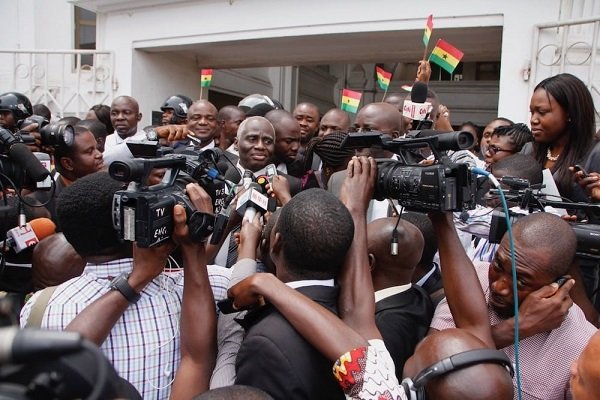
THE journalist is a hunter. He goes after human rats and grasscutters personified, matters about whom he can salt and spice and present as news. The fatter and juicier the catch, the better, because sensation is essentially our cup of tea.

Our job is to sell news and sell it in grand style.
Because the journalist is a hunter and is created with a special kind of nose for sniffing out news, he is usually not welcome in many places. He is seen as someone who has been born to make people uncomfortable.
The problem is that some people don’t want things written about them even if it is promotional and favourable. When it entails publishing their pictures alongside the story, they are doubly scared.
“Please, don’t use my picture. People will think I’ve got money and come for loan,” someone told me.
Anyhow, journalists are seen as intruders, undesirables, born with plenty of okro in the mouth; maybe some also in the nose. Some of my friends are no longer too close because they fear I’d give them full coverage in the Sikaman Palava column. Ha ha ha! What a funny world!
Well, people like my Uncle, Sir Kofi Jogolo, my former classmate and born-mathematician, Kwame Korkorti, and ex-football star cum human-salamander Kofi Kokotako don’t mind featuring in the hilarious inches of this column. Kofi Owuo alias Death By Poverty is one personality who has to be mentioned in this palaver.
These are people who are going to live long, primarily because they see the world as one big ball of fun. When Kwame Korkorti was told that his dear mother was dead at home, he smiled and asked the bearer of the message whether his mother had cooked the afternoon meal before claiming she was dead. Until her death, Korkorti ate his lunch at his mother’s end.
When my Uncle Kofi Jogolo was picked and lost 1,500 dollars and a good amount of Sikaman currency, he didn’t lament the loss. Instead he was amused. In fact, he was almost glad about it, because he grinned from ear to ear, stroked his delicate moustache and congratulated the thief, adding that “He is smarter than I am.” Yeah, Jogolo is the man who employs a Swedish barber to trim his moustache.
And when Kofi Kokotako was unemployed and was nearly hit by an articulated truck, he called the driver a fool. “The idiot should have killed me,” he said to me. “Didn’t he know I was unemployed and suffering?”
Today, Kokotako is employed as a Reverend and is not doing badly at all. Thanks to the regular silver collection.
And what about Kofi Owuo, the celebrated poor man. His wife left him not because he was poor, but because he swore in front of her that he would never prosper.
The following dawn the wife packed bag and baggage and went back to her parents and told them all about her husband’s alliance with poverty. Her parents were bewildered and called the alliance unholy. They had no option than to send back Owuo’s drinks to end the marriage.
Kofi Owuo alias Death By Poverty did not contest the issue. He was more engrossed thinking about how to become poorer than to contest what he called a frivolous matter. The wife could go to hell, he said. These are people longevity smiles upon. Nothing worries them.
Getting back to talking about journalists. I’d say that anywhere there is journalism, the issue of press freedom is not too far away. Is the press free? That’s one question foreigners want answer to when they are on visit.
Well, journalists celebrate a yearly WORLD PRESS FREEDOM DAY to drum home the idea of press freedom as a very important thing in the practice of journalism.
This year’s was celebrated almost a fortnight ago but people didn’t see much of us because we are normally not good celebrants. We should have mounted a float to roam the entire capital, dancing asaboni to brass band music just like PTC did recently.
Although journalists are known to be very good dancers because they walk very much, on that day, they were all busy writing. It was the Minister of Information, Mr Kofi Totobi Quakyi who saved the day by addressing a forum organised to mark the day.
He is a man I’ve always admired since his radical university days. He spoke much on press freedom, cautioning the press not to abuse the freedom granted by the Fourth Republican constitution, but to use it for the progress of society.
Well, press freedom has been defined by many journalists as the freedom to ‘write nonsense’. This definition is not quite accurate. I asked one staff reporter to define press freedom. It took him fifteen minutes to put up something.
“Press freedom is the freedom that is enjoyed by the press that enables journalists to publish or broadcast any kind of material so long as it is absolutely true, is not libelous and slanderous, and is not against the national interest.”
I gave him eight out of 10, a straight A. I guess every journalist is old enough to know that certain things he or she writes is for or against the national interest. We certainly must guard against writing against the national interest; that is very important.
There is also the question of criticising government. The government can be criticized, so long as the criticisms are genuine and the President and his ministers are not insulted and called names. Let us criticize, but let us do it decently so that the journalistic profession can be revered, and its nobility acknowledged. We are not war mongers, are we?
One area in which journalists are not spoken well of is the complaint that they misquote people. Journalists sometimes misquote people, but in four out of five complaints it turns out that nobody is misquoted after all.
When we interview people they say things unreservedly and we publish unreservedly. When the publication is out and their friends or superiors read it and accuse them of having said too much to the press, then they start claiming they were misquoted.
We have encountered these ‘misquotation palaver’ every now and then and reporters are usually accused of this transgression. However, when they bring out their note-books or recorders, it is realised that they wrote nothing out of the way. “Book no lie”.
My advice to people who deal with the press is that if they do not want anything written, they shouldn’t say it. What they want to say is OFF-RECORD, then of course, there is no reason to say it. When you say it, you’re taking a risk. In that instance, you can’t also claim to have been misquoted or words put into your mouth.
And it isn’t every journalist who would be circumspect in matters that are supposed to be off-record, because journalists often want to be as sensational as possible to make their stories saleable. So say just what you want to see published and you won’t later regret it and claim you were misquoted.
Well, I’m not holding brief for journalists, because a few of us are notorious for colouring our reports sometimes sand-papering the words so much that they look very bright in front of readers.
As I once said, when the police tells one such notorious pressman that the thief stole a brown goat, the pressman would want to know whether the goat was bearded. Of course, the police would say ‘Yes’.
However, in the press report, it appears, “A gang of notorious goat-thieves were apprehended in the early hours of yesterday. In the car in which they were riding was a brownish-red goat having a long beard. Upon further examination, it was realised that the goat also had a greyish moustache.”
When the story appears, the police are naturally disturbed. A single thief turns out to be a gang of thieves. The goat also becomes a chameleon and changes colour to brownish-red. And a moustacheless goat overnight wears a greyish moustache whether you like it or not. Luckily the journalist does not add that the moustache was trimmed by a Swedish barber.
Yes, we have a few of such mischief-creating, chronically notorious journalists. But they are one in a hundred. In any case, we make the world. And we shall always do our best to make it a happy place to live in.
This article was first publish on Saturday, May, 20, 1995
When I hear of people who are of the opinion that they cannot make it in life unless they travel abroad, l become sad.
Whenever I see on TV, news of people, that is migrants who have drowned in the Mediterranean Sea, while attempting to cross to Europe, l become filled with sadness and then anger.
The underlying factor is desperation born out of loss of hope, in life. When an individual tends to believe that his only hope of making it in life is to travel abroad, the risk of dying at sea, does not deter him or her.
The role of some pastors on shaping the mindset of people, especially the youth, leaves much to be desired. You hear them declaring on various media platforms how they can pray for you to get a visa to travel abroad, instead of encouraging them to find something to do to improve their lives as the Bible teaches that God will bless the work of their hands.
The GREATER WORKS CONFERENCE is geared towards renewing the minds of people with a specific focus on people of African descent to rid themselves of the negative perception of lack of capacity to excel in life.
Pastor Mensa Otabil believes that every human being, no matter the skin colour, was created in the exact image of God and therefore has the capacity to do exploits.
The whiteman was not created in the image of God while the Blackman was created in the image of something other than God. The Black person therefore can achieve whatever the whiteman can achieve.
The development in terms of industrialisation that is lacking which has generated unemployment for the youth, is due to lack of effective leadership. The lack of moral integrity in society, is what is causing the lack of job opportunities, which is as a result of corrupt acts which drive away private investment.
A culture of inferiority complex exists which needs to be dealt with, so the African can develop the self worth necessary for personal development which can then result in capacity deployment to avhieve personal goals.
Success in life begins with the individual’s recognition that he or she is capable of achieving the dreams he or she has conceived in his or her mind. The Bible teaches that the fear of the Lord is the beginning of wisdom, and the knowledge of the holy is understanding according to Proverbs 9:10.
Christianity was the driving force behind the development of Europe because no society can sustain development without high moral values. GREATER WORKS therefore is a deliberate project to shape the minds of people, especially the youth, who will become the leaders of our future, to prioritise morality in their daily lives.
This is the only way to see a massive transformation in every aspect of our lives as Ghanaians and Africans in Ghana and the rest of the continent.
Since the inception of the GREATOR WORKS CONFERENCE, it has made a lot of impact in the lives of many people from the youth up to the senior citizens level. I recall the testimony of a church member who was motivated and pursued higher education and became one of the youngest Chartered Accountants in this country. Year after year, the impact of the conference has been enormous and lives in Ghana and across the continent, are being transformed.
Black people have started regaining their self confidence and the youth have started getting into areas that previously were considered out of bounds. At a personal level, certain ideas that some years ago, l would have not dreamt about suddenly has become realistic dreams.
The Christian lifestyle has impacted on my children and those close to me. Mindset change starts with one individual, then another and then gradually it spreads like a viral infection until a critical mass is attained and them a massive impact. There is hope for the future.
By Laud Kissi-Mensah