Features
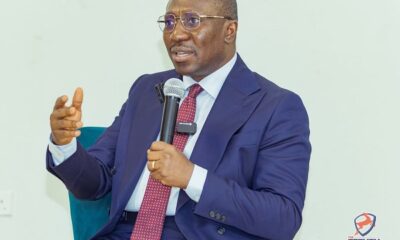
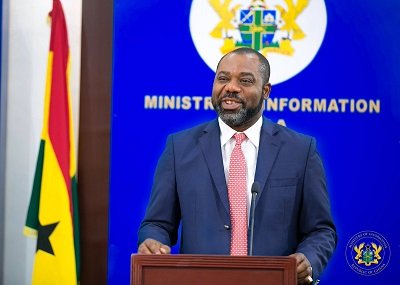
The success story of Dr Opoku Prempeh

- /home/u249204778/domains/spectator.com.gh/public_html/wp-content/plugins/mvp-social-buttons/mvp-social-buttons.php on line 27
https://spectator.com.gh/wp-content/uploads/2022/02/Dr-Mattew-Opoku-Prempeh.jpg&description=The success story of Dr Opoku Prempeh', 'pinterestShare', 'width=750,height=350'); return false;" title="Pin This Post">
- Share
- Tweet /home/u249204778/domains/spectator.com.gh/public_html/wp-content/plugins/mvp-social-buttons/mvp-social-buttons.php on line 72
https://spectator.com.gh/wp-content/uploads/2022/02/Dr-Mattew-Opoku-Prempeh.jpg&description=The success story of Dr Opoku Prempeh', 'pinterestShare', 'width=750,height=350'); return false;" title="Pin This Post">
A positive mindset, it is said, brings positive results and also a dream does not become a reality through magic: it takes sweat, determination and hardwork.
There is no gainsaying the fact that there has been massive improvement in the energy sector through the instrumentality of Dr. Matthew Opoku Prempeh, the current Minister of Energy.
He is looking for nothing short of a sustainable electricity supply in the country.
To this end, he has vowed not to allow the myriad of challenges in the energy sector to divert him from his ultimate goal; ie uninterrupted power supply to the good people of Ghana.
President Nana Akufo-Addo, after winning the 2020 presidential election for the second time decided to make Dr. Prempeh, a former Minister of Education who is also the Member of Parliament for Manhyia South in the Ashanti Region, the Minister of Energy, and that decision has turned out to be very good, first for the current administration and second for the nation.
The medical doctor, who is allergic to failure, has placed the energy sector on a pedestal such that the sector will no doubt witness the needed growth to promote Ghana’s development.
The minister together with the heads of the various agencies under the energy sector, set some key objectives for the 2021-to-2024 period and commenced working on them one after the other.
These objectives include stable, realistic and universally accessible electricity, availability of fuel and realistic pricing of petroleum products, increase Crude Oil reserves to improve revenue, local content and local participation in the energy sector and Ghana’s Energy Transition.
With the unambiguous game plan, the minister set to work and made additions to Ghana’s total installed capacity of electricity. In 2020, it was 5,018 Megawatts but moved to 5,231 Megawatts in 2021.
New additions of Bridge Power generating 150 Megawatts, Bui Solar generating 50 Megawatts and Volta River Authority (VRA) Kaleo Solar generating 13 Megawatts were made under the watch of Dr. Prempeh.
To increase the availability of electricity generation and achieve price competiveness, the Ministry of Energy renegotiated all Power Purchasing Agreements (PPAs) and shifted from Capacity Based PPA to energy purchase on procurement of electricity.
For power to be transmitted very well, power quality was highly improved in 2021 by introducing more Bulk Supply Points (BSPs), such as Kasoa in the Central Region and Pokuase in the Greater Accra Region to improve the quality of power supply.
Improving technical losses was also a major pre-occupation of the Minister of Energy, making him to make swift moves to upgrade power lines which became the ‘Dum Sie Sie’ agenda to reduce losses and increase transmission capacity.
Power stability in the middle belt of Ghana was so crucial to Dr. Prempeh that the Ameri Plant has been relocated to Kumasi the Ashanti Regional Capital, to ensure that there is grid stability for the people in those areas.
Losses associated with power distribution are being dealt with and, in 2021, the minister designed various strategies to deal with the ugly situation.
To improve revenue collection from electricity users beyond the 50 per cent average for the two distribution companies, Electricity Company of Ghana (ECG) and Northern Electricity Distribution Company (NEDCo), the Ministry of Energy introduced private sector participation to address commercial losses in the power distribution sector.
The ministry and for that matter government also committed through the Millennium Development Authority (MiDA) to improve transmission and distribution of electricity.
In addition to that, there were Boundaries Metering for nine ECG operational regions to help reduce commercial losses.
To increase reserves under petroleum upstream, Dr. Prempeh supervised government’s full payment to Offshore Cape Three Points (OCTP) partners for the cost of the Takoradi-Tema interconnection project and with that Ghana will benefit from savings on Gas Price of at least $70million per annum.
Under the petroleum upstream activities, the Ministry of Energy in 2021 supervised preparatory studies towards drilling of a well in the Voltarian Basin, unitisation of Afena and Sankofa fields to reduce cost of development and improve, in addition to Ghana National Petroleum Corporation (GNPC), acquisition of seven per cent each of Anadarko’s stake in Jubilee and TEN Field.
In addition to that Dr. Prempeh was deep in Eni’s discovery of Oil in Eban-1X Well, as well as the invitation to tender for new blocks to increase Oil and Gas reserves, negotiations on acquisition of AKER Field and Tullow Oil’s drill of seven wells.
2021 saw lots of activities in the downstream petroleum development, with the Cylinder Recirculation Model programme to improve safety and increase access to clean gas being implemented, as well as National Petroleum Authority (NPA)’s aggressive strategy to reduce fuel smuggling and dumping.
Under the watch of Dr. Prempeh, there are well-orchestrated plans to develop and improve gas infrastructure in the country and to also increase the availability of petroleum products.
On top of Dr. Prempeh’s agenda was NPA’s regulation of natural gas condensate fuel, integration of Natural Gas activities across the value chain to boost efficiency, increase the utilisation of gas in the country and increase investment in the downstream.
There is a Gas Commercialisation game plan under which the Tema LNG project, a strategic project to diversify and boost security of gas supply to the nation, is expected to be commissioned in the first quarter of 2022. The terminal will have the capacity to receive, regassify and deliver up to 400 mmscfd. Negotiations have commenced with N-Gas, the supplier of gas in the West African Gas Pipeline (WAGP), as part of government’s effort to renegotiate existing gas agreements to lessen the Take or Pay burden.
To rationalise electricity tariff, the Ministry of Energy is collaborating with the Public Utilities Regulatory (PURC) to rationalise electricity tariffs to achieve equity for all consumer categories, in addition to shifting from capacity based PPA to energy purchase on procurement of electricity.
The minister’s commitment to local participation in the petroleum industry is clear, as he is supervising the Energy Commission in the establishment of Legislative Instruments (LI) to increase participation in the energy industry. LI 1835 will be for the power sector, while LI 2204 would cater for petroleum upstream.
Renewable and Nuclear Energy Development is dear to the heart of Dr. Prempeh such that, in 2021, there were various steps to strengthen that area with data collection and assessment to select a preferred site for the development of a nuclear power plant with evaluation of the expression of interest is ongoing to select a vendor country for the development of a nuclear power plant.
The International Atomic Energy Agency (IAEA) is committed to Ghana’s nuclear power programme and has promised technical support.
In 2021, the National Energy Transition Committee was commissioned to draft a transition plan for Ghana by the end of the first quarter of this year.
The construction of three mini-grids at the Azizakpe, Aflive and Alorkpem islands in the Ada East District of the Greater Accra Region has commenced as part of efforts to electrify 50 island communities and hard-to-reach areas with Renewable Energy technologies, while the Scaling Up Renewable Energy Programme (SREP) is being extended to include prioritised projects, such as solar streetlights and off-grid solar power projects for isolated communities.
There is no gainsaying the fact that Dr. Prempeh took off smoothly in 2021 and with various strategies put in place, Ghana’s energy sector will definitely blossom under his watch.


There is a scripture that is found in Matthew 6:22 which says that the lamp of the body is the eye and therefore the eye must see well to enable the body to get to its destination.
What most people do not know is that behind the scenes, there is a strong interaction between the eyes and the brain before a picture becomes clear. The state of mind therefore is crucial to the eye seeing clearly to enable the body to process accurately the information the eyes are feeding it for proper identification of what the eyes see.
This is similar to how a person behaves i.e. what informs the decisions that forms in the mind that results in the actions that a person performs. The actions of a person does not therefore just happen but is as a result of things that went on in the mind, which in most cases resulted from information passed on to it by the eyes either consciously or unconsciously.
There are so many issues that affect our society which makes one wonder, whether the people who displayed such acts were created by someone or something other than God.
How can a person see a beach created by God with beautiful beaches and fresh air blowing all around, decides to defecate at such places, and therefore desecrate the environment? lt is simply mind boggling?
When other people in other countries who dwell on the coast are using their beaches for tourist attraction purposes as a means of livelihood and also to promote environmental health, some people living around our beaches, have turned them into rubbish dumping sites and toilets.
It is a very sad situation and the earlier we did something about it the better. It is a national emergency that must engage the attention, first of the government and then the citizenry, where religious bodies and NGOs must play a critical role.
The things we focus on in this country, needs to be addressed. Our minds which processes the info the eyes send to the brain, must be disciplined. There are certain behaviours that a disciplined mind can ignore even when the eye has provided info to the brain. One of the things a disciplined mind does, is the avoidance of a second look, which is critical for every person who wants to avoid adultery or fornication.
Once a person is not blind, he will see things. The boobs, the ‘shankus’, the coca cola shapes, the light complexioned, the dark complexioned etc. the eyes will definitely see and report same to the brain. What the brain or the mind decides to do or instructs the eye to do is the issue.
It can decide to instruct the eye to take a second look and let the mind drool over it or say ignore it and that will be the end.
If the mind becomes trained to focus on environmental issues like clean environment, the eyes will automatically be reporting on insanitary conditions to the brain as and when it sees them. The mind will pay attention to such data and begin to process them and to identify solutions to deal with the reported insanitary conditions.
There is the need to encourage citizens to train the mind to focus on the right thing so that in tandem with the eyes, focus will be maintained. When the mind is so trained, it communicates with the eye to also focus on hood things that helps in both are spiritual life and our secular lives, for indeed the eyes are the lamp of the body. God bless.
THE relationship between New Times Corporation (NTC) and African Concrete Productions (ACP) is based entirely on matters of the stomach. Each depends on the other in a dietary symbiosis, reinforced by the close proximity of each other
At lunchtime, you’d see a particular set of Times workers marching regimentally to ACP to face the wall. You’d think they are soldiers. It has long been declared that the company manufactures the best kokonte in the Greater Accra Region. ACP is, therefore, a culinary haven for those NTC kokonte fans, both male and female.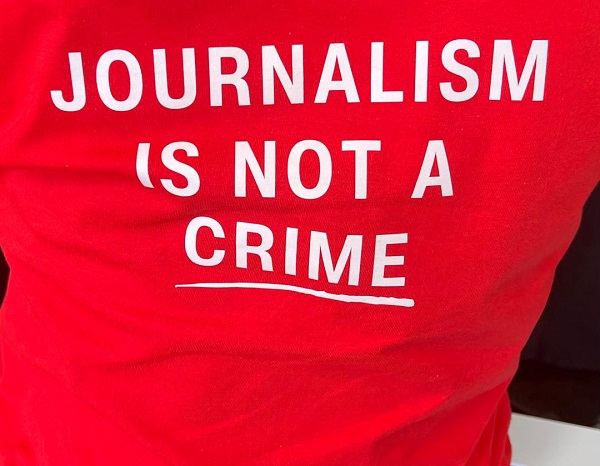
As the NTC kokonte warriors cross the border to ACP, you’d see some ACP banku fanatics dancing joyously to NTC. They are lucky folks because they do not have to obtain visa to enter into ‘Times’ to attack the balls of banku with precision and accuracy. They also claim that the lightsoup at ‘Times’ is arguably the best in West Africa.
So the relationship between the two entities was quite cordial and based practically on stomach palaver, until ACP workers staged an industrial revolution, whereupon the managing director, accountant and estate manager were allegedly stripped naked and locked up in a room. An insurgency had began in earnest.
An ACP worker came to ‘Times’, this time not to eat banku and okro. He had come to inform newsmen that juicy stuff awaited them at ACP. It could make a front page lead story.
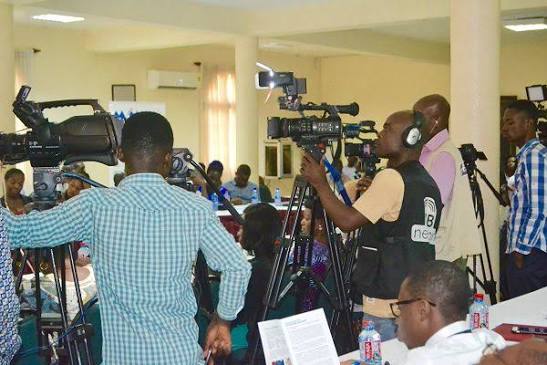
A camerawoman and a female reporter were accordingly dispatched to go and bring back news, juicy news as juicy as kokonte and groundnut soup.
I was driving to work when I espied the familiar camerawoman clicking away outside the ACP premises. I didn’t see any ‘Times’ reporter but angry workers who were on the verge of getting violent. I slowed down and the driver behind blew his horn at me like a lunatic. I drove on.
Later, I heard the reporter and camerawoman were harassed and brutalised. The report came,. “The camerawoman, Mrs Salome Adonu-Agbottah and reporter Mrs Doreen Allotey, in an attempt to retrieve the camera which the workers had seized from them were severely beaten. They were manhandled and almost pushed into a big gutter opposite the company’s premises.
BRUISES
“….The camerawoman had bruises on her body, her hand bag was destroyed and the money in it stolen. Mrs Allotey’s watch was also snatched and her feet stamped on.”
Luckily, it was not her nose that was trampled upon. She has a beautiful nose.
The bad news was received with extreme sorrow. If the victims had been men, it would not have seemed too bad. But to brutalise women is just unacceptable. The New Times Corporation has not stopped mourning the incident which has been condemned in many circles.
Some people keep asking me why Times sent females to cover a potentially violent demonstration. I tell them they might as well ask why CNN’s amazon, Christina Amanpour, is assigned to cover the carnage in Bosnia-Herzegovina and Rwanda. She is always on the frontline in jeans and jacket.
Journalism is a potentially hazardous profession, and once you accept to study and practise the trade, you might as well bone up to face any assignment as long as your superiors feel you are capable of handling it or you have demonstrated the capacity to handle it. Both males and females can be assigned anywhere, anytime just like policemen and women are assigned.
The only difference between cops and pressmen is that the latter are armed only with a pen and the former with a gun. The question is should newsmen also arm themselves so that in any event of an assault they would not be found wanting in self-defence? They can’t adequately defend themselves with a pen and a jotter. A pen cannot even disfigure an opponent’s upper lip.
Photo-journalists have particularly suffered violence. Spectator ace-cameraman Vincent Dzatse was severely assaulted by AMA men when he attempted to take pictures of their indiscretions.
Sports cameraman, P. K. Arthur has been beaten more than once at the sports stadium when riots errupted and he wanted to capture it on his lenses.
Some sports journalists have been banned from entering the Accra Sports Stadium by supporters because in their comments, they didn’t write “sense”. Some supporters once nearly lynched Christian Abbew, Spectator Sports Editor, near a courtroom. He was stoned like the biblical Stephen. He had gone to defend a contempt charge.
I think it is time journalists met and discussed how best to defend themselves in any event of an attack by individuals or mobs. In the pursuance of their duty, they must be free from harassment and assault.
Some journalists go to work and return home with a black-eye or a double fore-head. It is just not right. Something has to be done about it. I think journalists should be armed. But first we must be trained in the use of firearms so that our warning shot do not hit below the belt. What about training in Kung Fu?
This article was first published on Saturday, October 17, 1998.