Hot!
The application of smart solutions to agriculture is the Key to achieving Food Sufficiency – VP Bawumia

- /home/u249204778/domains/spectator.com.gh/public_html/wp-content/plugins/mvp-social-buttons/mvp-social-buttons.php on line 27
https://spectator.com.gh/wp-content/uploads/2023/12/Bawumia-Farmers-Day.jpg&description=The application of smart solutions to agriculture is the Key to achieving Food Sufficiency – VP Bawumia', 'pinterestShare', 'width=750,height=350'); return false;" title="Pin This Post">
- Share
- Tweet /home/u249204778/domains/spectator.com.gh/public_html/wp-content/plugins/mvp-social-buttons/mvp-social-buttons.php on line 72
https://spectator.com.gh/wp-content/uploads/2023/12/Bawumia-Farmers-Day.jpg&description=The application of smart solutions to agriculture is the Key to achieving Food Sufficiency – VP Bawumia', 'pinterestShare', 'width=750,height=350'); return false;" title="Pin This Post">
The targeted interventions and programmes initiated by the Government in the Agriculture sector since 2017 continue to yield significantly positive results and, with comprehensive reviews and upscaling, the objective of food security and resilience should be achieved shortly, Vice President Bawumia has stated.
The application of smart solutions to agriculture would, however, speed up this process, and Dr Bawumia has challenged all players in the agriculture value chain to embrace and speedily adopt smart technologies to boost food production.
Speaking at the 39th National Farmers’ Day held at Tarkwa in the Western Region on Friday, 1st December 2023, Vice President Bawumia said Ghana’s experience on the Agriculture front in the past six years demonstrates government’s unwavering commitment to transform the sector and place it on a sound footing for accelerated development, with demonstrable results.
“These efforts have yielded notable success through the flagship programme, Planting for Food and Jobs (PFJ), initiated in 2017. For example, from a baseline growth of 2.9% in 2016, the agricultural sector recorded an average growth rate of 6% from 2017 to 2022. This significant increase in growth rate enhanced food security, increased job opportunities across the agricultural value chain and supported emerging industries with raw materials among others.
“The programme resulted in significant increases in productivity of some staples. Yields for maize production increased from 1.8 metric tonnes per hectare in 2016 to 3.3 metric tonnes per hectare in 2022. That for rice increased from 2.9 metric tonnes to 4.5 metric tonnes per hectare during the same period,” he underscored.
PFJ 2.0
To reinforce these gains and further expand the reach of these interventions, Government in August this year launched Planting for Food and Jobs 2.0, with clear objectives.
“The PFJ 2.0 programme holds a lot of promise for the food and agricultural sector given the valuable lessons learnt from the past. It is a five-year strategic intervention that marks a major shift from the input subsidy programme to a smart input credit system. The programme is designed to deliver smart solutions to catalyze growth and transform the food and agricultural sector.
“We have set ourselves ambitious but achievable targets for every year of the five-year period of the programme. For example, we expect to increase our self-sufficiency of rice from the current level of 48% in 2022 to 72% by 2025 and 106% by 2028; and for poultry from 5% in 2022 to 22% by 2025 and 111% by 2028. We strongly believe that by design the PFJ 2.0 will create greater awareness about Ghana’s agriculture and attract the needed investment from both domestic and international investors.
Technology
Reiterating his call for the adoption of improved scientific methods, technology, digitalization, Big Data and the Internet of Things, Vice President Bawumia emphasized that farmers and fishers need to embrace and adopt new methods of food production.
“In the 21st century, technology abounds and can be accessed easily. There is therefore no excuse to continue with farm methods and practices that militate against the achievements of sustainable food security and resilient food systems. Some of these smart technologies adopted in our agricultural system include development and dissemination of improved climate smart crop varieties and animal breeds; design and application of efficient irrigation systems with solar systems; adoption of conservation agriculture; use of climate information services for improved weather forecasting; application of precision agriculture with use of drones; soil tests kits to inform appropriate use of soil nutrients; improved market information and use of digital platforms for trading; and improved storage systems and technologies to reduce postharvest losses and increase value addition.
“We will continue to scale up the adoption of these technologies and the introduction of new ones that become available,” he pledged.
Food Sufficiency
Giving an overview of the various interventions being implemented by his Ministry, the Minister for Food and Agriculture, Hon Brian Acheampong, was confident that Ghana would be less reliant on the rest of the world for her food security in the very near future.
“Planting for Food and Jobs 2.0 is a five year integrated and comprehensive programme designed to meet our food needs as a nation, and I am confident that in five years, which is 2028, Ghana will be food sufficient and resilient. Government will continue to do its part and provide the necessary resources for this success. For instance in 2024, Government is seeking to provide Ghs10 billion for the Agric sector,” he revealed.
Awards
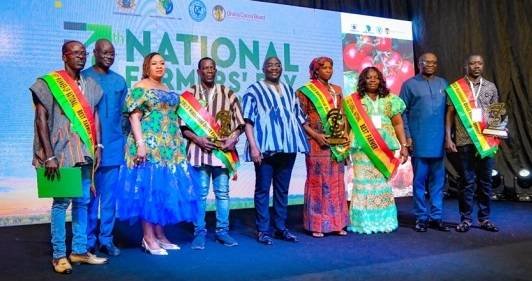
15 farmers and fishers were honoured at the National Farmers Day Awards, with Madam Charity Akortia from the Agona West District of the Central Region walking away with the Ghs 1 million as her prize after being adjudged, after a rigorous national exercise, as National Best Farmer for 2023. She takes over from Nana Yaw Sarpong Siriboe I, Akyempimhene of the Juaben Traditional Area, who was the 3rd youngest winner of the Award since its inception.

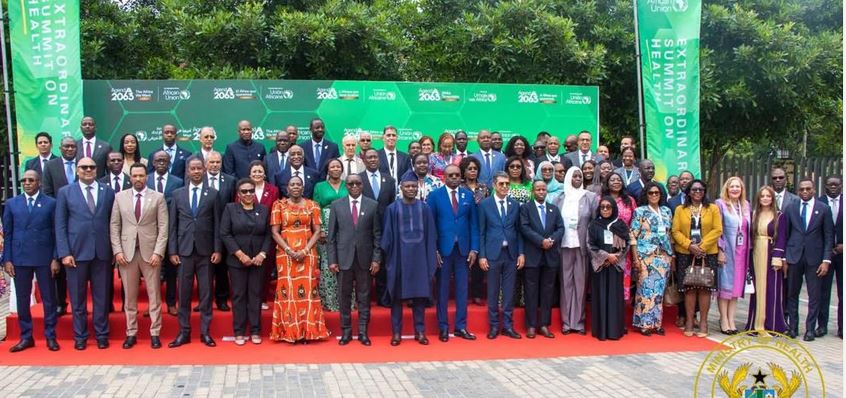
African leaders have been urged to strengthen political commitment and domestic investment to end preventable maternal deaths and AIDS by 2030.
The call comes as African health ministers and policymakers meet in Accra to deliberate on health financing, health security and universal health coverage across the continent.
Mr Edouard Bizimana, Burundi’s Minister of Foreign Affairs, Regional Integration and Development Cooperation, made the call on Tuesday at the opening of the African Union’s (AU) 25th Extraordinary Summit on Health in Accra.
He said Africa needed increased domestic investment to build resilient health systems as it continued to grapple with infectious diseases and the growing burden of non-communicable diseases (NCDs).
Mr Bizimana, who is also Chairperson of the AU Executive Council, said although Africa accounted for nearly 17 per cent of the world’s population, it bore 24 per cent of the global disease burden while having less than three per cent of the global health workforce and only one per cent of global health expenditure.
“Despite maternal mortality declining by nearly 40 per cent since 2000, Africa still accounts for about 70 per cent of maternal deaths globally, while almost two-thirds of people living with HIV reside on the continent,” he said.
Mr Bizimana said the growing burden of NCDs was placing additional pressure on already stretched health systems.
“These figures are not merely statistics. They represent painful human realities, preventable losses and unacceptable inequalities, they remind us that health is not an expense it is a strategic investment and a prerequisite for our sovereignty and development. “he said.
Mr Bizimana said recent global health emergencies had exposed Africa’s vulnerability and underscored the need to expand local production of medicines and vaccines, strengthen the health workforce and improve emergency preparedness.
“Our citizens expect resilient health systems where every mother can give birth safely, every child has access to essential healthcare and every African enjoys quality health services regardless of where they live,” he said.
The two-day summit, being held ahead of the 20th Extraordinary Session of the AU Assembly of Heads of State and Government, has brought together health ministers, policymakers and health stakeholders to identify solutions to Africa’s health financing and security challenges.
Madam Florence Samizi, Tanzania’s Deputy Health Minister, called for stronger collaboration among AU Member States to accelerate progress towards universal health coverage.
The summit is being held on the theme: “Advancing Justice, Equality and Universal Health Coverage: Ending AIDS, Tuberculosis, Improving Maternal Health, Addressing Endemic Non-Communicable and Neglected Tropical Diseases in Africa.”
The meeting is expected to adopt the Accra Declaration, a roadmap to strengthen Africa’s health systems and advance health sovereignty by 2030. -GNA


Senior Lecturer at the University of Ghana’s Department of Political Science, Dr. Joshua Jebuntie Zaato says the imprisonment of the Ashanti Regional Chairman of the New Patriotic Party (NPP), Bernard Antwi Boasiako, popularly known as Chairman Wontumi, will have little meaning unless it leads to a broader crackdown on illegal mining.
In a post on his Facebook page on the July 21, 2026, Dr. Zaato said the judgment should mark the beginning of efforts to completely eradicate galamsey and hold all those involved accountable, regardless of their political affiliation.
He said the country must work towards restoring polluted rivers, protecting forests and ensuring that people implicated in illegal mining activities are prosecuted.
According to him, those the President has publicly acknowledged to be involved in galamsey should face prosecution.
He called for the prosecution of district chief executives (DCEs), members of Parliament (MPs) and senior political party officials who have been accused of engaging in or supporting illegal mining.
Dr. Zaato further urged the government to take decisive action to end the destruction of the country’s forests caused by galamsey.
He maintained that the imprisonment of Chairman Wontumi would only have a lasting impact if it results in a comprehensive and impartial fight against illegal mining across the country.
By: Jacob Aggrey