News
Suhum Municipal Assembly distributes 50,000 free oil palm seedlings to 120 farmers

- /home/u249204778/domains/spectator.com.gh/public_html/wp-content/plugins/mvp-social-buttons/mvp-social-buttons.php on line 27
https://spectator.com.gh/wp-content/uploads/2020/06/Palm-Seedlings-2.jpg&description=Suhum Municipal Assembly distributes 50,000 free oil palm seedlings to 120 farmers', 'pinterestShare', 'width=750,height=350'); return false;" title="Pin This Post">
- Share
- Tweet /home/u249204778/domains/spectator.com.gh/public_html/wp-content/plugins/mvp-social-buttons/mvp-social-buttons.php on line 72
https://spectator.com.gh/wp-content/uploads/2020/06/Palm-Seedlings-2.jpg&description=Suhum Municipal Assembly distributes 50,000 free oil palm seedlings to 120 farmers', 'pinterestShare', 'width=750,height=350'); return false;" title="Pin This Post">
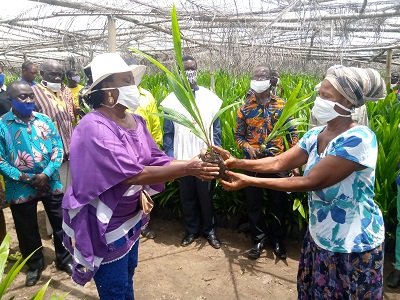
The Suhum Municipal Assembly has distributed a first batch of 50,000.00 free oil palm seedlings to 120 farmers within the municipality for cultivation.
The oil palm seedlings for the first phase exercise were nursed within six months at a cost of GH¢65, 000.00.
Each beneficiary received 416 seedlings to cover about seven acres of land.
In total, more than 8,000 farmers within the municipality were expected to benefit at the end of the phase two of the Ministry of Food and Agriculture five-year flagship programme dubbed ‘Planting for Export and Rural Development’ being implemented by the Ministry of Local Government and Rural Development.
Distributing the seedlings to the farmers, the Municipal Chief Executive, Mrs Margaret Darko said the government recognised the important role of agriculture in the growth and development of the country.
She said the Planting for Export and Rural Development programme was initiated to commercialise farming in the rural communities and to support farmers within the municipality as part of the government’s commitment to alleviating poverty.
She said enhancing the capacity of farmers to cultivate more farm produce to feed their families, Ghana and for export to help build a stronger economy had been the desire of the President, Nana Addo Dankwa Akufo-Addo.
The MCE indicated that the New Patriotic Party government recognised the contribution of agriculture towards growth and development of the nation and had since been implementing flagship programmes, including Planting for Food and Jobs, Rearing for Job and Export.
She advised residents of the municipality to eschew politics and support all government developmental programmes.
Mrs Darko commended the government for the initiatives which were farmer-friendly and had the potential of alleviating poverty in the country.
For his part, the Suhum Municipal Director of Agriculture, Mr Samuel K. Dzisah said the seedlings were procured from the Soil Research Institute at Kusi and nursed in two separate communities at Okurase and Zor for distribution to the beneficiary farmers and advised the youth to take advantage of the all-important opportunity to enrich themselves.
He said the Department of Agriculture remained resolute to provide any needed assistant to all farmers to reap the benefits of the project.
He indicated that farming was a lucrative business which the youth must endeavour to engage in, adding that it was not a means of punishment as portrayed by some Ghanaian youth.
FROM DAVID KODJO, SUHUM

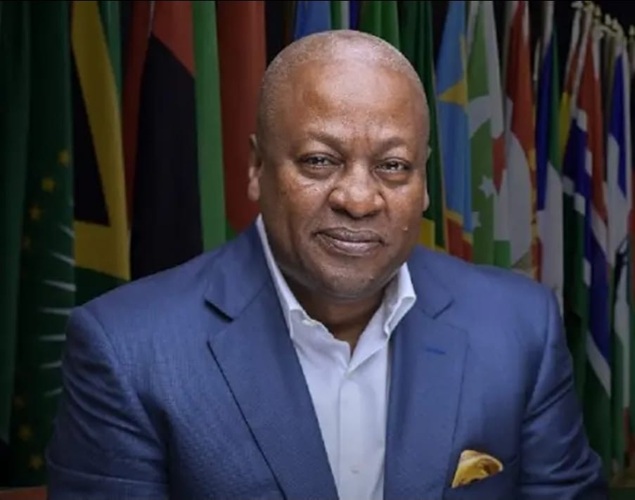
President John Dramani Mahama will be joining African heads of state, business leaders, investors and innovators shaping Africa’s next chapter, at the inaugural Alamein Africa Forum scheduled to take place from 2nd to 4th October 2026 in the historic city of Alamein on Egypt’s Mediterranean coast.
The three-day Alamein Africa Forum is established as a permanent African Business Forum to convene biennially in Egypt.
It is to become the continent’s premier gathering where political power meets entrepreneurial prowess, bridging the established engines of African growth with the new sectors defining its future.
Co-organised by the Government of Egypt, African Export – Import Bank (Afreximbank), the African Union and AUDA-NEPAD, it is expected to bring together more than twenty (20) heads of state and government representatives alongside business leaders, bankers and development institutions.
Ghana’s President, who on 23rd September 2026 declared Ghana is open for business in New York after ringing the ceremonial closing bell at the Nasdaq Stock Market will be leading the Ghanaian delegation, to include the Minister for Trade, Agribusiness, and Industry, Elizabeth Ofosu – Adjare, to the forum.
Other members of the Ghanaian delegation are the Head and Presidential Advisor for Ghana’s 24-Hour Economy and Accelerated Export Development Programme, Hon. Augustus Goosie Tanoh, Ghana’s Special Envoy to the Alliance of Sahel States, Colonel Larry Gbevlo – Lartey alongside key Ghanaian private sector players.
Bringing together leaders in politics, business and policy from across the continent, the Alamein Africa Forum will provide a unique opportunity to shape Africa’s growth agenda by aligning policy and investment priorities, mobilising partnerships for implementation and strengthening financing and investment pathways.
The private sector must become an integral part of Agenda 2063, the African Union’s strategic fifty-year masterplan to transform the continent. The private sector is the core economic engine required to turn the African 2063 from an aspirational government roadmap into realized infrastructure, jobs, and value-added trade.
By Chris KONEY
News
Contractors move to site to begin construction of 120-Bed Trauma Hospital at Bole – Felix Kwakye Ofosu

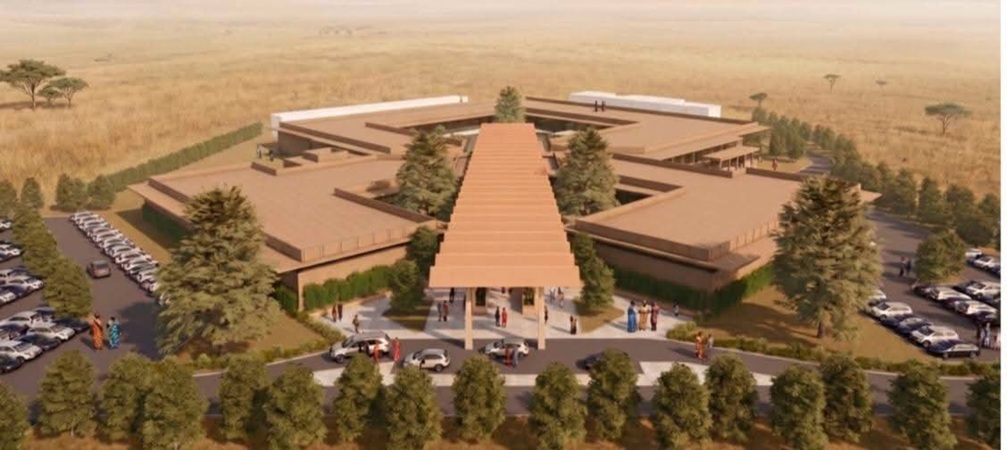
Minister for Government Communications, Felix Kwakye Ofosu, has revealed that contractors have moved to site to begin construction of a 120-bed Specialised Trauma and Emergency Hospital at Bole in the Savannah Region.
According to the Minister, the 16,000 square metre facility will be equipped with modern medical infrastructure to provide emergency and trauma care.
The hospital will have a 24-hour Accident and Emergency Unit, trauma resuscitation bays, emergency operating theatres, an Intensive Care Unit (ICU) and a High Dependency Unit (HDU).
It will also include specialised trauma wards, a burns treatment unit, orthopaedic and surgical units, as well as imaging and diagnostic facilities, among others.
By Edem Mensah-Tsotorme