News
Rayshard Brooks police shooting declared homicide

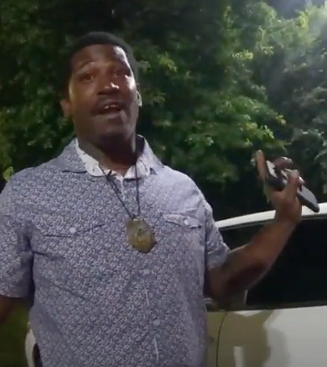
A medical examiner in Atlanta, Georgia, has declared the death of an African-American man to be homicide after he was shot in an encounter with police.
Rayshard Brooks died while fleeing from two white police officers in a restaurant car park late on Friday.
Protests erupted after his death, weeks after another black man, George Floyd, was killed in custody in Minneapolis.
Atlanta’s police chief quit and the police officer suspected of shooting Mr Brooks was fired.
Following his death, the Wendy’s drive-through restaurant where he was stopped was set on fire on Saturday.
Thousands of people joined Black Lives Matter protests across the US at the weekend. In Brooklyn, New York on Sunday, thousands gathered for a rally and silent march for black transgender lives. Organisers estimate that 15,000 people assembled for the event.
In Chicago, a statue of the first US President, George Washington, was spray-painted with the words “slave owner”.
Washington was an active slave holder for 56 years. While spoke of his desire to end the practice, at the time of his death in 1799, 317 enslaved people lived on his Mount Vernon estate. The founding father left instructions in his will for the 123 slaves he owned outright to be freed, only once his wife Martha had died.
Crowds also gathered again in Washington DC near the White House while in Los Angeles, a large number of LGBT protesters marched with rainbow flags to denounce what they said was police brutality, racism and transphobia.
And anger over the killing of Mr Floyd, who died as a police officer held his knee on his neck on May 25, fuelled new protests over the weekend in the UK.
Protesters are expected to gather in Atlanta today for a march organised by the state’s National Association for the Advancement of Colored People (NCAAP), scheduled on the same day that Georgia’s legislators return to the State Capitol.
On Sunday evening, more than 100 people turned out in the rain at the site of the shooting for a peaceful protest.
According to the Fulton County medical examiner, the manner of death of Rayshard Brooks was “homicide.” He suffered two gunshots to the back that caused organ injuries and blood loss. -BBC

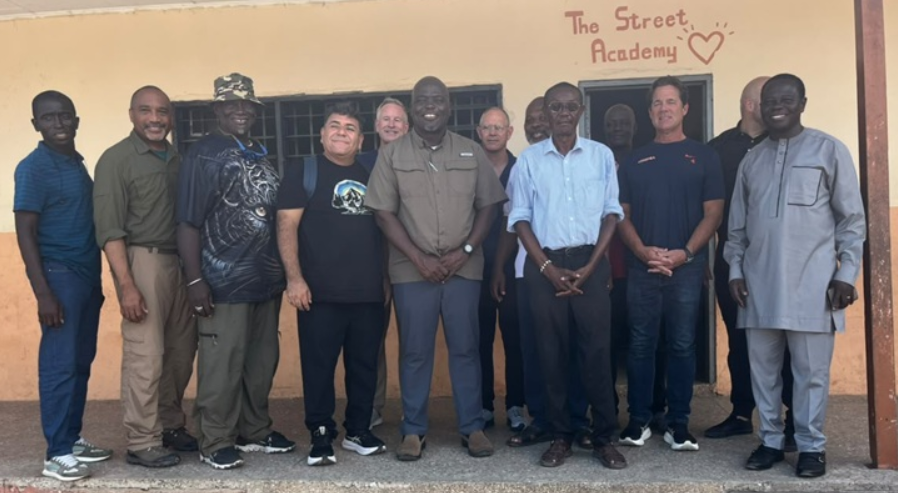
A group of compassionate friends from Innovation Gospel Impact last Friday visited the management, teachers and learners of the Street Academy in Accra.
The visit was to interact to get a deeper insight into the operations of the Academy that houses hundreds of street and underprivileged children and find ways to support them.
The team was led by Rev. Dr Isaac Apenteng Yeboah, a former Director for West African Mailbox Club and Director for Prisons Support Foundation, and Rev. Dale Sutherland from Washington DC.
The call, according to the visitors was occasioned by reports about the struggles of the Academy despite the occasional support it enjoys from individuals and some corporate entities.
Briefing them, the Founder and Executive Director of the Academy, Dr Ataa Lartey, thanked them for the concern showed, indicating that “this is a major boost for both teachers and learners; knowing that their plight is known by people outside their premises.”
According Dr Lartey, the Academy had planned to undertake a number of project to enhance teaching and learning and also procure facilities for the children with keen interest in sports but had to shelve those plans for lack of finance.
He told the team that their biggest concerns were the monthly utility bills that takes a toll on their finances.
“We have a piece of land we planned to turn into an astro turf pitch to train the younger ones whose interests lies in making a career out of football, however, we have been unable to commence because there is no money now,” he said.
Dr Lartey expressed gratitude to the teachers who have dedicated their lives to training these children, rather than going for well-paying jobs and hoped that with time, their conditions of engagement would improve.
Moved by the plight of the Academy, the group donated a cash amount of Gh₵3,000 to settle its water bills.
They described as unfortunate the conditions of learners and teachers of the Academy and pledged to continuously support their operations to realize the dream to build a better future for the unfortunate children.
The group offered to support the school with its monthly utility bills, feeding and staff allowance and urged the Academy staff to remain in constant touch with them.
The Street Academy is located at the Accra Art Center and offers brilliant but needy the chance to pursue their educational dreams by enrolling them in public schools with others offered training in sports and cultural activities.
By Spectator Reporter
SKIP THE QUEUE, TAP THE NEWS
You can now read the Ghanaian Times and The Spectator newspapers from the comfort of your device via TimesNewsPlus.
Join our WhatsApp Channel: https://whatsapp.com/channel/0029VbBElzjInlqHhl1aTU27
News
Embrace education but preserve indigenous languages, cultures, traditional values -Prof Komla Tsey

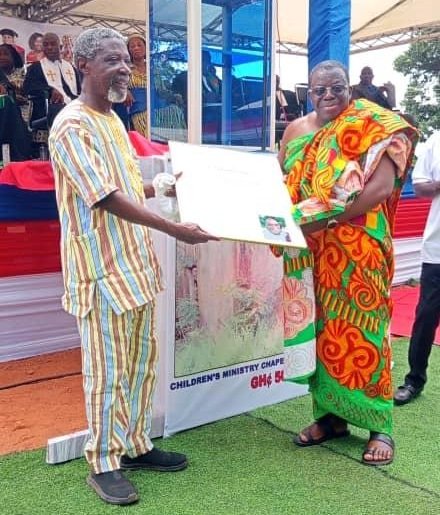
Professor Komla Tsey, Chairman of Agate E.P. Church 125th Anniversary celebration has called on the youth to embrace education while also preserving our indigenous languages, cultures and traditional values.
According to him, embracing education alone is not enough while we undervalue our indigenous cultures and values.
Professor Komla Tsey gave the advice in an address to mark the 125th anniversary celebration of Agate E.P. Church in the Afadjato South District.
He noted that the Whiteman brought education through our churches but most of the social vices we are experiencing these days is because of the neglect of some of our value systems that shape our lives.
He acknowledged the church’s contribution to education, emphasizing that people can appreciate its achievements without necessarily sharing its religious beliefs.
He encouraged the youth to continue to learn from other countries, adapt useful ideas to local needs and develop innovative solutions to challenges in their communities.
He further urged them to embrace modern technology, including artificial intelligence, while listening to the elderly, studying science and value their indigenous languages.
He additionally urged the youth to maximise their education and share their knowledge with other young people in their communities to promote economic transformation.
He commended the church for its achievements in turning out good citizens in their communities.
The Clerk of the General Assembly of the EP Church, Ghana, Rev. Dr. Lawson Dzanku, in a sermon admonished Christians to remain steadfast in their faith and religious activities to win more souls for Christ.
He noted that the church has over the years contributed significantly to education and healthcare as well as established agricultura stations across the country to promote agricultural development. Read More.
From Kafui Gati,Agate
SKIP THE QUEUE, TAP THE NEWS
You can now read the Ghanaian Times and The Spectator newspapers from the comfort of your device via TimesNewsPlus.
Join our WhatsApp Channel: https://whatsapp.com/channel/0029VbBElzjInlqHhl1aTU27