News
Principles of ‘New Start’: Air Continued from previous edition

- /home/u249204778/domains/spectator.com.gh/public_html/wp-content/plugins/mvp-social-buttons/mvp-social-buttons.php on line 27
Warning: Trying to access array offset on false in /home/u249204778/domains/spectator.com.gh/public_html/wp-content/plugins/mvp-social-buttons/mvp-social-buttons.php on line 27
&description=Principles of ‘New Start’: Air Continued from previous edition', 'pinterestShare', 'width=750,height=350'); return false;" title="Pin This Post">
- Share
- Tweet /home/u249204778/domains/spectator.com.gh/public_html/wp-content/plugins/mvp-social-buttons/mvp-social-buttons.php on line 72
Warning: Trying to access array offset on false in /home/u249204778/domains/spectator.com.gh/public_html/wp-content/plugins/mvp-social-buttons/mvp-social-buttons.php on line 72
&description=Principles of ‘New Start’: Air Continued from previous edition', 'pinterestShare', 'width=750,height=350'); return false;" title="Pin This Post">
Did you ever stop to think that we live at the bottom of an ocean of air that surrounds the earth? We could live a few weeks without food and a few days without water, but how long do you think we would live if we had no air?
In one or two minutes, we would all become unconscious and within five or six minutes, we would all be dead. We need a constant supply of pure air into our bodies to keep our blood pure and healthy, to soothe our nervous system and fill our lungs and keep our voices speaking clearly.
The first thing a baby needs when it is first born is to breathe air. Air is “life” to a new born baby and that air is essential to that little one right through life. Children should run and play in the fresh air every day if possible. This will help them to be more cheerful, healthier, and happier.
Pure, fresh air gives a good appetite, helps improve the blood flow, purifies the blood, refreshes the body, helps digestion of food, helps us sleep soundly and helps to heal the sick.
Our homes should be kept clean as well as well ventilated with fresh air. Curtains and drapes should be open to allow sunshine and air to fill the rooms with life-giving elements. We should also sleep with windows open at night where possible.
The fresh air will help our sleep to be more relaxed and restful. If there are sick in the home, the room should not be shut for them to breathe the same air over and over again. The oxygen in the fresh air will help bring a quicker recovery, help the blood to cleanse and purify, resulting in greater strength and health – sooner.
AIR THAT REFRESHES
There is a kind of air that can energise and relax the mind and body within minutes. It is found near waterfalls, in forests, at the beach and after a rainstorm. However, there is another kind of air that can bring on anxiety, depression and even suicidal feelings.
WHAT MAKES THE DIFFERENCE?
Air contains positively and negatively charged molecules called ions. These ions become electrically charged as a result of gaining or losing an electron. Air containing an abundance of negative ions is refreshing, as found in the bush, or by river, lakes, waterfalls and at the beach.
On the other hand, air containing mostly positive ions as found in city centres, airports, poorly ventilated rooms and on crowded motorways, is associated with headaches, anxiety, insomnia and depression.
The blend of exercise and fresh air is important, as good active exercise increases the demand for fresh air and we naturally breathe more deeply.
Take time out of the busy day to take a walk in the bush or some other quiet place and do some deep breathing. It will not only lift your chest, but lift your day.
REST
In the hustle and bustle of our busy modern lives, most of us keep going until we finally drop at the end of the day from exhaustion.
We have all heard of the saying “burning the candle at both ends” to describe a person who is always going full speed, borrowing from the store of energy and robbing themselves of needed rest to let body and mind rest up and refresh.
This is not the best way for us to live. Being moderate, even in creative and productive work is what is best for our health. The first place we think of when we speak of rest is in our beds for the evening sleep. We should get into a regular pattern.
Going to bed at 8:30 – 9:00pm is a good time for settling down to sleep and 5:00 -6:00am is good for rising. This pattern brings a good night’s rest and unloads pressure in the morning to beat the clock before work starts.
Quiet reading, some exercise and family time at the breakfast table brings a sweet start to the day. This may be the ideal, but not always practical for certain lifestyles, but if one is able, the pattern soon starts getting easier and life is enjoyed more fully.
It may be hard to sleep the first few evenings at the earlier time, but upon rising at the earlier time of 6:00am approximately, one will soon be looking for sleep by 8:30 – 9:00pm.
Other places of rest, rather than sleep, is out in the beauty and quietness of nature. If possible, it is good to leave the busy cities behind and seek that rest in the quietness of a country setting, beside a river, or lake, in a grove of trees, or in the mountains.
Other ways can be in a good book, giving good counsel and guidance, talking to a friend, quietly taking a walk, and taking time to be with the family.



Veteran Nigerian actor and African screen legend, Pete Edochie, has paid a courtesy call on the Chief Executive Officer of the Ghana Gold Board (GoldBod), Sammy Gyamfi, during his visit to Ghana.
Edochie is in Ghana to launch the African Legacy Project, which includes a book, documentary film and an African Youth Mentorship Initiative targeting about 500,000 young people across the continent.
Mr. Gyamfi welcomed the opportunity for GoldBod to support the mentorship initiative, noting that it aligns with the Board’s Special Intervention Programme and its focus on social impact and economic empowerment.
GoldBod’s work is also referenced in Pete Edochie’s new book, which highlights Ghana’s efforts to ensure its gold resources contribute to national development.
By Edem Mensah-Tsotorme
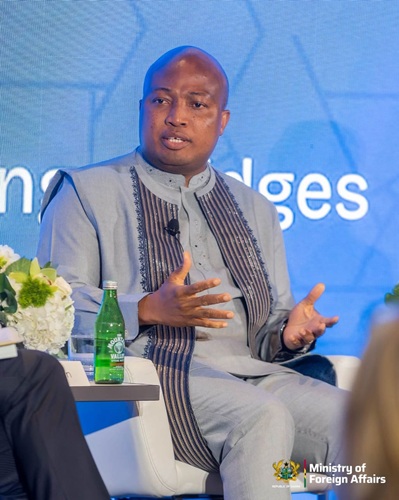
The Ministry of Foreign Affairs has warned Ghanaians seeking employment in Zambia to be cautious of fraudulent job offers that could expose them to human trafficking and forced involvement in cybercrime.
The warning follows the arrest of six Ghanaians in Lusaka, Zambia, during a joint operation by the Zambia Police Service, the Drug Enforcement Commission and the Department of Immigration on August 23, 2026.
According to the Ministry, the operation targeted a facility suspected of being involved in organised cybercrime activities and led to the arrest of 79 people, including 10 Zambians and 69 foreign nationals.
The Ministry said six of the foreign nationals arrested were Ghanaians.
It explained that reports received by the Ghana High Commission in Lusaka indicated that some of those arrested had been recruited through what appeared to be legitimate employment opportunities, including online data entry jobs.
However, the Ministry said some were allegedly forced into online scam activities after their passports were confiscated by their employers.
It warned that the situation highlights how human trafficking groups are using fake employment opportunities to lure unsuspecting job seekers into illegal activities.
The Ministry has therefore advised Ghanaians travelling to Zambia or seeking employment there to thoroughly verify job offers, recruitment agencies and prospective employers before travelling.
Ghanaians living in Zambia have also been urged to remain vigilant when responding to online job opportunities and maintain regular contact with the Ghana High Commission in Lusaka for consular assistance when necessary.
The Ministry said the government remains committed to protecting the welfare and interests of Ghanaians travelling to or living outside the country.
By: Jacob Aggrey