News
Playing our Ghanaian folk games in Helsinki

Last weekend, I took part in a summer picnic organised by a Ghanaian association here in Helsinki. The picnic allowed a group of Ghanaian immigrants to be outdoors after the lockdown in Finland was eased somewhere last month. The event brought together about 30 people.
We ate and drank (no alcohol), the organisers of the picnic and those of us older ones decided that instead of playing football and running races that Ghanaian immigrant groups usually do on such occasions, we would do some traditional Ghanaian moves or folk games for a change.
Displaying “Kye Kye Kule”, “Ampe”, and “Anntoakyire”
We did “Kye Kye Kule” moves, played “Ampe”, and “Anntoakyire”. The reason for these traditional Ghanaian games/play was two-fold. First, we wanted to do exercises in which as many people as possible could take part for the fun and also to keep physically active for good health after about three months of staying home due to the lockdown that started in mid-March and was eased last month.
The second reason was that we wanted to show to the children who had been born here in Finland or who did not grow up in Ghana to have ever witnessed those Ghanaian physical activities.
I saw the kids watched with obvious delight the activities and also when they took part in the activities.
We laughed and enjoyed singing and enacting “Kye Kye Kule”: “Kye Kye Kule…Kyee Kule; Kye Kye Kofi sa…Kye Kye Kofi sa; Kofi salangan…Kofi salanga; Tatashi langa…Tatashi langa…Kum adende..kum adende”.
It was similarly with the “Anntoakyire”. “Anntoakyire…Yeeye; obi ba oo…yee yei; obeewu oo…yeeye; obi ba rebewu oo…oda ho”. I told someone that years ago in Ghana an elderly man had explained to me the etymology of “Anntoakyire”, explaining that it was originally called “Annhwewoakyire” (literally, “not to look behind you” because you do not have to look behind you to determine that an object has been placed there; you have to show smartness by guessing right).
Portraying Ghana culture to kids born in Finland
I remember some years ago, some Ghanaian immigrants taught Twi to Ghanaian kids here in Finland as well as drumming and dancing. Maybe due to work schedules and other issues teaching of such activities has died down. But we know it has to be revived.
I have written sometimes about how Ghanaian migrants in Finland live and organise their lives in everyday practices within the Finnish society and culture.
Actually, while Ghanaian immigrants in Finland make efforts to integrate into the society where they live (here in Finland), they also try to portray the culture of Ghana, their original country.
Cooking and eating certain kinds of food (or an improvisation from food combinations) are deemed typically Ghanaian (or African) is an example. Ghanaian immigrants in Finland also display Ghanaian culture during funeral events where people mostly wear Ghanaian funeral clothes and styles made with fabrics from Ghana.
Modernity, technology and our folk games
We may be losing grounds with keeping our folk games and indigenous identity due to modern technology and video games. Actually technology is driving the world very fast, and we may be helpless stopping technological advances.
All the same, we should find ways of going along with modern technology while still maintaining our indigenous practices that are worth preserving.
Mobile phones and computers have potentials if used effectively to enhance information and education although they have their own challenges, such as non-access to the devices and considerations of sedentary lifestyles and health.
Lack of exercises can lead to cardiovascular problems, even among kids, especially those who are obese as well as those with lower social bonds.
Aside this, we also need to teach the kids to appreciate what our culture offers as a way of our cultural/social capital and identity, even if it is multiple identities involving both Ghanaian and Finnish cultural values.
Dr Perpetual Crentsil
perpetual.crentsil@yahoo.com


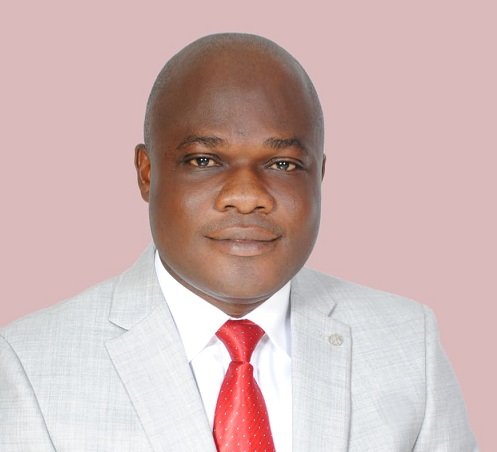
Minister for Local Government, Chieftaincy and Religious Affairs, Ahmed Ibrahim, has revealed that in the whole of 2024, only GHS 362 million was released to MMDAs in Common Fund.
Contrary to this, In 2025 alone GHS 5 billion was released to the MMDAs with the following breakdown as follows.
The Minister made this revelation when he took his turn at the Government Accountability Series held today.
In breakdown, the minister nonted that 1st Quarter – 790,372,058.40 was released for 2025.
He added that for the 2nd Quarter, 1,464,983,309.60 was released.
3rd Quarter saw the release of 1,188,921,640.80 and
1,592,706,391.20 for 4th Quarter.
The Minister added tha each of the MMDAs were required to undertake the following; at least 2-CHPS compounds, 3 Classroom blocks, 10 Boreholes, and Completion of legacy projects.
Additionally, 25% of the Common Fund was allocated for the Construction of 24-Hour Economy Model Markets.
Ahmed Ibrahim noted that as a result of the timely and unprecedented release of Funds, a total of 494 CHPS compounds, 761 Classroom Blocks, 4,029 Boreholes, and 2,755 Legacy projects are currently at various stages of completion.
Also, he added that 261 24-Hour Economy Model Markets have all been awarded on contracts and construction has begun on many of them.
By Edem Mensah-Tsotorme
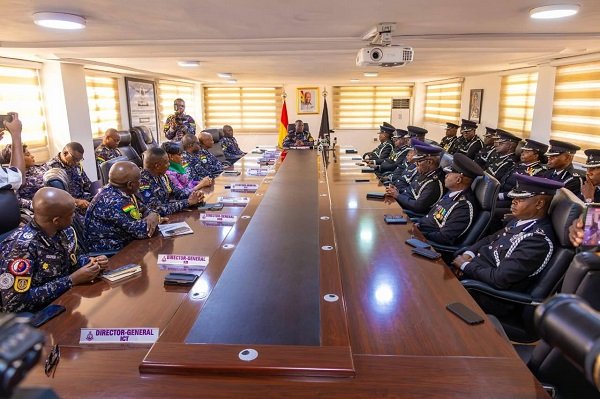
The Inspector-General of Police (IGP), Mr. Christian Tetteh Yohuno, together with members of the Police Management Board (POMAB), on April 17, 2026, decorated nineteen (19) senior officers who have been promoted to their next ranks based on the recommendations of the Police Council and approval of the President, John Dramani Mahama.
The ceremony, held at the National Police Headquarters in Accra, forms part of efforts to recognise merit, dedication, and long-standing service within the Ghana Police Service, while strengthening leadership across key operational and administrative levels.
The officers promoted from Deputy Commissioner of Police (DCOP) to Commissioner of Police (COP) are Dr. Luke Asue-In-Yeng Zakpaa, Mr. Frederick Agyei, Mr. Duuti Tuaruka, Mr. Arthur Osei-Akoto, Mr. Darko Offei Lomotey, Mr. Eric Ken Winful, Mr. Barnabas Nambont Nasumong, and Mr. Desmond Owusu Boampong.
The IGP and members of POMAB congratulated the officers and urged them to uphold the highest standards of professionalism and integrity in the discharge of their duties.