News
Playing our Ghanaian folk games in Helsinki

- /home/u249204778/domains/spectator.com.gh/public_html/wp-content/plugins/mvp-social-buttons/mvp-social-buttons.php on line 27
Warning: Trying to access array offset on false in /home/u249204778/domains/spectator.com.gh/public_html/wp-content/plugins/mvp-social-buttons/mvp-social-buttons.php on line 27
&description=Playing our Ghanaian folk games in Helsinki', 'pinterestShare', 'width=750,height=350'); return false;" title="Pin This Post">
- Share
- Tweet /home/u249204778/domains/spectator.com.gh/public_html/wp-content/plugins/mvp-social-buttons/mvp-social-buttons.php on line 72
Warning: Trying to access array offset on false in /home/u249204778/domains/spectator.com.gh/public_html/wp-content/plugins/mvp-social-buttons/mvp-social-buttons.php on line 72
&description=Playing our Ghanaian folk games in Helsinki', 'pinterestShare', 'width=750,height=350'); return false;" title="Pin This Post">
Last weekend, I took part in a summer picnic organised by a Ghanaian association here in Helsinki. The picnic allowed a group of Ghanaian immigrants to be outdoors after the lockdown in Finland was eased somewhere last month. The event brought together about 30 people.
We ate and drank (no alcohol), the organisers of the picnic and those of us older ones decided that instead of playing football and running races that Ghanaian immigrant groups usually do on such occasions, we would do some traditional Ghanaian moves or folk games for a change.
Displaying “Kye Kye Kule”, “Ampe”, and “Anntoakyire”
We did “Kye Kye Kule” moves, played “Ampe”, and “Anntoakyire”. The reason for these traditional Ghanaian games/play was two-fold. First, we wanted to do exercises in which as many people as possible could take part for the fun and also to keep physically active for good health after about three months of staying home due to the lockdown that started in mid-March and was eased last month.
The second reason was that we wanted to show to the children who had been born here in Finland or who did not grow up in Ghana to have ever witnessed those Ghanaian physical activities.
I saw the kids watched with obvious delight the activities and also when they took part in the activities.
We laughed and enjoyed singing and enacting “Kye Kye Kule”: “Kye Kye Kule…Kyee Kule; Kye Kye Kofi sa…Kye Kye Kofi sa; Kofi salangan…Kofi salanga; Tatashi langa…Tatashi langa…Kum adende..kum adende”.
It was similarly with the “Anntoakyire”. “Anntoakyire…Yeeye; obi ba oo…yee yei; obeewu oo…yeeye; obi ba rebewu oo…oda ho”. I told someone that years ago in Ghana an elderly man had explained to me the etymology of “Anntoakyire”, explaining that it was originally called “Annhwewoakyire” (literally, “not to look behind you” because you do not have to look behind you to determine that an object has been placed there; you have to show smartness by guessing right).
Portraying Ghana culture to kids born in Finland
I remember some years ago, some Ghanaian immigrants taught Twi to Ghanaian kids here in Finland as well as drumming and dancing. Maybe due to work schedules and other issues teaching of such activities has died down. But we know it has to be revived.
I have written sometimes about how Ghanaian migrants in Finland live and organise their lives in everyday practices within the Finnish society and culture.
Actually, while Ghanaian immigrants in Finland make efforts to integrate into the society where they live (here in Finland), they also try to portray the culture of Ghana, their original country.
Cooking and eating certain kinds of food (or an improvisation from food combinations) are deemed typically Ghanaian (or African) is an example. Ghanaian immigrants in Finland also display Ghanaian culture during funeral events where people mostly wear Ghanaian funeral clothes and styles made with fabrics from Ghana.
Modernity, technology and our folk games
We may be losing grounds with keeping our folk games and indigenous identity due to modern technology and video games. Actually technology is driving the world very fast, and we may be helpless stopping technological advances.
All the same, we should find ways of going along with modern technology while still maintaining our indigenous practices that are worth preserving.
Mobile phones and computers have potentials if used effectively to enhance information and education although they have their own challenges, such as non-access to the devices and considerations of sedentary lifestyles and health.
Lack of exercises can lead to cardiovascular problems, even among kids, especially those who are obese as well as those with lower social bonds.
Aside this, we also need to teach the kids to appreciate what our culture offers as a way of our cultural/social capital and identity, even if it is multiple identities involving both Ghanaian and Finnish cultural values.
Dr Perpetual Crentsil
perpetual.crentsil@yahoo.com


Over 20 structures built within the 50-metre buffer zone of the Kpeshie Lagoon at the Laboma Beach Resort in the La Dade-Kotopon Municipality were on Sunday demolished by the Greater Accra Regional Coordinating Council (GARCC).
Buildings such as single-unit semi-detached under construction and completed chalets at the resort were pulled down while portions of a newly constructed perimeter wall were also demolished. Read More
SKIP THE QUEUE, TAP THE NEWS
You can now read the Ghanaian Times and The Spectator newspapers from the comfort of your device via TimesNewsPlus.
Join our WhatsApp Channel: https://whatsapp.com/channel/0029VbBElzjInlqHhl1aTU27
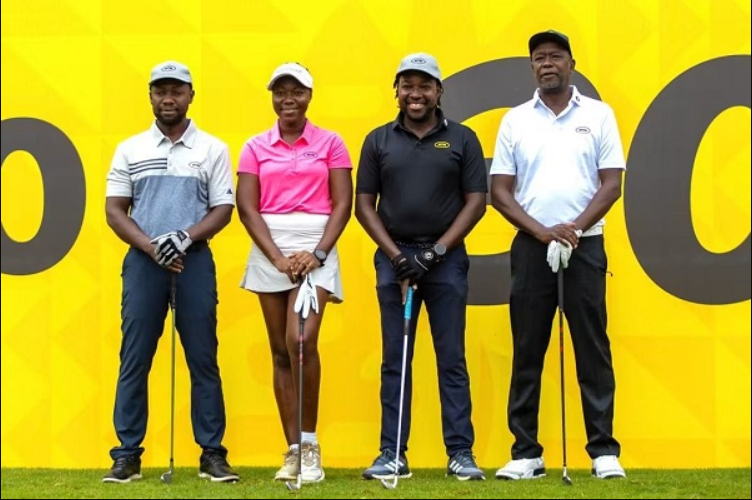
About 120 golfers from clubs across Ghana participated in an 18-hole competition, dubbed ‘MTN 30th Anniversary CEO Invitational Golf Tournament’ held at the Achimota Golf Club on Saturday.
At the end of the hectic day, Frederick Semenu Duvor won the Men’s Group A event with 39 points, while Julienne Afi claimed the Ladies’ Group A title with the same score.
Yaw Mireku Jnr. won the Men’s Group B with an impressive 45 points, while Kous Louanges Mang took the Ladies’ Group B title with 38 points.
Kofi Mangesi won Men’s Group C with 40 points while Elorm R. Akuash Bonney claimed the Ladies’ version with 42 points.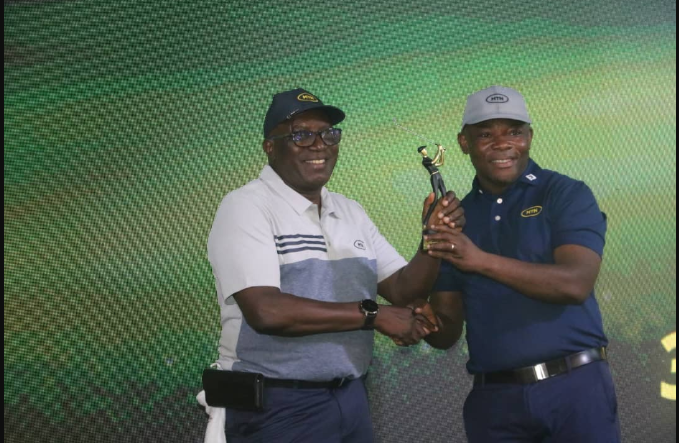
In the Seniors Division, Jan Vogel emerged winner of the men’s category with 39 gross, while Helen Appah topped the ladies’ category with 44 gross.
Addressing participants, the company’s Board Chairman, Mr Ishmael Yamson, urged the company to approach its next phase with the same resilience, discipline and determination that have defined its success over the past three decades.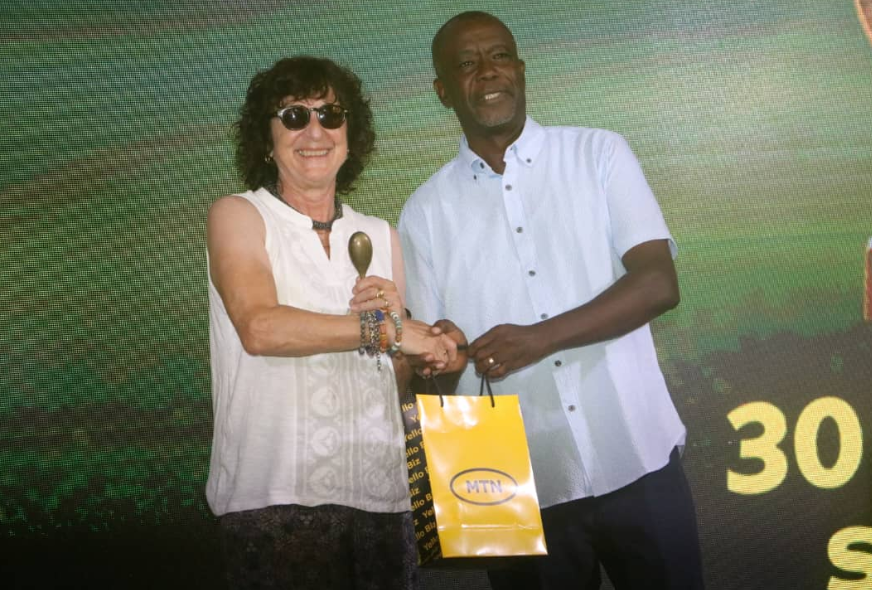
He drew a striking parallel between the game of golf and MTN Ghana’s three-decade journey, describing both as long games in which success depends less on one spectacular moment than on consistency, patience, judgment and the ability to recover from setbacks.
He said, golf had taught him a lesson that extended far beyond the fairways, thus, a round cannot be won on the first hole.
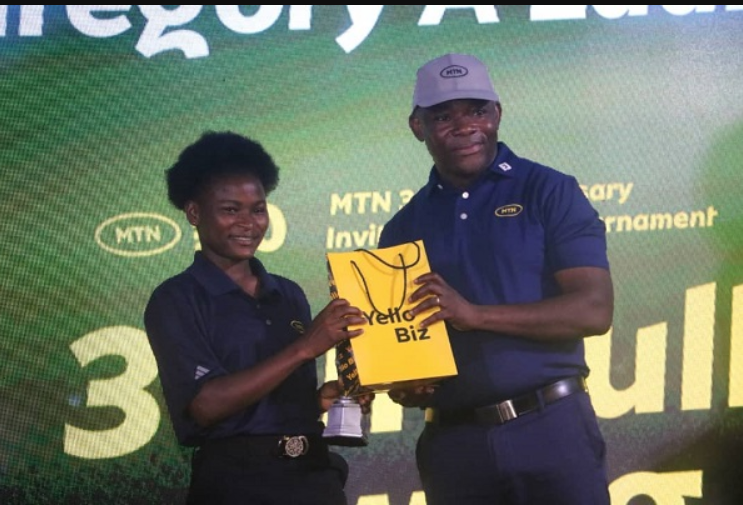
In golfing terms, he said, MTN Ghana had encountered its share of regulatory bunkers, competitive hazards and unexpected storms that had forced the company to pause, reassess and change its approach.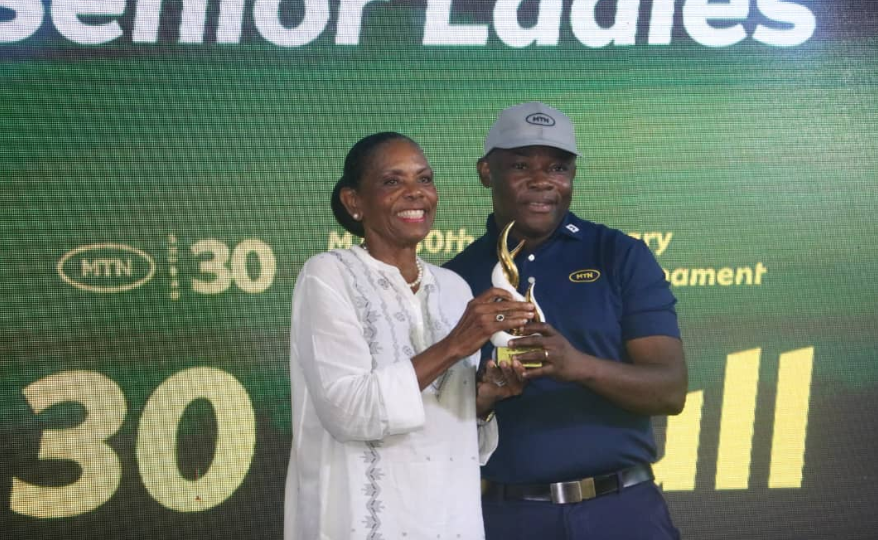
But those challenges, he suggested, were part of the journey rather than reasons to abandon it.
By Andrew Nortey
SKIP THE QUEUE, TAP THE NEWS
You can now read the Ghanaian Times and The Spectator newspapers from the comfort of your device via TimesNewsPlus.
Join our WhatsApp Channel: https://whatsapp.com/channel/0029VbBElzjInlqHhl1aTU27

 Entertainment1 week ago
Fiifi Coleman Productions adapt ‘I Told You So’ stage play into feature film
- News6 days ago
48 Engineer Regiment to be major sub-contractor on Accra-Kumasi Expressway, $2bn ready- Prez Mahama
- News1 week ago
Ghanaian journalist celebrates Texas town’s ‘Eden of the Far West’ tag after mayor’s nod