News
Parent Associations can fundraise to support Free SHS policy – GES


- /home/u249204778/domains/spectator.com.gh/public_html/wp-content/plugins/mvp-social-buttons/mvp-social-buttons.php on line 27
https://spectator.com.gh/wp-content/uploads/2024/01/f782795b-a871-4607-85f3-ae59ea0b0ef5.jpeg&description=Parent Associations can fundraise to support Free SHS policy – GES', 'pinterestShare', 'width=750,height=350'); return false;" title="Pin This Post">
- Share
- Tweet /home/u249204778/domains/spectator.com.gh/public_html/wp-content/plugins/mvp-social-buttons/mvp-social-buttons.php on line 72
https://spectator.com.gh/wp-content/uploads/2024/01/f782795b-a871-4607-85f3-ae59ea0b0ef5.jpeg&description=Parent Associations can fundraise to support Free SHS policy – GES', 'pinterestShare', 'width=750,height=350'); return false;" title="Pin This Post">
The Ghana Education Service (GES) has announced that Parents Associations (PAs) can fundraise in support of the Free Senior High School (SHS) policy.
According to the GES, the PAs may explore diverse fundraising avenues for school development but are prohibited from imposing any fees on students or pupils.
This was contained in a recently released guidelines document by GES for the operation of Parents Associations in Pre-tertiary schools.
There have been concerns about the operations of PTAs that supposedly thwarted the government’s efforts at ensuring universal access to education, specifically at the SHS level.
This was due to the outrageous imposition of levies by some PTAs which sought to defeat the purpose for which the Free SHS policy was introduced.
In response to these developments, the management of GES suspended the imposition of levies in all schools.
It also directed the reorganization of the Parent Teachers Associations (PTAs) to Parent Associations (PAs) to limit the involvement of management and staff of the school.
The GES emphasised that PAs should operate independently, separate from school management and staff.
According to GES, PAs could undertake projects to support the development and growth of the schools to which they are related but emphasised that the management of the schools shall have full authority over the handling of such projects without interference from PAs.
GES stated that PAs may through the management of the school, offer support to teachers/staff of the school through the provision of incentive packages and other welfare schemes.
It maintained that no child shall be discriminated against or given preferential treatment in the official duties of the teacher/staff to which that incentive or welfare package is related.
“Aside from contributions made by PAs, individual parents/guardians may make voluntary donations or contributions to the school as that individual deems fit and such donation shall not confer any preference or privilege to any student in terms of access to and use of the facility or donation,” GES said.
The GES in the document clarified that although school management should not be signatories to Parents Associations’ activities, they can participate without assuming liability for decisions made.
However, PAs are required to submit their annual activities and plans for approval by school management.
Additionally, the accounts of PAs will undergo annual audits, and audit reports must be submitted to Regional Directors for forwarding to the Director General of the Ghana Education Service.
Source: Myjoyonline.com


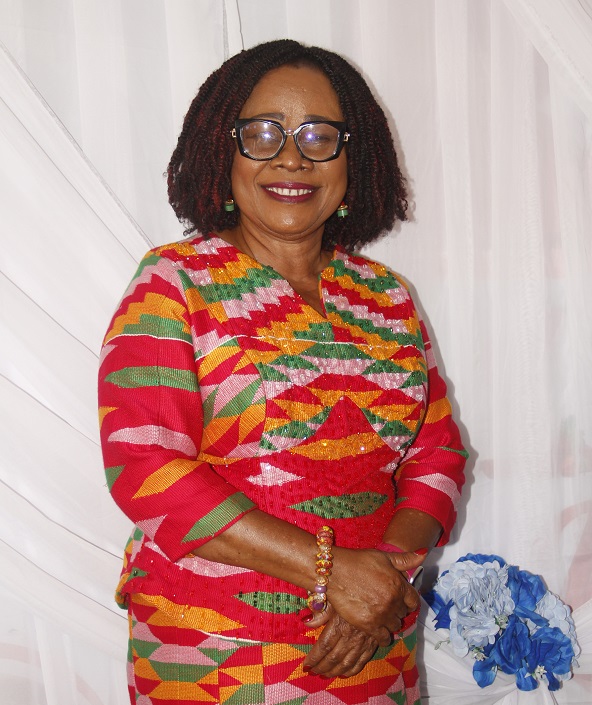
A nine-member board for the New Times Corporation (NTC), publishers of The Ghanaian Times and The Spectator newspapers was sworn into office on Thursday with a call to strengthen the governance of the Corporation.![Dr. Binka (seated second from right) with Dr Okpoti [right] the board and Management of NTC photos Okai Elizabeth.](https://spectator.com.gh/wp-content/uploads/2026/08/Dr.-Binka-seated-second-from-right-with-Dr-Okpoti-right-the-board-and-Management-of-NTC-photos-Okai-Elizabeth-1024x683.jpg)
The new NTC board is chaired by Dr Charity Binka and has Very Rev. Helena Amma Serwah Opoku-Sarkodie, Mr Tito Kojo Voegborlo Esq and Naana Aklerh Amenyah Kubi I as members. Read More
SKIP THE QUEUE, TAP THE NEWS
You can now read the Ghanaian Times and The Spectator newspapers from the comfort of your device via TimesNewsPlus.
Join our WhatsApp Channel: https://whatsapp.com/channel/0029VbBElzjInlqHhl1aTU27

Christians have been urged to demonstrate a living faith in Jesus Christ by allowing their confession of Him as Lord and Saviour to reflect in their daily lives.
According to the Kaneshie District Pastor of the Evangelical Presbyterian Church, Ghana (EPCG), Rev. Dzidzor Nathaniel Affram, a genuine Christian’s confession should go beyond words and be demonstrated through obedience to God, love for others and service to the Church.
He made the call at the 40th anniversary remembrance service for the late Wesley Kwasi Kwadzo at the Evangelical Presbyterian Church, Ghana, Maranatha Congregation at Awudome Avenui in the Volta Region.
Speaking on the theme, “The Church Built on a Living Confession,” Rev. Affram said life would continually present challenges capable of testing Christians’ faith, making it necessary for believers to hold firmly to their confession that Jesus Christ is Lord.
He explained that accepting Jesus Christ as Lord and Saviour required Christians to live according to His teachings, stressing that their faith must be evident in their conduct.
“A living confession listens to God and not man,” he said, urging Christians to remain obedient to God even when faced with difficulties and pressures.
Rev. Affram further encouraged the congregation to care for vulnerable people and demonstrate concern for others, adding that such acts were practical expressions of Christian faith.
He also urged Christians to identify and use their God-given gifts to build the Church.
He said every member of the Church had a role to play and cautioned Christians against looking down on others because of their status or abilities.
The remembrance service brought together family members, friends, members of the congregation and sympathisers to commemorate the 40th anniversary of the late Wesley Kwasi Kwadzo.
By Lizzy Okai