News
Oil-producing communities in Western Region to benefit from sea defense and social projects – Prez Mahama


- /home/u249204778/domains/spectator.com.gh/public_html/wp-content/plugins/mvp-social-buttons/mvp-social-buttons.php on line 27
https://spectator.com.gh/wp-content/uploads/2025/07/WhatsApp-Image-2025-07-30-at-17.28.08.jpeg&description=Oil-producing communities in Western Region to benefit from sea defense and social projects – Prez Mahama', 'pinterestShare', 'width=750,height=350'); return false;" title="Pin This Post">
- Share
- Tweet /home/u249204778/domains/spectator.com.gh/public_html/wp-content/plugins/mvp-social-buttons/mvp-social-buttons.php on line 72
https://spectator.com.gh/wp-content/uploads/2025/07/WhatsApp-Image-2025-07-30-at-17.28.08.jpeg&description=Oil-producing communities in Western Region to benefit from sea defense and social projects – Prez Mahama', 'pinterestShare', 'width=750,height=350'); return false;" title="Pin This Post">
President John Dramani Mahama has assured that coastal communities in the Western Region affected by oil and gas activities will see direct improvements in infrastructure, sea defense, and social services under his next development agenda.
The president made it clear that the discovery of petroleum in the region must be a blessing and not a burden.
He stated that towns like Essiama and Anochie, located in the oil-producing enclaves, would benefit from better roads, bridges, schools, health facilities, and agribusiness support as part of the government’s commitment to inclusive development.
He explained that the government is expanding sea defense projects along the coast to protect fishing communities from tidal wave erosion.
These efforts, he noted are also aimed at preserving marine livelihoods and supporting the coastal economy.
President Mahama revealed that the government will establish a dedicated oil and gas services hub at the Takoradi Port through a public-private partnership.
He said the expansion of the port would include new container terminals and dry bulk facilities to boost exports and reduce delays for vessels.
He added that the (Local Content and Local Participation) Regulations, 2013 (L.I. 2204) would be strengthened to ensure young people in the Western Region gain access to petroleum jobs, contracts, and technical training.
The president also announced that the Ministry of Energy had been directed to renegotiate land arrangements with landowners around the planned petroleum hub.
He said the government will release unused portions of land back to communities and pay compensation for land that will be used, starting with 5,000 hectares instead of the initially acquired 20,000 hectares.
He stressed that oil wealth must translate into better living conditions for the people whose lands and livelihoods are affected by exploration and production activities.
Jacob Aggrey

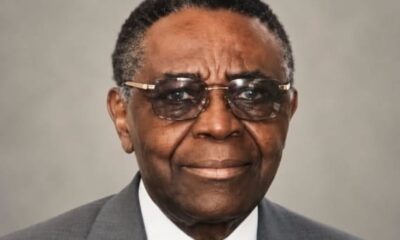





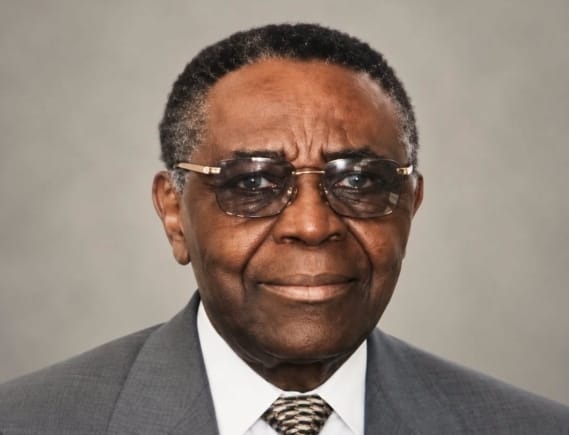
The New Patriotic Party (NPP) has announced with profound sorrow the passing of Ambassador Samuel Arthur Odoi-Sykes, describing him as an eminent statesman, distinguished patriot, and one of the founding pillars of the party.
In a statement issued by the party, Ambassador Odoi-Sykes was eulogized for dedicating several decades of his life to the service of Ghana and the cause of democratic governance.
“His constant dedication to public service, constitutional democracy, and principled political leadership earned him the admiration and respect of colleagues across the political divide,” the statement said.
Ambassador Odoi-Sykes served as Member of Parliament for Ashiedu Keteke, now Odododiodio, during the Third Republic, where he rose to become Minority Leader of Parliament. He was noted for his exemplary parliamentary leadership and advocacy for democratic ideals.
As a founding father of the NPP, he played a pivotal role in laying the institutional and ideological foundations of the party.
His leadership as National Chairman from 1998 to 2001 was instrumental in uniting and strengthening the NPP, culminating in its historic electoral victory in the year 2000 and the first democratic transfer of power between political parties under the Fourth Republic.
Following that landmark achievement, he continued his service to the Republic as Ghana’s High Commissioner to Canada from 2001 to 2006, where he represented the nation with distinction and enhanced Ghana’s diplomatic relations abroad.
The party noted that throughout his lifetime, Ambassador Odoi-Sykes served on numerous national and party committees, offering wise counsel, strategic leadership and invaluable institutional memory.
“His integrity, humility, intellect, and constant commitment to Ghana’s democratic development will remain an enduring source of inspiration for present and future generations,” the NPP said.
“His passing marks the end of an illustrious chapter in Ghana’s political history. The nation has lost a distinguished public servant, while the New Patriotic Party has lost one of its most respected elder statesmen and steadfast architects.”
The party extended its deepest condolences to his wife, children, the entire Odoi-Sykes family, friends, and associates.
“As we mourn his passing, we also celebrate a life exceptionally lived in faithful service to God, country, and the Party. Ambassador Samuel Arthur Odoi-Sykes has indeed paid his dues, and his legacy of principled leadership, patriotism, and selfless service will forever remain etched in the annals of Ghana’s democratic history.
“May his soul rest in perfect peace, and may his memory keep inspiring generations yet unborn,” the statement concluded.
By Edem Mensah-Tsotorme
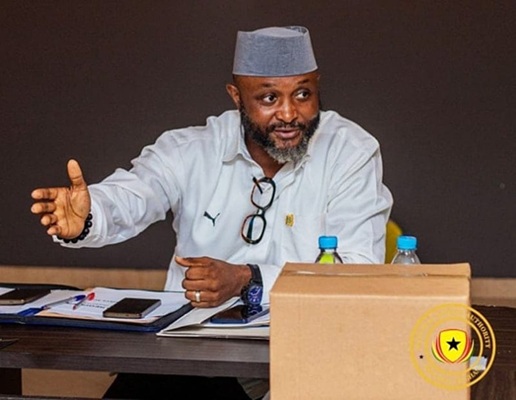
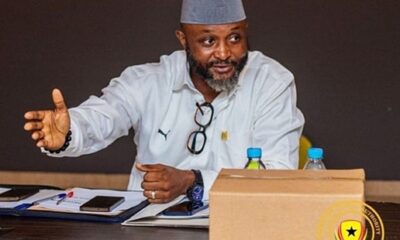
Lawyers for suspended National Sports Authority (NSA) Director-General, Yaw Ampofo Ankrah, say he will not appear before Parliament for now because matters concerning him are currently under investigation by the Criminal Investigations Department (CID) of the Ghana Police Service.
In a statement issued on behalf of Mr Ampofo Ankrah, his legal counsel, Jerry Avenorgbor of Brookman Amissah & Associates, said the sports administrator has cooperated and will continue to cooperate with the police as they work to establish the facts.
The lawyers said Mr Ampofo Ankrah and his representatives would refrain from making detailed public comments on the allegations while the investigation is ongoing.
They urged the media and the public to exercise restraint and avoid presenting allegations, speculation or unverified information as established facts.
The lawyers stressed that the existence of an investigation does not, by itself, amount to a finding of wrongdoing against Mr Ampofo Ankrah or any other person.
On calls for Mr Ampofo Ankrah to appear before Parliament, his lawyers said it would be “imprudent” for him to do so while the CID investigation remains active and he is under suspension.
According to them, appearing before Parliament at this stage could create complications for the investigation and potentially affect the process through which the facts are being established.
Mr Ampofo Ankrah has therefore decided to defer any appearance until the investigation has been concluded and the circumstances surrounding his suspension have been determined by the appropriate authorities.
His lawyers, however, stressed that the decision should not be interpreted as a refusal to submit to lawful processes or to account to Parliament or any other constitutionally mandated institution.
They explained that the position is intended to protect the integrity of the ongoing investigation and prevent any action that could potentially interfere with it.
The lawyers further indicated that if his suspension is lifted and he is restored to his position as Director-General of the NSA at the discretion of the Office of the President, he will respond appropriately to any lawful request to appear before Parliament or another competent institution.
Mr Ampofo Ankrah and his legal representatives are expected to respond to the findings of the investigation and address any issues requiring clarification once the appropriate authorities have completed their work.
They have meanwhile called for patience and respect for the ongoing investigative process.
By: Jacob Aggrey