News
Minister meets new leadership of Ghana School Feeding Programme

- /home/u249204778/domains/spectator.com.gh/public_html/wp-content/plugins/mvp-social-buttons/mvp-social-buttons.php on line 27
https://spectator.com.gh/wp-content/uploads/2025/03/FB_IMG_1741171710941-960x600.jpg&description=Minister meets new leadership of Ghana School Feeding Programme', 'pinterestShare', 'width=750,height=350'); return false;" title="Pin This Post">
- Share
- Tweet /home/u249204778/domains/spectator.com.gh/public_html/wp-content/plugins/mvp-social-buttons/mvp-social-buttons.php on line 72
https://spectator.com.gh/wp-content/uploads/2025/03/FB_IMG_1741171710941-960x600.jpg&description=Minister meets new leadership of Ghana School Feeding Programme', 'pinterestShare', 'width=750,height=350'); return false;" title="Pin This Post">
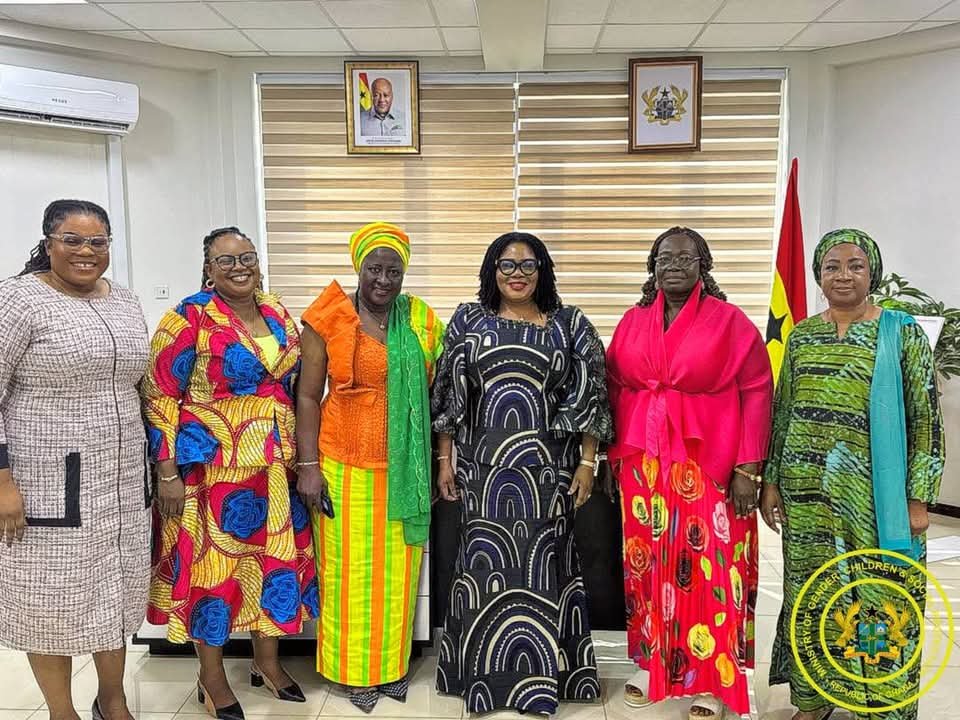
The Minister for Gender, Children, and Social Protection, Dr. Agnes Naa Momo Lartey, has held her first official meeting with the new leadership of the Ghana School Feeding Programme (GSFP).
The meeting brought together the National Coordinator, Madam Hajia Fati Forgor, the two Deputy National Coordinators ( Madam Felicia Mekpoi Bortey and Madam Faustina Lamptey), and the MASLOC CEO to discuss the way forward for the programme.

In her remarks, the Minister emphasized the need for strong collaboration between the GSFP and the Ministry, noting that effective teamwork would help resolve challenges affecting the programme.
She stressed that GSFP remains a priority area for President John Dramani Mahama, and as such, all stakeholders must work together to enhance its quality and expand its reach, particularly in vulnerable communities.
The Minister also highlighted the importance of proper monitoring and supervision to ensure caterers are delivering nutritious meals to school children.
The Chief Director of the Ministry, Dr. Afisah Zakariah, took the opportunity to brief the new coordinators on the programme’s structure, approval processes, reporting lines, and payment systems.
She reiterated that the GSFP, under the supervision of the Ministry, is committed to its core mandate of providing one hot, nutritious meal daily to pupils from Kindergarten to Primary Six.
Madam Hajia Fati Forgor, the new National Coordinator, expressed gratitude to the Minister for the warm reception and pledged to work closely with her deputies to fulfill the vision of the President.
She acknowledged the Minister’s commitment to strengthening the programme and assured both the President and the Ministry of her dedication to addressing challenges, including fostering open dialogue with caterers for smooth operations.
The CEO of the Microfinance and Small Loans Centre (MASLOC) Abigail Akwambea Elorm Mensah also participated in the meeting and explored potential collaboration with GSFP to support caterers financially while they await payments.
Discussions further touched on restructuring the GSFP to enhance efficiency and sustainability.
The meeting ended on a note of renewed commitment to improving the programme’s effectiveness and ensuring that school children across the country receive quality meals.
Hajia Fati and the two deputies were be later introduced to the staff of the Ghana School Feeding Programme.








The Ghana Football Association (GFA), through its Technical Directorate, will organize a one-day workshop for Ghana Premier League coaches ahead of the 2026/27 season.
The virtual session will bring together head coaches of all Premier League clubs for an engagement aimed at strengthening technical standards, enhancing professionalism, and ensuring a common understanding of key issues ahead of the new campaign.
It will be led by GFA Technical Director, Dr. Joseph Kwame Mintah, together with members of the Technical Directorate.
The workshop will provide a platform for coaches to engage the directorate on matters relating to their roles and responsibilities, with focus on key technical and administrative areas to ensure the smooth running of the competition.
Particular attention will be paid to the conduct and responsibilities of team officials, with emphasis on discipline, professionalism and adherence to competition regulations.
The exercise is expected to equip participants with relevant guidance and practical information as clubs finalize preparations for the new season.
The 2026/27 Ghana Premier League will kick off on Saturday, September 5, 2026, when Vision FC host Young Apostles at the Nii Adjei Kraku II Sports Complex in Tema New Town.

The Inspector-General of Police (IGP), Mr. Christian Tetteh Yohuno, on Monday’s, August 31, 2026, decorated Inspector Hance Atubra of the Tarkwa Divisional Headquarters with his new rank of Chief Inspector.
The decoration ceremony took place at the National Police Headquarters in Accra.
Chief Inspector Atubra was promoted in recognition of his bravery and exceptional efforts in saving lives and protecting property during a fire outbreak at Aboso in the Western Region on August 26, 2026.
The IGP commended him for his courage, quick response and dedication to duty, noting that his actions exemplify the professionalism and service expected of police officers.
By Edem Mensah-Tsotorme