News
Media, Community Voices Are Enhancing Vaccinations in Ghana and Nigeria

- /home/u249204778/domains/spectator.com.gh/public_html/wp-content/plugins/mvp-social-buttons/mvp-social-buttons.php on line 27
https://spectator.com.gh/wp-content/uploads/2025/10/WhatsApp-Image-2025-10-03-at-11.39.14-1.jpeg&description=Media, Community Voices Are Enhancing Vaccinations in Ghana and Nigeria', 'pinterestShare', 'width=750,height=350'); return false;" title="Pin This Post">
- Share
- Tweet /home/u249204778/domains/spectator.com.gh/public_html/wp-content/plugins/mvp-social-buttons/mvp-social-buttons.php on line 72
https://spectator.com.gh/wp-content/uploads/2025/10/WhatsApp-Image-2025-10-03-at-11.39.14-1.jpeg&description=Media, Community Voices Are Enhancing Vaccinations in Ghana and Nigeria', 'pinterestShare', 'width=750,height=350'); return false;" title="Pin This Post">
When 28-year-old Salamatu Wahab from Nanton in Ghana’s Northern Region heard that health workers were coming to vaccinate children against measles and rubella, she hesitated. Rumours in her community claimed vaccines could make children sick or even cause infertility later in life.
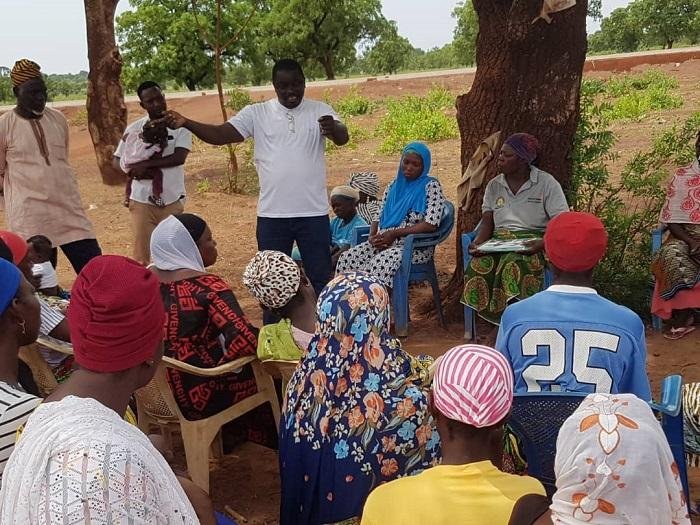
But that morning, when she tuned in to a local FM station, she heard a nurse and her community chief explain the safety of the vaccines in Dagbani, her mother tongue. Reassured, she took her two-year-old son, Abdul, to the nearest outreach point.
“I nearly refused,” Salamatu admitted. “But when I heard the nurse and our chief on the radio, I realised the vaccine is to protect my child. Today, I am happy I went.”
Her story reflects a larger shift: media and community voices are proving powerful tools in countering misinformation, addressing fears, and strengthening vaccine confidence across Ghana and Nigeria.
The Challenge of Vaccine Hesitancy& Coverage gaps
Ghana’s Expanded Programme on Immunisation (EPI) described by Dr Amponsa-Achaino, Manager of EPI, as one of Africa’s stronger immunisation initiatives, has significantly reduced deaths from measles, polio, and other vaccine-preventable diseases. Yet challenges remain.
According to Ghana’s 2022 Demographic and Health Survey (GDHS), about 75% of children aged 12–23 months were fully vaccinated for basic antigens. However, only 56% were fully vaccinated according to the national schedule, revealing a discrepancy that needs urgent attention.
Further complicating the situation, WHO/UNICEF data show year-to-year reveal variations and low uptake of second doses, pointing to gaps in the programme’s reach.
These vulnerabilities were laid bare in 2023, when the Northern Region experienced a measles outbreak affecting over 100 children. According to Dr. Hilda Mantebea Boye, President-elect of the Paediatric Society of Ghana, the outbreak was fueled by vaccine supply delays and low vaccination turnout.
This highlighted the fragility of Ghana’s progress: issues such as hesitancy and logistics can swiftly erode decades of achievements.
A similar challenge is unfolding in Adamawa State, Nigeria, where immunisation coverage remains insufficient to stop outbreaks.
First-dose measles coverage stands at 67%, while second-dose coverage is only 51%-far below the level needed for herd immunity. During this period, 462 confirmed measles cases were recorded, according to DHIS2 data.
In response, the state rolled out a 100-day PHC intensification strategy across 226 wards and 1,070 health facilities, ensuring underserved and hard-to-reach communities are not left behind. This initiative underscores the importance of stronger health systems, outreach, and education to improve coverage and prevent further outbreaks.
Media–NGO Collaborations
To bridge these gaps, health authorities and NGOs have turned to media partnerships.
In Ghana, groups such as the African Media and Malaria Research Network (AMMREN) and the Centre for Capacity Improvement for the Wellbeing of the Vulnerable (CEWID) work with journalists, radio stations, and traditional leaders to deliver accurate vaccine information in local dialects.

“Radio is still the heartbeat of rural communities,” said Abdulai Issah, a journalist in Yendi. “When nurses, chiefs, or mothers share their testimonies on air, people listen and trust the message.”
In Nigeria, similar collaborations drive Adamawa State’s campaigns. Dr. Yusuf Abdelhakim, WHO’s State Coordinator, explained: “In Adamawa, people listen to radio more than television. We involve radio stations in the state task force.
Communities cite radio as one of the main ways they hear about campaigns. That’s evidence that media is vital.”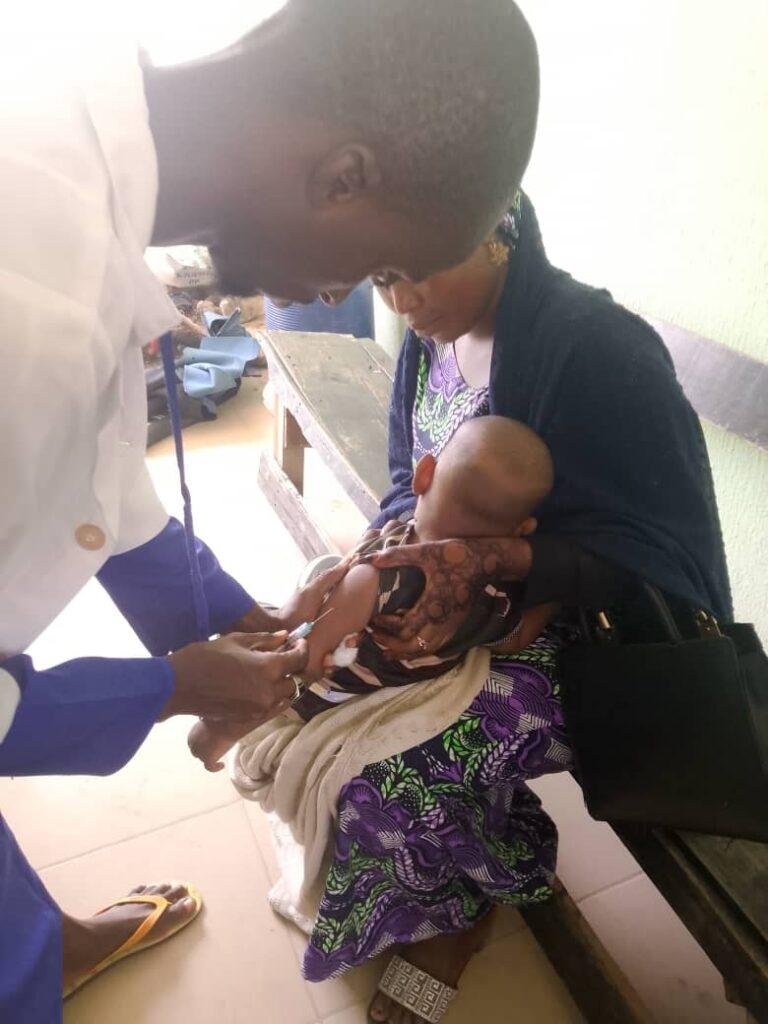
Dr Abdelhakim added that WHO supports training, social mobilisation, and independent monitoring to ensure grassroots campaigns reach even hard-to-reach areas, sometimes with the help of vigilantes in insecure zones.
At Adamawa Broadcasting Corporation (ABC) Yola, veteran producer Adamu Bakari noted: “We use Hausa and Fulfulde dramas, jingles, and live talk shows with health experts. Listeners trust the messages because they come from doctors, health workers, and officials.”
The Power of Trusted Voices
In Ghana, chiefs and imams now use Friday prayers and durbars to encourage parents. “I now use community meetings to remind parents about vaccines,” said Chief Alhassan Yakubu of Sahanayili, who was trained by CEWID.
In Nigeria, imams and ward heads are also stepping in. Abubakar Aliyu, a health educator in Yola, recalled: “The biggest challenge is fathers who refuse vaccination. But when radio and imams support us, even fathers begin to bring their children.”
For parents like Mohammed Abubakar from Mayo Belwa, trust from community leaders made the difference: “One of my relatives told me vaccines stop children from giving birth later. I almost believed him. But my leaders explained the truth, and I realised vaccines protect health. Now, I convince others too.”
Mothers’ Perspectives
From Tamale to Yola, mothers describe how radio, testimonies, and health worker engagement reshaped their attitudes.
After repeated media campaigns, Salamatu not only vaccinated her son but also began encouraging neighbours. In 2024, Ghana’s Measles-Rubella and Vitamin A campaign reached over 6.9 million children nationwide, with Northern Region coverage surpassing 95% according to the WHO Africa.
In Adamawa, Jummalo Abdulkadir once hesitated but changed her mind after a radio jingle. “Now, I believe in vaccination with all my heart,” she said. Hassana Usman added: “The radio convinced me to bring my daughter. Some parents still refuse, but I trust the health workers.”
For some, painful experiences were the turning point. Aziz Abdullah, a young man from Tamale, developed lifelong complications after missing his measles shot.
“When I was a child, our community health post was far and my parents thought measles was just a childhood fever that ‘everyone gets.’ Over time I got measles at age 7, and during the illness I developed complications: pneumonia, severe cough, and for weeks I could hardly eat or walk. Even now, I have a bit of breathing difficulty when it rains, and I carry a mild limp in my leg from a musculoskeletal effect. I tell younger parents: don’t skip vaccines. It’s not just a shot — it’s your child’s future.”
Similarly, Amina from Wuro Ladde, Nigeria, nearly lost her son after missing his measles vaccination. That ordeal transformed her into an advocate for full immunisation.
“That painful experience transformed my perspective: today, I ensure all my children are fully immunised” she stated. She urged other parents to do the same.
Journalists as Health Advocates
Journalists have embraced a proactive role in both countries. In Ghana, with AMMREN’s training, more than 50 journalists now report responsibly on vaccines. In 2024, AMMREN launched the National Media Vaccine Network, ensuring consistent coverage across all 16 regions.
In Nigeria, journalists at ABC Yola use creative formats like dramas and call-in shows to keep communities engaged.
“We realised misinformation spreads like wildfire on social media,” said Mavis Offei, a Ghanaian health reporter. “But when we explain issues in simple language, readers and listeners are less likely to believe rumours.”
Building Trust, Closing Gaps
Experts say the lesson from both Ghana and Nigeria is clear: trust is local.
“A mother in Nanton may never read a WHO bulletin, but she listens to her chief, her nurse, and her favourite radio presenter,” said Dr. Abdul-Razak Alhassan, a health communication specialist. “When all three deliver the same message, doubts fade. It’s not just about vaccines; it’s about relationships.”
In Adamawa, Dr. James Vassumunjeko, Director of Immunisation, stressed that progress comes from combining data-driven strategies with local engagement: “The media has done a lot in addressing hesitancy. Community and religious leaders are also crucial—some even tell parents that refusing vaccination endangers the whole community.”
A Community Shift
Across both countries, parents who once resisted now actively promote vaccination.
In Kumbungu, Ghana, refusals are fewer than five years ago. In Yola, Nigeria, mothers now proactively seek out immunisation services. Fathers too, once skeptical, are beginning to bring their children after hearing messages from imams and radio programmes.
As WHO’s Dr. Abdelhakim put it: “Vaccine hesitancy exists everywhere—even among the educated. But when you engage communities with the right voices, trust grows. That’s how we’re building healthier communities.”
For mothers like Maryam Isa in Yola, the lesson is simple: “I will never neglect my child’s vaccination again. Radio changed my mind—and saved my child.”
Her words capture a wider reality : when trusted voices join voices, communities move from doubt to confidence-one vaccine at a time.
By Benedicta Gyimaah Folley & Abubakar Muhammad Adamu




Residents of Brodi, a farming community in the Tain District of the Bono Region, have been left in shock and mourning following the alleged murder of a 45-year-old woman by her husband, who later died by suicide.
According to information gathered by the Ghana News Agency (GNA), the suspect, popularly known as Kwabena Jack, believed to be in his 50s, allegedly attacked and killed his wife, Abena Donkor, while the couple were working on their farm on Monday, August 11, 2026.
Mr Kingsley Obah, Assembly Member for the Brodi Electoral Area, confirmed the incident to the GNA.
He explained that after news of the woman’s death spread through the community, residents launched a search for the suspect. His lifeless body was later discovered in a nearby bush on Tuesday, August 12, 2026.
Police have since conveyed both bodies to the Tain District Government Hospital, where they have been deposited for preservation and autopsy.
Investigations into the incident are ongoing. -GNA
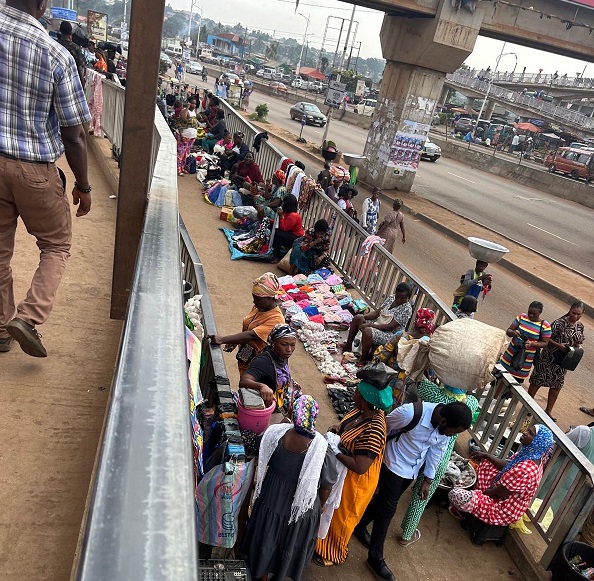
Hawkers and roaming preachers have taken over the five-metre high Madina REDCO footbridge and adjoining streets, making it increasingly difficult for pedestrians to use the facility intended to promote safe road crossing.
The traders have virtually turned sections of the footbridge into a marketplace, displaying their wares on the floor using jute sacks, plastic sheets and metal trays, while others have occupied both sides of the walkway with their merchandise.
Foodstuffs such as okro, garden eggs, pepper, onions, dried fish, smoked fish, grains, spices and other groceries are openly sold on the footbridge and along the roadside, forcing pedestrians to weave through the crowded path.
Clothing and fashion accessories including slippers, brassieres, panties, socks, bags and other household items are also displayed for sale, leaving only limited space for commuters to use.
The situation is worsened by the presence of itinerant preachers who position themselves on the footbridge with public address systems to evangelise, drawing crowds to further obstruct pedestrian movement.
Head porters are also seen crossing the highway through the median while carrying heavy loads instead of using the footbridge, exposing themselves to the danger of being knocked down by speeding vehicles.
Also, portions of the footbridge are showing signs of deterioration. Several metal railings are rusted, bent and loosely secured with pieces of wire, raising concerns about the safety of users, especially children, the elderly and persons with disabilities.
Sections of the concrete surface are worn and chipped, while makeshift wooden supports attached to parts of the structure suggest temporary repairs.
After a visit by The Spectator last week, it emerged that many commuters preferred crossing the busy Madina Highway instead of using the footbridge because of the congestion created by the trading and preaching activities.
For years, successive attempts by the police, the military and the La Nkwantanang Madina Municipal Assembly to address congestion around the REDCO and Zongo Junction enclave have yielded little success, with the area becoming notorious for roadside trading, indiscriminate parking and pedestrians refusing to use the footbridge.
A pedestrian, who gave her name only as Maame Yaa, described the situation as worrying, saying the footbridge, which was constructed to protect lives, had gradually lost its purpose because of the growing encroachment by traders and preachers.
According to her, many pedestrians were discouraged from using the facility because navigating through the crowded walkway had become difficult and uncomfortable.
She appealed to the La Nkwantanang Madina Municipal Assembly and other relevant authorities to intensify enforcement to prevent unauthorised trading and other activities on the footbridge and ensure it served its intended purpose of promoting pedestrian safety.
However, during the visit, personnel of the Ghana National Fire Service (GNFS) were seen carrying out a decongestion exercise to remove hawkers from sections of the roadside around the footbridge as part of efforts to improve public safety and ease the movement of both pedestrians and motorists.
The exercise forms part of a pilot project initiated by the Municipal Fire Commander for Madina, Division Officer II (DO II) Abdul Salia, who assumed command of the Madina Municipal Fire Station three months ago.
Speaking in an interview with The Spectator, DO II Abdulai Salia, who is also a long time resident of the community, said the month long project began on July 1 and ended on July 31, with 30 firefighters deployed daily to regulate traffic, clear hawkers from the streets and footbridge, and create access for emergency vehicles.
Continued on page 12
By Esinam Jemima Kuatsinu