News
Make family planning centres, antenatal clinics adolescent friendly

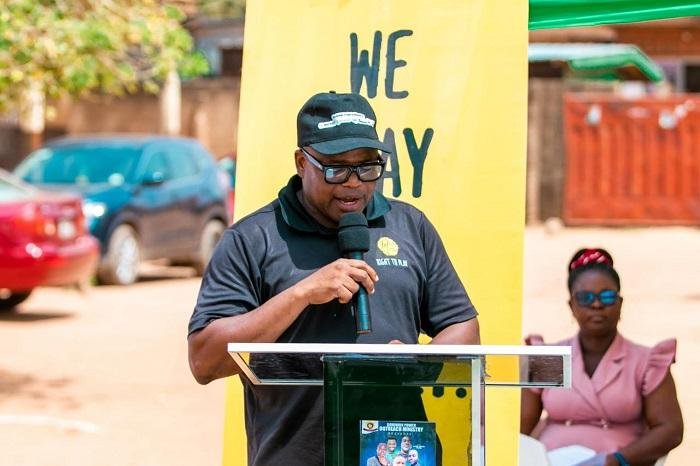
Stigmatisation and judgmental attitudes from some health workers have been identified as some of the factors that discourages young people from accessing care.
The interim Country Director of Right to Play Ghana, Mr Evans Sinkari, has, therefore, urged family planning centres to be more welcoming and inclusive to adolescents seeking reproductive health services.
“Young people are among the most vulnerable when it comes to reproductive health, yet they face the greatest barriers to accessing services,” he said.
In an interview with The Spectator, Mr Sinkari explained that adolescents, aged 10 to 19, were at risk of unintended pregnancies, unsafe abortions, and sexually transmitted infections due to limited access to information and services.
He stated that many were sexually active, whether by choice, coercion, or early marriage—yet often lacked adequate knowledge of, or access to contraception.
He emphasised that health workers’ judgmental attitudes, coupled with lack of privacy and confidentiality, often shame adolescents, deterring them from seeking contraceptives.
The fear that parents or community members may discover their choices further discourages them, he noted, and added that unfriendly environments at health facilities largely designed for adults, created feelings of intimidation, while financial and social barriers limit adolescents’ decision-making power and ability to pay for care.
According to Mr Sinkari, accessible and youth-friendly family planning centres would help reduce adolescent pregnancies and associated risks.
Contraceptive access, he stressed, prevents unsafe abortions, a leading cause of maternal mortality among adolescents.
He noted that promoting health and education would also reduce unintended pregnancies, allowing young people to remain in school and realise their potential.
On adolescent pregnancy, he noted that some health workers stigmatised young mothers when they sought antenatal care.
He emphasised the need for compassion, dignity, and professionalism in treating adolescent pregnant girls, arguing that stigmatisation undermined their rights and Ghana’s public health goals.
“It is not right for health workers in Ghana or anywhere to undermine adolescent girls,” he indicated, warning that such attitudes discouraged antenatal visits, skilled delivery, and postnatal care.
Some young mothers, fearing mistreatment, turn to unsafe abortions or unqualified traditional attendants, putting their lives at risk.
“These psychological harms lead to poor maternal and child outcomes, including preterm births, low birth weight, neonatal complications, and reduced uptake of postnatal services such as child immunisation and nutrition,” he explained.
Additionally, he cautioned that negative attitudes by health professionals perpetuate a cycle of harm, discouraging care-seeking, worsening health outcomes, increasing stigma, and undermining Ghana’s health and development goals.
Citing the 1992 Constitution and international agreements ratified by Ghana, such as the UN Convention on the Rights of the Child and the African Charter on the Rights and Welfare of the Child, he stressed that all adolescents have the right to quality, non-discriminatory healthcare.
Moreover, Mr Sinkari called for full implementation of Ghana’s Adolescent Health Services Policy and the National Reproductive Health Services Policy, which emphasise creating safe, supportive, and youth-friendly health services.
He said adolescent reproductive health must be a national priority, urging the establishment of more adolescent-friendly clinics across the country to provide education, reduce stigma, and help Ghana achieve SDG 3 on health and SDG 5 on gender equality.
From Ama Tekyiwaa Ampadu Agyeman, Koforidua
Join our WhatsApp Channel now!
https://whatsapp.com/channel/0029VbBElzjInlqHhl1aTU27









Minister for Local Government, Chieftaincy and Religious Affairs, Ahmed Ibrahim, has revealed that in the whole of 2024, only GHS 362 million was released to MMDAs in Common Fund.
Contrary to this, In 2025 alone GHS 5 billion was released to the MMDAs with the following breakdown as follows.
The Minister made this revelation when he took his turn at the Government Accountability Series held today.
In breakdown, the minister nonted that 1st Quarter – 790,372,058.40 was released for 2025.
He added that for the 2nd Quarter, 1,464,983,309.60 was released.
3rd Quarter saw the release of 1,188,921,640.80 and
1,592,706,391.20 for 4th Quarter.
The Minister added tha each of the MMDAs were required to undertake the following; at least 2-CHPS compounds, 3 Classroom blocks, 10 Boreholes, and Completion of legacy projects.
Additionally, 25% of the Common Fund was allocated for the Construction of 24-Hour Economy Model Markets.
Ahmed Ibrahim noted that as a result of the timely and unprecedented release of Funds, a total of 494 CHPS compounds, 761 Classroom Blocks, 4,029 Boreholes, and 2,755 Legacy projects are currently at various stages of completion.
Also, he added that 261 24-Hour Economy Model Markets have all been awarded on contracts and construction has begun on many of them.
By Edem Mensah-Tsotorme
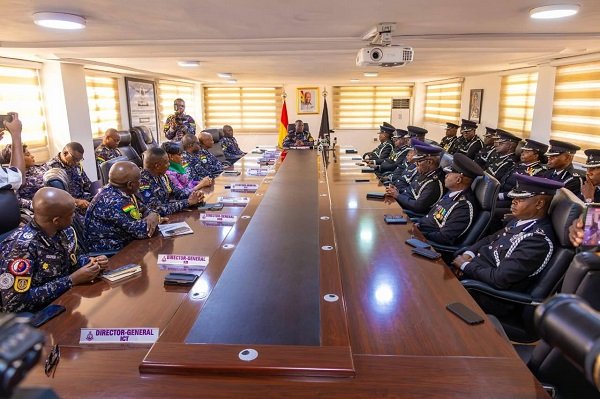
The Inspector-General of Police (IGP), Mr. Christian Tetteh Yohuno, together with members of the Police Management Board (POMAB), on April 17, 2026, decorated nineteen (19) senior officers who have been promoted to their next ranks based on the recommendations of the Police Council and approval of the President, John Dramani Mahama.
The ceremony, held at the National Police Headquarters in Accra, forms part of efforts to recognise merit, dedication, and long-standing service within the Ghana Police Service, while strengthening leadership across key operational and administrative levels.
The officers promoted from Deputy Commissioner of Police (DCOP) to Commissioner of Police (COP) are Dr. Luke Asue-In-Yeng Zakpaa, Mr. Frederick Agyei, Mr. Duuti Tuaruka, Mr. Arthur Osei-Akoto, Mr. Darko Offei Lomotey, Mr. Eric Ken Winful, Mr. Barnabas Nambont Nasumong, and Mr. Desmond Owusu Boampong.
The IGP and members of POMAB congratulated the officers and urged them to uphold the highest standards of professionalism and integrity in the discharge of their duties.