News
Mahama shares Ghana’s debt restructuring lessons at AU conference

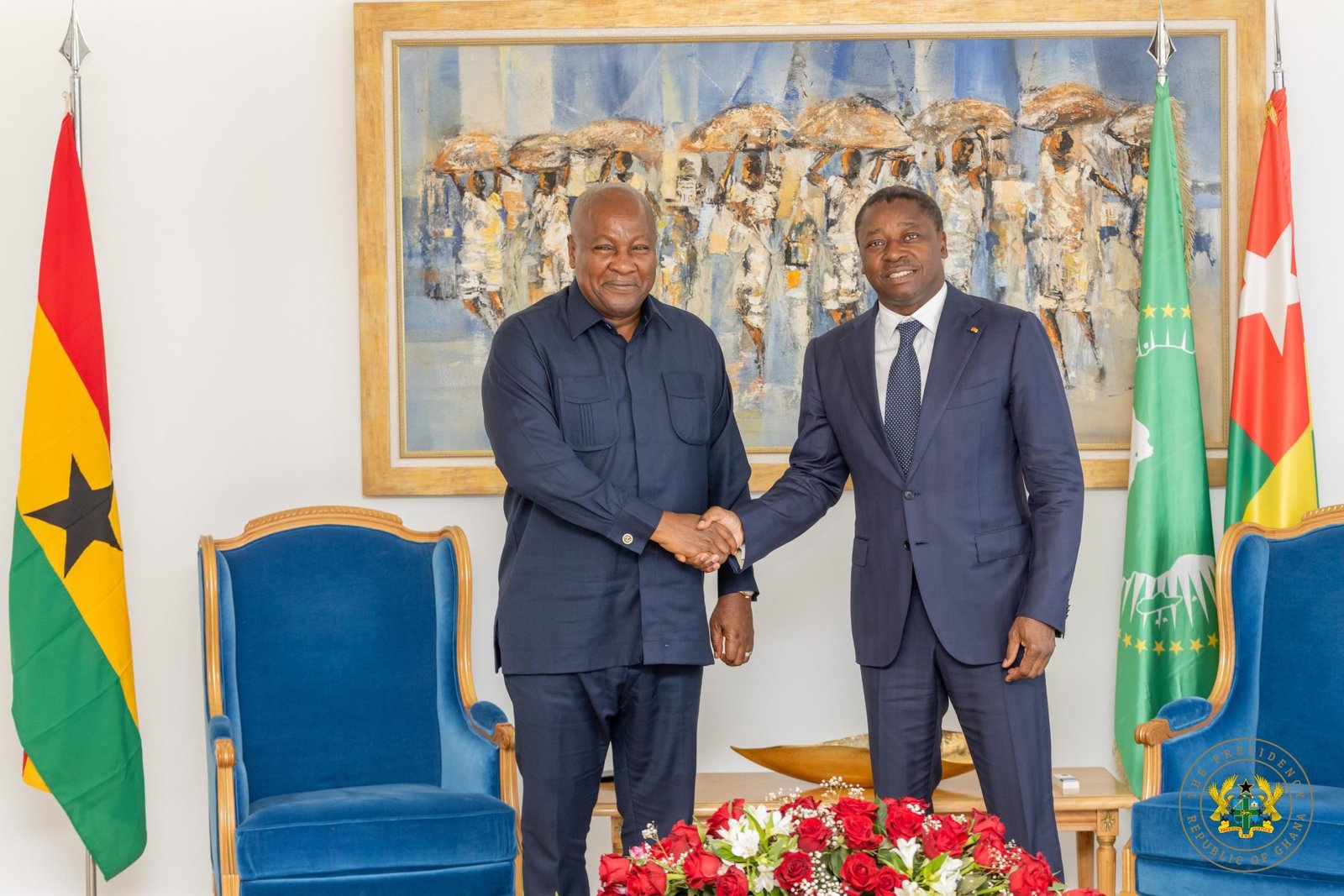
President John Dramani Mahama addressed fellow African leaders at the African Union Conference on Debt in Lomé, Togo, on Monday, sharing insights from Ghana’s experience with debt restructuring.
He emphasised the importance of transparency and timely engagement with creditors to avoid severe economic consequences from reactive debt management decisions.
The president highlighted the significant infrastructure gap facing Africa, which requires an estimated $130-170 billion in annual investment. He noted that the lack of access to affordable, long-term financing options often leaves nations with unsustainable debt burdens.
Citing IMF data, the President expressed concern that 22 African countries are currently in or at high risk of debt distress. He pointed out that the average public debt-to-GDP ratio in sub-Saharan Africa is projected to exceed 60% in 2025, a significant increase from 40% a decade ago.
Drawing from Ghana’s history, President Mahama referenced the Heavily Indebted Poor Countries (HIPC) initiative and the Multilateral Debt Relief Initiative (MDRI), which enabled Ghana to reduce its debt-to-GDP ratio from over 100% to under 30%. This, he explained, freed up crucial fiscal space for investments in key sectors like education, roads, and healthcare.
“Ghana, like many of our peers, has had to undergo painful restructuring to restore macroeconomic stability and rebuild investor confidence,” President Mahama stated.
He highlighted Ghana’s strategic use of concessional and non-concessional financing between the early 2000s and 2015 to accelerate infrastructure development and social inclusion.
The President detailed how, after initial progress, Ghana’s debt situation deteriorated due to a combination of unrestrained borrowing and multiple external shocks, leading to a debt-to-GDP ratio increase from 56.3% in 2016 to a peak of 90.7% in 2022.
He noted that by 2023, interest payments alone consumed 47% of total government revenue, a level deemed fiscally unsustainable by the World Bank.









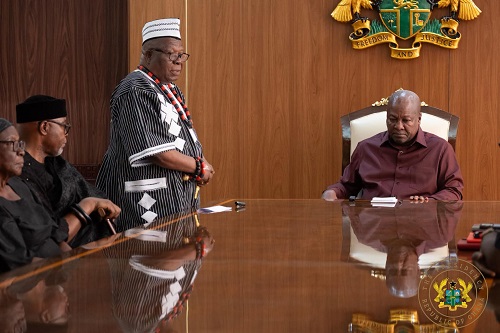
The family of Ambassador James Victor Gbeho, a distinguished statesman and diplomat, has paid a courtesy call on President John Dramani Mahama. They officially informed him of his passing.
The delegation, representing the Gbeho family, noted that it was culturally and diplomatically important to formally notify the President of the loss before making a public announcement of his death.
Ambassador Gbeho was a towering figure in Ghanaian and international politics. He served in many diplomatic missions, including New York. He was Ghana’s Minister for Foreign Affairs, a Member of Parliament for the Anlo constituency, and President (formerly Executive Secretary) of the ECOWAS Commission.
He was widely respected for his role in regional integration and his contributions to global diplomacy at the United Nations.
President Mahama expressed his condolences and shared reflections on Ambassador Gbeho’s contributions to the country, West Africa and the world.
Funeral details will be announced later.

The Minister for the Interior, Muntaka Mohammed-Mubarak, has revoked all firearm permits in Ghana with immediate effect and announced a new registration process for all gun owners.
The minister made the announcement on Tuesday, June 23, at the information service department saying all individuals who currently hold licences to own firearms or sidearms must undergo a fresh registration process.
“From this afternoon, all permits that have been granted to any individual that you are holding a sidearm or firearm is hereby revoked,” Mr Muntaka said.
He explained that the government had identified gaps in the country’s firearm registration system and needed to introduce stricter measures to improve public safety.
“We are opening the window where everyone will have to come forward again to register or re-register the gun because we’ve changed the procedure,” he stated.
According to him, the government decided not to wait until the end of the year to make the changes because lives could still be saved within the next six months.
The Interior Minister said one of the new requirements would be mandatory mental health screening for applicants seeking firearm licences.
“We’ve seen that people with mental health have already gone through and have the sidearm. Now we are introducing mental health. Before we give you the sidearm, we have to be sure that you have the mental stability to hold the firearms,” he said.
Mr Muntaka also announced that applicants would be required to undergo drug tests before being granted licences.
“We’ve also realised that people who are on drugs are also holding their arms and they are legitimate because it’s been registered. Now you have to go through drug tests to be sure that you are not on drugs before you can hold sidearms,” he added.
The minister said the new measures form part of efforts by the government to tighten firearm control and prevent legally registered weapons from falling into the wrong hands.
He urged all firearm owners to cooperate with the new registration process once details of the exercise are announced.
By: Jacob Aggrey