Entertainment
Lost art: COVID-19’s devastating impact on Ghana’s arts


- /home/u249204778/domains/spectator.com.gh/public_html/wp-content/plugins/mvp-social-buttons/mvp-social-buttons.php on line 27
https://spectator.com.gh/wp-content/uploads/2021/10/A-wood-curver-working-on-his-product.jpg&description=Lost art: COVID-19’s devastating impact on Ghana’s arts', 'pinterestShare', 'width=750,height=350'); return false;" title="Pin This Post">
- Share
- Tweet /home/u249204778/domains/spectator.com.gh/public_html/wp-content/plugins/mvp-social-buttons/mvp-social-buttons.php on line 72
https://spectator.com.gh/wp-content/uploads/2021/10/A-wood-curver-working-on-his-product.jpg&description=Lost art: COVID-19’s devastating impact on Ghana’s arts', 'pinterestShare', 'width=750,height=350'); return false;" title="Pin This Post">
The role of artists is to express themselves and tell a certain truth about their society in their work.
Art does, and always will, offer insights into who we are and what we are experiencing, as individuals and as a society as a whole.
But art is a money-making venture, and with the world effectively at a standstill, gallerists, dealers, and the artists they represent are essentially operating without one of their greatest sales tools, that is the human connection.
With the COVID-19 pandemic in place, the conventional process of communicating an artist’s vision and enticing collectors, institutions, and gallery goers to buy into it both figuratively and literally has been dormant.

In an interview, Mr. Philip Opuni, a fine artist at the Kumasi Cultural Centre in the Ashanti Region, said the pandemic had shuttered his business
“The principal effect, of course, is not being able to be present physically in front of a piece of work,” he said.
He again said that, visiting the museums, galleries, and having studio visits with artists and interacting with artwork personally was integral to the industry, especially during traumatic moments.
He said that, moments like the one we are in now, ie rising unemployment, instability, and uncertainty, could have an effect. “Many are less concerned with starting or building collections than they are with securing the basic necessities in order to survive.”
“I am not worried about the negative impact of COVID-19 on art, I am, however, worried of the people who count on a functioning art industry to make ends meet and whose livelihood is dependent on museums, galleries being open, on shows being guarded, maintenance being performed, art works being shipped, and sales being made,” he added.
One Mr. Harrison also said, artists were concerned with how long this pandemic was going to last, especially as social distancing was a serious impediment to the process of production.
He said, mass job losses, venue closures and most significantly, the threat of contracting the disease were factors that the art industry wasn’t prepared to face. “The economic hardship might have similarities, but the effect on how we look at art, and how we function as an art community has fundamentally changed,” Mr. Harrison explained.
Ms. Philomina Awudu, an artist at the Tamale Cultural Centre said, the pandemic was changing the way we valued art, which is the biggest question we do not have an answer to.
There is a world where by looking only digitally at art, I can imagine lasting effects on the perception and taste of art. One can ask: Will artwork that is virtual dictate our taste?
“Will it determine the trajectory of the art of the future?”, she asked.
She said, the outbreak of COVID-19 had also led to deeper introspection. Artists, by and large, were required to hit the pause bottom, which revealed a sense of clarity that perhaps wouldn’t have been apparent if the industry continued business as usual.
Reporters, political pundits, health experts, and commentators are all spewing facts and figures, debating over the right course of action to take to move the nation forward. Artists, on the other hand, have the ability to offer a different kind of vision of the future.
Ms Philomina said, “Art is the soul of any civilised society, and I love my part in it; but I am no expert in the business of art, only creating mine, but the current state of the art world, like that weekend at various cultural centres in the country, is cloudy.”
From Geoffrey Buta, Kumasi.


Organisers of Rhythms On Da Runway have announced November 28, 2026 as the date for the 16th edition of the event, to be held at the Palms Convention Centre.
This year’s edition, themed: ‘UNBOUND: Because You’ve Got Style’, is focused on breaking barriers in fashion and creating space for all.
According to the Chief Executive Officer of Nineteen57 Events, Shirley Emma Tibilla, affectionately called Cookie Tee, the focus of this edition is to give everyone an opportunity to express themselves without barriers.
She told The Spectator that as a leading fashion brand in the country and beyond, they want to open doors for people regardless of their colour, size and abilities among others.
Described by the BBC as “the biggest cultural exposé in Africa,” Rhythms On Da Runway returns this year as a celebration of fashion, music and individual expression without limits.
Organisers say for years fashion has been shaped by narrow ideas of who belongs on the runway, with certain body types, ages and abilities placed at the centre while many others are left out. UNBOUND seeks to open that picture.
This year’s runway will welcome people with different abilities, backgrounds, body types and personal stories. The theme will influence model casting, the collections, the stories told through the clothes and the way guests experience the event.
Beyond the runway, ‘Unbound’ will create room for young people to learn from established designers, gain practical experience and explore careers within fashion and the wider creative industry.
It will also open conversations around adaptive fashion, accessible event design, talent discovery, mentorship and employment.
The 2026 edition will bring together fashion designers and music stars from Ghana and across the African diaspora, with strong collections, live performances and an all-star cast of celebrity models.
The event will also feature the Black Star Awards, which will honour public figures shaping Africa’s future through leadership and contributions to the continent’s Orange Economy.
Organisers say the list of participating designers, performing artists, award recipients and other event details will be announced in the coming weeks.
By Edem Mensah-Tsotorme
SKIP THE QUEUE, TAP THE NEWS
You can now read the Ghanaian Times and The Spectator newspapers from the comfort of your device via TimesNewsPlus.
Join our WhatsApp Channel: https://whatsapp.com/channel/0029VbBElzjInlqHhl1aTU27

Veteran Ghanaian gospel musician Bernice Offei has passed on Saturday August 12, 2026.
She was 63.
The news of her demise flashed through social media on Saturday, prompting an outpouring of grief from musicians, fans and members of the Christian community, who have since paid tribute to her distinguished career.
She gained strong reputation as a singer, songwriter and minister whose music transcended generations.
Some of her popular songs include ‘Kaa She Gbeyei,’ ‘It’s By Grace,’ ‘Nyame Kokroko’ and ‘N’adom Ara Kwa.’
Her contribution to the growth of gospel music in Ghana was recognised in 2009 when she won the Best Female Vocal Performance and Songwriter of the Year awards at the Ghana Music Awards, now known as the Telecel Ghana Music Awards.
Beyond music, Mrs Offei distinguished herself in academia and professional life. She attended Achimota School before earning an MPhil in Crop Science from the University of Ghana and a Master’s Degree in Information Technology from University College London in the United Kingdom.
Mrs Offei was married to Prof. Samuel Kwame Offei, a former Pro-Vice Chancellor of the University of Ghana, and the couple had two children.
Her death comes days after she was reported missing but was later found safe.
Mrs Offei leaves behind a rich music legacy that continues to inspire faith, hope and resilience among generations of listeners. -GNA
SKIP THE QUEUE, TAP THE NEWS
You can now read the Ghanaian Times and The Spectator newspapers from the comfort of your device via TimesNewsPlus.
Join our WhatsApp Channel: https://whatsapp.com/channel/0029VbBElzjInlqHhl1aTU27

 Entertainment1 week ago
Rhythms On Da Runway returns November 28 with 16th edition themed ‘Unbound’
- News1 week ago
48 Engineer Regiment to be major sub-contractor on Accra-Kumasi Expressway, $2bn ready- Prez Mahama
- Entertainment1 week ago
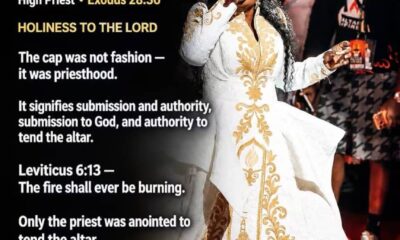
Ohemaa Mercy’s Tehillah Experience outfit was priestly regalia, not costume – Management clarifies