News
Let’sustain the peace

Exactly two years ago, some media colleagues and I from Ghana and Nigeria had the privilege of being invited by the African Mission in Somalia (AMISOM) to witness first hand the roles being played by our country men and women in support of the peace process in Somalia.
This feature is a fulfilment of a promise I made to the then Deputy Head of the Ghanaian Police Contingent in AMISOM, Chief Superintendent Cosmos Allan Anyan who advised that upon our return to Ghana we should use our various media platforms to highlight the negative effects of war to Ghanaians when we are about going to the 2020 December Polls.
In his opinion, if we did so, it would among other things go a long way to get the citizenry to cherish the relative peace the nation was enjoying and guard it jealously instead of taking it for granted and engaging in activities that have the potential to compromise the peace of our motherland, Ghana .
AMISOM is basically about peace keeping mission in Somalia operated by the African Union (AU) with the consent of the United Nations (UN) and aimed at restoring peace in the war torn nation .
Somalia was once a beautiful and a peaceful country but was torn into shreds by civil war in the 1980s.
The one week we spent in Somalia in November 2018, I must confess that I lived in danger zone because unlike Ghana where I could move freely on foot or soft body vehicles without fear of a gun shot, bomb blast, suicide attacks and other related issues, that was a sharp contrast.
We moved about most of the time in Mamba vehicles (a specialised vehicle which provides protection against mines of up to seven kilogrammes) wearing a body armour which weighed probably about 10 kilogrammes overall combat helmet which weighed about 30 pounds.
Even though our movements were under tight security, it was still very uncomfortable knowing that the Al-Shabab was also close by and could strike at any time.
On a couple of occasions, we escaped death because the intelligence gathering machinery of the AMISOM was on its toes.
We had the opportunity to visit some parts of the country and if you were told this was once a peaceful place, you would doubt.
There were visible marks of gun shots in some of the buildings and traces of bomb blasts and the situation was more heart breaking at the Internally Displaced Persons’ Camps.
I still remember how some of the children looked sick, mothers looked frustrated and men hopeless at the Alrahma IDP Camp.
Some of them told us how they could go a day or two without food or even water and for breastfeeding mothers who had to feed their younger ones on an empty stomach was quiet worrying .
There were more than 1,000 Camps in Mogadishu, the national capital of Somalia, according to the then AMISOM Gender Focal Person, Inspector Rachel Malambo.
A 42-year old widow, Ms Abiba Nuru Alee who granted the media an interview through an interpreter told us she was once an independent woman who owned a house, a farm and other properties with enough to eat and spare.
She was even taking care of eight other people but because of the war, she lost everything and had found herself in an IDP Camp where she had to beg for food and water and aside from that she could not tell whether she would survive the day or not.
For many women like her who had lost their husbands to the war, she wouldn’t wish war even on her worst enemy.
Ms Alee said no country should engage in any activity that had the tendency to destroy the peace of a country because the effect was irreversible or devastating.
As the nation goes to the polls on December 7, let us all remember what women and children like Ababa Nuru Alee are going through and be mindful of our deeds and utterances.
A war may take days, weeks, months or even years but its repercussions may take decades or even centuries and the nation may never recover.
Well, physical things could be fixed but the emotions of people never get restored. The hurt from families who never get to see their loved ones again whether they are dead or separated .
When there is war, women and children and even men are sexually abused. Some women never get to know the fathers of their children and the defiled children perpetually live in trauma.
The issues of hunger and starvation, no access to quality healthcare including maternal healthcare, education and having to live in a state of insecurity is heartbreaking.
Let us always remember that we have only one Ghana. There are people who deliberately foment trouble because they stand to benefit if the country is in chaos.
Don’t forget the conflict entrepreneurs. For them, it is an opportunity to sell their fighter jets, arms and ammunition, armoured vehicles and conflict apparels among others.
Let peace prevail.
From Dzifa Tetteh Tay, Tema.


The state has closed its case in the Republic v Akonta Mining and two others.
The case was heard earlier today at the Accra Criminal Court, where state prosecutors and CID investigators from the Ghana Police Service closed the Republic’s case.
In all, the prosecution called three witnesses to prove its case, two former employees of Akonta Mining Company Limited and a detective from the Ghana Police Service.
According to an update on the case, the two former employees testified to Mr Bernard Antwi-Boasiako’s deep involvement in Akonta Mining Company’s alleged illegal mining activities in the Tano-Nimiri Forest Reserve.
The police detective tendered in evidence drone footage and other audio-visual materials and official communications in support of the testimonies of the two former Akonta Mining employees.
The accused persons, through cross-examination of the witnesses, sought to dissociate themselves from every mining activity in the Tano-Nimiri Forest Reserve.
At the close of the prosecution’s case, counsel for the accused persons asked the court to allow him to call the first prosecution witness back into the witness box for further cross-examination.
The court gave him up to Friday, October 30, to file a formal motion to recall the witnesses.
The case has been adjourned to November 4 for the motion to be heard.
By Edem Mensah-Tsotorme
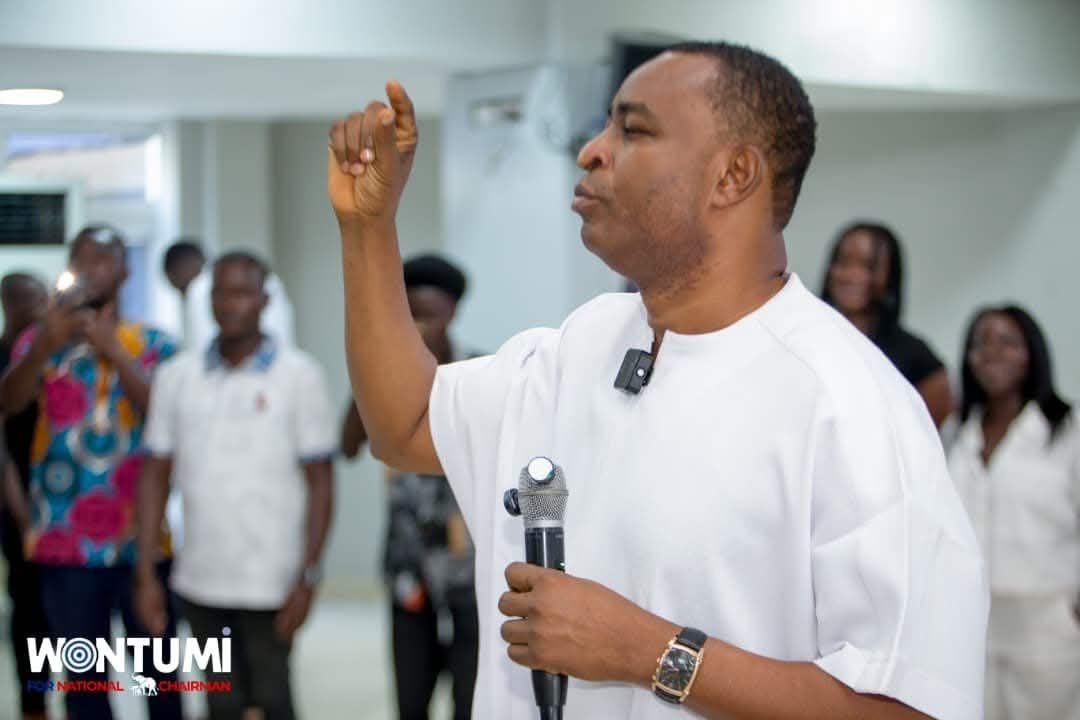
Dr Palgrave Boakye-Danquah, spokesperson to NPP Ashanti Regional Chairman Bernard Antwi Boasiako, popularly known as Chairman Wontumi, has called on the government and Parliament to undertake major reforms in Ghana’s prison system, including the construction of a dedicated prison hospital and the introduction of regulated conjugal visits.
In a press statement issued on Tuesday, October 27, 2026, Dr Boakye-Danquah shared Chairman Wontumi’s observations and recommendations following his remand on July 20, 2026.
According to the statement, Chairman Wontumi’s experience in prison has given him the opportunity to interact with prison officers and inmates and observe the challenges facing the Ghana Prisons Service.
The statement noted that the NPP chairman believes the correctional system must move beyond punishment to focus on rehabilitation, welfare and productivity.
One of his major concerns is the lack of dedicated, well-equipped prison hospitals, ambulances and standby generators in several prison facilities.
Dr Boakye-Danquah said Chairman Wontumi had raised concerns about the difficulties in providing medical care to seriously ill inmates, including those suffering from tuberculosis.
He is therefore calling for the construction of a modern prison hospital to serve facilities across the country. In the interim, he has proposed emergency arrangements with the 37 Military Hospital and the Police Hospital.
On the welfare of prison officers, Chairman Wontumi has urged the government to review their salaries, accommodation and conditions of service.
He has also called for proper classification of inmates, arguing that minor offenders should not be housed alongside armed robbery convicts and that persons facing trial for serious offences, including treason and terrorism, should be appropriately separated from other inmates.
The statement further highlighted concerns about the need for counselling and behavioural support for young inmates, particularly those serving sentences for defilement-related offences.
Chairman Wontumi has also called for a clear policy on the classification and management of LGBTQI+ inmates within the prison system.
On family relationships, he has proposed the creation of designated private areas where prisoners can receive visits from their spouses and children.
He believes regulated conjugal visits could help preserve marriages, reduce tension among inmates and support rehabilitation.
“The prisoner is the one in prison, not the children or spouse,” the statement noted, explaining his position on the need to protect family relationships during incarceration.
Chairman Wontumi has appealed to the Ministry of Food and Agriculture to support prison farms with the necessary equipment to improve food production.
According to the statement, the Ghana Prisons Service has access to vast lands and skilled labour but faces a shortage of agricultural equipment, with only one tractor reportedly available for farming and garbage-related activities.
He has further proposed greater collaboration between prison authorities and the justice sector, suggesting that regional prison commanders should be included in relevant discussions because of their knowledge of prison conditions and inmate rehabilitation.
On infrastructure, Chairman Wontumi has called on the government and private sector to invest in modern prison facilities and factories, arguing that the system has seen limited structural improvements over the years.
Appeal to Parliament
Dr Boakye-Danquah said Chairman Wontumi had made a special appeal to Parliament to lead efforts towards comprehensive prison reform.
He is urging the Speaker of Parliament to initiate discussions on prison conditions as a human rights and national development issue.
He has also called on the Majority and Minority caucuses to work together to pass a new Prison Reform Act and approve funding for a dedicated prison hospital, ambulance services, standby generators and agricultural equipment.
Additionally, he wants the Parliamentary Select Committees on Defence and Interior, Health, and Food and Agriculture to undertake working visits to prisons across the country to assess conditions firsthand.
According to the statement, Chairman Wontumi believes bipartisan cooperation between the Majority and Minority caucuses is necessary to secure the legal and financial reforms required to improve the prison system.
He has called for broader prison reforms across Africa, expressing hope that Ghana could lead the continent in improving correctional facilities.
Reflecting on his experience since July 20, Chairman Wontumi stated: “At this experience since July 20th till date, prison doesn’t reform as it should be. I pray that the entire Africa will learn from Ghana.”
The statement added that Chairman Wontumi remained in high spirits.
By: Jacob Aggrey