Hot!
Let’s invest in our athletes for medals …but congrats to the gritty Dogboe


• Ghana’s 4×100m relay team
The World Athletics Championship in Eugene-Oregon, USA, ended last weekend with Ghana failing to win a single medal.
It is not all-too surprising, though; because we have not invested enough to expect a medal from such high-profile championship.
We can only harvest from where we have sown.
Ghana competed in five different events – including men 4×100m, long jump, 100m, 200m and 800m – and per some of the times returned in the season, some Ghanaians were expectant of a medal or two. Fair enough.
The first day saw Ghana’s 100m record holder Benjamin Azamati and Joseph Paul Amoah failing to progress in the heats after finishing in fourth and sixth positions with times of 10.18s and 10.22s respectively.
Amoah again slumped in sixth spot when he took another turn for the 200m.
Up came Alex Amankwah, another hopeful. But after staging a fantastic run in the 800m heats and finishing in fourth place with a time of 1:45.92, something bad happened. Sadly, for the 30-year-old athlete, he was disqualified for lane violation, moments after the race. He burst into tears in pain and disbelief.
But some little joy was to come when the quartet of Sean Safo-Antwi, Benjamin Azamati, Joseph Manu, and Joseph Amoah ran a blistering time of 38.58s – a season’s best, to finish third behind the USA and Great Britain – taking them to the final.
But wait a minute. The final was a beauty to behold as the smashing Azamati ‘jetted off’ the quartet to finish fifth – but what initially looked like third place – with an imposing time of 38.07s.
They could still have done better though, but that creditable performance should be a gigantic motivator ahead of the Commonwealth Games.
Sadly, the nation’s in-form long jumper Deborah Acquah also failed to glitter as she only managed a distance of 6.46m, critically below the 6.75m automatic qualifying mark. Indeed, she had rolled off with two faulty jumps before finally making a first-rate jump but that was not enough to get her through to the finals. Come to think of it, Deborah is the nation’s national record holder in the women’s long jump with a leap of 6.89m.
But just like her colleagues, she has promised to make amends in the Commonwealth Games that roared off Thursday.
Though disappointing, Ghana’s run at the world championships is not a hopeless story, at all. Yet, it teaches grave lessons; to take some fine look at disciplines that can haul home medals and put Ghana on the world map.
We pride ourselves as a sports nation yet are so deeply engrossed in virtually one discipline – football, to the detriment of the rest.
Yes, we know the passion of the nation is sports; but if other disciplines that we have comparative advantage like athletics, boxing, weightlifting, to mention but a few, are accorded some measurable amperage of support financially, Ghana would be the cynosure of all eyes during games.

Acquah – Ghana’s long jumper

Dogboe – Eyeing a second world title
On this note, we can only wish our athletes the very best of luck as they dash for yet another adventure to carve a niche for themselves in Birmingham and also bring glory to the country.
Having said that, it would not be out of place to gild the lily of Isaac ‘Royal Storm’ Dogboe for outpointing his American counterpart – Joez Gonzalez in their world title eliminator in the USA, last weekend.
The Royal Storm’s resurgence is so admirable and could easily serve as reference point for many boxers.
Having fatally lost twice to Mexico’s Emmanuel Navarrete, and losing his WBO super bantamweight title in the process, many wondered whether he could navigate his path back into the pugilistic sport.
But he did. His doughty character, self-belief, strong-will and supreme determination, were deeply embedded in his rock-solid frame.
Truth, however, is that Dogboe would have to improve tremendously as he seeks for a second world coronet against – possibly USA’s Ray Vargas. He is another demon in the ring.
That fight should be a monolithic undertaking and it would demand something more unique from the Royal Storm to scale.
PlainTalk With John Vigah


The professor who spends his days exploring the intricacies of African languages found himself at the centre of a different kind of lesson on Friday, October 2, 2026. 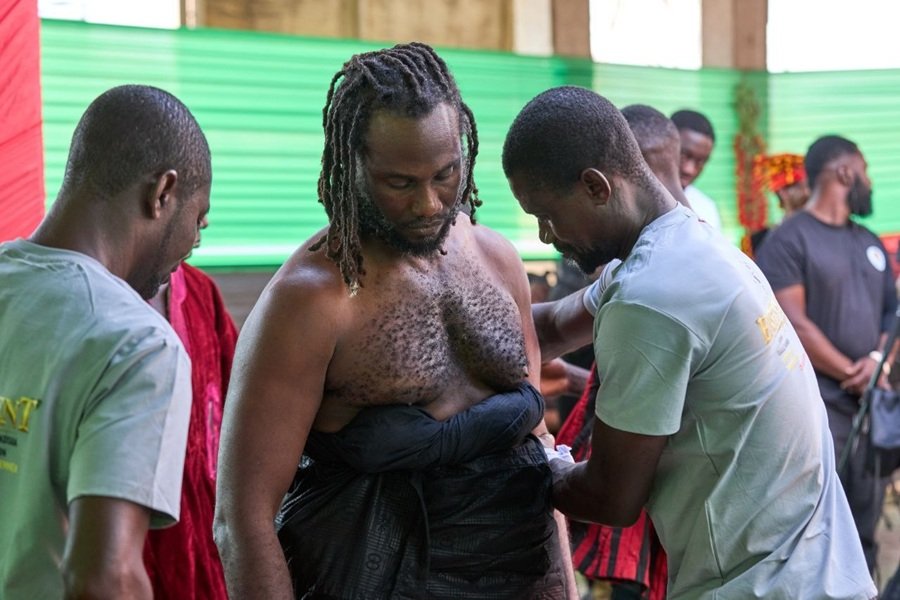
This time, there were no lecture notes, academic arguments or university classrooms. Instead, there was the weight of tradition, the rhythm of a community celebration and the solemnity of an oath at a royal palace.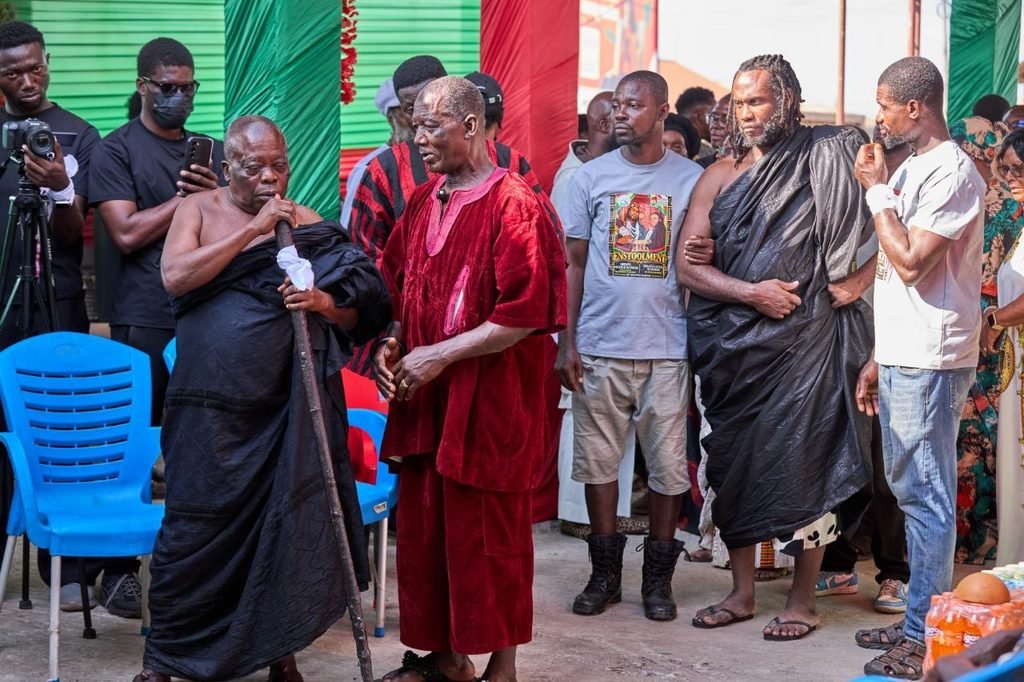
Professor Ọbádélé Kambon, a full Professor of African Linguistics at the University of Ghana, was enstooled as Apagyahene and Sunsum Ɔsahene of Akuapem Mampong in the Eastern Region in a ceremony that brought academia and traditional authority together.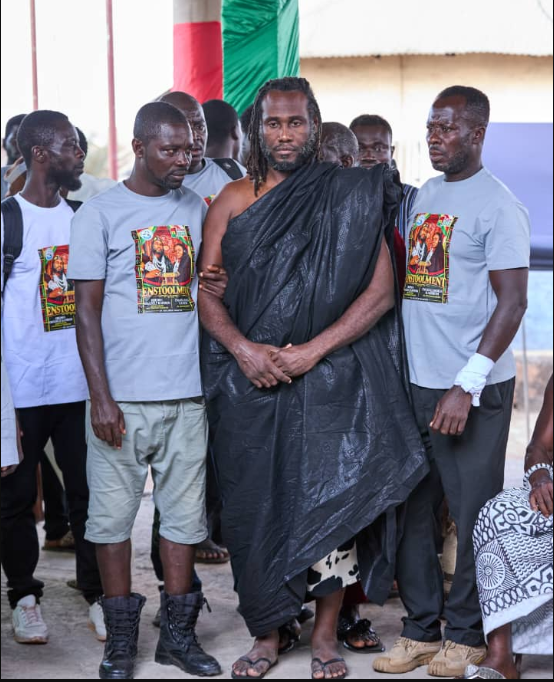
For the professor, the occasion was more than a new title. It was a moment that connected his academic interests in African languages and indigenous knowledge with the living traditions of an Akan community.
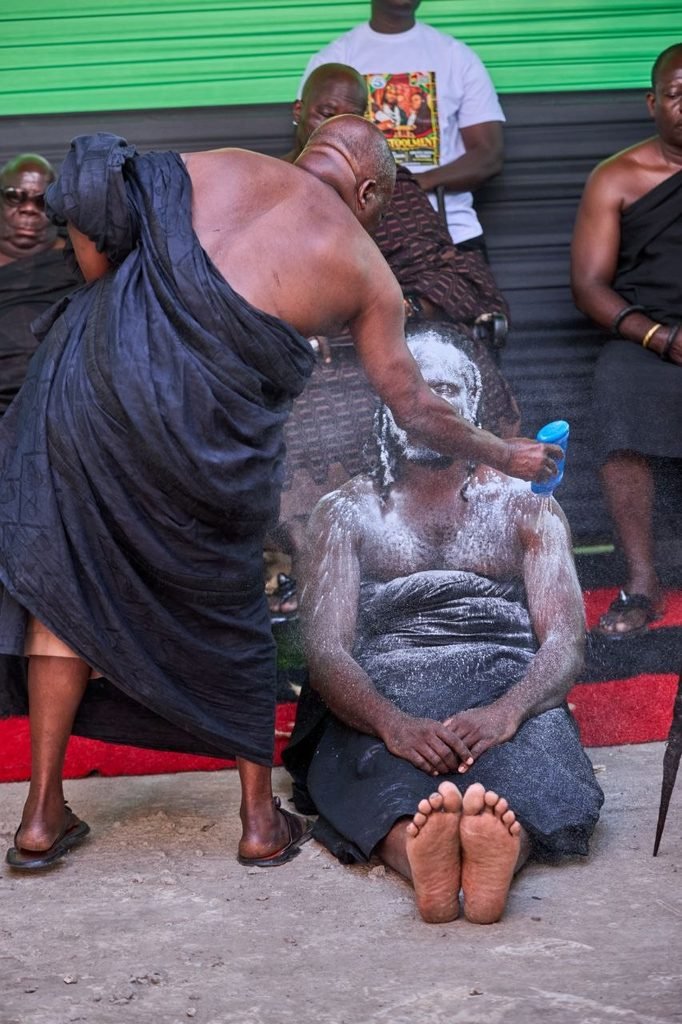
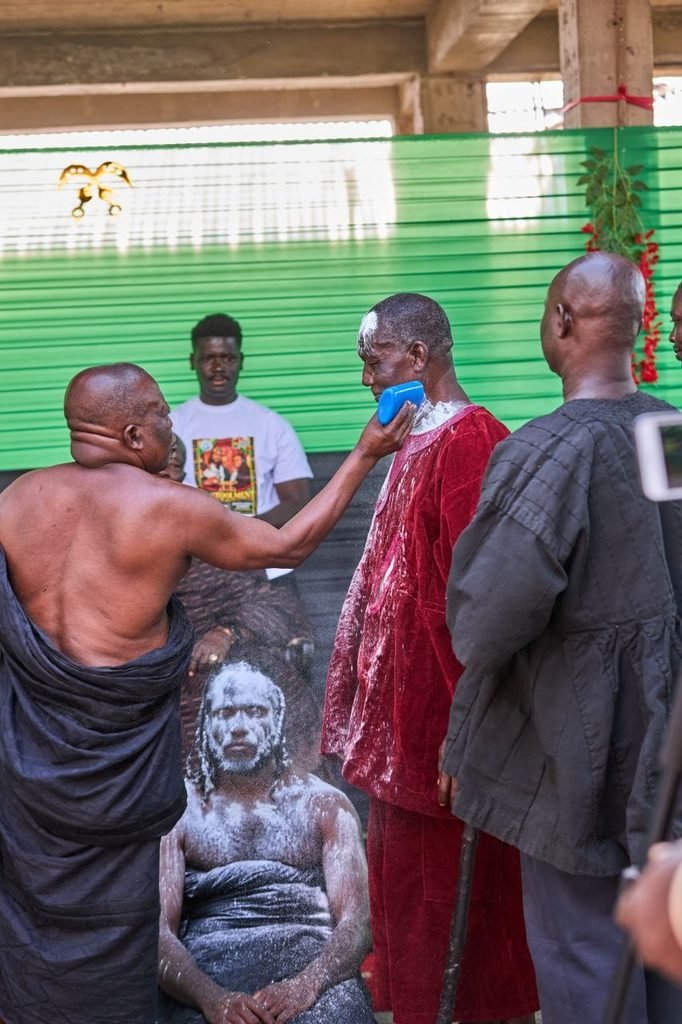
The day’s events unfolded through a series of customary observances. Kambon was first taken to the compounds of the Ɔkyeamehene and Gyasehene, where the preparations for his installation continued.
Then came the application of hyire, the white kaolin powder associated with traditional rites.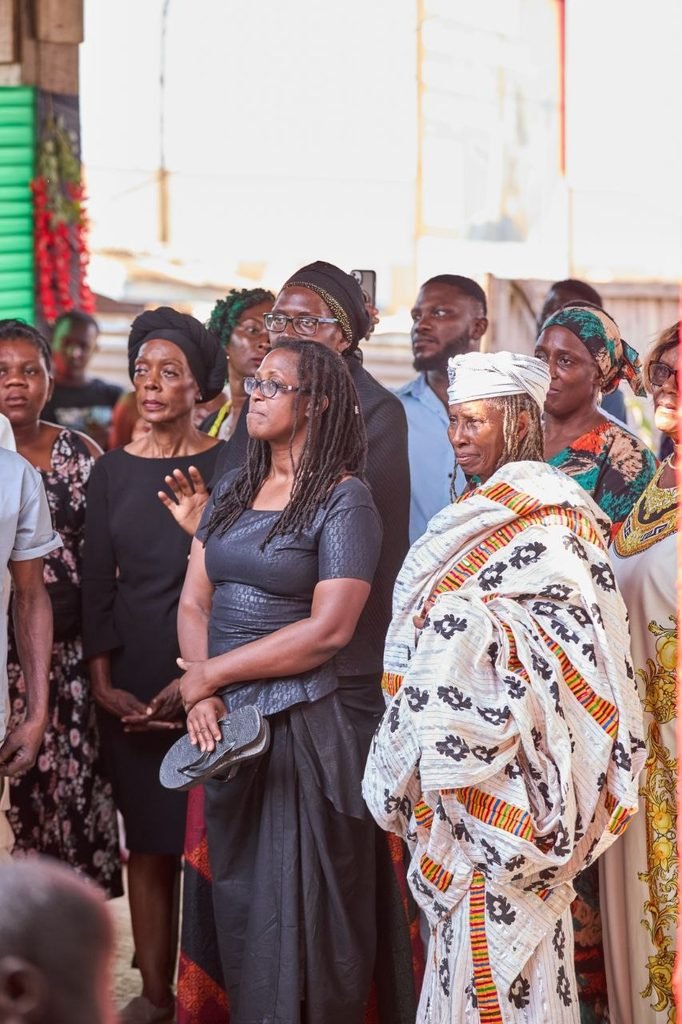
With the customary proceedings underway, the new chief was lifted onto the shoulders of celebrants and carried along the main thoroughfare of Akuapem Mampong.
The procession transformed the streets into a public stage for a ceremony rooted in the community’s traditional institutions.
There was something striking about the image, a university professor, accustomed to the measured language of academic discourse, being carried through the town in a display of traditional recognition.
Yet the celebration was not complete with the procession.
A ram was sacrificed at the Mamponghene’s compound before Kambon was taken to the palace, to swear the oath associated with his new offices.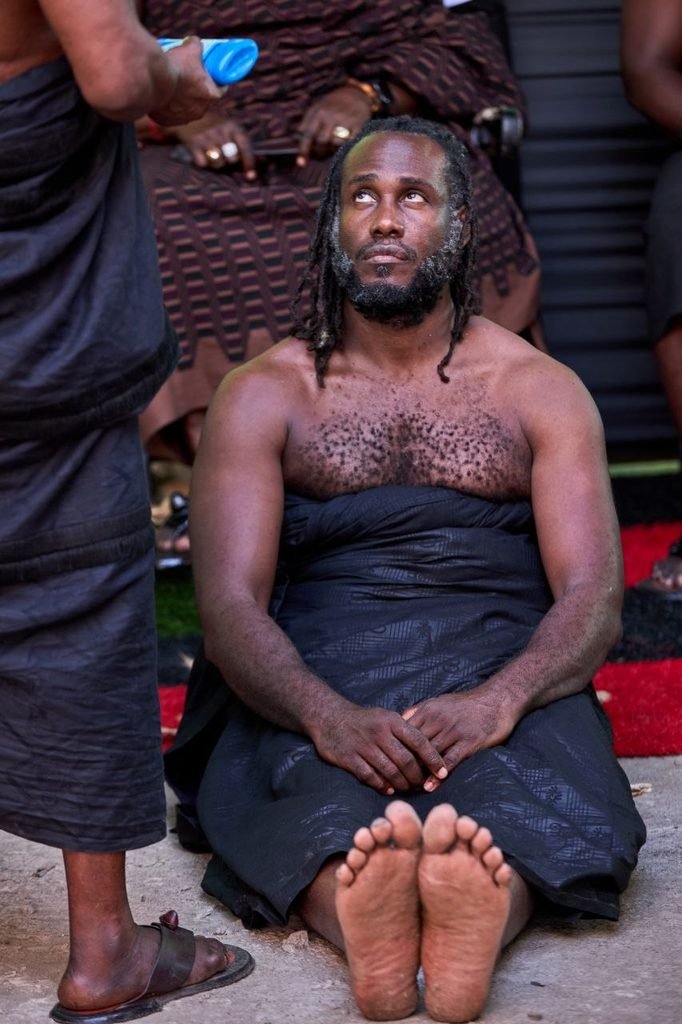

The ceremony brought him formally into his roles as Apagyahene and Sunsum Ɔsahene.
Beyond the colourful proceedings, the titles themselves carry layers of historical meaning.
Kambon in his research explores the historical connections between Apagya and Akan political and military organisation.
Accounts cited in his work linked Apagya to an asafo, or military company, while historical writing traces an Apagya stool in Asante to the reign of Opoku Ware I in the eighteenth century.
These historical associations offer a glimpse into the institutions that have shaped Akan society over generations, although they do not automatically define the precise responsibilities of the office in Akuapem Mampong.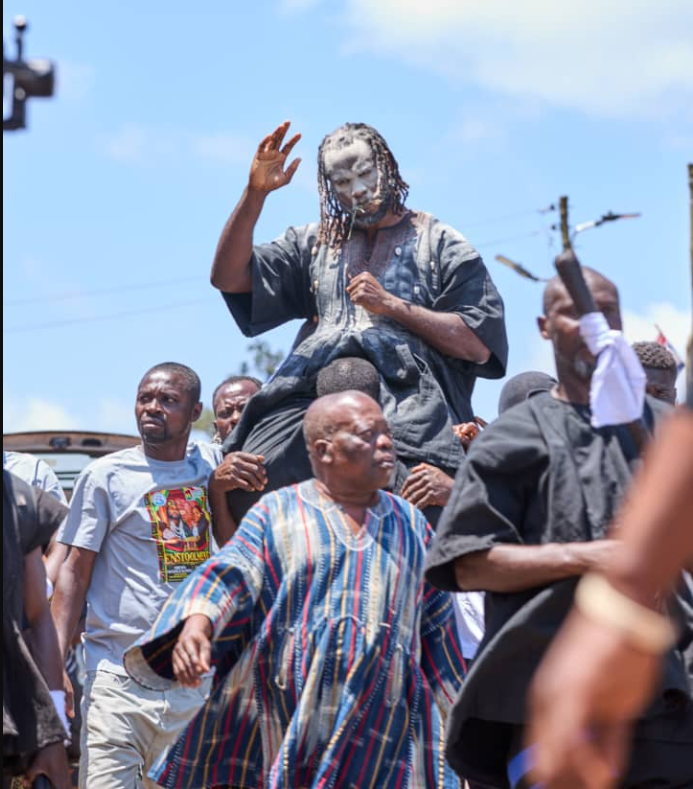
Kambon’s own professional life reflects a similar interest in preserving and examining African knowledge.
His work encompasses Akan language structure, naming practices across the Black world, proverbs and indigenous intellectual traditions.
Through Abibitumi, the platform he founded, he also promotes language learning, scholarship and cultural engagement.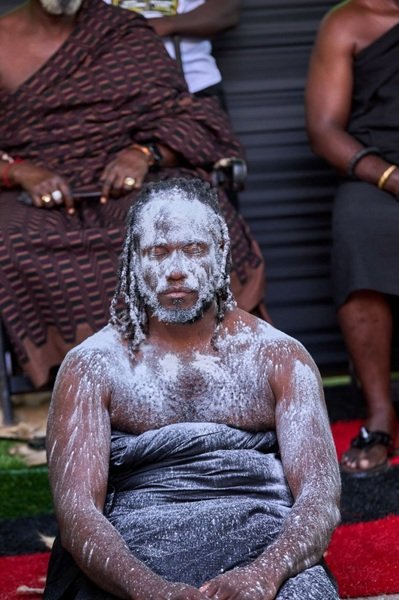
But tradition was only one part of the story that day.
When the formal ceremony gave way to a reception, the occasion expanded into a celebration of three milestones: Kambon’s enstoolment, his promotion to full professor and his daughter Ama’s admission to the University of Ghana.
The gathering therefore carried a personal significance that went beyond the honours bestowed on one man. 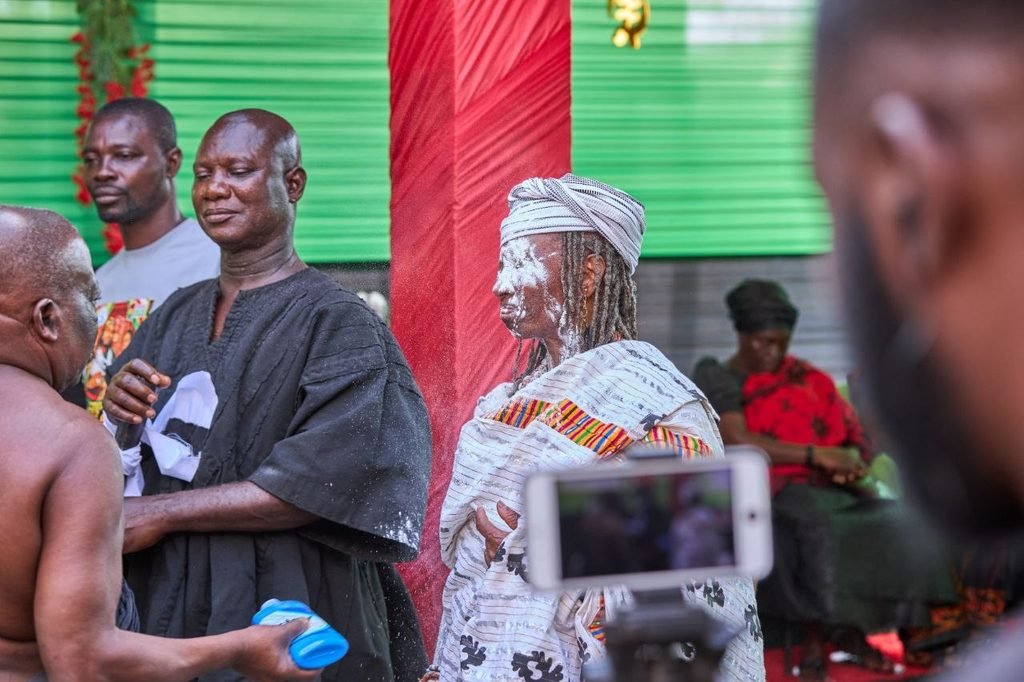
It celebrated professional advancement, the continuation of family aspirations and a connection to cultural heritage.
For a father, seeing a daughter gain admission to the same university where he holds a distinguished academic position offered another reason to celebrate.
For the professor, the moment placed family achievement alongside his own professional and traditional milestones.
Kambon had already established a place in the traditional life of Akuapem Mampɔn through an earlier installation as Banmuhene Kyidɔmhene, recorded in 2017.
His latest enstoolment adds another chapter to that relationship.
In Akuapem Mampɔn, the day brought together the university, the palace and the family table in one celebration. And for Kambon, the journey from the lecture room to the traditional procession showed how scholarship, cultural responsibility and family achievement could converge in a single memorable occasion.
By Enoch Ntiamoah Siaw
SKIP THE QUEUE, TAP THE NEWS
You can now read the Ghanaian Times and The Spectator newspapers from the comfort of your device via TimesNewsPlus.
Join our WhatsApp Channel: https://whatsapp.com/channel/0029VbBElzjInlqHhl1aTU27

Intercity STC Coaches Limited has interdicted a driver captured in a viral video allegedly hitting a Sprinter bus during an overtaking manoeuvre at Pokuase before driving away from the scene.
In a public notice, the company described the driver’s conduct as unacceptable, stressing that it did not reflect the safety standards and professionalism it upholds.
Management said it had commenced an immediate investigation into the incident and identified the driver, who has been interdicted pending the outcome of the disciplinary process.
The company added that it was awaiting an official report from the Pokuase Police Command to help establish the facts surrounding the incident.
STC reaffirmed its commitment to passenger safety and responsible road use, while thanking members of the public for bringing the incident to its attention.
Management assured the public that appropriate action would be taken following the investigation.
By: Jacob Aggrey