Features
Is the NHIS working effectively at the accredited health facilities at all?


For the number of times, this year, that I had sought medical attention at my health provider (Clinic), which has been duly registered under the National Health Insurance Scheme (NHIS), I did not receive my medications from the pharmacy even though the prescriptions by the doctors were covered by the scheme.My only benefits were the examination and compilation of my vital information, i.e. taken of temperature, blood pressure and checking of weight by the nurses and finally the medical treatment by the doctors. The prescriptions for my drugs were issued alright by the doctors, only to be told by the pharmacists on duty that the drugs were not available, therefore, I should go outside and buy them.
‘NO DRUG’ SYNDROME BY ACCREDITED NHIS HEALTH PROVIDERS
I have monitored and observed this situation critically in some of the NHIS health providers in Accra and arrived at the conclusion that I was not the only person suffering from this unfavourable practice but quite a number of people were also being denied their legitimate entitlement. The mantra has been, ‘please go to the doctor to write a fresh prescription for you to buy your drugs from pharmacies outside’. Such is the scenario in most of the health facilities covered by the NHIS in our dear country. I have contacted a number of people who have attested to that fact and told me they have been buying their drugs from pharmacies outside at exorbitant prices. I have come to realise that these health facilities covered by the NHIS, have the drugs alright but then, failure to reimburse them by the government has necessitated their reluctance to supply them to the beneficiaries of the scheme. The NHIS is indebted to them in huge amount which remains unpaid.
QUESTIONS FOR NHIS ADMINISTRATORS
The few questions we need to ask ourselves are; What is happening to the NHIS? Is the NHIS collapsing? Why is it that medical facilities that are operating under the scheme are not being reimbursed by the government? Are there no funds to run the scheme properly? Has the economic decline affected the scheme financially? Somebody must answer these questions to set the records straight.
Ghana was the first Sub-Saharan African country to introduce the National Health Insurance Scheme (NHIS) in 2003 through an Act of Parliament (Act 650 Amended Act 852) and its full implementation started in 2004. Under the NHIS Amended Act 852 (2012), every Ghanaian is required to enrol in the health insurance scheme. The scheme is regarded as one of the social intervention programmes the government introduced to provide financial access to quality health care in Ghana.
THE EMERGENCE OF NHIS AND HOW IT IS FUNDED
The scheme is largely funded by the National Health Insurance Levy (NHIL) which is 2.5 per cent levy on goods and services collected under the Value Added Tax (VAT), 2-5 percentage points of Social Security and National Insurance Trust (SSNIT) contributions per month.
The idea for the establishment of the NHIS in Ghana was conceived by former President John Agyekum Kufuor who used the scheme as a campaign promise in the 2000 general election and promised to abolish the ‘Cash and Carry’ system of health delivery when he gained power in the country.True to his campaign promise, President Kufuor, after winning the election introduced the scheme in 2003.
The major objective of the NHIS was to ensure that it covered all indigene Ghanaians across the country with the purpose of delivering a comprehensive and affordable health care nationwide. The scheme was designed to cover employers, unemployed both in the rural and the urban communities across the country.
ACHIEVEMENT OF NHIS UNDER VARIOUS GOVERNMENTS
Since its introduction in the country, the scheme had witnessed remarkable progress in various regimes after the Kufuor led government. Former Presidents John Evans Atta Mills, John Mahama and the current President Akufo-Addo, readily embraced the scheme because of its immense benefits to the people and the country in general. They, therefore, adopted it as one of the social interventions in the health sector and gave it the needed push. The scope of the scheme was widened to rope in more beneficiaries. Currently, the active membership of the NHIS has risen from 10.8 million in 2018 to over 12 million in 2019. The Ashanti Region, according to statistics, recorded the highest active membership of 2.2 million followed by the Greater Accra Region in the year under review. Latest figures on the entire membership as of the end of 2021 is not yet available.
The scheme has been made compulsory by government based on past experiences which showed that most of the citizens could not engage in it and the fact that the government has the duty to protect the general welfare of all the citizens in our dear country. The flexible nature of the scheme and its lower payment of registration, made it quite easy for people to register and enrol as members. It has been designed to exempt certain category of people including the older persons from the payments of certain charges.
EMERGING CHALLENGES OF THE NHIS
Like all human institutions across the globe, the scheme despite its successful implementation over the years in the country, is challenged with a number of problems such as poor coverage, poor quality care, corruption, poor stakeholder participation, lack of clarity on concepts in the policy, intense political influence and poor financing. These administrative lapses are, indeed, affecting the effective operation of this laudable scheme.
It is worthy of note that National Health Insurance Authority (NHIA), the administrative body of the scheme in collaboration with the National Identification Authority (NIA), is determined to ensure that all residents in Ghana use one card which will be the Ghana Card to access health care. Consequently, steps are in progress to synchronise the NHIS card with the Ghana Card. That will be a positive development and a step in the right direction.
THE SUCCESSFUL STORY OF THE NHIS

Suffice it to say, the NHIS unlike the ‘Cash and Carry’ system which requires up-front payment of medical care and imposes a financial stress on Ghanaians in terms of health care delivery, is a laudable social intervention which needs to be supported adequately by government if we are to achieve health for all by the year 2024 and beyond. The scheme has come to serve and continues to serve a useful purpose in our dear country and we need to nurture it to flourish. It has been a source of hope for the majority of people in the rural areas who depend on it to access their health care needs. It is, therefore, necessary for the government to clear the outstanding arrears of the service providers and invest heavily in the programme to enable the scheme to cater for the millions of patients under the scheme.
A healthy nation, they say, is a wealthy nation. Health care is important to society because people get ill, accidents and emergencies do arise and the hospitals are needed to diagnose, treat and manage different types of ailments and diseases. Many of our people’s aspirations and desires cannot be met without longer, healthier and happy lives.
Contact email/WhatsApp of author:
0277753946/0248933366
By Charles Neequaye


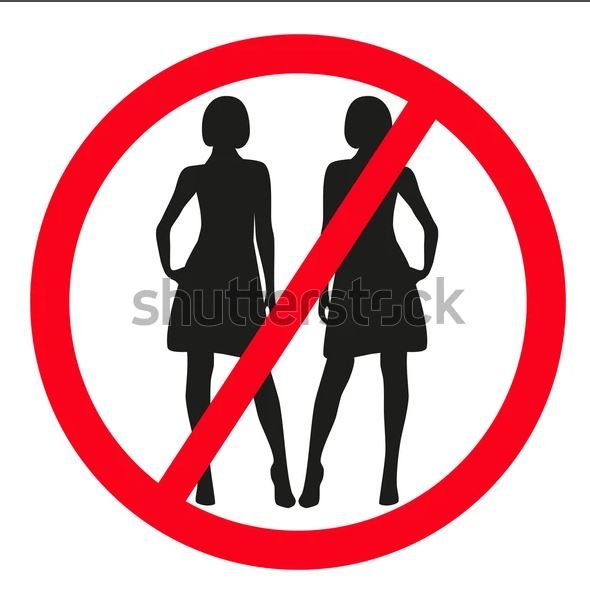
ANY man with two balls between his thighs, must desire a woman. If he doesn’t, then he has been emasculated. So he is incapable of desiring a woman and must submit himself to medical or spiritual deliverance. God willing, he’d start nodding like an agama lizard.
Those who have not been emasculated but yet do not desire women are celibate and have consigned themselves to religious order as monks or priests. Even monks and priest desire women, but are compelled to suppress it, lest they fall from grace to grass.
There are others who are not under any vow of celibacy and yet they don’t desire women. Instead they desire men. There reason why God destroyed Sodom and Gomorrah with fire was that men were going after men, an abomination that is unforgivable.
When men have sex with men and women with women, all manner of people including sociologists and psychologists explain it away and even suggest that homosexuals and lesbians should be tolerated because their sexual orientation is not of their own doing.

JAMAICA
In countries like Jamaica, homosexuals are attacked and even killed, because their very existence is seen as a curse of the land. Going to the extent of killing homos is however a bit to the extreme because I believe that anyone who strays must be given the chance to reform if he can.
Homosexuality in Ghana is said to be spreading, and the schools are said to be the breeding grounds of new converts. Does this suggest that the act is not the result of any genetic aberration, but one that is learnt?
There is a girls’ school in the Eastern Region where first year students are initiated into lesbianism. Those who refuse are given a tough deal. They are punished, harassed and life is made very uncomfortable for them. Sooner or later, they join the fold.
It is time school authorities rose and stopped some of these bad behaviours among school children, because lesbians are said to have a maladjustment in marriage when they eventually get wedded.
They do not enjoy sex with their husbands and some go extra-marital, hankering after their former lesbo mates. It is a tragedy for most marriages.
As for the homos, they go bisexual, that is getting married and yet enjoying sodomy on the side. Others can’t bear the sight of women and can, therefore, not marry. That is why in some western countries two men can get wedded as well as two women. They call it human rights. The Bible calls it ABOMINATION.
ORIENTATION
It is an abomination because even lesser beings like animals are not getting it wrong. A male dog will not go after another male dog even if it is blind. It is always in tune with its natural sexual orientation. The only problem with the dog is that it doesn’t mind expressing its avowed love in the middle of the street once it is on heat.
Homosexuals are bound to have medical problems. The orifice at the end of the alimentary canal known as the anus has sphincter muscles that help in the elimination and retention of waste. You must be capable of retaining faeces until you get to your toilet bowl, and then you can off-load in peace. No court case!
The anus and rectum of homos lose their elasticity of the sphincter due to sex. And once this elasticity is lost, faeces drips out uncontrollably. It means the person has lost that retention capability. And if he doesn’t wear pampers, there will be an offensive accumulation of faecal matter on his “supporter.”
This shows clearly that the anus is not anatomically or physiologically adaptable for sex. If it is used for sex, it is an abuse of the organ because collateral damage to the tissues is inevitable.
Now do homosexuals have the right to propagate their ideals in society? They have all the rights to life, work, equal opportunity, whatever. However, they do not have the right to unnatural carnal knowledge.
BESTIALITY
If homosexuals claim they have the right to practise what they know best, then they might as well accord the right to men who have unnatural carnal knowledge with beasts like pigs, goats, sheep, etc which is called BESTIALITY.
And how would society look like if men are chasing goats and pigs to have sex with them? Society must be organised such that weirdos do not hide under the label of human rights to pollute the callow minds of the youth and the gullible.
That was why it was right for government to stop that conference of homos and lesbos wanted to hold on the sacred land of Sikaman.
We don’t want a situation in Ghana where Abena and Akua will go to the altar and ask the pastor to bless their marriage, or Kodjo and Kwame. When this starts happening in Sikaman, then we are finished. Even the common dog will not respect us.
The youths of Ghana must beware of some foreigners who offer money for sex. Some offer big money to film homosexual acts for sale in their countries. Even some people are filmed without them knowing it. So they engage in the act, get paid, but the film goes into circulation without their consent.
Those who also go to internet chatrooms and are told to undress and model their naked bodies should know that they are secretly filmed. High-tech is changing the world for the better and for the worse.
This article was first published on Saturday October 7, 2006
Introduction
In modern society, we have a polite habit of treating corruption as a white-collar crime- a calculated, intellectual choice made by clever people who simply decided to break the rules for financial gain.
We put them in business suits, hold formal court trials, and treat them as rational actors who made a bad moral gamble. We need to stop doing that.
From this moment on, let us drop the polite euphemisms. Let us look at corruption for what it actually is, especially when it reaches the upper echelons of power: a severe, degenerative form of clinical insanity.
When a person engages in deep, habitual corruption, they are not just being “greedy” or “immoral.” Their mind has broken away from shared human reality.
They are exhibiting the classic symptoms of psychological derangement, living in a self-constructed hallucination, and operating with the cognitive impairment of someone who has lost their mind.
Treating every corrupt person as clinically insane at the heights is not a poetic exaggeration- it is an accurate diagnosis of a brain broken by power, fear, and moral detachment.
Here is a continuation from last week
Part 3: How society must treat the “mad at the heights”
If we finally accept that every corrupt person is clinically insane at the heights, it completely changes how we must deal with them. You do not negotiate with madness, and you do not cure a psychotic break by asking politely for the stolen money back.
1. Stop treating them like sophisticated geniuses
We often romanticize corrupt leaders and white-collar criminals as “masterminds” or “brilliant fixers.” Stop.
They are not masterminds; they are psychiatric patients running loose in a china shop. Their actions are clumsy, self-destructive, and ultimately fatal to the societies around them. View them for what they are: deranged individuals having a dangerous episode of power-induced psychosis.
2. Remove them instantly for public safety
You would never allow a violently psychotic person to pilot a commercial airplane or perform open-heart surgery. Yet, we routinely leave corrupt, unhinged individuals in charge of national economies, defense budgets, and legal systems.
The moment a leader exhibits signs of apex corruption, they must be removed immediately—not just as a legal punishment, but as a public health quarantine.
3. Quarantine power through systemic architecture
Madness thrives in unmonitored isolation. To protect society from the insane at the heights, we must build rigid, automated institutional straitjackets:
Radical transparency ledgers: Exposing every single dollar so their delusions cannot hide in the dark.
Mandatory term limits: Preventing any single brain from marinating in the neurochemical madness of absolute power for too long.
Automated Oversight: Removing human gatekeepers who have lost their minds to temptation, replacing them with immutable, algorithmic checks and balances.
Conclusion
It is time to stop playing polite games with corruption. When someone climbs to the top, turns their back on humanity, hoards the wealth of nations, and stares blankly at the suffering they cause, call it what it is.
They are not just criminals. They are insane and mad at the heights.
Until we treat corruption as the severe psychological and neurological pathology that it is, we will keep handing the keys of our civilization over to the deranged. It is time to institutionalize accountability, quarantine the mad, and build systems that keep human sanity firmly anchored to reality.
By Robert Ekow Grimmond-Thompson
SKIP THE QUEUE, TAP THE NEWS
You can now read the Ghanaian Times and The Spectator newspapers from the comfort of your device via TimesNewsPlus.
Join our WhatsApp Channel: https://whatsapp.com/channel/0029VbBElzjInlqHhl1aTU27