Increasing exports to generate more revenue


Great relief and joy it was to the business community and players in the import business, when the government in 2007 redenominated the country’s currency.
The objective of the redenomination was to address the bulky money one held in an attempt to deposit or withdraw money from the bank.
Thus, four zeros were struck out of the currency and two million cedis became two-hundred cedis.
Interestingly, one cedi was at par with the American Dollar in terms of value, that is one cedi equalled one dollar.
Businesses and for that matter Ghanaians hailed the government for the redenomination because of the relief it brought them and the stability the currency gained.
But the relative stability the cedi gained whittled away as the dollar quickly overtook the cedi.
The value of the dollar over the period has more than increased five-fold the value of the cedi. A dollar currently is sold at more than five cedis on the forex market.
Increasing the country’s exports of raw materials and value-added products will not only boost revenue for the state, but help shore up the country’s currency, the Cedi.
The cedi, over the years, has always been under pressure from other international currencies, such as the Pound Sterling, the Euro and especially the Dollar, the major currency for international trade.
This is as a result of the country’s inability to raise enough dollars through exports, because the value of the country’s import most of the time, exceeds its export.
Serious fiscal burden is put on the government if the country is unable to raise the necessary funds to fund the budget, and pressure also exerted on the Bank of Ghana to raise the necessary forex to support the economy.
Over the years, the country has largely relied on its traditional partners such as the US, United Kingdom, Germany and Japan for the export of the country’s commodities, namely, cocoa, diamond, gold, timber, bauxite, and manganese.
The recent addition to the country export commodities, is crude oil, which the country struck in commercial quantities more than 10 years ago.
Crude oil exports for the past decade have pumped millions of dollars into the Ghanaian economy, serving as a buffer for the cedi. It is estimated that the country has raked about $6 billion from its share of oil resources among others, through taxes.
In these years, where the world price of the country’s export commodities plummet on the world market, the government finds it difficult to raise the necessary revenue to fund the budget and has to resort to borrowing to meet the country’s financial needs.
The country’s traditional partners had been kind to the country by continuously accepting to purchase Ghana’s raw materials over the years. As well as they need Ghana’s resources to prop up their economies, Ghana equally needs their market to sell its raw materials to raise more forex.
Boosting Ghana’s exports will help shore up Ghana’s economy, generate more revenue and create jobs for the youth.
With the narrowing of Ghana’s international market for its produce due to competition from other markets, it has become necessary for the country to look within Africa for new markets.
Not only will looking within Africa help to diversify the country’s export markets but also help increase the country’s exports.
Recognising the need to look within Africa for trade and exports, leaders on the continent had in the early days of independence thought of an African continental market.
At the African Union (AU) Summit in 2012 in Addis Ababa, the Heads of State of the Union agreed to create a new Continental Trade Area by 2017.
This culminated in the creation of the Africa Continental Free Trade Area (AfCFTA), the largest trade deal after the formation of the World Trade Organisation.
Eventually, trading under AfCFTA began on January I, 2021, and as of January 23, 2021, all the African countries except, Eritrea, had signed the AfCFTA Agreement and 34 countries including Ghana had deposited their instrument of ratification to the AU.
This means AfCFTA member-states can export to any of the African countries duty and quota free, except for some sensitive goods.
AfCFTA is envisaged to create a market of 1.3 billion people with a combined Gross Domestic Product of more than $3.4 trillion.
The United Nations Economic Commission for Africa estimates that the trade agreement will boost intra-African trade by 52 per cent by 2022.
A recent study conducted by the Konfidants, an International Research and Advisory firm, offers good hope for Ghana because there is a huge African market Ghana is yet to harness.
Titled Ghana’s Competitive Potential in The AfCFTA – A Country Competitiveness and Opportunity Assessment Report, the objective of the report conducted in March and funded by the Business Sector Advocacy Fund, among others, is to provide a broad understanding of Ghana’s trade competitiveness in the continental market, map out markets with the greatest potential within AfCFTA for Ghana’s key industries and products.
The report focused on seven value-added products, that were selected in consultation with industry players and government, namely Agro-processed goods, Plastics, Pharmaceuticals, Mineral Oils, Textiles, Metal and Cosmetics.
Among other findings, in terms of export value ranking, Ghana’s intra-Africa exports value ranking (out of 54 countries) in the seven products categories studied is generally impressive.
Though Ghana ranked in the top 10 African countries in the four products (plastics, mineral oils, pharmaceuticals, metals), ranked in the top 15 countries in two products (agro-processed goods, and cosmetics) and placed in the top 20 countries with one product (textiles).
It said Ghana was under uitilising its significant export potential in certain key markets such as Nigeria, Togo, Burkina Faso, Senegal, Cote D’Ivoire, Niger, Egypt, Mali, Benin, Tunisia, South Africa, Morocco, Cameroon, Kenya and Gambia.
For example, the report said Ghana was utilising only 62 per cent of the $136.8 million Nigerian market, while Ghana was taking advantage of only 50 per cent of the Togo market valued at $11.4 million.
Interestingly, the report is emphasising that there is a huge African market Ghana must tap to boost its exports in the seven-product areas aforementioned, and this is good news for the country.
Against this backdrop, the government must identify and support some companies which are into the seven-product categories already outlined, to produce for exports.
The Chief Executive Officer of the Association of Ghana Industries (AGI), Mr. Seth Twum-Akwaboah has emphasised the need for government to support local industries operating in the seven-product areas to boost Ghana’s competitiveness under AfCFTA. He stated this during the launch of the report on Ghana’s competitiveness Potential in the AfCFTA couple of weeks ago.
In addition, the government must provide tax incentives and holidays for companies operating under AfCFTA to help them become competitive and compete favourably with their peers on the continent.
Furthermore, industries will need reliable and cheaper power to be able to operate efficiently and at a lower cost, and in view of this, government must intervene and reduce the cost of power in the country.
AGI stressed that the cost of electricity was relatively higher in Ghana, compared with other African countries, and under the current arrangement local companies could compete with their other African peers.
To this end, Konfidants in their report said, “Government must aim at reducing Ghana’s high industrial power tariff to about five cents per kilowatt-hour for strategic industries under the government’s Industrial Transformation Agenda.”
Ghana must not fail under AfCFTA and all the efforts must be marshalled to support the private sector, to enable the country tap the opportunities the African continental trade initiative offers.
By Kingsley Asare


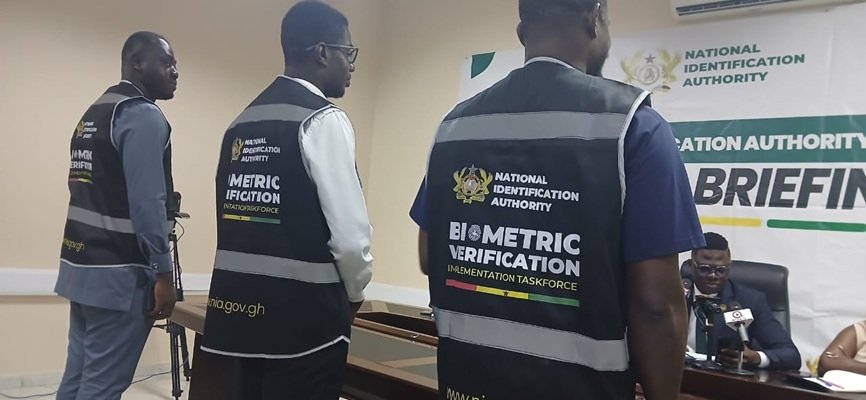
The National Identification Authority (NIA) has announced the commencement of enforcement of the National Identity Register (Amendment) Regulations, 2026 (L.I. 2523), warning institutions that fail to comply with the new requirements of possible fines of up to 2,000 penalty units.
The Authority says it will deploy a Biometric Verification Implementation Task Force to inspect institutions and ensure they comply with the regulations, following the expiration of a three-month grace period granted to businesses and public institutions.
Speaking at a press briefing in Accra on Monday, November 2, 2026, the NIA’s Corporate Affairs representative, William Ampomah Emmanuel Darlas, said the Authority had completed its public education and stakeholder engagement activities and was now moving into the enforcement and compliance monitoring phase.
He explained that the regulations require institutions that verify the identities of customers or applicants as part of their operations to use the NIA’s approved biometric verification platform instead of relying solely on visual inspection of the Ghana Card.
Under the new rules, institutions are prohibited from photocopying, scanning or keeping copies of the Ghana Card for identity verification purposes.
Mr Darlas stressed that simply collecting a customer’s Ghana Card, looking at the photograph and comparing it with the person presenting it would no longer be accepted as a valid method of identity verification.
He, however, clarified that the Ghana Card remains the country’s official national identity document and that citizens are not required to register for a new card or capture their biometrics again under the new regulations.
He said the new system is intended to reduce identity fraud, impersonation and other crimes by ensuring that the person presenting the Ghana Card is the actual owner.
According to him, the biometric verification process will rely on information already captured during Ghana Card registration, including fingerprints, iris details and facial features stored in the card’s chip.
Mr Darlas warned institutions against using third-party companies or individuals to access the NIA’s identity verification platform, insisting that the Authority does not work with intermediaries.
He said institutions seeking access to the National Identity Register must deal directly with the NIA and complete its official onboarding process.
The process requires institutions to prove that they are legally registered companies in Ghana, obtain certification from the Data Protection Commission and work with the NIA’s technical team to establish the necessary connection to its platform.
He further cautioned institutions already connected to the platform against subletting their access to other businesses, particularly small and medium-sized enterprises.
He disclosed that the Authority had received reports of some institutions providing their verification services to other businesses without the NIA’s approval and warned that those involved would face legal action.
Mr Darlas said organisations that fail to comply with L.I. 2523 could face fines ranging from 500 to 2,000 penalty units, depending on the nature of the offence.
He explained that the NIA does not have the authority to impose the fines directly but would take offenders to court for the appropriate punishment.
He indicated that Institutions found guilty could also face additional administrative measures, including being barred from accessing the NIA’s verification platform in the future.
The NIA representative further clarified that the new regulations do not prohibit all institutions from physically using the Ghana Card during transactions.

The Managing Director of the Ghana Publishing Company Limited, Nana Kwesi Boatey, has revealed how he transformed a major overstaffing challenge into a success story through the government’s 24-Hour Economy initiative.
Speaking at the Government Accountability Series on Monday, November 2, Mr. Boatey disclosed that when he assumed office in February 2025, and inherited a bloated workforce of 250 employees doing work that could be efficiently handled by 150 people, a situation that created serious liquidity challenges for the state-owned company.
Instead of resorting to downsizing, he adopted an innovative approach by instituting a 24-hour operational system.
Under the new system, staff were redistributed across three shifts: 7 a.m. – 4:30 p.m., 10 a.m. – 7 p.m., and 10 p.m. – 4:30 a.m.
This not only ensured optimal use of labour but also maximized machine utilization and improved overall output.
According to him, the single move redefined the productivity culture within the company, reinforcing discipline, accountability, and efficiency.
The Ghana Publishing Company’s turnaround is being cited as a practical example of how the 24-Hour Economy policy can drive growth without job losses.
By Edem Mensah-Tsotorme