News
Finance Minister outlines new gold policies to boost reserves and curb smuggling

- /home/u249204778/domains/spectator.com.gh/public_html/wp-content/plugins/mvp-social-buttons/mvp-social-buttons.php on line 27
https://spectator.com.gh/wp-content/uploads/2026/02/WhatsApp-Image-2026-02-25-at-16.46.10.jpeg&description=Finance Minister outlines new gold policies to boost reserves and curb smuggling', 'pinterestShare', 'width=750,height=350'); return false;" title="Pin This Post">
- Share
- Tweet /home/u249204778/domains/spectator.com.gh/public_html/wp-content/plugins/mvp-social-buttons/mvp-social-buttons.php on line 72
https://spectator.com.gh/wp-content/uploads/2026/02/WhatsApp-Image-2026-02-25-at-16.46.10.jpeg&description=Finance Minister outlines new gold policies to boost reserves and curb smuggling', 'pinterestShare', 'width=750,height=350'); return false;" title="Pin This Post">
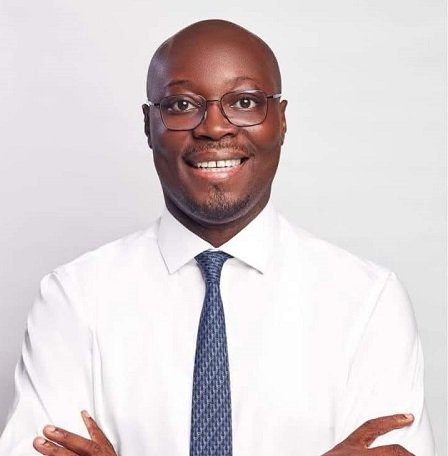
Finance Minister Dr. Cassiel Ato Forson has announced a set of policy measures aimed at strengthening Ghana’s foreign exchange reserves, improving gold sector governance, and reducing illegal mining and smuggling.
Presenting the policy directions in Parliament, he explained that government will revise the current arrangement under which the Bank of Ghana acquires 20 percent of large scale gold output.
He indicated that an Inter Agency Committee will be formed to ensure compliance by mining firms.
The committee, he noted, will be co chaired by the Ministers for Finance and Lands and Natural Resources, with membership drawn from the Governor of the Bank of Ghana, as well as the heads of the Minerals Commission and the Ghana Gold Board.
According to him, the Minister for Lands and Natural Resources will invoke the state’s preemption rights under the Ghana Gold Board Act, 2025 and the Minerals and Mining Act, 2006 to purchase a minimum of 20 percent of gold produced by large scale mining companies.
He stated that this is expected to translate into at least 0.57 tonnes of gold per week.
He stressed that the gold purchased will be in doré form and processed locally to promote value addition.
Payments, he added, will be made in cedis at the prevailing interbank exchange rate, with discount rates determined by volume.
Dr.Forson further explained that the refined gold will eventually be added to Ghana’s physical reserves, and that any future sale by the central bank will require prior approval from Cabinet and Parliament.
He maintained that these measures will improve transparency, promote local refining, and reduce acquisition costs while ensuring that mining companies meet their obligations.
Turning to the artisanal and small scale mining sector, he stated that the Ghana Gold Board will adopt strategies to purchase at least 2.45 tonnes of gold weekly through official channels.
Over the next three years, he projected that the country could mobilise about 127 tonnes of gold annually from the sector, which at current prices could generate more than 20 billion dollars in foreign exchange each year.
To achieve this, he noted that the Gold Board will secure sufficient funds to sustain market participation and assume full responsibility for signing off take agreements and selling gold procured from the sector starting March 2026.
He added that the Board will introduce risk management tools, including gold backed derivative trading and hedging programmes, to reduce market losses.
Dr.Forson also pointed to price incentives and bonuses for licensed miners as part of efforts to discourage smuggling and encourage legal sales.
Beyond the gold sector, he outlined broader measures to improve foreign exchange inflows, including the expansion of non traditional exports such as cashew, shea, and rubber, as well as efforts to revive the cocoa sector.
He mentioned the development of new oil palm plantations and the acceleration of new oil field projects, including Pecan, to support export earnings.
The minister also addressed energy sector financing, noting that Ghana has historically spent about three billion dollars annually to cover shortfalls and payments to independent power producers.
He explained that the proposed Gas to Power Transformation Policy, which includes the construction of a state owned 1,200 megawatt power plant and a second gas processing facility, will help conserve foreign exchange.
Dr.Forson emphasised that maintaining fiscal discipline, particularly achieving a primary surplus, remains critical to slowing the depletion of the country’s reserves.
By: Jacob Aggrey





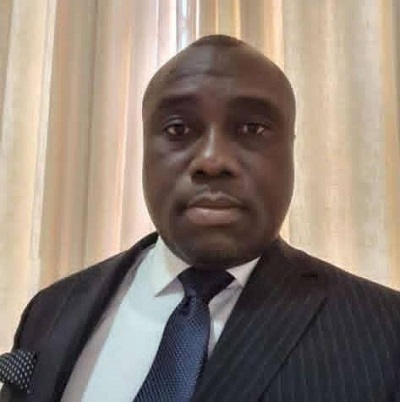
The Director of Legal Affairs of the New Patriotic Party (NPP), Gary Nimako Marfo, has questioned who will bear the cost of conducting presidential and parliamentary primaries following the Supreme Court’s ruling on the party’s delegate system.
Speaking to journalists, Mr. Nimako Marfo said he would not immediately comment on the ruling, adding that he wanted to wait for the full details before sharing his views.
“I don’t want to comment on it now. Let’s wait,” he said.
When asked about the Supreme Court’s decision that all members in good standing should vote in party elections, he shifted attention to the financial implications of implementing the ruling.
According to him, allowing all members in good standing to vote would increase the cost of organising internal party elections.
He questioned who would pay for the expanded electoral process.
“Who is going to pay for the cost of the elections?” he asked.
When a journalist suggested that political parties would bear the cost, Mr. Nimako Marfo replied, “Let’s wait and see.”
The comments come after the Supreme Court ruled that political parties should allow all members in good standing to vote in their internal elections, a decision that is expected to expand participation but also increase the financial and logistical demands of organising presidential and parliamentary primaries.
By: Jacob Aggrey
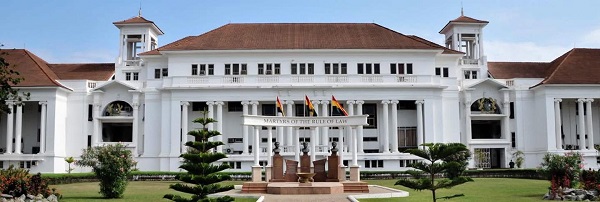
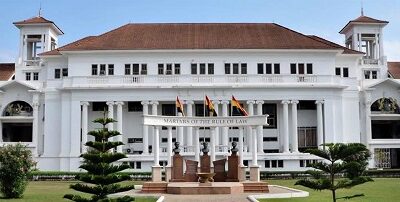
The Supreme Court of Ghana has declared the delegate system used by political parties to elect presidential and parliamentary candidates unconstitutional.
In a 5-2 majority decision delivered, the Court ruled that the long-standing system violates democratic principles and ordered all political parties to ensure every registered, card-bearing member participates in presidential and parliamentary primaries.
The ruling brings to an end decades of internal party elections conducted by a limited number of delegates.
The suit was filed by former Minister for Environment, Science, Technology and Innovation, Professor Kwabena Frimpong-Boateng; veteran politician Dr. Nyaho Nyaho-Tamakloe; and former Minister for Lands and Forestry, Dr. Christine Amoako-Nuamah.
The plaintiffs argued that the delegate system created inequality among party members by granting voting rights to a privileged minority while excluding ordinary members in good standing.
They told the Court that restricting voting rights to delegates was inconsistent with the democratic principles enshrined in the 1992 Constitution.
The Attorney-General’s Department supported the suit and urged the Court to adopt a “one member, one vote” approach.
In its submission, the State argued that political parties perform an important public function in Ghana’s democratic framework and that their internal electoral processes must reflect constitutional values of equality, participation and universal suffrage.
The Attorney-General further submitted that expanding voting rights to all registered members would strengthen accountability and deepen internal democracy within political parties.
The judgment means that going forward, presidential and parliamentary candidates will be selected by all registered members of a political party, instead of by delegates alone.
Political parties are expected to review their constitutions and structures to comply with the Court’s directive ahead of the 2028 general elections.
By Edem Mensah-Tsotorme