Features
Fare thee well, Queen Elizabeth II

- /home/u249204778/domains/spectator.com.gh/public_html/wp-content/plugins/mvp-social-buttons/mvp-social-buttons.php on line 27
https://spectator.com.gh/wp-content/uploads/2022/09/Queen-Elizabeth-II.jpg&description=Fare thee well, Queen Elizabeth II', 'pinterestShare', 'width=750,height=350'); return false;" title="Pin This Post">
- Share
- Tweet /home/u249204778/domains/spectator.com.gh/public_html/wp-content/plugins/mvp-social-buttons/mvp-social-buttons.php on line 72
https://spectator.com.gh/wp-content/uploads/2022/09/Queen-Elizabeth-II.jpg&description=Fare thee well, Queen Elizabeth II', 'pinterestShare', 'width=750,height=350'); return false;" title="Pin This Post">
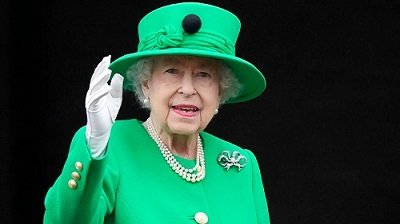
Queen Elizabeth waves goodbye to the world
The announcement by Buckingham Palace concerning the death of Queen Elizabeth II has sent a wave of sadness across the world.
Having been enthroned as Queen of the United Kingdom in 1952, the late leader was able to fulfill many official engagements involving the United Kingdom within and outside UK.
She visited Ghana on two occasions, that is, 1961 and 1999. On one occasion she was the Special Guest of Honour in Ghana in 1961 to participate in the country’s post-Presidential days after Ghana had decided to use Kwame Nkrumah as its own President. So glamorous was she that Ghanaians at the time felt very proud about the diplomatic relations between Ghana and the United Kingdom. The Queen is blessed with many children, grandchildren and great grandchildren.
The royal family in UK feels very proud about and will do everything to protect her and the royal family and tradition.
In line with tradition and culture, the British will observe 12 days of mourning during which the state will declare the period as holidays in honour of the late Queen.
President Nana Addo Dankwa Akufo-Addo has, on behalf of the government and people of Ghana, expressed his condolences to the royal family and people of Britain. This is a sad moment for our British friends but the sadness is shared by all Ghanaians, the Commonwealth of Nations and the world as a whole.
The world has a lot to learn from the beautiful quality of the late Queen. Her beautiful and infectious smile was the envy of people in the world.
Again, her language of diplomacy and unique advice to the royal family as well as government officials would be missed by those who benefitted from such advice, guidance and counselling. There is no doubt that the world as a whole will miss her dearly.
The presence of the Queen at functions added special grace to all those occasions. Many nationals of different countries felt proud and greatly honoured by her presence.
One of the latest events she attended publicly was the Birmingham Commonwealth Games. On that occasion she encouraged members of the Commonwealth to stay together and promote the interest of the Commonwealth and the world through the Games.
United Kingdom together with the world has lost an important personality who will be missed by the world. It is not only the UK which has lost this gem of a Queen but the entire universe of mankind.
The royal system in the United Kingdom has been preserved over the years till today, in line with British customs and traditions. This has helped to preserve the identity of that country.
This is a big lesson to all countries to emulate and preserve their values and norms in line with their own prospective practices. Again, the way in which the death of the Queen was announced is very admirable.
Members of the royal family first gathered and took a decision on the death of the Queen before allowing Buckingham Palace to make announcement of the death. This was picked by the British Broadcasting Corporation and announced to the world.
Thus everything was done in an orderly manner. What this means is that, when it comes to announcement of the passing of the royal, it cannot be done any how or in a haphazard manner, but in a well-rehearsed, smooth and meaningful manner acceptable to the people in line with customs, norms and belief systems.
This is a great lesson that we cannot ignore.
Furthermore, it is instructive to note that the news of the passing was broadcast by the national broadcaster after receiving it at the Buckingham Palace. Another lesson here is that those who serve on the national network must be fair, committed, diligent and responsible.
Anyone who wants to be respected on the national network should have accommodation for such values and principles.
After passing away at age 96, the Queen kept to certain basic principles of health. First, she doid not eat just any food but balanced diet to keep her body healthy. She took time also to rest whenever she found it necessary to do so.
Again, she took in enough water and exercised her body. She undertook all this on regular basis. No wonder, she stayed long till age 96.
The great leader is without blemish, but she would be remembered for all the good things she stood for. Having been on the throne for 70 years she played a critical role in the transformation and growth of the Commonwealth of Nations.
This seeks to bring all former British colonies together and promote their common interests. Under the Commonwealth, certain achievements were made. First of all, the Commonwealth has helped to promote peace and security not only in Commonwealth but in the world as a whole.
In addition, there has been technical cooperation between the UK, on one hand, and the Commonwealth countries, on the other. Also, various forms of assistance have been made available to the Commonwealth countries.
All these have helped to promote socio-economic development in various parts of the world. The role of the Queen in the world has also helped to bring about pleasant diplomatic relations in all parts of the world. Her personal qualities as a Queen are enviable. Her language of diplomacy and tact as well as prospect for everyone go to show that we need to build healthy relationships with one another irrespective of colour, belief, race and practices, among others.
The visit of the Queen to Ghana on two occasions portrays her as a lover of the country. In 2001, for example, she singled out Nana Addo Dankwa Akufo-Addo to propose a toast in Canada during a Commonwealth Summit in that country.
The demise of the Queen is a big blow to the world. It is expected that her successor, having followed the role she played on this earth, will also work hard to emulate the attitude and lifestyle of the late Queen who demonstrated that she was a Queen mother not only in the United Kingdom but to the world as a whole.
Countries must keep to their norms and values so that like the people in the UK, their identity as a people will be preserved and kept afresh for the present and future generations. This is how the beauty and tradition can be blended and kept together for the good of mankind on this earth.
Queen Elizabeth II would be remembered at all times because she paid her due as a world leader.
May her soul rest in perfect peace.
BY DR. KOFI AMPONSAH-BEDIAKO
Email address/whatsApp number of author:
Pradmat201@gmail.com (0553318911)

“A woman who abandons her baby in a dustbin at Kasoa Lorry Station is not always a wicked woman. Sometimes, she is a wounded woman whose mind has broken, whose family has rejected her, and whose society has left her with only one terrible option: disappear or be disgraced.”
That is the hard truth Ghana must hear.
In the last 10 days alone, our nation has been confronted with the same painful headline, twice.
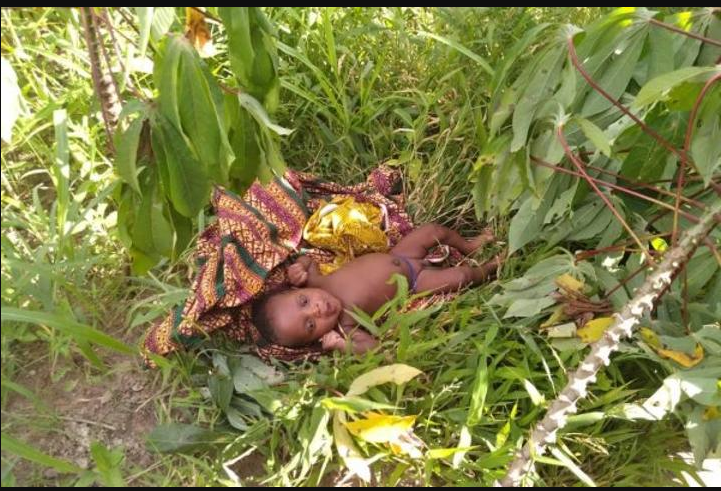
Case 1 – Kasoa Main Lorry Station, Central Region: A newborn baby girl was found abandoned inside a dustbin at the public toilet of the Kasoa Main Station. A woman who went to use the facility discovered the infant and raised an alarm. Commercial drivers and bystanders quickly retrieved the baby and rushed her to the Kasoa Polyclinic for emergency medical care.
Case 2 – Asante Bekwai, Ashanti Region: On Thursday morning, August 20, 2026, a two-week-old neonate was reportedly abandoned by an unknown nursing mother at Bekwai in the Ashanti Region. Residents who came across the child raised the alarm. The baby was admitted to the Bekwai Government Hospital as police commenced investigations.
Let me be clear from the start: Newborn abandonment is wrong. It is dangerous. It is criminal. And it can kill. This article does not excuse it. But if we only arrest and shame, we will never stop it. We must treat the root, not just punish the fruit.
What exactly is newborn abandonment? – The two definitions
The Legal Definition: Under Ghana’s Criminal Offences Act, 1960 (Act 29), Section 96, and the Children’s Act, 1998 (Act 560), abandonment of a child under 12 years is a criminal offence. It is classified as exposure and abandonment, punishable as a misdemeanor or felony. The law sees the mother as a perpetrator.
The Psychological definition: In clinical textbooks, newborn abandonment is defined as the intentional, permanent relinquishment of all parental rights, care, and responsibilities over an infant within the first 28 days of life without making formal, legal arrangements for care.
To understand this crisis properly, we must not confuse it with child abandonment. Newborn abandonment happens within 0-28 days of life, often driven by acute panic, denial of pregnancy, or postpartum psychosis where the attachment bond never formed. Child abandonment, on the other hand, involves toddlers to teenagers where a bond existed but collapsed over time due to chronic poverty, family breakdown, or parental burnout. One is an acute crisis of the first month; the other is a chronic breakdown over years. Both are harmful, but they need different interventions.
Psychologically, newborn abandonment is the ultimate rupture of the primary attachment bond. Think of a 19-year-old university student who secretly gives birth alone in her hostel room, wraps the crying baby in a polythene bag, and drops it at a refuse dump at midnight. That is not just a crime scene; it is a scene of extreme panic and psychological dissociation.
Why would a mother carry a baby for 9 months and then abandon it?
This is the question every Ghanaian asks. If you wanted to abandon it, why not abort? The answer is deeply psychological:
1. The psychodynamics of denial of pregnancy: This is a profound defense mechanism, not a lie. The mother’s subconscious mind completely rejects the reality of the pregnancy. She does not gain weight normally, feels no kicks, does not seek antenatal care, and genuinely convinces herself she is not pregnant until sudden, shocking labour pains take her by surprise in a toilet or bedroom.
2. Fantasy of a dissolving problem: This is called cognitive avoidance. She believes “my boyfriend will come back,” “my mother will forgive me,” or “something miraculous will happen before birth.” So she waits, paralyzed, until the baby is here.
3. Barriers to safe abortion: Deep religious guilt, moral anxiety, fear of dying from a back-alley abortion, lack of money for a safe procedure, and family laws force her to carry to term even when she feels incapable.
4. The shock of reality and acute panic: Upon delivery, the physical presence and crying of the newborn shatters all denial. Confronted with immediate exposure, shame, and reality, her brain enters a trauma response — “fight, flight, or freeze.” For many, it becomes “flight” — physically escape the threat of exposure to survive socially. That is why babies are left in places where others will find them -lorry stations, churches, hospitals.
Source:
Counselor Prince Offei, CPAC’s founder, is a leading Mental Health Professional, Marriage Counsellor, Author, ADR Expert/Arbitrator, and Spectator Newspaper Columnist. He writes on relationships, marriage, parenting, special needs support, and their connection to mental health. For therapy, counselling, or enquiries, contact Counselor Prince & Associates Consult (CPAC) in Accra on 0559850604 / 0551428486.
SKIP THE QUEUE, TAP THE NEWS

You can now read the Ghanaian Times and The Spectator newspapers from the comfort of your device via TimesNewsPlus.
Join our WhatsApp Channel: https://whatsapp.com/channel/0029VbBElzjInlqHhl1aTU27
Features
Environmental stewardship is an act of worship: The Islamic response to climate change, environmental degradation (Part 4)

The environmental consequences of illegal mining have reached alarming levels in Ghana. Several major rivers, including the Pra, Ankobra, Offin, Birim and Tano, have experienced significant pollution from illegal mining activities, increasing the cost and complexity of water treatment while threatening the availability of potable water for millions of citizens (Water Resources Commission, 2024; Ghana Water Limited, 2024). These developments underscore the urgent need for stronger environmental governance and collective action.
Islam equally emphasises accountability in governance. The Prophet Muhammad (peace be upon him) taught that every leader is responsible for those under his or her authority (Sahih al-Bukhari, Hadith 7138; Sahih Muslim, Hadith 1829). This principle extends to public officials entrusted with environmental regulation, traditional authorities responsible for communal lands, mining companies, local assemblies, and community leaders. Environmental protection cannot succeed
where accountability is absent.
At the same time, addressing galamsey requires more than law enforcement. Sustainable solutions must tackle the underlying socio-economic realities that drive individuals into illegal mining. Many young people are motivated by unemployment, poverty, and limited economic opportunities. Islamic principles of social justice therefore call for the creation of alternative livelihoods through sustainable agriculture, vocational training, responsible small-scale mining under strict environmental standards, entrepreneurship, and skills development. Environmental protection and economic empowerment should not be viewed as competing priorities but as complementary goals that promote human dignity and national development.
Faith communities also have an indispensable role to play. Mosques, churches, schools, traditional councils, and civil society organisations possess significant influence in shaping public attitudes and behaviours. Imams, in particular, should consistently remind congregations that wealth acquired through actions that destroy communities and Allah’s creation cannot be regarded as a blessing. Religious education should cultivate environmental ethics alongside spiritual devotion, reinforcing the understanding that protecting rivers, forests, and farmlands is an expression of gratitude to Allah and a fulfilment of the trust of Khalifah.
Ultimately, the struggle against galamsey is more than a campaign to protect natural resources; it is a struggle to uphold justice, preserve human dignity, and honour the trust that Allah has placed upon humanity. Lasting solutions will require strong governance, responsible citizenship, sustainable economic opportunities, and renewed moral leadership. Only when these elements
work together can Ghana safeguard its natural heritage for present and future generations.
Water conservation, waste management and sustainable development: Practical expressions of Islamic stewardship
Religious education should cultivate environmental ethics alongside spiritual devotion, reinforcing the understanding that protecting rivers, forests, and farmlands is an expression of gratitude to Allah and a fulfilment of the trust of Khalifah.
Ultimately, the struggle against galamsey is more than a campaign to protect natural resources; it is a struggle to uphold justice, preserve human dignity, and honour the trust that Allah has placed upon humanity. Lasting solutions will require strong governance, responsible citizenship, sustainable economic opportunities, and renewed moral leadership. Only when these elements
work together can Ghana safeguard its natural heritage for present and future generations.
Islam is not merely a religion that condemns environmental destruction; it also provides practical guidance for preserving and sustaining the natural world. Through its teachings on moderation, cleanliness, conservation, and responsible consumption, Islam cultivates an environmental ethic that remains remarkably relevant to contemporary challenges such as water scarcity, pollution, waste management, and climate change. These teachings encourage Muslims to become
responsible custodians of Allah’s creation in both private and public life.
Water conservation: A sacred responsibility
Water occupies a unique position in Islam as the source of life and an essential element of worship. Allah says, “And We made from water every living thing. Then will they not believe?” (Qur’an 21:30, Sahih International). This verse reminds believers that water is not merely an economic resource but a divine blessing upon which all living creatures depend. The importance of water is further reflected in Islamic acts of worship. Muslims perform ablution (wudu) before the five daily prayers and ritual bathing (ghusl) under prescribed circumstances.
Yet, despite its central role in purification, Islam strongly discourages wastefulness. The Prophet Muhammad (peace be upon him) once advised one of his companions not to waste water while performing ablution, even when using water from a flowing river (Sunan Ibn Majah, Hadith 425). This timeless guidance establishes the principle that abundance does not justify extravagance.
Conservation remains a religious obligation regardless of the apparent availability of natural resources.
This Prophetic teaching carries profound implications for contemporary Ghana. Illegal mining has severely polluted many rivers, increasing the cost of water treatment and limiting access to safe drinking water for numerous communities. Climate change has also intensified seasonal variability in rainfall, placing additional pressure on freshwater resources (IPCC, 2023). Against this
backdrop, conserving water is no longer simply an environmental preference—it is a moral imperative grounded in Islamic teaching.
Water conservation should therefore become a shared responsibility among households, educational institutions, industries, and places of worship. Simple practices such as repairing leaking pipes, harvesting rainwater, protecting riverbanks, avoiding contamination of water bodies, and promoting efficient irrigation contribute to safeguarding one of Allah’s greatest blessings. Every effort to preserve water is an investment in public health, food security, and the
wellbeing of future generations.
Unfortunately, indiscriminate disposal of refuse remains a significant challenge in many communities. Plastic waste clogs drainage systems, contributes to flooding during the rainy season, pollutes rivers and beaches, and threatens marine ecosystems. Open burning of waste further degrades air quality and poses serious health risks, particularly for children and the elderly (UNEP,2024).
The author is Chief Imam of Katamanso Municipal and Certified Counsellor and Governnace Expert.
SKIP THE QUEUE, TAP THE NEWS
You can now read the Ghanaian Times and The Spectator newspapers from the comfort of your device via TimesNewsPlus.
Join our WhatsApp Channel: https://whatsapp.com/channel/0029VbBElzjInlqHhl1aTU27