News
Excessive make-up can interfere with biometric verification — EC cautions women

- /home/u249204778/domains/spectator.com.gh/public_html/wp-content/plugins/mvp-social-buttons/mvp-social-buttons.php on line 27
https://spectator.com.gh/wp-content/uploads/2024/12/a1-1000x600.jpg&description= Excessive make-up can interfere with biometric verification — EC cautions women', 'pinterestShare', 'width=750,height=350'); return false;" title="Pin This Post">
- Share
- Tweet /home/u249204778/domains/spectator.com.gh/public_html/wp-content/plugins/mvp-social-buttons/mvp-social-buttons.php on line 72
https://spectator.com.gh/wp-content/uploads/2024/12/a1-1000x600.jpg&description= Excessive make-up can interfere with biometric verification — EC cautions women', 'pinterestShare', 'width=750,height=350'); return false;" title="Pin This Post">
The Electoral Commission (EC) of Ghana has cautioned women not to apply a lot of makeup on Election Day, else they would be left disappointed.
According to the Commission, the Biometric Verification Device (BVD) may be unable to capture such women because of the over-application of cosmetic material on the face.
Mr Fred Tetteh, the Deputy Director of Research, Monitoring and Evaluation of the EC, who gave the caution, said such women cannot vote in case the finger print and manual exercise fail.
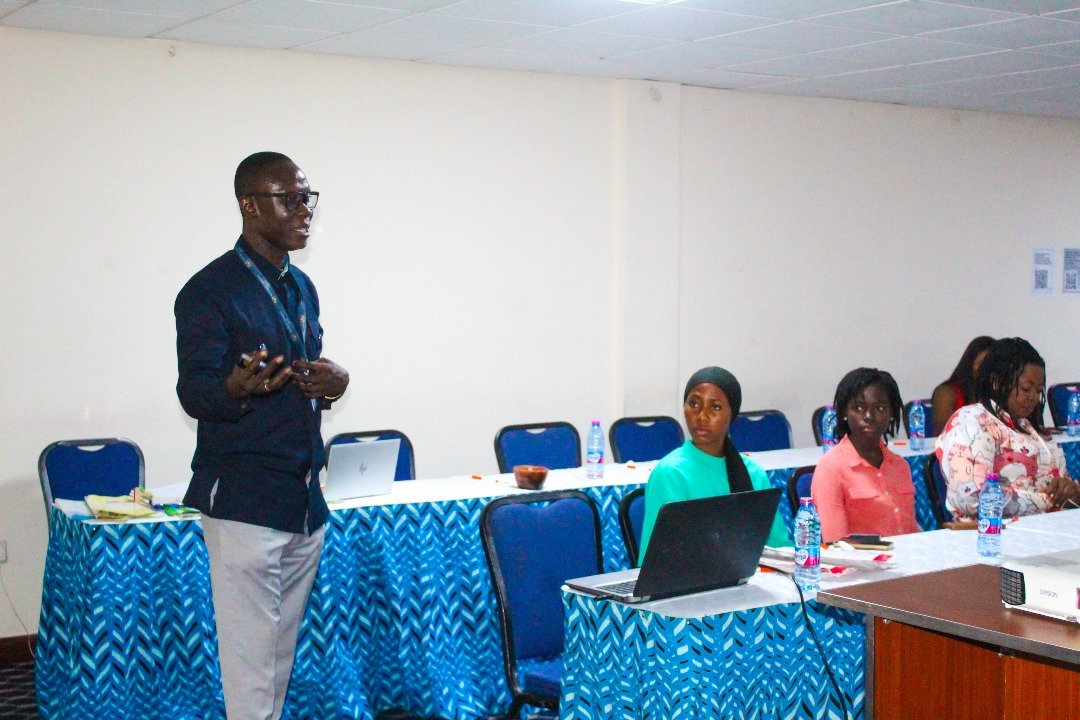
Explaining at a briefing session on Tuesday, Mr Tetteh stated that the BVD has only three features, which is the finger print, facial recognition and manual.

According to him when the BVD fails to capture the finger print, it resorts to the facial identity which becomes problematic when there is too much makeup.
It was themed: ‘Strengthening Advocacy for Gender-Representative and Inclusive Governance in 2024 and Beyond.’
The aim is to increase the participation and representation of women and women with disabilities within all decision making spaces of Ghana’s governance system.
Mr Tetteh advised women to be modest with the makeup when going to vote.
“I beg the women to stay away from the ‘pancake’ and others. It is just an election day; kindly minimise the polishing so that you can vote freely without any hitches and stress.”
Additionally, he said when both fingerprint and facial recognition fail, then one has to go through manual verification which usually comes with doubts.
He noted that the EC was putting in place structures to ensure a peaceful and transparent elections, which would be friendly for observers and polling agents who would also be expected to obey the rules.
In a welcome address, the Head of Programmes for ABANTU for Development, Mrs Grace Ampomaa Afrifa, urged key stakeholders, chiefs, the media, religious leaders and other influential people in society to educate people about the need to maintain the peace of the country even beyond the exercise.
The Coordinator for Affimative Action Law Coalition, Becky Ahadzi Esq., stated that it was unfortunate that Affirmative Action Law was passed after the primaries, limiting the number of females’ candidates in parliament.
The session was organised by ABANTU for Development, a non-governmental organisation, that focuses on supporting community led- development initiatives in Ghana and Africa with support from STAR Ghana Foundation.
By Linda Abrefi Wadie







A nine-member board for the New Times Corporation (NTC), publishers of The Ghanaian Times and The Spectator newspapers was sworn into office on Thursday with a call to strengthen the governance of the Corporation.![Dr. Binka (seated second from right) with Dr Okpoti [right] the board and Management of NTC photos Okai Elizabeth.](https://spectator.com.gh/wp-content/uploads/2026/08/Dr.-Binka-seated-second-from-right-with-Dr-Okpoti-right-the-board-and-Management-of-NTC-photos-Okai-Elizabeth-1024x683.jpg)
The new NTC board is chaired by Dr Charity Binka and has Very Rev. Helena Amma Serwah Opoku-Sarkodie, Mr Tito Kojo Voegborlo Esq and Naana Aklerh Amenyah Kubi I as members. Read More
SKIP THE QUEUE, TAP THE NEWS
You can now read the Ghanaian Times and The Spectator newspapers from the comfort of your device via TimesNewsPlus.
Join our WhatsApp Channel: https://whatsapp.com/channel/0029VbBElzjInlqHhl1aTU27

Christians have been urged to demonstrate a living faith in Jesus Christ by allowing their confession of Him as Lord and Saviour to reflect in their daily lives.
According to the Kaneshie District Pastor of the Evangelical Presbyterian Church, Ghana (EPCG), Rev. Dzidzor Nathaniel Affram, a genuine Christian’s confession should go beyond words and be demonstrated through obedience to God, love for others and service to the Church.
He made the call at the 40th anniversary remembrance service for the late Wesley Kwasi Kwadzo at the Evangelical Presbyterian Church, Ghana, Maranatha Congregation at Awudome Avenui in the Volta Region.
Speaking on the theme, “The Church Built on a Living Confession,” Rev. Affram said life would continually present challenges capable of testing Christians’ faith, making it necessary for believers to hold firmly to their confession that Jesus Christ is Lord.
He explained that accepting Jesus Christ as Lord and Saviour required Christians to live according to His teachings, stressing that their faith must be evident in their conduct.
“A living confession listens to God and not man,” he said, urging Christians to remain obedient to God even when faced with difficulties and pressures.
Rev. Affram further encouraged the congregation to care for vulnerable people and demonstrate concern for others, adding that such acts were practical expressions of Christian faith.
He also urged Christians to identify and use their God-given gifts to build the Church.
He said every member of the Church had a role to play and cautioned Christians against looking down on others because of their status or abilities.
The remembrance service brought together family members, friends, members of the congregation and sympathisers to commemorate the 40th anniversary of the late Wesley Kwasi Kwadzo.
By Lizzy Okai