Hot!
Essien shows the way

- /home/u249204778/domains/spectator.com.gh/public_html/wp-content/plugins/mvp-social-buttons/mvp-social-buttons.php on line 27
https://spectator.com.gh/wp-content/uploads/2020/09/Michael-Essien.jpg&description=Essien shows the way', 'pinterestShare', 'width=750,height=350'); return false;" title="Pin This Post">
- Share
- Tweet /home/u249204778/domains/spectator.com.gh/public_html/wp-content/plugins/mvp-social-buttons/mvp-social-buttons.php on line 72
https://spectator.com.gh/wp-content/uploads/2020/09/Michael-Essien.jpg&description=Essien shows the way', 'pinterestShare', 'width=750,height=350'); return false;" title="Pin This Post">
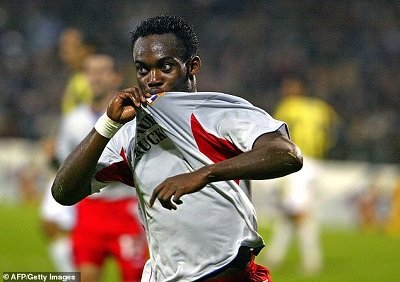
The news of former Ghana international Michael Essien joining Danish side Nordsjaelland as a player-coach for the 2020-21 season must be an eye opener for other footballers who are at the twilight of their careers.
It is a popular move for players the world over that wants to pursue managerial careers when they finally hang their boots.
Top players like Frank Lampard and John Terry who featured alongside Essien, Vincent Kompany, formerly of Manchester City, Liverpool’s Steven Gerrard, Luis Enrique currently in charge of the Spanish national team, Mikel Arteta of Arsenal are some examples of the new breed of coaches that followed in this path.
It makes their progression smooth and less cumbersome as they hope to find clubs in the top flight.
In Ghana, it has not been a common sight seeing players chase such opportunities when it’s clear they are nearing the end of their careers.
Thankfully, the very few that are chatting this path are showing signs of becoming bedrock of the coaching community in Ghana.
Kwesi Appiah, Ibrahim Tanko and lately C.K Akonnor have proven that when our coaches go through the process successfully, it will be very difficult for officials to ignore them.
Laryea Kingston is also doing a wonderful work with the Right to Dream Academy which is churning out a number of talented youth.
At the age of 37, Essien is aware of his dwindling energy levels and will surely play a bit pat role as a player and assist the Head Coach Flemming Pedersen for the new season.
Undergoing this successfully will aid his quest for a full coaching badge.
According to reports, Essien will join the staff in an assistant role and participate in training sessions alongside the players to help implement the drills and ideas and conduct video analysis and ‘group evaluations.
“I am delighted to have joined FC Nordsjaelland coaching staff as part of my development towards my full coaching licence. I will also be assisting the players on and off the pitch as part of my role,” Essien said on social media.
It, however, becomes heart-breaking to see a number of other players hover around after a sterling career doing virtually nothing and have chose to ignore such opportunities.
Unfortunately, with the efforts put in place by federations to provide a path for players to venture into coaching after their careers, a lot more are seen walking around and doing virtually nothing, preferring to boast about their exploits in the past and blame the nation for not helping them after they retired.
Meanwhile others like Essien, Akonnor etc have shown that with a little effort, they stand a chance of becoming coaches.
This is surely an example a lot of the retired footballers out there would have to emulate.
Undoubtedly, the implementation of the Club Licensing exposed a weakness in Ghana’s coaching structure as it rendered a number of our coaches unqualified to handle Premier League teams.
One of the ways by which that problem can be addressed is the certification of coaches through the right channel which even favours those in active service.
With the Belgium FA, players, especially those in the national teams are usually required to start planning for their coaching badges; so they collaborate with their respective clubs find ways to get them enrolled on such schemes.
That was why Vincent Kompany got his badge a year after retiring and a player like Kevin De Bruyne is set to complete his course although he is still active.
Of course, every player may not end up being a coach but for those that harbour that dream, they should consider this path Essien has charted and follow.
Essien reached the very top of his career by winning trophies with both Lyon and Chelsea.
He caught the attention of Chelsea, who signed the midfielder for £24.4million, – a club record for the Blues by then.
By Andrew Nortey



The Tema Regional Police Command has arrested a 32-year-old man for allegedly posing as a soldier and extorting money from unsuspecting members of the public at Ashaiman.
The suspect, identified as Bright Atsu Kudiabor, was arrested by the Ashaiman Police on Wednesday, September 16, 2026, at about 7:00 a.m.
According to the Police, he was arrested at an area known as “I Shall Return”, where he was allegedly parading himself as a soldier and demanding money from people.
The Police said Kudiabor, who is an ex-convict, was initially arrested by personnel of the Ghana National Fire Service in Ashaiman with assistance from other members of the public.
A search conducted on him after he was handed over to the Police reportedly led to the recovery of a set of military camouflage uniform.
The suspect is currently in Police custody and assisting with investigations.
The Tema Regional Police Command said he would be processed for court after investigations are completed.
The Police urged the public to remain vigilant and report anyone who falsely presents themselves as a soldier or a member of another security agency to deceive or extort money from the public.
By: Jacob Aggrey
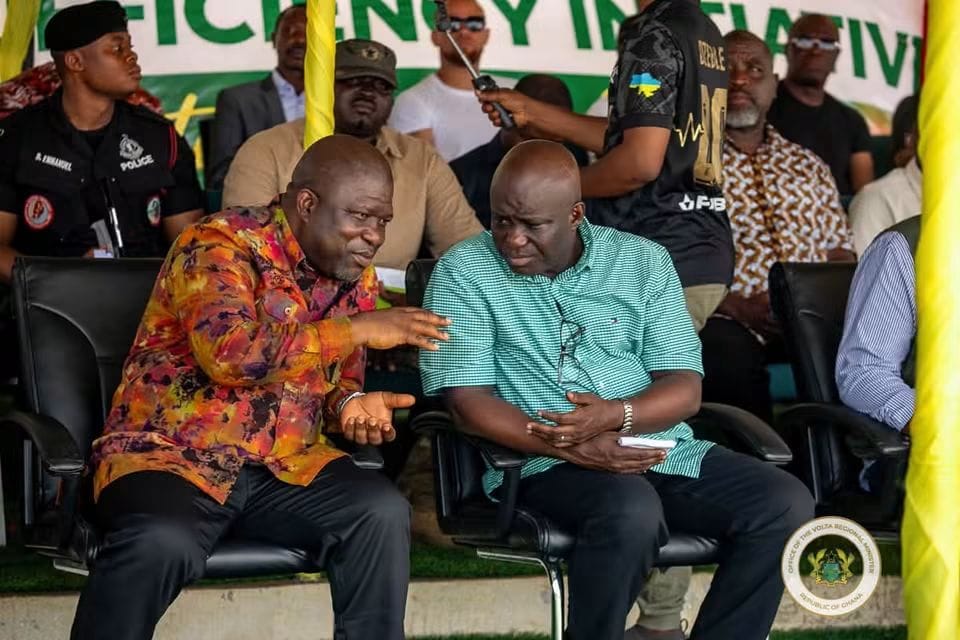
Volta Regional Minister, James Gunu, says the Volta Region holds enormous agricultural potential and efforts must be geared towards connecting farmers to the needed resources to unlock that potential.
He said focus must be on linking farmers to resources, technology, financing and markets to increase production, create jobs and build sustainable livelihoods.
Hon. Gunu made the remarks at the national launch of the Ghana Tomato Self-Sufficiency Initiative (GHATSI) held at Anloga in the Volta Region on Tuesday, September 15.
The initiative, under the theme “Produce at Home. Feed the Nation. Export the Surplus,” seeks to boost local tomato production, processing and marketing while reducing Ghana’s heavy reliance on imported tomatoes.
The launch was attended by the Minister for Food and Agriculture, Eric Opoku, his Deputy, John Setor Dumelo, Feed Ghana Coordinator, Bright Demordzi, Members of Parliament, traditional leaders, MMDCEs, farmers and other stakeholders.
Mr.Gunu expressed appreciation to the Minister for Food and Agriculture for the support announced for the region, including two excavators, 200 cartons of organic fertiliser, and GH¢200,000 for Ms. Kuatudzo Esther Dela, a tomato farmer and processor from Ziope.
He described the initiative as an important step towards making agriculture a stronger driver of food security, job creation and economic growth in the Volta Region.
By Edem Mensah-Tsotorme

 Entertainment1 week ago
Fiifi Coleman Productions adapt ‘I Told You So’ stage play into feature film
- News6 days ago
48 Engineer Regiment to be major sub-contractor on Accra-Kumasi Expressway, $2bn ready- Prez Mahama
- News1 week ago
Ghanaian journalist celebrates Texas town’s ‘Eden of the Far West’ tag after mayor’s nod