Fruitful Living
Eid-ul-Adha: A living legacy of faith, sacrifice, and devotion

- /home/u249204778/domains/spectator.com.gh/public_html/wp-content/plugins/mvp-social-buttons/mvp-social-buttons.php on line 27
https://spectator.com.gh/wp-content/uploads/2025/06/Imaam-Alhaji-Saeed-Abdulai-400x600.jpg&description=Eid-ul-Adha: A living legacy of faith, sacrifice, and devotion', 'pinterestShare', 'width=750,height=350'); return false;" title="Pin This Post">
- Share
- Tweet /home/u249204778/domains/spectator.com.gh/public_html/wp-content/plugins/mvp-social-buttons/mvp-social-buttons.php on line 72
https://spectator.com.gh/wp-content/uploads/2025/06/Imaam-Alhaji-Saeed-Abdulai-400x600.jpg&description=Eid-ul-Adha: A living legacy of faith, sacrifice, and devotion', 'pinterestShare', 'width=750,height=350'); return false;" title="Pin This Post">
We begin in the name of Allah, the Most Merciful, the Most Compassionate. We praise Him, seek His help and forgiveness, and seek refuge in Him from the evils of our souls and the wrongs of our actions.
May peace and blessings be upon the Prophet Muhammad (peace be upon him), his family, his noble companions, and all those who follow his path until the Day of Judgment.
Understanding the essence
of Eid-ul-Adha
Eid-ul-Adha, the Festival of Sacrifice, is one of the two major Islamic celebrations observed by Muslims across the world.
It commemorates the unwavering submission of Prophet Ibrahim (Abraham, peace be upon him) to Allah’s command when he was prepared to sacrifice his beloved son Isma’il (Ishmael, peace be upon him). Allah, in His infinite mercy, intervened and replaced the son with a ram, thus honouring Ibrahim’s sincerity and faith.
This moment of sacrifice is recorded in the Qur’an: “Then when they had both submitted and he put him down upon his forehead, We called out: ‘O Ibrahim! You have fulfilled the vision.’ Indeed, We thus reward the doers of good.” (Surah As-Saffat, 37:103–105)
This act of obedience is not merely a historical account. It is a living symbol that forms the essence of Eid-ul-Adha.
Ibrahim (A.S): The Architect
of Submission
Before the moment of sacrifice, Prophet Ibrahim and his family played critical roles in establishing Islam’s foundational pillars:
1. The building of the Ka‘bah
Prophet Ibrahim and his son Isma’il were chosen to construct the Ka‘bah, the sacred House of Allah in Makkah. The Qur’an records this noble moment:
“And [mention] when Ibrahim was raising the foundations of the House and [with him] Isma’il, [saying], ‘Our Lord, accept [this] from us. Indeed, You are the Hearing, the Knowing.’”
(Surah Al-Baqarah 2:127)
This structure remains the spiritual centre of Muslim worship, facing which over a billion Muslims direct their daily prayers.
2. The struggle of Hajar (Hajara) between Safa and Marwa
The mother of Isma’il, Hajar (Hajara), exemplifies a profound lesson of patience and faith. Left in the barren valley of Makkah with her infant, she ran between the hills of Safa and Marwa, desperately searching for water. Her perseverance was rewarded when the well of Zamzam sprang forth at the feet of her baby.
Her sincere struggle is now ritualised in Hajj as the Sa‘i between Safa and Marwa—a reminder of the role of women, the power of du‘a, and the value of trust in Allah’s provision.
Sacrifice at Mina and the
Rites of Jamarat
During Hajj, pilgrims reenact Ibrahim’s confrontation with Shaytan at Mina, where he rejected the devil’s temptation and cast stones at him. This act is now observed in Hajj as the ritual of stoning the Jamarat, symbolising the rejection of evil, temptation, and disobedience.
It is a vivid spiritual lesson: the path to Allah is one of resistance to distraction and sin, and one must be prepared to fight these forces with unwavering faith.
The essence of Arafat in Hajj
The Prophet Muhammad said:“Hajj is Arafah.” (Sunan al-Tirmidhi, 889)
Standing on the plain of Arafat, in deep humility and supplication, is the heart of Hajj. It represents the Day of Judgment, when all of humanity will stand before their Creator. The Prophet said: “There is no day on which Allah frees more people from the Fire than the Day of Arafah.” (Sahih Muslim, 1348)
For pilgrims, Arafat is a time of repentance, reflection, and renewal— and for non-pilgrims, fasting on that day is highly recommended.
Three core lessons from the
Sacrifice of Prophet Ibrahim
(A.S.)
1. Absolute obedience to Allah
Ibrahim’s willingness to sacrifice his son teaches that the essence of faith is unquestioning obedience to Allah. He prioritised divine command over emotion, logic, or comfort.
Takeaway:
In our lives, we must also be ready to put aside our desires, egos, and even attachments if they conflict with Allah’s instructions. This may involve sacrifices such as waking up for Fajr, staying away from haram income, or being truthful in difficult situations.
2. Sincere intention and inner sacrifice
The real essence of the sacrifice lies in the heart’s submission to Allah.
It is neither their meat nor their blood that reaches Allah, but it is your piety that reaches Him.”
(Surah Al-Hajj 22:37)
Takeaway:
Every act of worship should be grounded in sincerity. Whether it is prayer, charity, or sacrifice, what matters most is the purity of our intention.
3. Sacrifice for the greater good
The legacy of Eid-ul-Adha teaches us that sometimes, faith requires us to give up what we love for a greater purpose. Sacrificing wealth, time, or status in the path of Allah or for the benefit of others leads to spiritual elevation.
Takeaway:
Use your resources such as time, money, skills, for acts of benefit: support the poor, educate the young, assist the sick, and build your community.
Celebrating Eid-ul-Adha: A
Festival for all Muslims
Even for those who do not go on Hajj, Eid-ul-Adha holds immense significance. Muslims across the world participate in the act of Qurbani (sacrifice) to honor the tradition of Ibrahim (A.S.).
Types of animals and their
symbolism
Permissible animals include goats, sheep, cows, and camels. Each must meet a minimum age and be free of defects. The sacrificed animal is then divided into three parts: one for the family, one for relatives and friends, and one for the poor and needy.
This distribution reflects the spirit of sharing, compassion, and social responsibility—values at the heart of Islam.
The eternal message of Eid-ul-Adha
Eid-ul-Adha is not merely a celebration; it is a living tradition that calls us to:
• Submit like Ibrahim,
• Strive like Hajar,
• Sacrifice like Isma’il,
• Reflect like the pilgrims at Arafat.
May this Eid awaken within us a renewed commitment to obedience, sincerity, and compassion.
Let us make every Eid-ul-Adha a step forward in our spiritual journey, embodying the values of submission, sacrifice, and service to humanity. I wish every Muslim Eid Mubaarak
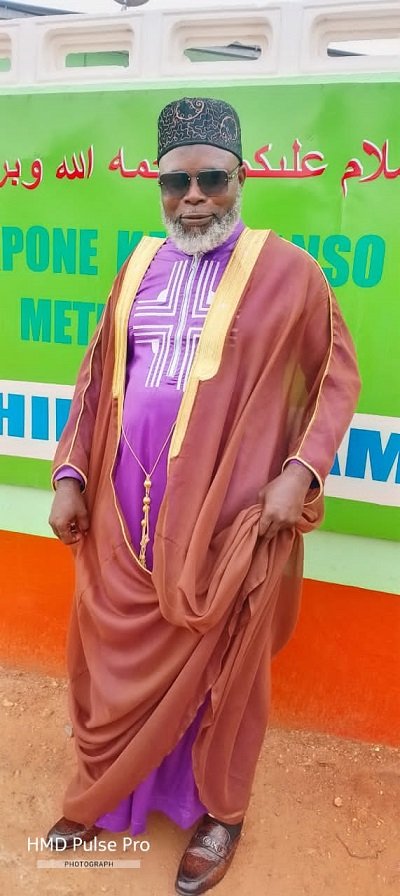
By Imaam Alhaji Saeed Abdulai
(Kpone Katamanso Metropolitan Chief Imaam)

Fruitful Living
Environmental stewardship is an act of worship: The Islamic response to climate change, environmental degradation (Part 4)
The environmental consequences of illegal mining have reached alarming levels in Ghana. Several major rivers, including the Pra, Ankobra, Offin, Birim and Tano, have experienced significant pollution from illegal mining activities, increasing the cost and complexity of water treatment while threatening the availability of potable water for millions of citizens (Water Resources Commission, 2024; Ghana Water Limited, 2024). These developments underscore the urgent need for stronger environmental governance and collective action.
Islam equally emphasises accountability in governance. The Prophet Muhammad (peace be upon him) taught that every leader is responsible for those under his or her authority (Sahih al-Bukhari, Hadith 7138; Sahih Muslim, Hadith 1829). This principle extends to public officials entrusted with environmental regulation, traditional authorities responsible for communal lands, mining companies, local assemblies, and community leaders. Environmental protection cannot succeed
where accountability is absent.
At the same time, addressing galamsey requires more than law enforcement. Sustainable solutions must tackle the underlying socio-economic realities that drive individuals into illegal mining. Many young people are motivated by unemployment, poverty, and limited economic opportunities. Islamic principles of social justice therefore call for the creation of alternative livelihoods through sustainable agriculture, vocational training, responsible small-scale mining under strict environmental standards, entrepreneurship, and skills development. Environmental protection and economic empowerment should not be viewed as competing priorities but as complementary goals that promote human dignity and national development.
Faith communities also have an indispensable role to play. Mosques, churches, schools, traditional councils, and civil society organisations possess significant influence in shaping public attitudes and behaviours. Imams, in particular, should consistently remind congregations that wealth acquired through actions that destroy communities and Allah’s creation cannot be regarded as a blessing. Religious education should cultivate environmental ethics alongside spiritual devotion, reinforcing the understanding that protecting rivers, forests, and farmlands is an expression of gratitude to Allah and a fulfilment of the trust of Khalifah.
Ultimately, the struggle against galamsey is more than a campaign to protect natural resources; it is a struggle to uphold justice, preserve human dignity, and honour the trust that Allah has placed upon humanity. Lasting solutions will require strong governance, responsible citizenship, sustainable economic opportunities, and renewed moral leadership. Only when these elements
work together can Ghana safeguard its natural heritage for present and future generations.
Water conservation, waste management and sustainable development: Practical expressions of Islamic stewardship
Religious education should cultivate environmental ethics alongside spiritual devotion, reinforcing the understanding that protecting rivers, forests, and farmlands is an expression of gratitude to Allah and a fulfilment of the trust of Khalifah.
Ultimately, the struggle against galamsey is more than a campaign to protect natural resources; it is a struggle to uphold justice, preserve human dignity, and honour the trust that Allah has placed upon humanity. Lasting solutions will require strong governance, responsible citizenship, sustainable economic opportunities, and renewed moral leadership. Only when these elements
work together can Ghana safeguard its natural heritage for present and future generations.
Islam is not merely a religion that condemns environmental destruction; it also provides practical guidance for preserving and sustaining the natural world. Through its teachings on moderation, cleanliness, conservation, and responsible consumption, Islam cultivates an environmental ethic that remains remarkably relevant to contemporary challenges such as water scarcity, pollution, waste management, and climate change. These teachings encourage Muslims to become
responsible custodians of Allah’s creation in both private and public life.
Water conservation: A sacred responsibility
Water occupies a unique position in Islam as the source of life and an essential element of worship. Allah says, “And We made from water every living thing. Then will they not believe?” (Qur’an 21:30, Sahih International). This verse reminds believers that water is not merely an economic resource but a divine blessing upon which all living creatures depend. The importance of water is further reflected in Islamic acts of worship. Muslims perform ablution (wudu) before the five daily prayers and ritual bathing (ghusl) under prescribed circumstances.
Yet, despite its central role in purification, Islam strongly discourages wastefulness. The Prophet Muhammad (peace be upon him) once advised one of his companions not to waste water while performing ablution, even when using water from a flowing river (Sunan Ibn Majah, Hadith 425). This timeless guidance establishes the principle that abundance does not justify extravagance.
Conservation remains a religious obligation regardless of the apparent availability of natural resources.
This Prophetic teaching carries profound implications for contemporary Ghana. Illegal mining has severely polluted many rivers, increasing the cost of water treatment and limiting access to safe drinking water for numerous communities. Climate change has also intensified seasonal variability in rainfall, placing additional pressure on freshwater resources (IPCC, 2023). Against this
backdrop, conserving water is no longer simply an environmental preference—it is a moral imperative grounded in Islamic teaching.
Water conservation should therefore become a shared responsibility among households, educational institutions, industries, and places of worship. Simple practices such as repairing leaking pipes, harvesting rainwater, protecting riverbanks, avoiding contamination of water bodies, and promoting efficient irrigation contribute to safeguarding one of Allah’s greatest blessings. Every effort to preserve water is an investment in public health, food security, and the
wellbeing of future generations.
Unfortunately, indiscriminate disposal of refuse remains a significant challenge in many communities. Plastic waste clogs drainage systems, contributes to flooding during the rainy season, pollutes rivers and beaches, and threatens marine ecosystems. Open burning of waste further degrades air quality and poses serious health risks, particularly for children and the elderly (UNEP,2024).
The author is Chief Imam of Katamanso Municipal and Certified Counsellor and Governnace Expert.
By Imam Alhaji Saeed Abdulai
Fruitful Living
Environmental stewardship is an act of worship: The Islamic response to climate change, environmental degradation (Part 3)
Within the Ghanaian context, environmental degradation has reached alarming proportions.
The destruction of forests, pollution of major rivers, indiscriminate dumping of refuse, bushfires, coastal erosion, and rapid urban expansion continue to undermine public health, agricultural productivity, and economic resilience (Environmental Protection Agency Ghana, 2024).
Particularly concerning is the widespread contamination of water bodies through illegal mining activities, which has rendered several rivers unsafe for domestic use and increased the cost of water treatment. These realities illustrate the tangible consequences of fasād described in the Qur’an more than fourteen centuries ago.
Islam does not merely prohibit environmental destruction; it encourages believers to become agents of restoration (iṣlāḥ). The Qur’an consistently contrasts corruption with reform, calling believers to promote justice, preserve creation, and contribute positively to society.
Environmental restoration through reforestation, river conservation, responsible waste management, and sustainable agriculture therefore constitutes an important dimension of iṣlāḥ.
Every effort to restore degraded ecosystems is not only a contribution to national development but also an act of obedience to Allah.
Understanding environmental degradation as fasād fundamentally reshapes the Muslim response to today’s ecological crises.
Pollution is no longer viewed merely as poor sanitation, nor deforestation as simply an economic issue. They become moral failures that violate humanity’s covenant as Khalifah and threaten the balance established by Allah.
This ethical perspective provides a compelling foundation for addressing one of Ghana’s most pressing environmental challenges—illegal mining, commonly known as galamsey-which represents one of the clearest manifestations of environmental corruption in contemporary society.
Illegal mining (Galamsey): An Islamic and national crisis
Among the many environmental challenges confronting Ghana today, none has generated greater national concern than illegal small-scale mining, popularly known as galamsey.
Although mining has contributed significantly to Ghana’s economic development for decades, illegal mining has evolved into a major environmental, social, and governance crisis.
The indiscriminate use of heavy machinery, excavation of farmlands, destruction of forest reserves, and pollution of rivers with mercury and other toxic substances have left lasting scars on the nation’s natural resources.
Beyond its environmental consequences, galamsey raises profound moral and ethical questions that demand reflection from an Islamic perspective.
Ghana continues to experience substantial forest loss due to illegal mining, illegal logging, agricultural expansion and human settlement.
The degradation of forest reserves weakens biodiversity conservation, reduces carbon sequestration, and increases vulnerability to climate-related disasters such as flooding and drought (Forestry Commission Ghana, 2024).
The environmental cost of illegal mining is staggering. Rivers that once supplied clean drinking water and supported fishing communities have become heavily polluted. Productive agricultural lands have been rendered infertile, forests have been cleared indiscriminately, and biodiversity has suffered extensive loss.
These developments threaten food security, increase the cost of water treatment, reduce agricultural productivity, and compromise the health and livelihoods of millions of Ghanaians (United Nations Development Programme [UNDP], 2023; Environmental Protection Agency Ghana, 2024).
Climate resilience is also weakened by illegal mining. Forests serve as important carbon sinks, regulate rainfall patterns, protect watersheds, and reduce soil erosion. Their destruction accelerates land degradation and increases communities’ vulnerability to flooding and drought.
Consequently, the environmental damage caused by galamsey extends far beyond mining sites, affecting entire ecosystems and future generations.
From an Islamic standpoint, such destruction constitutes a clear violation of humanity’s responsibility as Khalifah. Allah entrusted human beings with the care of the earth, not its reckless exploitation.
While Islam recognises the legitimacy of earning a lawful livelihood through commerce, agriculture, industry, and the responsible extraction of natural resources, these activities must be conducted within the limits of justice, public welfare, and environmental responsibility.
Economic benefit can never justify the destruction of Allah’s creation or the endangerment of human life.
The Qur’an repeatedly condemns those whose pursuit of worldly gain results in widespread destruction. Allah says, “And when he goes away, he strives throughout the land to cause corruption therein and destroy crops and animals.
And Allah does not like corruption” (Qur’an 2:205, Sahih International). Although revealed in a broader ethical context, this verse powerfully illustrates the destructive consequences of human greed.
The deliberate destruction of fertile land, vegetation, water bodies, and wildlife for short-term financial gain closely reflects the type of corruption condemned by the Qur’an.
The Prophet Muhammad (peace be upon him) established another enduring principle when he declared, “There should be neither harming nor reciprocating harm” (Sunan Ibn Majah, Hadith 2341; Al-Muwatta of Imam Malik, Hadith 1461).
This legal maxim (lā ḍarar wa lā dirār) has become one of the foundational principles of Islamic jurisprudence. It requires Muslims to avoid actions that cause unjustifiable harm to individuals or society.
Illegal mining clearly violates this principle because its consequences extend far beyond those directly involved. Entire communities lose access to clean water, farmers lose their livelihoods, children face long-term health risks, and future generations inherit degraded ecosystems.
The crisis of galamsey also illustrates the relevance of the higher objectives of Islamic law (Maqāṣid al-Sharī’ah). The preservation of life (Hifz al-Nafs) is threatened when polluted rivers expose communities to toxic chemicals and waterborne diseases.
The preservation of wealth (Hifz al-Māl) is undermined through the destruction of farms, fisheries, and other sustainable sources of income. The preservation of intellect (Hifz al-‘Aql) is endangered by exposure to hazardous substances such as mercury, which can impair neurological development and cognitive function.
The preservation of lineage (Hifz al-Nasl) is compromised as environmental degradation jeopardises the health, livelihoods, and welfare of future generations. Even the preservation of religion (Hifz al-Dīn) is affected because Islam calls believers to uphold justice, fulfil trusts, and refrain from causing corruption on earth. Thus, galamsey undermines every major objective that Islamic law seeks to protect.
The issue is not solely an environmental problem but also a governance challenge. Weak enforcement of environmental regulations, corruption, inadequate land-use planning, and economic hardship have all contributed to the persistence of illegal mining.
Ghana has enacted laws to regulate mining activities and protect the environment, including the Minerals and Mining
Act, 2006 (Act 703), as amended, and the Environmental Protection Act, 2025 (Act 1124).
Furthermore, Article 41(k) of the 1992 Constitution of Ghana places a civic duty on every citizen “to protect and safeguard the environment. Effective implementation of these legal frameworks requires political commitment, institutional integrity, and active public participation.