News
‘Don’t stigmatise childless couples’

After nine years of childlessness and depressing moments, a 40-year-old teacher, Sarfoa Kentimpo is overwhelmed with joy as she no longer suffers stigmatisation but is now a proud mother sharing her experiences with others.
Sharing the good, bad and ugly about the period of trying to conceive, with The Spectator she said that what she had desired and prayed about for so many years had finally come to pass after two miscarriages and the loss of a baby a few days after delivery through a caesarean section.
The 40-year-old mother said at a point, she was traumatised and feared whether she could conceive again and also carry it full-term without complications.
She said the stigmatisation was exhausting as some people thought it was her fault and constantly used abusive language on her, especially relatives whom she had expected to sympathise with her.
“At a point it looked like everyone had become a medical person prescribing local and orthodox medicine. Some even brought it and when I did not show interest in using it they said I was not serious. I have been through a lot,” she said with tears in her eyes.
She said she had spent much of her savings and time just to be a mother and nine years felt like eternity but was happy God had been faithful.
Ms Kentimpo encouraged all couples trying to conceive to be prayerful and also seek medical help because both was needed to make the dream of becoming a parent a reality.
She called on spouses to be supportive and avail themselves for medical attention while advising family members to be sensitive during such times.
She also called on spouses to defend their wives during what she described as the most vulnerable moment in their lives and protect them from attacks from in-laws who are not friendly because a good mental health was key to make conception a success.
The 40-year-old mother advised couples, especially the women to identify and engage in activities that made them happy and fulfilled to take their minds off the struggle to conceive.
“As for me, I realised that I got attracted to children so I spent more time with them and also provided some of their needs,” she disclosed.
From Dzifa Tetteh Tay, Tema


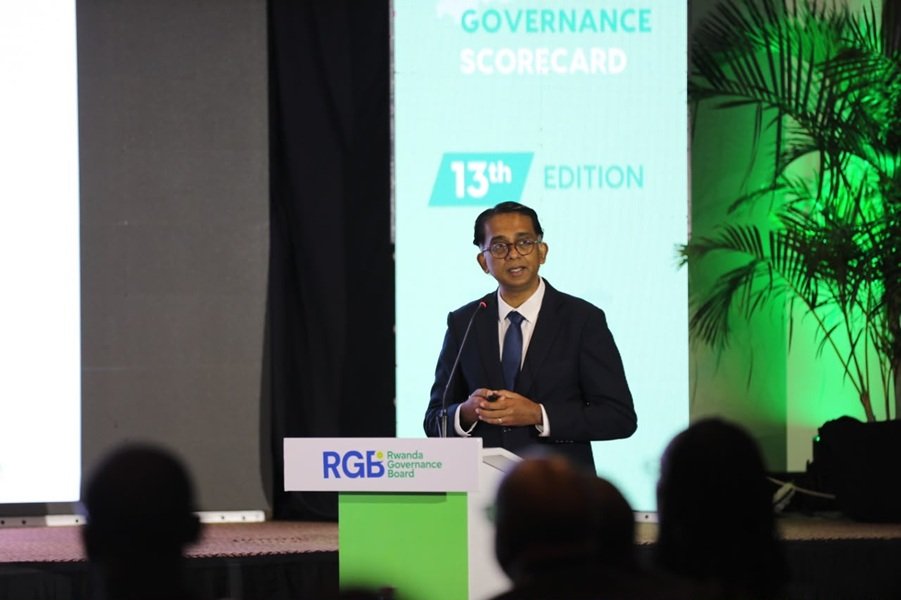
Ghana has made progress in the way it manages public resources and delivers services to citizens, with improvements in financial management and access to education and healthcare helping to raise its governance score.
The country ranked 92nd out of 133 countries worldwide and ninth in Africa in the 2026 Chandler Good Government Index (CGGI), according to a report released last Thursday.
The improvement offers a positive sign for Ghana, although the country still faces challenges in areas such as leadership, long-term planning and creating an attractive environment for businesses.
The index showed that Ghana’s performance in Financial Stewardship, which measures how governments manage public finances and maintain fiscal sustainability, almost doubled this year after declining between 2021 and 2024.
Its score in Helping People Rise, which looks at how government policies and services improve people’s lives, also increased for the second consecutive year, reflecting progress in areas including education and healthcare.
However, the country recorded declines in Leadership and Foresight and Attractive Marketplace, indicating areas where further attention may be needed.
Ghana’s performance comes at a time when several African countries are also making progress in governance. The report found that 71 per cent of African countries assessed in both 2025 and 2026 improved their overall scores.
Dinesh Naidu, Director of Knowledge at Chandler Governance Group, said the continent’s strongest gains were in financial management, followed by efforts to improve citizens’ lives.
He said the progress suggested that improvements in government capabilities were beginning to translate into tangible benefits, including better access to education and healthcare.
However, Africa continues to face significant challenges. Although average scores improved in six of the index’s seven pillars over the past year, the region’s overall average remains below its 2021 level.
The report also found that 23 of the 35 African countries assessed ranked outside the global top 100, while none made it into the top 50.
Globally, 61 per cent of the 120 countries assessed in both 2025 and 2026 recorded higher scores, representing the highest annual share of countries improving since the index began in 2021.
The Chandler Good Government Index assesses government capabilities and effectiveness across 133 countries, representing 94 per cent of the world’s population.
It uses 35 indicators grouped under seven pillars to help governments identify their strengths, recognise gaps and learn from the experiences of other countries.
Mr Naidu said rankings should not be treated as an end in themselves but as a guide to identifying areas that need improvement.
He said sustained progress depended on strong institutions, responsible use of public resources and the ability of governments to turn policies into meaningful outcomes for citizens.
For Ghana, the latest results point to progress in some important areas, while highlighting the need to strengthen other aspects of governance to ensure that improvements are felt in the daily lives of ordinary people.
By Esinam Jemima Kuatsinu
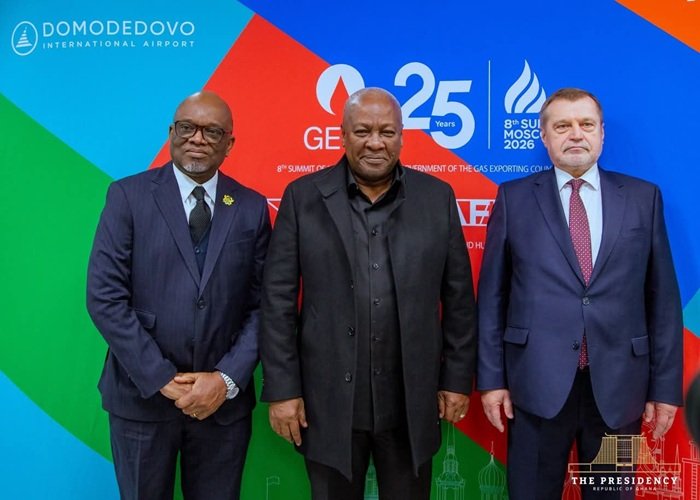
President John Mahama has arrived in Moscow, Russia, from Ethiopia to participate in the 3rd Russia-Africa Summit.
The summit is being hosted by Russian President Vladimir Putin.
During the visit, President Mahama will join fellow African leaders at the Economic and Humanitarian Forum and summit plenary sessions.
He is also scheduled to hold high-level bilateral talks with President Putin and attend a Kente exhibition organised by the Russia-Ghana Parliamentary Forum.
As part of the visit, the President will receive honorary doctorate degrees from the Russian University of Transport and the Peoples’ Friendship University of Russia.
He will also engage Russian businesses and state institutions to advance bilateral cooperation between Ghana and Russia.
By Edem Mensah-Tsotorme