Features
Disqualified – Part 2

- /home/u249204778/domains/spectator.com.gh/public_html/wp-content/plugins/mvp-social-buttons/mvp-social-buttons.php on line 27
Warning: Trying to access array offset on false in /home/u249204778/domains/spectator.com.gh/public_html/wp-content/plugins/mvp-social-buttons/mvp-social-buttons.php on line 27
&description=Disqualified – Part 2', 'pinterestShare', 'width=750,height=350'); return false;" title="Pin This Post">
- Share
- Tweet /home/u249204778/domains/spectator.com.gh/public_html/wp-content/plugins/mvp-social-buttons/mvp-social-buttons.php on line 72
Warning: Trying to access array offset on false in /home/u249204778/domains/spectator.com.gh/public_html/wp-content/plugins/mvp-social-buttons/mvp-social-buttons.php on line 72
&description=Disqualified – Part 2', 'pinterestShare', 'width=750,height=350'); return false;" title="Pin This Post">
After leaving the Sampson’s house, Kakraba picked up his phone and called Paa John, his buddy since senior high school.
‘Hey Kaks’, ‘Charlie what’s up. So how did it go with Eunice’s dad?’
‘Just as we thought, my brother. He asked me to sit down and interrogated me about my parents, my job, and even asked about my financial position. Charley, this Sampson family is so arrogant’. ‘
So what did you tell him?’ ‘Nothing. Basically I mentioned my job with Development Partners, and my entry into the property business, but I told him that I had just started in what is certainly a high risk business which requires big capital, and that I hadn’t quite reached financial stability.
And he made it clear that being a former diplomat and due to his high social position, he would only entertain people of good financial standing around his children. In other words, I can come around the house as a friend, but certainly not as a potential suitor. He flatly disqualified me’. ‘Unbelievable. So will you continue to bring them all those goodies from the north?’
‘You know the goats, guinea fowls and foodstuffs I’ve been sending to you for distribution are very cheap up north, and I often visit the market centres where the big trucks are stationed, so it’s no big deal. Indeed, these days I don’t need to go to the market at all. I send MoMo to a guy at the market, and he buys them and pays a truck driver to deliver them to you, which you deliver to your mom, my home and Eunice’s home.
And as you know, the delivery to my home is intended for my sisters, for their restaurant. So let Mr Sampson and his folks enjoy my kindness for a little longer. Very soon I will vanish from their sights’. ‘What do you mean? Have you decided to leave Eunice?’
‘After the stories you have been telling me, do you want me to keep hanging on? I will stop by her place every now and then, maybe even take her and her two fellow terrorists to lunch or to jam, but I am easing myself out of her life. Her dad just gave me the perfect excuse’.
‘Actually, Kaks, Patricia and Amanda are quite harmless, if you ignore their pretenses about being among the most beautiful and best dressed ladies in Accra. All three are good looking, but they are certainly not among the prettiest. And their claim to be well dressed is absolutely crazy. But the dangerous person is Asantewa.
She’s the one pumping evil ideas into their minds. I wonder why three graduate girls sit down for a little witch like Asantewa to manipulate them. She has been in this business for some time, fixing rich and prominent people with girls and cashing in. We can call her a pimp’.
‘Paa John, many of her clients are not really rich or prominent, just greedy guys without self-confidence who pay for the connection with pretty, inexperienced girls. Eunice and her two friends are gullible, because I learnt that Asantewa is fixing them with a group of guys who talk a lot, but don’t even have decent businesses going’.
‘Let’s forget about these small mind girls and discuss something serious. How is business?’
‘Everything is fine up north. There are five sites in the Northern Region, after which I will tackle five each in Western North and Eastern Region. My work mainly involves supervising contractors, ensuring that they use the required materials and deliver to standard. I keep in regular touch with them, and help them to realize that mobilizing the right materials in good time saves them a lot of money.
This has gone down well. And I have an application which enables the funders to go online and see the actual progress of work. I try to be on site at crucial times, and they can always reach me when I’m down south. About the same thing is happening in Accra. We are working on ten buildings along two streets in Adabraka.
Lawyer Mills has been very helpful. The families know him very well, so they accepted the terms we offered. We offered them resettlement at Mensah Krom, and generous spending cash. They will get the final instalment when we complete the sale.
I have paid all the contractors, and made a big payment for the land after Nsawam. When I get full payment for the Adabraka project, I will concentrate on Nsawam, big time. I’ve reached agreement with the chief and his elders. I am building a decent school block and palace with community centre, then I will go on to the residential buildings. Two hundred houses’.
‘Kakraba, you are simply unbelievable. You just don’t give up. And Eunice doesn’t know who you are?’ ‘Not at all. Basically she sees me as regular guy with some extra change in his pocket, able to afford good entertainment. She wants a very rich guy who will spoil her, take her to Dubai and London every now and then. She doesn’t know that a good number of those guys are criminals’.
‘But she’s quite a well-mannered girl, and good looking. And she seems to like you a lot. So why don’t you have patience with her, and try to win her to your way of life?’
‘Paa John, you know I don’t really have the time. Eunice has two problems. She learnt snobbishness and arrogance from her parents, so it will not be easy. Moreover, together with her three friends they live in a world of their own. Very soon they will crash down to reality. So let me concentrate on my work. Hopefully I will soon meet a beautiful girl who will love me for who I naturally am.

The emotional lives of women are deep and complex. They are shaped by biology, the brain, and how women interact with the world around them. While everyone feels emotions, science shows unique patterns in how women process and express them.
1. How the brain and body work
Emotions are not just feelings in the mind. They are physical processes controlled by the brain and body:
Connected brain halves: Studies show that women often have strong connections between the left and right sides of the brain. This helps women link logic with intuition and feelings very quickly.
Strong memories: The brain’s emotional centre helps women remember emotional events with vivid detail. This builds strong gut feelings and helps women learn from past experiences.
Hormone changes: Hormones like estrogen and progesterone change throughout the month. Estrogen can boost good moods and energy, while progesterone can cause calmness or quiet reflection. These shifts are natural physical responses.
2. Empathy and connection
Women often show high levels of empathy and social skill:
Mirror neurons: People have brain cells called mirror neurons that let us feel what others feel. Research suggests these networks help women deeply sense and understand the emotions of people around them.
The “Tend-and-Befriend” Response: When stressed, men often react with fight or flight. Women often use a “tend-and-befriend” response. Driven by bonding hormones, women are wired to care for others and seek support from friends and community during hard times.
3. Society and expectations
Society also shapes how women express their feelings:
Different rules: Girls are often taught to be nurturing and expressive. However, society sometimes judges women harshly if they show anger or act too assertive at work. This forces women to balance their true feelings with outside expectations.
Emotional labor: Women often carry the weight of keeping families and workplaces happy. While this builds strong bonds, it can also lead to tiredness if they do not take time for themselves.
4. Resilience and Intuition
These biological and social factors give women great emotional strength:
The Power of Sharing: Many women are good at processing sadness, joy, and love by talking with others. This helps them heal and grow.
Listening to intuition: “Woman’s intuition” is real. It is not magic; it is the brain quickly putting together past experiences, physical clues, and deep observations into a clear gut feeling.
Conclusion
Women’s emotions are a powerful and sophisticated system. They are driven by brain science, body chemistry, and deep empathy. Understanding these systems helps us see the vital role women play in building strong relationships and communities.
By Robert Ekow Grimmond-Thompson
Features
Confronting newborn abandonment in Ghana: When a cry for help is heard in a dustbin – Part 2

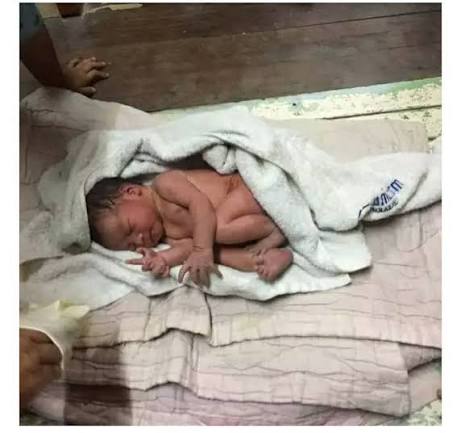
The root causes: It is never just one reason
My years of counselling at CPAC show me abandonment is rarely an act of malice. It is the tragic endpoint of seven overwhelming distresses:
1. Severe maternal mental illness —The hidden emergency
a) Clinical Postpartum Depression (PPD): This is far beyond “baby blues.” It is a severe mood disorder that can appear weeks to months after birth. Due to a massive drop in hormones, extreme sleep deprivation, and emotional exhaustion, the mother feels deep sadness, worthlessness, and complete emotional numbness towards her baby. Picture: A new mother sits by her bed all day, staring blankly. Her baby cries for hours, but she cannot lift her hands to carry the baby. She whispers, “This baby would be better off without me.” She does not hate the baby; she feels she has completely failed as a mother.
b) Peripartum Psychosis (Postpartum Psychosis): This is a psychiatric emergency. Rare but extremely dangerous, appearing suddenly within the first 2-3 weeks after delivery. The mother completely loses touch with reality. She hears commanding voices telling her to abandon the baby, or believes the baby is possessed by an evil spirit or is a “spirit child” who will bring a curse. Picture: A mother genuinely believes she heard a voice saying, “Leave this child at the crossroads at midnight or your family will die.” She abandons the baby not out of hatred, but because her broken mind believes she is obeying a higher spiritual order to save her family.
c) Pre-existing untreated Schizophrenia: This is a chronic, severe mental disorder that existed before the pregnancy. The stress of pregnancy and labour shatters her fragile coping. She suffers from paranoid delusions — believing people want to poison her and the baby — flat affect (zero facial expression), and grossly disorganised thinking, making it impossible to plan how to feed or clean a baby. Picture: A young woman whose family called her illness “spiritual attack” instead of taking her for medication wanders away after delivery, completely forgetting she even gave birth, leaving the infant behind.
2. Extreme socio-economic deprivation: For many girls in some parts of Ghana such as Kasoa, Madina, or Bekwai, poverty is not a statistic; it is a daily panic. No money for antenatal care, no money for hospital delivery, no money for baby diapers or formula. When a mother cannot feed herself, the thought of feeding another mouth feels impossible. Some mothers say, “I left her where someone richer would find her, because I could not watch her starve to death in my hands.” It is a distorted act of survival.
3. Intense societal stigma and shame: In Ghana, pregnancy outside marriage, teenage pregnancy, or pregnancy from rape can bring extreme family rejection. The girl is called “spoilt,” beaten, banned from church, or sacked from school. The fear of bringing shame to the family name is heavier than the fear of police. So she hides the pregnancy for 9 months, delivers alone, and abandons in secret to protect her family’s “honour.”
4. Paternal abandonment — The Man Who Ran Away: Behind almost every abandoned baby is a man who vanished. He says, “It is not mine,” or “Abort it,” and switches off his phone. The mother is left utterly isolated — no emotional, financial, or social support. She is criminalised alone, but the abandonment started with him. Psychological research shows paternal denial is one of the strongest predictors of maternal panic and newborn abandonment.
5. Substance abuse disorders: Alcohol, tramadol, and other drug addiction impair the brain’s executive functioning — the ability to plan, judge consequences, and process emotions. A mother struggling with addiction may give birth in a highly intoxicated or withdrawal state, unable to comprehend the needs of the newborn, leading to neglect and eventual abandonment.
6. The spirit child cultural phenomenon and superstition: In some remote pockets of Northern Ghana and even in few parts of Central and Ashanti regions, public health research shows babies born with congenital deformities, severe disabilities, or whose mothers die in childbirth are branded as “spirit children” or cursed. In extreme instances, families, under cultural pressure, mandate that such babies be exposed or abandoned at shrines or bushes. This is not mental illness, but a harmful cultural belief system that still kills.
The invisible wounds
On the baby: Risk of death from hypothermia, sepsis, and infection. Survivors suffer Anaclitic Depression and Failure to Thrive due to lack of touch. As adults, they battle Reactive Attachment Disorder, chronic mistrust, and identity crisis — “Why did my mother leave me in a dustbin?”
On the mother: Lifelong hidden grief, intense guilt, chronic PTSD, depression, and elevated suicide risk. A prison cell does not heal this.
On the nation: Overburdened orphanages like Osu Children’s Home, draining health budgets, and overworked Social Welfare officers.
SKIP THE QUEUE, TAP THE NEWS

You can now read the Ghanaian Times and The Spectator newspapers from the comfort of your device via TimesNewsPlus.
Join our WhatsApp Channel: https://whatsapp.com/channel/0029VbBElzjInlqHhl1aTU27