News
Deputy Attorney General: ₵500 million siphoned in National Service Authority scandal


- /home/u249204778/domains/spectator.com.gh/public_html/wp-content/plugins/mvp-social-buttons/mvp-social-buttons.php on line 27
https://spectator.com.gh/wp-content/uploads/2025/10/WhatsApp-Image-2025-10-21-at-15.44.35-450x600.jpeg&description=Deputy Attorney General: ₵500 million siphoned in National Service Authority scandal', 'pinterestShare', 'width=750,height=350'); return false;" title="Pin This Post">
- Share
- Tweet /home/u249204778/domains/spectator.com.gh/public_html/wp-content/plugins/mvp-social-buttons/mvp-social-buttons.php on line 72
https://spectator.com.gh/wp-content/uploads/2025/10/WhatsApp-Image-2025-10-21-at-15.44.35-450x600.jpeg&description=Deputy Attorney General: ₵500 million siphoned in National Service Authority scandal', 'pinterestShare', 'width=750,height=350'); return false;" title="Pin This Post">
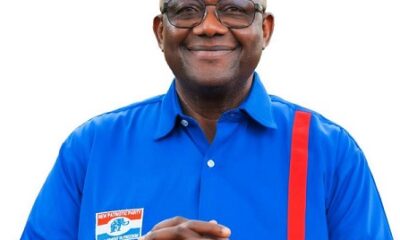
Deputy Attorney General, Dr. Justice Srem-Sai, has revealed shocking details about how about ₵500 million was allegedly siphoned from the National Service Authority (NSA).
Speaking in an interview, Dr. Srem-Sai described the situation as “a shock,” especially because national service personnel are paid only about ₵700 a month.
“You could never believe that millions of cedis could be siphoned through a project which pays personnel ₵700. It was a poverty project,” he said.
According to him, the alleged fraud was carried out through a fake market platform that was supposed to help service personnel buy items on credit and pay later from their allowances.
He explained that although the idea sounded good, investigations showed that the so-called “market” was used to push huge sums of money to vendors who sold nothing.
“We realized that people set up the system and were pushing a lot of money into the market when no one actually bought anything. These vendors received money even though they sold nothing, and the funds ended up in private pockets,” he revealed.
Dr. Srem-Sai said the evidence so far shows how elaborate and deliberate the scheme was. He added that when the trial begins, Ghanaians will be shocked to see how the funds were moved in and out of bank accounts.
On whether the accused persons, including Giftio Wari and Mr. Osei Sibe, have requested plea bargains, Dr. Srem-Sai confirmed that some suspects had made such requests, but not all were accepted.
“Every Ghanaian is entitled to plea bargain. Some of them applied to us for that. We considered them and rejected some. The fact that some are in court should tell you that we rejected certain proposals,” he stated.
He also said the government is determined to recover the full amount allegedly stolen.
“We are looking at recovering that amount — the entire ₵500 million. If they don’t have it, we will trace every asset and property they have, as far as the law allows us,” he added.
The Deputy Attorney General assured that the ongoing investigation and trial will help Ghanaians see the full extent of the alleged corruption at the National Service Authority.
By: Jacob Aggrey

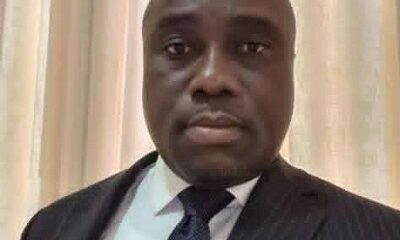



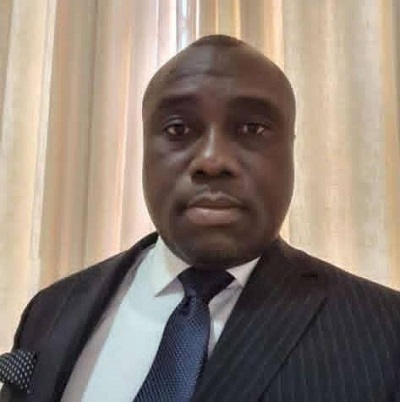
The Director of Legal Affairs of the New Patriotic Party (NPP), Gary Nimako Marfo, has questioned who will bear the cost of conducting presidential and parliamentary primaries following the Supreme Court’s ruling on the party’s delegate system.
Speaking to journalists, Mr. Nimako Marfo said he would not immediately comment on the ruling, adding that he wanted to wait for the full details before sharing his views.
“I don’t want to comment on it now. Let’s wait,” he said.
When asked about the Supreme Court’s decision that all members in good standing should vote in party elections, he shifted attention to the financial implications of implementing the ruling.
According to him, allowing all members in good standing to vote would increase the cost of organising internal party elections.
He questioned who would pay for the expanded electoral process.
“Who is going to pay for the cost of the elections?” he asked.
When a journalist suggested that political parties would bear the cost, Mr. Nimako Marfo replied, “Let’s wait and see.”
The comments come after the Supreme Court ruled that political parties should allow all members in good standing to vote in their internal elections, a decision that is expected to expand participation but also increase the financial and logistical demands of organising presidential and parliamentary primaries.
By: Jacob Aggrey
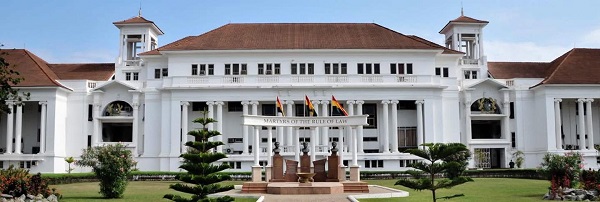
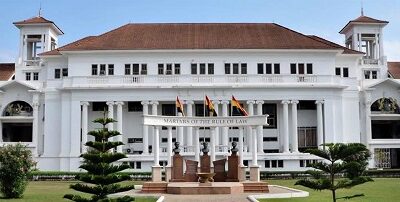
The Supreme Court of Ghana has declared the delegate system used by political parties to elect presidential and parliamentary candidates unconstitutional.
In a 5-2 majority decision delivered, the Court ruled that the long-standing system violates democratic principles and ordered all political parties to ensure every registered, card-bearing member participates in presidential and parliamentary primaries.
The ruling brings to an end decades of internal party elections conducted by a limited number of delegates.
The suit was filed by former Minister for Environment, Science, Technology and Innovation, Professor Kwabena Frimpong-Boateng; veteran politician Dr. Nyaho Nyaho-Tamakloe; and former Minister for Lands and Forestry, Dr. Christine Amoako-Nuamah.
The plaintiffs argued that the delegate system created inequality among party members by granting voting rights to a privileged minority while excluding ordinary members in good standing.
They told the Court that restricting voting rights to delegates was inconsistent with the democratic principles enshrined in the 1992 Constitution.
The Attorney-General’s Department supported the suit and urged the Court to adopt a “one member, one vote” approach.
In its submission, the State argued that political parties perform an important public function in Ghana’s democratic framework and that their internal electoral processes must reflect constitutional values of equality, participation and universal suffrage.
The Attorney-General further submitted that expanding voting rights to all registered members would strengthen accountability and deepen internal democracy within political parties.
The judgment means that going forward, presidential and parliamentary candidates will be selected by all registered members of a political party, instead of by delegates alone.
Political parties are expected to review their constitutions and structures to comply with the Court’s directive ahead of the 2028 general elections.
By Edem Mensah-Tsotorme