News
Confusion in Berekum as Traditional Council enforces century old taboo

- /home/u249204778/domains/spectator.com.gh/public_html/wp-content/plugins/mvp-social-buttons/mvp-social-buttons.php on line 27
Warning: Trying to access array offset on false in /home/u249204778/domains/spectator.com.gh/public_html/wp-content/plugins/mvp-social-buttons/mvp-social-buttons.php on line 27
&description=Confusion in Berekum as Traditional Council enforces century old taboo', 'pinterestShare', 'width=750,height=350'); return false;" title="Pin This Post">
- Share
- Tweet /home/u249204778/domains/spectator.com.gh/public_html/wp-content/plugins/mvp-social-buttons/mvp-social-buttons.php on line 72
Warning: Trying to access array offset on false in /home/u249204778/domains/spectator.com.gh/public_html/wp-content/plugins/mvp-social-buttons/mvp-social-buttons.php on line 72
&description=Confusion in Berekum as Traditional Council enforces century old taboo', 'pinterestShare', 'width=750,height=350'); return false;" title="Pin This Post">
A decision by the Berekum Traditional Council (BTC) in the Bono Region to enforce a century old taboo that forbids the rearing of goats in Berekum has sparked confusion among citizens of the area.
The move by the Council, The Spectator gathered was to appease a river god (Asuokoraa) in the area which is said to be angry with the traditional authorities for allowing the taboo to be defied.
The issue has since gone viral on social media, attracting varying views and concerns.
In December 2023, the traditional council announced the enforcement of the taboo which led to the killing of many stray goats before and during the performance of the funeral and burial rites of the late Omanhene of Berekum Traditional Area, Daasebre Amankona Diawuo ll.
Nana Badu Kaakyire, Twafohene of the BTC, who confirmed this to The Spectator said the move was to avert any imminent calamity in the area.
He said the council was serious about the directive and would not spare anyone that flout it.
According to him, the river god was indeed angry with Nananom who were given the directive after consulting it.
He said, as a result, the queen of Berekum has been directed not to visit any community with goats.
The Council’s decision has compelled small holder farmers that engages in the rearing of goats in the Berekum area to close their farms.
One such entity is the Semanhyia Learning and Development Farms, a livestock breeding facility based at Senaase in Berekum.
According to the Chief Executive of the Farms, Mr Frederick Benneh Frimpong, this decision to evacuate about 200 goats made up of exotic and local breeds within two weeks has put him in a fix.
He explained that despite the existence of the taboo, it was not exactly adhered to until the recent development.
He said it was during the funeral of the late chief of Berekum, Daasebre Amankona Diawuo II funeral in December that prompted the slaughter of stray goats to enforce the taboo.
The development, he said, brought about some anger among the people in the area.
“Within three days, a group of young men with machete stormed the community and killed all goats in town,” he narrated.
Providing further details, he said he was invited to the chief’s palace and was ordered to evacuate the animals from the land in two weeks.
He said a plea for more time to prepare was ignored by the Council and recounted investments that was set to go waste.
He told The Spectator that looking at the over GH¢5million project going down the drain makes him very said.
From Daniel Dzirasah, Berekum



A nine-member board for the New Times Corporation (NTC), publishers of The Ghanaian Times and The Spectator newspapers was sworn into office on Thursday with a call to strengthen the governance of the Corporation.![Dr. Binka (seated second from right) with Dr Okpoti [right] the board and Management of NTC photos Okai Elizabeth.](https://spectator.com.gh/wp-content/uploads/2026/08/Dr.-Binka-seated-second-from-right-with-Dr-Okpoti-right-the-board-and-Management-of-NTC-photos-Okai-Elizabeth-1024x683.jpg)
The new NTC board is chaired by Dr Charity Binka and has Very Rev. Helena Amma Serwah Opoku-Sarkodie, Mr Tito Kojo Voegborlo Esq and Naana Aklerh Amenyah Kubi I as members. Read More
SKIP THE QUEUE, TAP THE NEWS
You can now read the Ghanaian Times and The Spectator newspapers from the comfort of your device via TimesNewsPlus.
Join our WhatsApp Channel: https://whatsapp.com/channel/0029VbBElzjInlqHhl1aTU27

Christians have been urged to demonstrate a living faith in Jesus Christ by allowing their confession of Him as Lord and Saviour to reflect in their daily lives.
According to the Kaneshie District Pastor of the Evangelical Presbyterian Church, Ghana (EPCG), Rev. Dzidzor Nathaniel Affram, a genuine Christian’s confession should go beyond words and be demonstrated through obedience to God, love for others and service to the Church.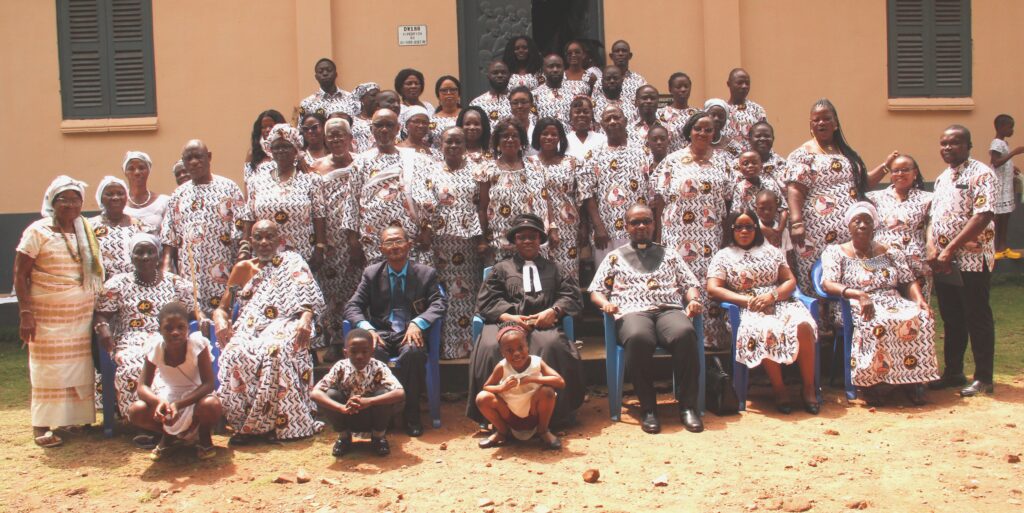
He made the call at the 40th anniversary remembrance service for the late Wesley Kwasi Kwadzo at the Evangelical Presbyterian Church, Ghana, Maranatha Congregation at Awudome Avenui in the Volta Region.
Speaking on the theme, “The Church Built on a Living Confession,” Rev. Affram said life would continually present challenges capable of testing Christians’ faith, making it necessary for believers to hold firmly to their confession that Jesus Christ is Lord.
He explained that accepting Jesus Christ as Lord and Saviour required Christians to live according to His teachings, stressing that their faith must be evident in their conduct.
“A living confession listens to God and not man,” he said, urging Christians to remain obedient to God even when faced with difficulties and pressures.
Rev. Affram further encouraged the congregation to care for vulnerable people and demonstrate concern for others, adding that such acts were practical expressions of Christian faith.
He also urged Christians to identify and use their God-given gifts to build the Church.
He said every member of the Church had a role to play and cautioned Christians against looking down on others because of their status or abilities.
The remembrance service brought together family members, friends, members of the congregation and sympathisers to commemorate the 40th anniversary of the late Wesley Kwasi Kwadzo.
By Lizzy Okai