Features
Collective management organisations and efforts to protect rights owners (Part 1)


- /home/u249204778/domains/spectator.com.gh/public_html/wp-content/plugins/mvp-social-buttons/mvp-social-buttons.php on line 27
https://spectator.com.gh/wp-content/uploads/2022/02/Copyright-law-Pix.jpg&description=Collective management organisations and efforts to protect rights owners (Part 1)', 'pinterestShare', 'width=750,height=350'); return false;" title="Pin This Post">
- Share
- Tweet /home/u249204778/domains/spectator.com.gh/public_html/wp-content/plugins/mvp-social-buttons/mvp-social-buttons.php on line 72
https://spectator.com.gh/wp-content/uploads/2022/02/Copyright-law-Pix.jpg&description=Collective management organisations and efforts to protect rights owners (Part 1)', 'pinterestShare', 'width=750,height=350'); return false;" title="Pin This Post">
Though copyright laws are made to protect rights owners, individual management of rights is practically impossible for certain types of use. The impracticability of enforcing the laws individually – both for the owner of the rights and for the user – creates a need for collective management organisations.
This article presents how the collective management organisations (CMOs) in Ghana are acting in the interest and on behalf of the owners of rights. Ghana’s examples can be emulated by CMOs in other countries.
THE LAW AND CREATION OF COLLECTIVE MANAGEMENT ORGANISATIONS
Article 36(2) of the 1992 Constitution of the Republic of Ghana stipulates as follows: The State shall, in particular, take all necessary steps to establish a sound and healthy economy whose underlying principles shall include:
(a) the guarantee of a fair and realistic remuneration for production and productivity in order to encourage continued production and higher productivity;
(b) affording ample opportunity for individual initiative and creativity in economic activities and fostering an enabling environment for a pronounced role of the private sector in the economy.
These Constitutional provisions are in tandem with the objects of copyright law, which establish appropriate mechanisms to protect the work of creators and give them incentives to produce new works for public consumption.
Section 49 of the Copyright Act, 2005 (Act 690) gives a legal backing for the formation of collective copyright administration societies. The Section provides as follows:
1. Authors, producers, performers and publishers may form collective administration societies for the promotion and protection of their interest.
2. A collective administration society may, acting on the authority of the owner of a right, collect and distribute royalties and other remuneration accruing to the owner.
3. The Minister may, by legislative instrument (L.I.), make regulations for the formation, operation and administration of societies.
In line with the above provisions of the Copyright Act, three (3) collective management organisations have been formed in Ghana. These are:
• Ghana Music Rights Organization (GHAMRO)
• Reprographic Rights Organization of Ghana (CopyGhana)
• Audiovisual Rights Society of Ghana (ARSOG)
The activities and operations of these collective management organizations are regulated by law i.e. the Copyright Regulations, 2010 (L.I. 1962) and the Hon. Minister for Justice has oversight responsibility over the CMOs. The Regulations contain elaborate provisions on the formation, operation and the administration of the CMOs. CMOs are registered as companies limited by guarantee. However, it is the Minister for Justice who grants them a certificate of approval to operate as CMOs.

LEVY ON DEVICES USED FOR THE REPRODUCTION OF COPYRIGHT MATERIALS (PRIVATE COPYING LEVY)
The Copyright Act, 2005 (Act 690) imposes a levy on devices used for reproducing copyright materials. This levy is also known as the private copying levy. The levy, which is collected by the Customs Division of the Ghana Revenue Authority (GRA), covers both the media and equipment used to copy copyright protected materials, which are imported into the country.
The Copyright Regulations, 2010 (L.I. 1962) set out the devices on which the levy is imposed and the procedure for the distribution of the proceeds of the levy to rightsholders. Currently, the levy constitutes the largest source of income for the collective management organisations in Ghana.
GHANA MUSIC RIGHTS ORGANIZATION (GHAMRO)
GHAMRO’s principal roles are to manage the rights of music owners and to issue licences to music users. The membership of GHAMRO is made up of authors/composers and publishers. The organisation’s membership in 2015 was 3,277 and grew to 4,138 in 2016.
Collecting revenues for members
GHAMRO as a CMO, is responsible for ensuring that tariffs are designed to make commercial use of musical works benefit those who compose and publish them. The sources of revenue for the society are revenue from mechanical rights, performance rights, and other sources.
GHAMRO collects fees from users who engage in public performance of music. The organisation has established a vertical hierarchy of the various types of exploitation in which music is performed. Three classifications of exploitation have been made on the basis of the role played by music. These are:
(a) Exploitation where music is essential or indispensable (e.g. radio and TV broadcasting, live performances, disc jockeys);
(b) Exploitation where music creates the atmosphere and is thus necessary (e.g. night clubs, hotels, restaurants, pubs); and
(c) Exploitation where music serves as a background which is not strictly necessary but is favourable to have (e.g. caller tunes used by telecommunication companies).
Currently, the main user categories recorded in the organisation’s books are as follows:
1. Broadcasting stations (radio and television)
2. Hotels
3. Restaurants and bars
4. Night clubs, drinking bars and pubs
5. Financial institutions
6. Fuel retailing stations
7. Telecommunication operators
8. Live performance by various event organisers
9. Shops and malls
10. Barber shops and salons
The organisation has also taken steps to broaden its licensing stream to cover digital music licensing, airlines, road transport unions, secondary schools and churches.
The third source of revenue, which constitutes a very small proportion of total revenue generated, are the token fees charged for the registration of new members as well as for updating their records with new works.
[This piece is culled from a study conducted by Magnus Ebo Duncan (PHD), titled: “Economic contribution of copyright companies in Ghana”]


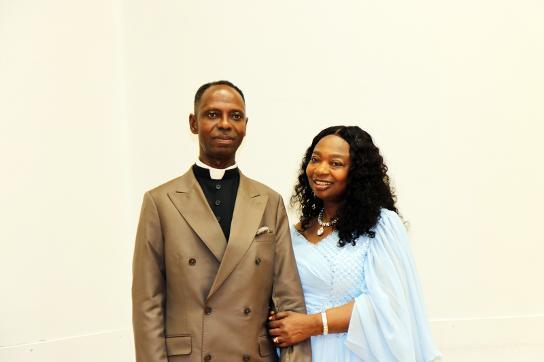
On Sunday, 16 August 2026, the Church of Pentecost (COP) in Finland held a befitting farewell church service for Apostle Francis Owusu Kwaah, the National Head of COP in Finland. It was a well-attended event and, by all measure, a perfect way to offer a well-deserved gratitude to Apostle Owusu Kwaah for his service and contribution to the growth of the church in Finland.
Apostle Owusu Kwaah arrived in Finland on 22 November 2020 and took up the position as the National Head of COP in Finland, taking over from Apostle Edmund Appiah who then moved to the UK.
Many people extolled the remarkable character and excellent leadership qualities of Apostle Francis Owusu Kwaah.
Achievements of Apostle Owusu Kwaah
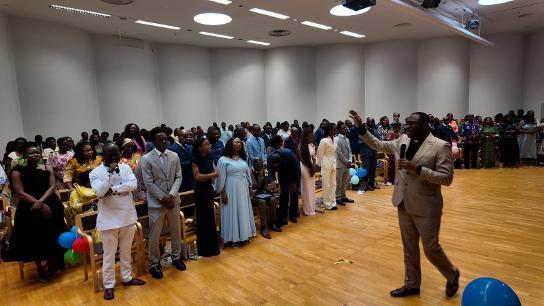
A key farewell message stated that under Apostle Owusu Kwaah’s leadership the church has experienced remarkable growth and transformation.
The message said further that there have been significant increases in church membership—two (2) more Assemblies have been added to the church fold while three pastors have been ordained (2 of them have been sent into missions abroad, with the other one is working in Finland).
Testimonies and Appreciations
Testimonies and messages of appreciation were delivered as appeared in the programme by the National Presbytery, the Men’s Ministry, Women’s Ministry, Children’s Ministry, and other well-wishers.
“Our Apostle is known for being approachable and reliable. His warm personality and humility have endeared him to many”, the farewell message further said, adding that his ministry has extended far beyond the walls of the church. He has faithfully visited hospitals, homes, and prisons to preach the word of God, pray with people, and bring hope to those in need.
For the over 20 years that the church has existed after it was started in September 2000 as a prayer group with a small number of devoted persons in Helsinki (see www.copfinland.fi), the COP has had smooth running and change of leadership to its advantage.
Apostle Owusu Kwaah took over from Apostle Edmund Appiah, who was the first to be appointed as National Head of COP in Finland from 2013 until early 2020. Indeed, under the leadership of Apostle Owusu Kwaah, and Apostle Appiah before him, the Church has grown and spread to other cities and towns in Finland.
Apostle’s response
Surrounded by his beloved wife, Mrs Joyce Owusu Kwaah, and their five children, Apostle Owusu Kwaah delivered a powerful and infectious message in response to the messages of gratitude to him and his family for their good work in the church.
He preached the importance of loving God with one’s whole heart. He entreated the audience to love God and do His work to glorify his name.
The Apostle thanked the COP Finland, the numerous friends and well-wishers who supported him and interacted assuredly with him and his family and thus made their stay very comfortable in Finland.
COP’s future and growth in Finland
The COP Finland has become very formidable in the religious space in Finland.
Indeed, it has played a prominent role in the religious or spiritual existence of its members, as well as in people’s social lives as a key aspect of integration into the Finnish society.
The church continues to grow and, for example, it has been one of the major channels through which the Ghana Union Finland (GUF), an association for Ghanaian immigrants in Finland, has made more contacts with members of the Ghanaian immigrant community.
SKIP THE QUEUE, TAP THE NEWS
You can now read the Ghanaian Times and The Spectator newspapers from the comfort of your device via TimesNewsPlus.
Join our WhatsApp Channel: https://whatsapp.com/channel/0029VbBElzjInlqHhl1aTU27
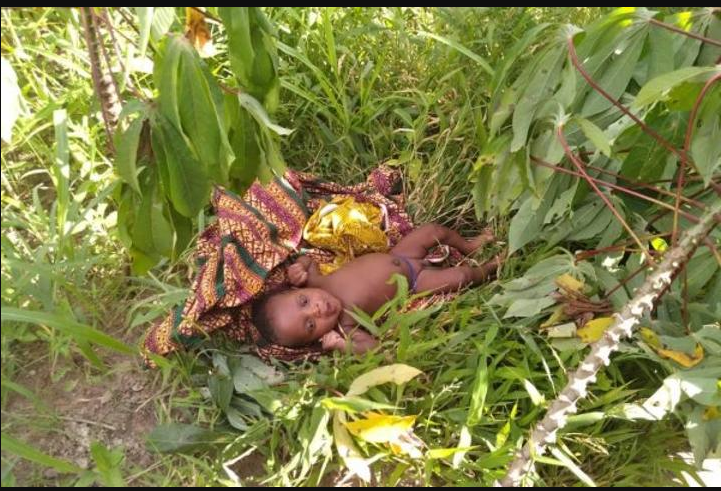
“A woman who abandons her baby in a dustbin at Kasoa Lorry Station is not always a wicked woman. Sometimes, she is a wounded woman whose mind has broken, whose family has rejected her, and whose society has left her with only one terrible option: disappear or be disgraced.”
That is the hard truth Ghana must hear.
In the last 10 days alone, our nation has been confronted with the same painful headline, twice.
Case 1 – Kasoa Main Lorry Station, Central Region: A newborn baby girl was found abandoned inside a dustbin at the public toilet of the Kasoa Main Station. A woman who went to use the facility discovered the infant and raised an alarm. Commercial drivers and bystanders quickly retrieved the baby and rushed her to the Kasoa Polyclinic for emergency medical care.
Case 2 – Asante Bekwai, Ashanti Region: On Thursday morning, August 20, 2026, a two-week-old neonate was reportedly abandoned by an unknown nursing mother at Bekwai in the Ashanti Region. Residents who came across the child raised the alarm. The baby was admitted to the Bekwai Government Hospital as police commenced investigations.
Let me be clear from the start: Newborn abandonment is wrong. It is dangerous. It is criminal. And it can kill. This article does not excuse it. But if we only arrest and shame, we will never stop it. We must treat the root, not just punish the fruit.
What exactly is newborn abandonment? – The two definitions
The Legal Definition: Under Ghana’s Criminal Offences Act, 1960 (Act 29), Section 96, and the Children’s Act, 1998 (Act 560), abandonment of a child under 12 years is a criminal offence. It is classified as exposure and abandonment, punishable as a misdemeanor or felony. The law sees the mother as a perpetrator.
The Psychological definition: In clinical textbooks, newborn abandonment is defined as the intentional, permanent relinquishment of all parental rights, care, and responsibilities over an infant within the first 28 days of life without making formal, legal arrangements for care.
To understand this crisis properly, we must not confuse it with child abandonment. Newborn abandonment happens within 0-28 days of life, often driven by acute panic, denial of pregnancy, or postpartum psychosis where the attachment bond never formed. Child abandonment, on the other hand, involves toddlers to teenagers where a bond existed but collapsed over time due to chronic poverty, family breakdown, or parental burnout. One is an acute crisis of the first month; the other is a chronic breakdown over years. Both are harmful, but they need different interventions.
Psychologically, newborn abandonment is the ultimate rupture of the primary attachment bond. Think of a 19-year-old university student who secretly gives birth alone in her hostel room, wraps the crying baby in a polythene bag, and drops it at a refuse dump at midnight. That is not just a crime scene; it is a scene of extreme panic and psychological dissociation.
Why would a mother carry a baby for 9 months and then abandon it?
This is the question every Ghanaian asks. If you wanted to abandon it, why not abort? The answer is deeply psychological:
1. The psychodynamics of denial of pregnancy: This is a profound defense mechanism, not a lie. The mother’s subconscious mind completely rejects the reality of the pregnancy. She does not gain weight normally, feels no kicks, does not seek antenatal care, and genuinely convinces herself she is not pregnant until sudden, shocking labour pains take her by surprise in a toilet or bedroom.
2. Fantasy of a dissolving problem: This is called cognitive avoidance. She believes “my boyfriend will come back,” “my mother will forgive me,” or “something miraculous will happen before birth.” So she waits, paralyzed, until the baby is here.
3. Barriers to safe abortion: Deep religious guilt, moral anxiety, fear of dying from a back-alley abortion, lack of money for a safe procedure, and family laws force her to carry to term even when she feels incapable.
4. The shock of reality and acute panic: Upon delivery, the physical presence and crying of the newborn shatters all denial. Confronted with immediate exposure, shame, and reality, her brain enters a trauma response — “fight, flight, or freeze.” For many, it becomes “flight” — physically escape the threat of exposure to survive socially. That is why babies are left in places where others will find them -lorry stations, churches, hospitals.
Source:
Counselor Prince Offei, CPAC’s founder, is a leading Mental Health Professional, Marriage Counsellor, Author, ADR Expert/Arbitrator, and Spectator Newspaper Columnist. He writes on relationships, marriage, parenting, special needs support, and their connection to mental health. For therapy, counselling, or enquiries, contact Counselor Prince & Associates Consult (CPAC) in Accra on 0559850604 / 0551428486.
SKIP THE QUEUE, TAP THE NEWS
You can now read the Ghanaian Times and The Spectator newspapers from the comfort of your device via TimesNewsPlus.
Join our WhatsApp Channel: https://whatsapp.com/channel/0029VbBElzjInlqHhl1aTU27