News
Beware of misinformation, disinformation – Dr Bawumia to Security Agencies

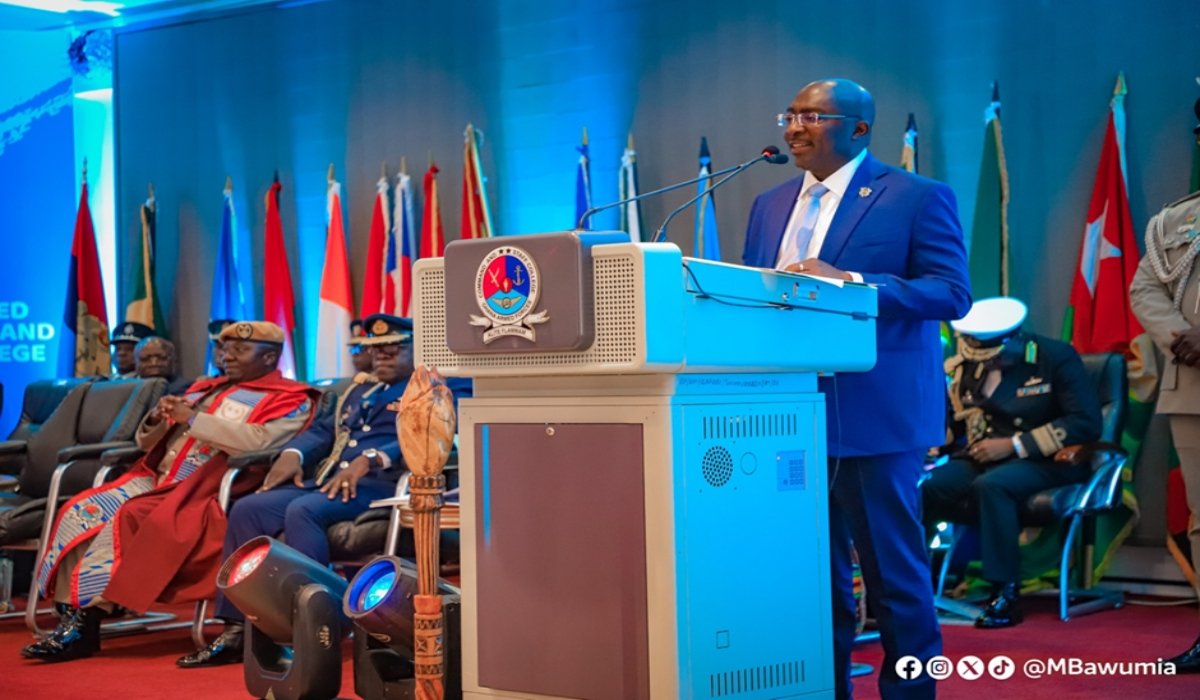
The Vice President, Dr Mahamudu Bawumia, has warned against the increasingly powerful influence of misinformation and disinformation on national development, especially as the nation heads towards Presidential and Parliamentary elections in December.
He has therefore called on all stakeholders, including the Military and other security agencies, to be alert and vigilant to avoid falling for fake and misleading material that could lead to unnecessary actions.
Speaking at the Joint Graduation Ceremony of the Ghana Armed Forces Command And Staff College Course 45 and the Master Of Science In Defence And International Politics in Accra on Friday, August 23, 2024 Vice President Bawumia praised the Ghana Armed Forces for their role in ensuring Ghana’s democracy is the model for the subregion, and charged them to zealously protect this hard-won reputation.
“This year marks another year where Ghanaians will go to the polls to choose a leader and representatives to parliament. Over the years, regardless of their free and fair nature, our elections have been fraught with security challenges and have in some instances, resulted in fatalities,” he said.
According to the Vice President, “In the Fourth Republic, governments have always depended on your professionalism, discipline and resolve to discharge your duties without fear or favour. However, we find ourselves in an era of intense misinformation and disinformation campaigns targeted at both the civil populace, you the Armed Forces and the government.”
“We must understand that these acts do not only have the potential to throw the Country into a state of anarchy but also impact on the wider security of the West African Region. I encourage you particularly after being given a detailed insight into the democratic control of the military, to dwell on the teachings to conduct yourselves professionally. It is imperative to ensure that stability and the tenets of democracy are upheld always,” he stated.
Citing the ever evolving nature of warfare and conflict, especially in the West Africa subregion Vice President Bawumia, who is also Chairman of the Police Council, commended the Control Board, the Military High Command, and the Management of the College for introducing courses at the Ghana Armed Forces Command and Staff College which reflect the changing times.
“As we know, the world has been experiencing a continuous shift in global power dynamics and security over the years. It is clearly far less predictable today than it was decades ago… In this regard, it is evident that the scope of warfare and security threats have equally changed and will continue to evolve from the traditional means and medium to a more complex structure. The tactics of these actors such as violent extremist groups have changed from invasions in large groups to surgical strikes targeting key national infrastructure using cheap modified first person view kamikaze drones that are highly lethal aside other equally fatal approaches,” not noted.
“Similarly, misinformation and disinformation activities have equally become the order of the day, generating support for them and disaffection towards the established central government. It is in this regard that the introduction of the Multi-Domain Operations module in the College curriculum is not only timely but pivotal in inculcating in the Graduands critically needed exposure to contemporary soldiering and arming them with the much-needed knowledge in developing counter measures and providing the keystone training concepts needed in combating such threats. Through this, we can equally position the Armed Forces, Sister Security agencies and allied armed forces to better defend Ghana and our respective friendly countries effectively,” he emphasized.
The Vice President urged the graduates, drawn from 17 countries including Ghana, to harness the insights gained during the course and the relationships forged with colleagues from different parts of the continent to work collaboratively to protect the peace and security of Africa and the world.
“I am of the firm belief that the modules and seminars you have been taken through have provided you with the platform to engage and build relationships that traverse beyond our borders. Therefore, you must understand the importance of collaborative efforts in realizing national security objectives or operational goals. These further shed light on the essence of joint operations as well as the key roles allies, multi-national agencies, sister security agencies and governmental organisations play in achieving set objectives,” he further added.
Dr.Bawumia concluded “I encourage you to take advantage of the relationship you have established and capitalize on it for enhanced co-operation. Furthermore, I urge you to use the knowledge gained to make a meaningful impact as you go out to take positions that are vital to the progress of the Ghana Armed Forces, your militaries and institutions.”








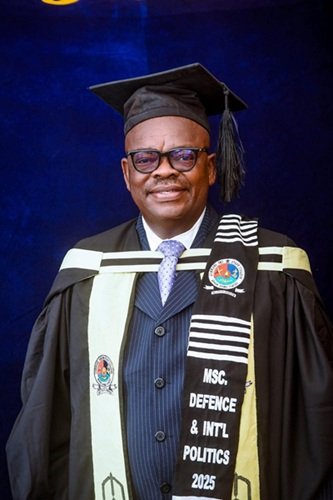
Management and staff of Owass FM have announced the passing of media personality, comedian and politician Seth Kwame Dzokoto following a medical emergency during a live morning show discussion at the station earlier today.
According to the station, Dzokoto was participating in a panel discussion on its morning show “Oman Nkoso” when he suddenly took ill and collapsed.
A statement from the station said its team immediately rushed him to the hospital for medical attention, but he was pronounced dead by the attending medical doctor upon arrival.
“We are deeply saddened by this unfortunate incident, which occurred in the course of our regular programming. Our thoughts and prayers are with his family, loved ones, colleagues, and all those who have been affected by his passing,” the statement said.
Management acknowledged that information about the incident is already circulating in the public domain, but appealed to the public and colleague media houses to respect the privacy of the bereaved family and refrain from circulating unverified information or speculation regarding the circumstances of his death.
Owass FM extended its heartfelt condolences to the family of Seth Kwame Dzokoto.
By Edem Mensah-Tsotorme

The State through the Attorney General (AG) has filed an appeal at the Supreme Court challenging the suspension of the trial in the case of The Republic v Hanan Aludiba and Faiza Seidu.
On Monday, the Court of Appeal suspended the trial in the case. But the prosecution says it has filed an appeal against the suspension order.
According to the update, the law does not allow a criminal trial to be suspended simply because an accused person has complained about some of the charges on the charge sheet, particularly when those complaints were dismissed as meritless.
It argues that if the Court of Appeal’s decision is allowed to stand, no prosecution will ever be possible, since all it would take for a trial to be suspended is an accused person complaining about anything on the charge sheet.
By Edem Mensah-Tsotorme