Hot!
Be careful how you use herbal medicine…Dr Anabah


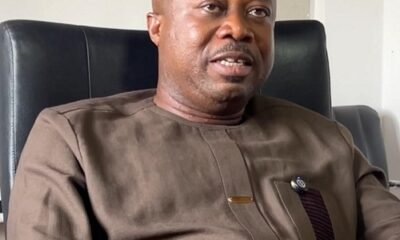
Dr Thomas Winsum Anabah, distinguished Medical Practitioner in Critical Care, has cautioned Ghanaians to be careful about how they use herbal medicines to treat themselves because, some of these medicines could pose health hazards, including liver and kidney problems.
According to the research medical doctor, some herbal medications could cause serious complications to the health of an individual, which includes liver intoxication, kidney impairment, when not taken in the correct proportion and mode.
The Medical Director of Habbana Medical Centre in Tamale gave the hint in an interview with The Spectator in Accra last week.
He lamented that, the toxicity of the drug, dosage, frequency of administration in the production of herbal medicines could replicate a dangerous threat to the health of a patient signed on taking the particular drugs.
“In my practice as a Medical Doctor here in Ghana, I have treated so many patients who have had serious side effects from herbal medications, and when you ask them, you realise that the way the medicine was produced and given to them does not have any scientific backings and endorsement at all for human beings to take,” he fumed.
The international award winning medical doctor cautioned Ghanaians to be watchful about the dispensation of herbal medicines in order to take them in the right dosages.
This, he meant, was to make the public to only take herbal medications that have undergone scientific research and approved by certified authorities.
He appealed to patients to always look out for inscriptions on the labels of herbal drugs and ensure that, it must be packaged, bottled and licensed by the Food and Drugs Authority similarly to the ones we buy from China, Japan, America and India.
Dr Anabah advised the government to strengthen our herbal, or plant medicine departments in Komfo Anokye Teaching Hospital and the Mampong Research Center to really come out with policy and support those dealing with herbal medicine to give us right prescription on how their drugs should be taken.
“I know there are some herbal medicine practitioners who have acquired license but there are a lot who do not conform to the guidelines of operations, hence government should regulate them very well and monitor their production very well and deal drastically with those who will not agree to have their drug tested before selling,” he stated.
This, he said, would help minimise the side effects, and all the negative consequences associated with the intake of herbal medicines.
According to Dr Anabah, government must open an avenue for all those dealing in herbal medicine to enlist themselves into groups in order for them to undergo some form of training and testing of their products.
“To me, I’m really very worried about the way herbal medicine is damaging people’s lives in Ghana, and I am not concluding that all herbal medicines are bad,” he emphasised.
According to him, there are a lot of quacks in the system, leading to increase of liver intoxication and kidney impairment in recent times mainly due to wrong herbal prescriptions.
“This aspect of medicine when regulated efficiently, could serve as a source of income and employment for a lot of Ghanaians,” he said.
Dr Anabah disclosed that people now go and bring anything boiled from the bush, and once they boil it and it’s dark, the darker it is, the more powerful they think it is, and that is how they determine its efficiency.
“I’ve seen people with wounds come to my facility because they have a small boil, and have gone to put soap concoctions there and got infected with bacteria, parasites and tetanus, and we nearly amputated the leg but we have salvaged a lot of them,” he indicated.
By Alfred Nii Arday Ankrah


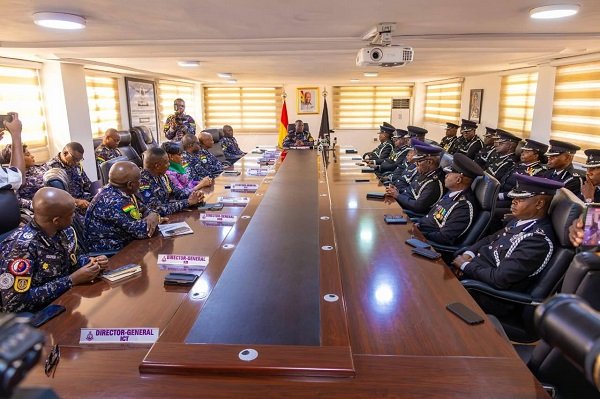
The Inspector-General of Police (IGP), Mr. Christian Tetteh Yohuno, together with members of the Police Management Board (POMAB), on April 17, 2026, decorated nineteen (19) senior officers who have been promoted to their next ranks based on the recommendations of the Police Council and approval of the President, John Dramani Mahama.
The ceremony, held at the National Police Headquarters in Accra, forms part of efforts to recognise merit, dedication, and long-standing service within the Ghana Police Service, while strengthening leadership across key operational and administrative levels.
The officers promoted from Deputy Commissioner of Police (DCOP) to Commissioner of Police (COP) are Dr. Luke Asue-In-Yeng Zakpaa, Mr. Frederick Agyei, Mr. Duuti Tuaruka, Mr. Arthur Osei-Akoto, Mr. Darko Offei Lomotey, Mr. Eric Ken Winful, Mr. Barnabas Nambont Nasumong, and Mr. Desmond Owusu Boampong.
The IGP and members of POMAB congratulated the officers and urged them to uphold the highest standards of professionalism and integrity in the discharge of their duties.

The Global Network of Export-Import Banks and Development Finance Institutions (G-NEXID) successfully held its sixth (6th) Exchange Programme, hosted by the Ghana Export – Import Bank (GEXIM) Bank in Accra from March 22 to 23 March.
The event brought together member institutions, partner organisations and Ghanaian public entities to advance dialogue on South-South trade, investment and development finance, while also creating opportunities for knowledge-sharing and institutional cooperation.
Organised as a capacity-building and networking platform, the 2026 edition of the G-NEXID Exchange focused on GEXIM’s experience in developing innovative solutions to promote intra-African and extra-African trade.
It also highlighted trade and investment opportunities in Ghana, particularly in the context of the African Continental Free Trade Area (AfCFTA) and broader national development initiatives.
The Exchange Programme forms part of G-NEXID’s mandate to foster cooperation among export-import banks and development finance institutions in support of South-South trade and investment.
This 6th edition follows earlier successful programmes hosted by India Exim Bank (2016), BNDES (2017), Indonesia Eximbank (2018), Afreximbank (2019) and Saudi EXIM Bank (2025).
On the first day, participants were presented with G-NEXID institutional information and received an update on the Network’s 2026 work programme.
There were a series of substantive presentations, including an overview of the Ghanaian economy by the Ministry of Finance, with particular attention to debt-related challenges; a presentation by the Ghana Investment Promotion Centre (GIPC), on investment opportunities in the country; and institutional presentations by GEXIM and Development Bank Ghana (DBG) on their respective mandates, initiatives, products and services.
Discussions during the sessions underscored strong interest in sector-focused webinars and business dialogues, particularly in agribusiness value chains such as poultry and rice.
Participants also emphasized the importance of continued information exchange and the sharing of best practices, especially in the area of guarantees.
The second day opened with a presentation on the 24-Hour Economy and Accelerated Export Development Programme, a national economic transformation strategy launched by President John Dramani Mahama in July 2025.
The initiative aims to enhance economic productivity through continuous industrial activity, accelerated export development and strategic import substitution.
As the programme is expected to mobilise both private and development capital, it presents concrete opportunities for G-NEXID members in areas such as co-financing, guarantees, trade finance and technical cooperation.
The programme also featured institutional presentations by guest organisations, namely the African Guarantee and Economic Cooperation Fund (FAGACE) and the West African Development Bank (BOAD), which shared their mandates, initiatives, products and services.
Following these exchanges, the G-NEXID Secretariat held bilateral discussions with both institutions as part of the Network’s ongoing membership drive.
Participants further benefited from a presentation by the Eastern and Southern African Trade and Development Bank (TDB), as well as a showcase of GEXIM’s key pipeline projects.
On the margins of the Exchange Programme, G-NEXID members also held their 20th Annual General Assembly Meeting to review progress and discuss strategic priorities.
Following the event, participants joined the GEXIM@10 International Conference, held from March 24-25, 2026 under the theme, “A Decade of Enabling Export Trade and Industrial Transformation: Resetting GEXIM for the Next Frontier.”
The conference provided an important platform for exploring how Ghana can strengthen its transition from a primary commodity exporter to a more competitive player in value-added trade and industrial development.
Source – G-NEXID