News
ATU training students to gain employable skills


- /home/u249204778/domains/spectator.com.gh/public_html/wp-content/plugins/mvp-social-buttons/mvp-social-buttons.php on line 27
https://spectator.com.gh/wp-content/uploads/2022/04/Prof-Samuel-Nii-Odoi-Vice-Chancellor-ATU.jpg&description=ATU training students to gain employable skills', 'pinterestShare', 'width=750,height=350'); return false;" title="Pin This Post">
- Share
- Tweet /home/u249204778/domains/spectator.com.gh/public_html/wp-content/plugins/mvp-social-buttons/mvp-social-buttons.php on line 72
https://spectator.com.gh/wp-content/uploads/2022/04/Prof-Samuel-Nii-Odoi-Vice-Chancellor-ATU.jpg&description=ATU training students to gain employable skills', 'pinterestShare', 'width=750,height=350'); return false;" title="Pin This Post">
Confronted with the issue of the country’s increasing population and its related problem of unemployment, the Accra Technical University (ATU) has introduced entrepreneurship programme to prepare students to become self employed.
Under the current trend of business model, the university would eventually develop a curriculum that would train students with the requisite skills to enable them to solve the problem of unemployment and at the same time tackle the issue of environmental degradation.
Prof Samuel Nii Odai, the Vice Chancellor of ATU, who was addressing the Social Enterprises and Youth Employability; Stakeholders Consultative Meeting in Accra, said the introduction of Social Enterprises Model was the panacea to solving the problem of unemployed youth in the country.
The programme was organised by ATU in collaboration with Boston University, Huddersfield University, Achievers Ghana, Social Enterprise Programme, and the British Council, as the main sponsor.
He said ATU would imbibe in the students the skills to enable them to come out with their own enterprises, an enterprise that would have a positive effect on the people in the community not the business that would have effect on the society and a business that would be sustainable, but not the type which the entrepreneur would be interested in its profit margin.
The Vice-Chancellor said ATU would work hard to become an Institute of Social Enterprise to enable it to play a meaningful role in training the country’s needed manpower.
Mr Andrew Mensah, an official of the British Council, who chaired the programme, said higher institutions that produce graduates with modern skills, required further training to meet the workplace employable skills.
He said while graduates needed to be more employable, the universities needed to produce graduates who would be self employed, but not those who would look for jobs, which unfortunately, were not available.
Mr Mensah said universities were gravitating towards innovation and entrepreneurship, a trend which he described as very encouraging and pragmatic.
He said the universities were required to act as catalysts for change, learning, innovation and commercialisation, adding that they must also play an important role and research in the ecosystem.
Mr Mensah said in response to the needs of the universities, the British Council has designed the innovation for African universities to strengthen them to develop their capacities as the key players in the ecosystem.
He said the project would foster the culture of innovation and entrepreneurship in the universities and facilitate the development of skills required to feed industry, company products and services, adding that the objective of the project was to strengthen the universities with their capabilities as key players in the entrepreneurship.
Ms Sarah Teiko of Amartefio Chambers who spoke on the State of the Regulatory Framework of Social Enterprises in Ghana, urged the students not to shy away from forming their own enterprises while they were still at school.
She said young entrepreneurs who employed young graduates and young entrepreneurs who were physically challenged but established their enterprises were entitled to tax exemptions for a period of five years.
Ms Teiko encouraged them to take advantage of the numerous opportunities to establish their businesses, adding that they must take a bold step in doing something which would be of immense benefit to the community.
By Raymond Kyekye


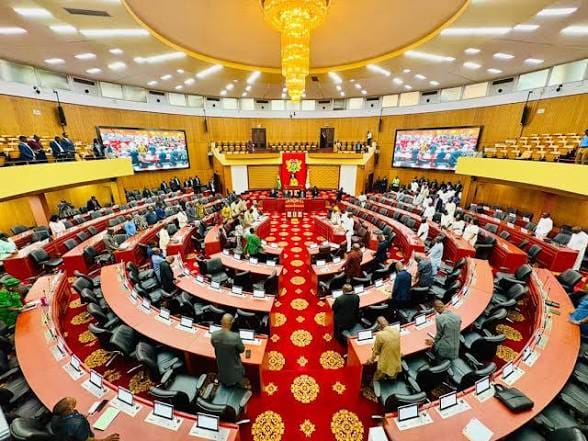
Parliament has clarified public commentary on social media regarding a notice on its notice board that read “No Vacancy for National Service Personnel 2026/2027. Kindly go for reposting.”
In a statement, signed by the Director of Media Relations, David Sebastian Damoah, Parliament said the notice has been misconstrued and was not a policy statement, a freeze on national service placements, or a change in its support for the National Service Scheme.
According to Parliament, the notice was a routine administrative message to prospective personnel who reported to the House, informing them that it has received more personnel than it can accommodate for the 2026/2027 service year and that they should seek reposting to other institutions.
It said it remains committed to the National Service Scheme and values the contribution of service personnel to its work, and regrets any confusion or inconvenience the wording may have caused.
By Edem Mensah-Tsotorme
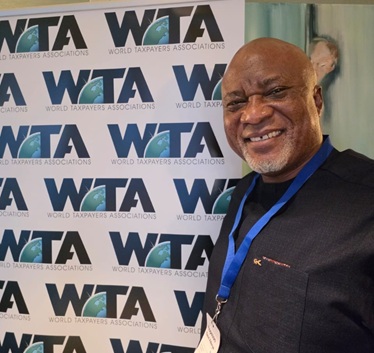
Ghanaian public advocate Hopeson Yaovi Adorye has been elected to the Board of Directors of the World Taxpayers Association (WTA).
The election took place on Sunday, October 5, 2026, during the Association’s conference in Kraków, Poland.
His election marks a significant addition to his international leadership portfolio and provides a platform for Ghanaian and African perspectives to contribute to global discussions on taxpayer rights, responsible taxation, transparency and prudent management of public resources.
Reacting to his election, Mr. Adorye expressed appreciation to the leadership and members of the WTA for the confidence reposed in him.
“I am deeply honoured by this confidence and conscious of the responsibility that comes with it. Taxpayers are at the heart of every economy, and they deserve fairness, transparency, accountability and value for the taxes they pay. I look forward to working with colleagues from across the world to strengthen the voice of taxpayers and promote responsible fiscal governance,” he said.
According to him, taxation should not be viewed solely as a mechanism for raising government revenue, but also as an important component of the social contract between citizens and the state.
Mr. Adorye said governments have a responsibility to ensure taxes are collected fairly and public resources are utilised efficiently to deliver quality infrastructure, healthcare, education, security and other essential services.
His election also creates an opportunity to bring African experiences into international conversations on taxation and public expenditure.
Mr. Adorye, who is Executive Director of Taxpayers League Ghana, has previously served as Global Board Chairman of the International Youth Network for UN Security Council Resolution 2250, an NGO associated with the United Nations Economic and Social Council (ECOSOC).
He is expected to use his new role to champion fiscal accountability, taxpayer education, good governance and stronger citizen participation in public financial management.