Hot!
‘Ahofade’ creates opportunity for local fashion industry – Reuben Frimpong


Advancement in technology has paved the way for e-commerce platforms such that consumers are able to spend less time shopping for items which may not be available in their locality.
A number of leading outlets offering this kind of ‘convenience’ readily come to mind but many of them do not stock authentic local products or are not wholly owned by Ghanaians.

It is, therefore, refreshing when young people spot this gap and come up with practical solutions that do not only employ other people but create also opportunities for indigenous businesses to thrive.
One of them is Mr. Reuben Frimpong who has embarked on progressive mission specifically tailored for players in the fashion industry. About two years ago, he and his team started ‘Ahofade’ an online platform which is fast becoming a one-stop shop for fashion and fashion accessories made here in Ghana.
The Founder recently interacted with The Spectator on his inspiration, the uniqueness of the platform and why buyers must not shun online businesses in spite of the growing skepticism within the space.
Background
Reuben, a third-year Bachelor of Science (BSc) Information Technology (IT) student at University of Ghana, Legon, has background in software engineering and has worked on a number of projects in last five years.
He said his interest in computer related programmes was piqued as a result of his participation in various technology fairs. So, after completing St Martin Senior High School at Nsawam in the Eastern Region, he enrolled at IPMC College of Technology in Accra before deciding to study further in the university.
According to him, Ahofade.com began after observing that some players in the fashion industry were selling to a smaller community when there was, indeed, the potential of reaching wider markets through the power of the internet.
“I thought of building [an outlet] where people can purchase these same items without going to the physical location of the seller.
“But considering that people were being scammed online, I thought we could establish a trustworthy brand such that whatever your request, you have the same thing delivered without being short-changed and that was how the whole idea came about,” he said.
Company
Reuben explained that the feasibility studies for the establishment of the company started early in 2021 after which other paper works and specific objectives of the company were clearly defined.
Despite initial setbacks, he said, ‘Ahofade’ was being accepted as a “lifestyle brand” that had fashionable products designed to meet every need.
The platform which has the “adinkra” symbol in its logo displays an array of items including shoes, bags, watches, dresses and accessories for both men and women at relatively affordable prices quoted in Ghanaian currency, the Cedi.
“We use the adinkra symbol in our logo to project the Ghanaian value. We want to make people know that there are quality products in Ghana that can be trusted.
“We deal with people who are already in business but are not exposing what they have to the rest of the world. We reach out to them and tell them what we can offer, we inspect their items, verify their location and they in turn sign onto our platform,” he said.
Competition
Mr. Frimpong maintained that ‘Ahofade’ was not in competition with existing e-commerce platforms as it focused mainly on local manufacturers unlike others that assembled products from all over the world.
“We are creating more opportunity for local manufactures in the fashion space and helping them to employ more people. It is a progressive journey and as we discover more people, we bring them on board. The plan is for us to be able to export these products and attract foreign exchange to local producers,” he added.
He noted response had been positive since inception as well-established individuals and firms in Accra and beyond continued to show confidence in their excellent service delivery.
Future
The founder said his team was constantly working to improve the user experience of the platform as it intensified public education on how to do business online without falling prey to impostors.
Providing further details on how the online platform operates, he said that businesses register for free but only paid a percentage (usually not more than 20 per cent) after selling their products via the website.
Mr. Frimpong plans to make ‘Ahofade’ a household name and a reference point for all local fashion gears and accessories. He said “people determined to start an e-commerce business to identify the exact problem they wish to solve and bear in mind that having a website alone is not enough.”
“Running a website costs money so you have to think of sustaining it even without making profit for at least a year or more. Talk to people who are already there and seek guidance when starting this kind of business,” he advised.
By Ernest Nutsugah


The professor who spends his days exploring the intricacies of African languages found himself at the centre of a different kind of lesson on Friday, October 2, 2026. 
This time, there were no lecture notes, academic arguments or university classrooms. Instead, there was the weight of tradition, the rhythm of a community celebration and the solemnity of an oath at a royal palace.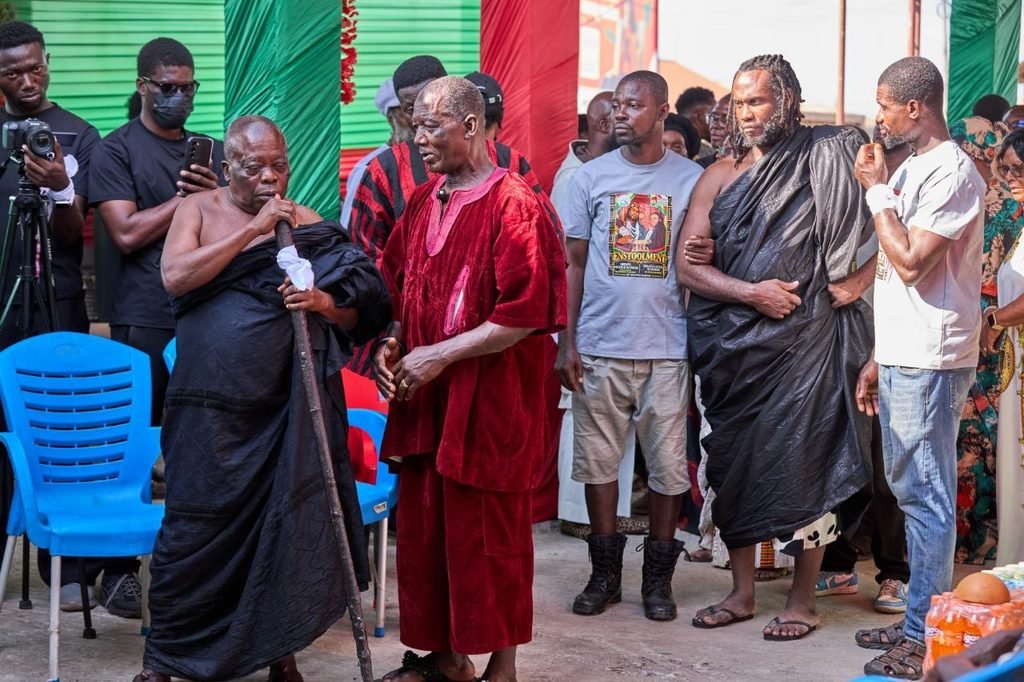
Professor Ọbádélé Kambon, a full Professor of African Linguistics at the University of Ghana, was enstooled as Apagyahene and Sunsum Ɔsahene of Akuapem Mampong in the Eastern Region in a ceremony that brought academia and traditional authority together.
For the professor, the occasion was more than a new title. It was a moment that connected his academic interests in African languages and indigenous knowledge with the living traditions of an Akan community.
The day’s events unfolded through a series of customary observances. Kambon was first taken to the compounds of the Ɔkyeamehene and Gyasehene, where the preparations for his installation continued.
Then came the application of hyire, the white kaolin powder associated with traditional rites.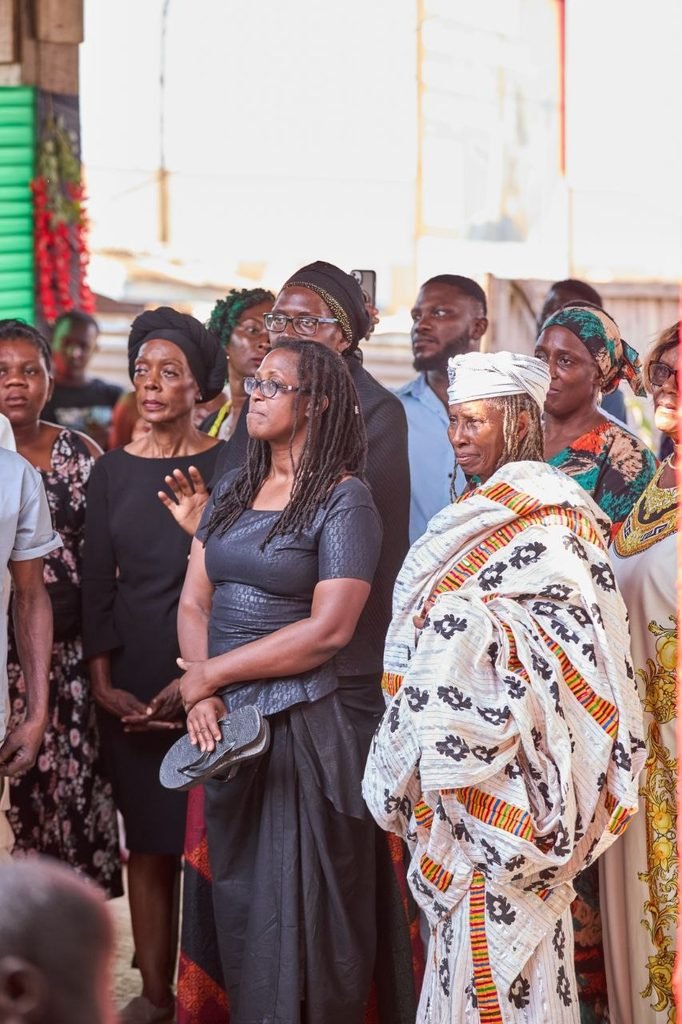
With the customary proceedings underway, the new chief was lifted onto the shoulders of celebrants and carried along the main thoroughfare of Akuapem Mampong.
The procession transformed the streets into a public stage for a ceremony rooted in the community’s traditional institutions.
There was something striking about the image, a university professor, accustomed to the measured language of academic discourse, being carried through the town in a display of traditional recognition.
Yet the celebration was not complete with the procession.
A ram was sacrificed at the Mamponghene’s compound before Kambon was taken to the palace, to swear the oath associated with his new offices.

The ceremony brought him formally into his roles as Apagyahene and Sunsum Ɔsahene.
Beyond the colourful proceedings, the titles themselves carry layers of historical meaning.
Kambon in his research explores the historical connections between Apagya and Akan political and military organisation.
Accounts cited in his work linked Apagya to an asafo, or military company, while historical writing traces an Apagya stool in Asante to the reign of Opoku Ware I in the eighteenth century.
These historical associations offer a glimpse into the institutions that have shaped Akan society over generations, although they do not automatically define the precise responsibilities of the office in Akuapem Mampong.
Kambon’s own professional life reflects a similar interest in preserving and examining African knowledge.
His work encompasses Akan language structure, naming practices across the Black world, proverbs and indigenous intellectual traditions.
Through Abibitumi, the platform he founded, he also promotes language learning, scholarship and cultural engagement.
But tradition was only one part of the story that day.
When the formal ceremony gave way to a reception, the occasion expanded into a celebration of three milestones: Kambon’s enstoolment, his promotion to full professor and his daughter Ama’s admission to the University of Ghana.
The gathering therefore carried a personal significance that went beyond the honours bestowed on one man. 
It celebrated professional advancement, the continuation of family aspirations and a connection to cultural heritage.
For a father, seeing a daughter gain admission to the same university where he holds a distinguished academic position offered another reason to celebrate.

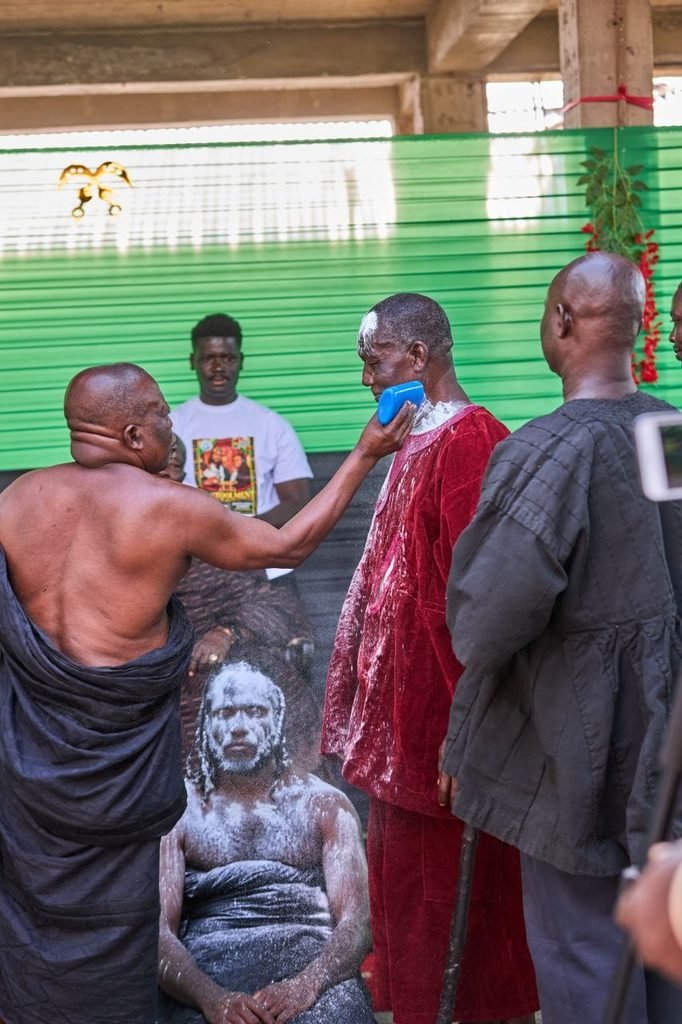
For the professor, the moment placed family achievement alongside his own professional and traditional milestones.
Kambon had already established a place in the traditional life of Akuapem Mampɔn through an earlier installation as Banmuhene Kyidɔmhene, recorded in 2017.
His latest enstoolment adds another chapter to that relationship.
In Akuapem Mampɔn, the day brought together the university, the palace and the family table in one celebration. And for Kambon, the journey from the lecture room to the traditional procession showed how scholarship, cultural responsibility and family achievement could converge in a single memorable occasion.
By Enoch Ntiamoah Siaw
SKIP THE QUEUE, TAP THE NEWS
You can now read the Ghanaian Times and The Spectator newspapers from the comfort of your device via TimesNewsPlus.
Join our WhatsApp Channel: https://whatsapp.com/channel/0029VbBElzjInlqHhl1aTU27

Intercity STC Coaches Limited has interdicted a driver captured in a viral video allegedly hitting a Sprinter bus during an overtaking manoeuvre at Pokuase before driving away from the scene.
In a public notice, the company described the driver’s conduct as unacceptable, stressing that it did not reflect the safety standards and professionalism it upholds.
Management said it had commenced an immediate investigation into the incident and identified the driver, who has been interdicted pending the outcome of the disciplinary process.
The company added that it was awaiting an official report from the Pokuase Police Command to help establish the facts surrounding the incident.
STC reaffirmed its commitment to passenger safety and responsible road use, while thanking members of the public for bringing the incident to its attention.
Management assured the public that appropriate action would be taken following the investigation.
By: Jacob Aggrey