News
African countries seek UN racism debate in wake of global protests

African countries called Friday on the UN Human Rights Council to urgently debate racism and police brutality in the wake of the global protests that followed George Floyd’s killing by an officer in the US.
In a letter written on behalf of 54 African countries, Burkina Faso’s ambassador to the UN in Geneva asked the UN’s top rights body for an “urgent debate” on “racially inspired human rights violations, police brutality against people of African descent and the violence against the peaceful protests that call for these injustices to stop.”
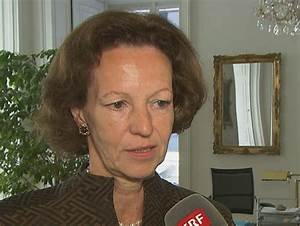
The letter, addressed to rights council president Elisabeth Tichy-Fisslberger of Austria, requested that this debate be held next week, when the council’s 43rd session resumes, after it was interrupted in March due to the COVID-19 pandemic.
It pointed to the case of George Floyd, a 46-year-old black man who died in police custody in Minneapolis on May 25 after a white officer, who has since been charged with murder, pressed his knee on his neck for nearly nine minutes.
call came after Floyd’s family, along with the families of other victims of police violence and over 600 NGOs this week called on the council to urgently address systemic racism and police impunity in the US.
For the council to consider such a request, it needs to have the backing of at least one country.
With the request now coming from a large group of states, “that increases the chances” it will take place, a council spokesman told AFP. Floyd’s death, which was caught on video and has sparked massive protests across the United States and around the world, “is unfortunately not an isolated incident, with many previous cases of unarmed persons of African descent suffering the same fate due to unchecked police brutality,” the letter said.
“Sadly, the fates of many other victims attracted no attention, as they were not captured on social media for all to see,” Ambassador Dieudonne Desire Sougouri wrote on behalf of the African Group at the council.
While the letter called for a debate on racism around the globe, it in particular highlighted the situation in the United States.
“The protests the world is witnessing are a rejection of the fundamental racial inequality and discrimination that characterise life in the United States for black people, and other people of colour,” it said.
A number of countries are expected to address Floyd’s killing and concerns about police violence and racism in the United States during the resumed 43rd council session even without a special debate.
But since the deadline for tabling fresh resolutions during this session expired back in March, they will only be able to call for concrete actions within the confines of this extraordinary debate.
FRANCE 24 with AFP


Ahyiresu and Abofrem, two quiet communities in the Atwima Mponua District, have been shaken to the core by a chilling midnight drama that reads like a nightmare.
A pastor and a young mother stand accused of attempting to bury a five‑month‑old baby girl alive, a crime that has ignited outrage and disbelief across the township.
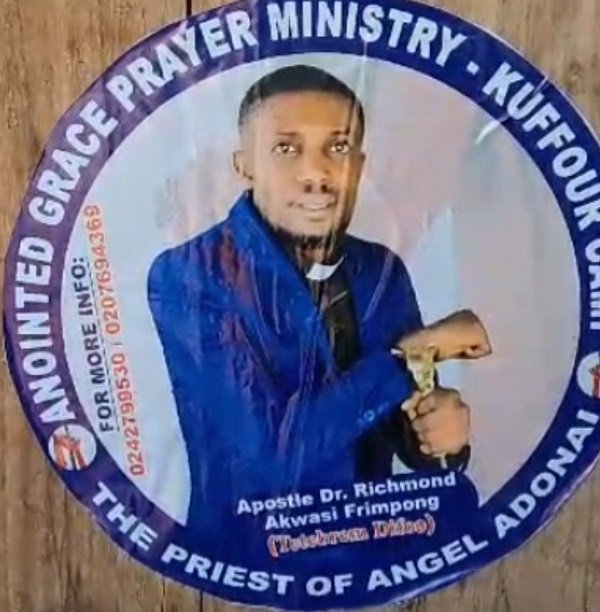
According to police, Apostle Richmond Akwasi Frimpong, 36, Head Pastor of the Anointed Grace Prayer Ministry at Kuffour Camp, conspired with his uncle Emmanuel Appiah, 53, and the child’s mother, 23‑year‑old Beatrice Agyapomaa, to dispose of the infant, Anaya Achiaa, under the cover of darkness.
A fourth suspect, Emmanuel Donkor, remains on the run.
The suspects were caught near a refuse dump around 10 pm on April 9, 2026, after a vigilant resident, Akwasi Twezor, noticed their suspicious movements.
When confronted, they claimed the child was already dead and had palace approval for burial. But Twezor’s instincts proved right—the baby was still alive, gasping faintly for breath.
Chief Linguist, Nana Yaw Badu, later confirmed that Frimpong had misled him earlier in the evening, securing permission for burial by falsely declaring the child dead.
The infant was rushed to the Abofrem Clinic, where she is now responding well to treatment. Police described her as “very beautiful.”
Assistant Superintendent of Police (ASP) Evelyn Yitamkey, Commander of DOVVSU in Bibiani, confirmed that the suspects have been provisionally charged.
Frimpong faces attempted murder and conspiracy charges, while Agyapomaa and Appiah are charged with conspiracy and abetment.
They were remanded by the Bibiani Circuit Court, presided over by Judge Frank Asiedu Nimako, to assist investigations.
The docket has been forwarded to the Attorney General’s Department for advice, ASP Yitamkey indicated.
The attempted crime has provoked fury among residents, many suspecting ritual motives aimed at bolstering the pastor’s influence.
Crowds attempted to attack the suspects outside court, but police intervention prevented mob justice.
The Assembly Member for Ahyiresu, Yusuf Suleiman, has assured residents that justice will be pursued swiftly.
From Kingsley E. Hope, Kumasi
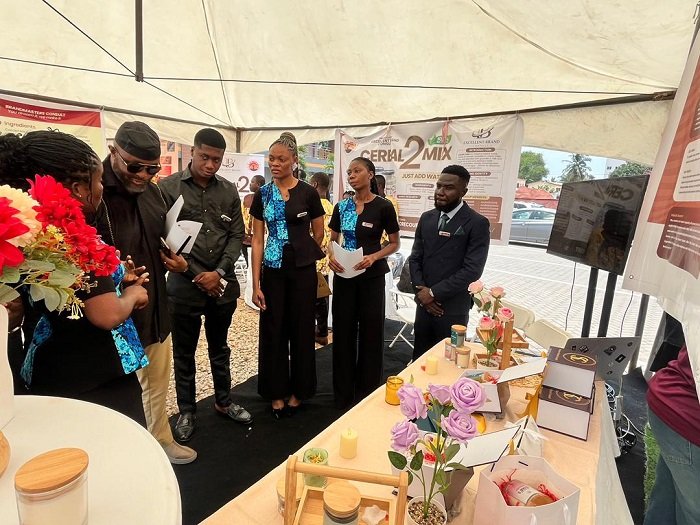
The forecourt of the African University of Communications and Business (AUCB) in Accra came alive on Friday with colour, creativity and innovation, as Level 300 students transformed the space into a lively exhibition of ideas.
Under the theme “Building meaningful brands beyond the logo,” the students invited patrons into a world where ordinary products were reimagined through storytelling, design and purpose.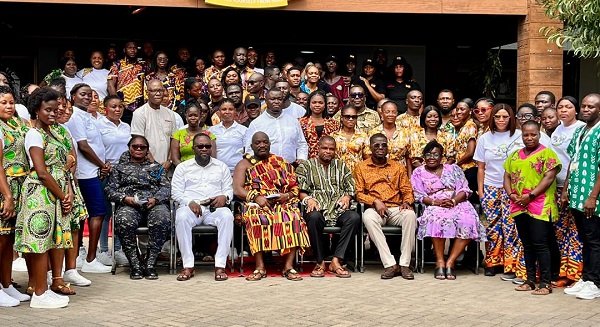
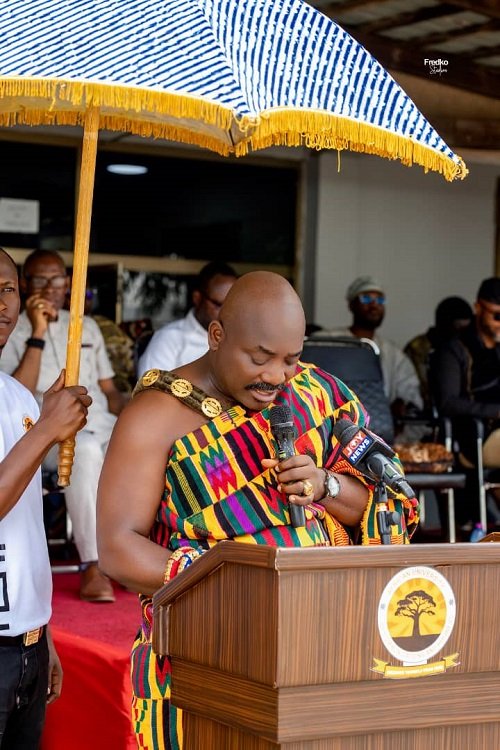
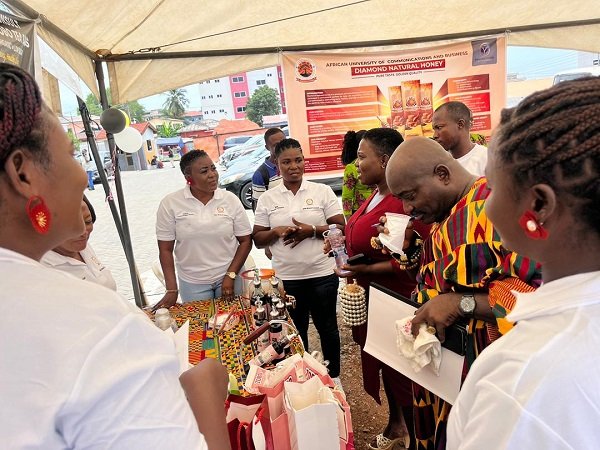

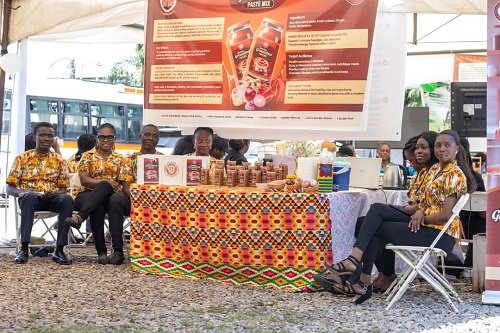
From scented candles to innovative food concepts, each stand told a unique story, one that went beyond aesthetics to capture identity, value and human connection.
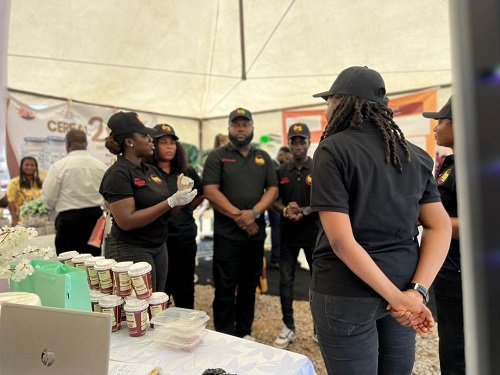
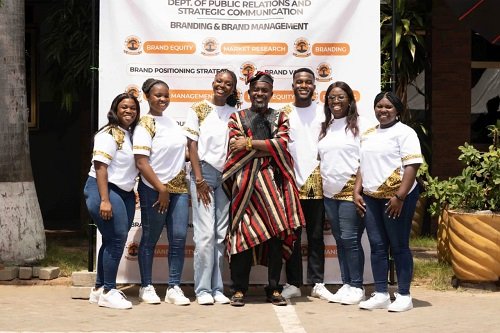
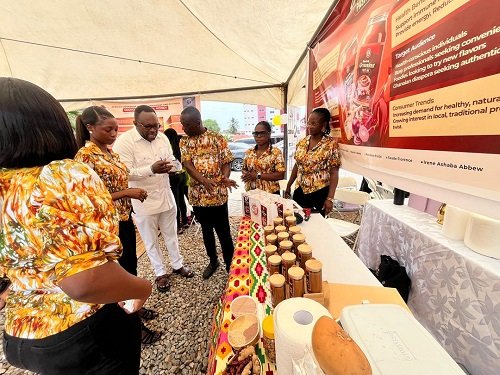
For many of the students, the event was more than just an academic exercise; it was a moment to dream out loud.
Guided by their lecturer, Peter Wonders, they explored what it truly means to build a brand in today’s competitive world where trust, consistency and experience matter just as much as logos and slogans.
Chairman of the occasion, Nana Kum Gyata VI, in his remarks said a brand is what people say about you when you are not present.
At the end of the presentations, awards were presented to deserving groups with Vida Nyaneba emerging as the overall best branding student.
By Esinam Jemima Kuatsinu
Follow our WhatsApp Channel now! https://whatsapp.com/channel/0029VbAjG7g3gvWajUAEX12Q