News
Ghana’s free primary healthcare policy: What it means for nutrition

- /home/u249204778/domains/spectator.com.gh/public_html/wp-content/plugins/mvp-social-buttons/mvp-social-buttons.php on line 27
https://spectator.com.gh/wp-content/uploads/2026/05/Free-primary-health-care-policy.jpeg&description=Ghana’s free primary healthcare policy: What it means for nutrition', 'pinterestShare', 'width=750,height=350'); return false;" title="Pin This Post">
- Share
- Tweet /home/u249204778/domains/spectator.com.gh/public_html/wp-content/plugins/mvp-social-buttons/mvp-social-buttons.php on line 72
https://spectator.com.gh/wp-content/uploads/2026/05/Free-primary-health-care-policy.jpeg&description=Ghana’s free primary healthcare policy: What it means for nutrition', 'pinterestShare', 'width=750,height=350'); return false;" title="Pin This Post">
Ghana’s Free Primary Healthcare (FPHC) Programme, launched in April 2026, is one of the most significant health policy shifts in recent years. By removing user fees at the primary care level, it promises to bring essential services closer to communities, especially women and children. For nutrition, the potential is huge. But potential alone does not save lives. Implementation will determine impact.
A question many Ghanaians are rightly asking is: how does FPHC relate to the existing National Health Insurance Scheme (NHIS)? The FPHC is not a replacement for the NHIS, but a complementary intervention. At the primary level, at health centres and polyclinics, everything is free of charge, and no NHIS card is required. Only a Ghana Card or proof of residency is needed to access care. The NHIS will now redirect its focus toward secondary and tertiary care, including specialised treatments under the Ghana Medical Trust Fund. For referrals to districts, regional, or teaching hospitals, a valid NHIS card will still be required. In simple terms, FPHC fills the gap the NHIS left at the community level, extending care to those previously excluded because they lacked an insurance card or the means to pay.
What the Policy Covers
The FPHC Programme is designed to eliminate user fees at the primary healthcare level, covering services at Community-Based Health Planning and Services (CHPS) compounds, health centres, and polyclinics. For nutrition, the implications are direct and meaningful. The programme includes antenatal and postnatal care, pregnancy nutrition education, breastfeeding support, child feeding guidance, growth monitoring, immunisation, and non-communicable disease (NCD) screenings.
The rollout begins in 150 underserved districts with plans of nationwide expansion between 2026 and 2028. Over 350 container-based service points have been positioned in high-traffic areas such as markets and lorry parks, bringing services closer to communities. Every Ghanaian will be entitled to at least one free basic health screening per year.
Why This Matters for Nutrition
For too long, cost has been one of the biggest barriers keeping mothers from attending antenatal clinics, getting nutrition counselling, and having their children weighed and monitored. A mother in a remote village should not have to choose between feeding her family and seeking healthcare for her child. The stakes are significant. Nearly one in five Ghanaian children under five is stunted, and over a third of pregnant women are anaemic. These are not statistics from a distant past; they reflect what is happening today, in communities where financial barriers have long kept families from the care they need. This policy, if implemented effectively, removes that impossible choice.
Identifying malnutrition early gives children a far better chance of recovery and survival. A child identified as wasted or stunted at six months has a far better chance of recovery than one identified at two years. If implemented well, the FPHC Programme could significantly improve early detection and prevention of malnutrition.
The Question of Implementation
Public health analysts have raised legitimate questions about sustainable financing and whether Ghana’s already-stretched health workforce can deliver on these promises. The WHO Director-General praised the initiative and noted it brings Ghana closer to universal health coverage. But praise is not delivery. Expanding access without ensuring quality and consistency risks overpromising and underdelivering.
For the FPHC Programme to truly benefit nutrition, services must be reliably available in all implementing districts. Health workers must be equipped and supported to deliver nutrition care. Nutrition must be treated as a core service, not an add-on and progress must be tracked and publicly reported.
Nutrition advocates must watch this policy closely, push for nutrition services to be fully integrated into implementation, and hold leaders accountable for ensuring that the women and children who need these services most are reached.
Because in public health, success is not measured by policies launched, but by lives improved.
Feature article by Women, Media and Change under its Nourish Ghana: Advocating for Increased Leadership to Combat Malnutrition project

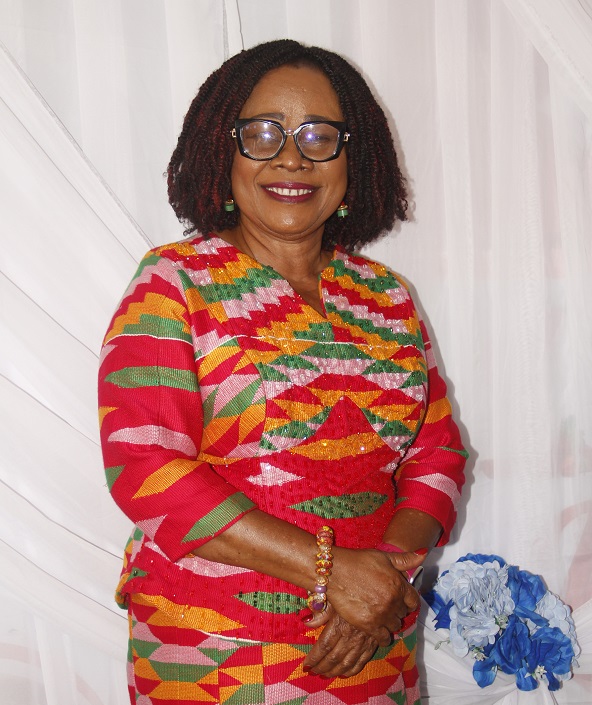
A nine-member board for the New Times Corporation (NTC), publishers of The Ghanaian Times and The Spectator newspapers was sworn into office on Thursday with a call to strengthen the governance of the Corporation.![Dr. Binka (seated second from right) with Dr Okpoti [right] the board and Management of NTC photos Okai Elizabeth.](https://spectator.com.gh/wp-content/uploads/2026/08/Dr.-Binka-seated-second-from-right-with-Dr-Okpoti-right-the-board-and-Management-of-NTC-photos-Okai-Elizabeth-1024x683.jpg)
The new NTC board is chaired by Dr Charity Binka and has Very Rev. Helena Amma Serwah Opoku-Sarkodie, Mr Tito Kojo Voegborlo Esq and Naana Aklerh Amenyah Kubi I as members. Read More
SKIP THE QUEUE, TAP THE NEWS
You can now read the Ghanaian Times and The Spectator newspapers from the comfort of your device via TimesNewsPlus.
Join our WhatsApp Channel: https://whatsapp.com/channel/0029VbBElzjInlqHhl1aTU27

Christians have been urged to demonstrate a living faith in Jesus Christ by allowing their confession of Him as Lord and Saviour to reflect in their daily lives.
According to the Kaneshie District Pastor of the Evangelical Presbyterian Church, Ghana (EPCG), Rev. Dzidzor Nathaniel Affram, a genuine Christian’s confession should go beyond words and be demonstrated through obedience to God, love for others and service to the Church.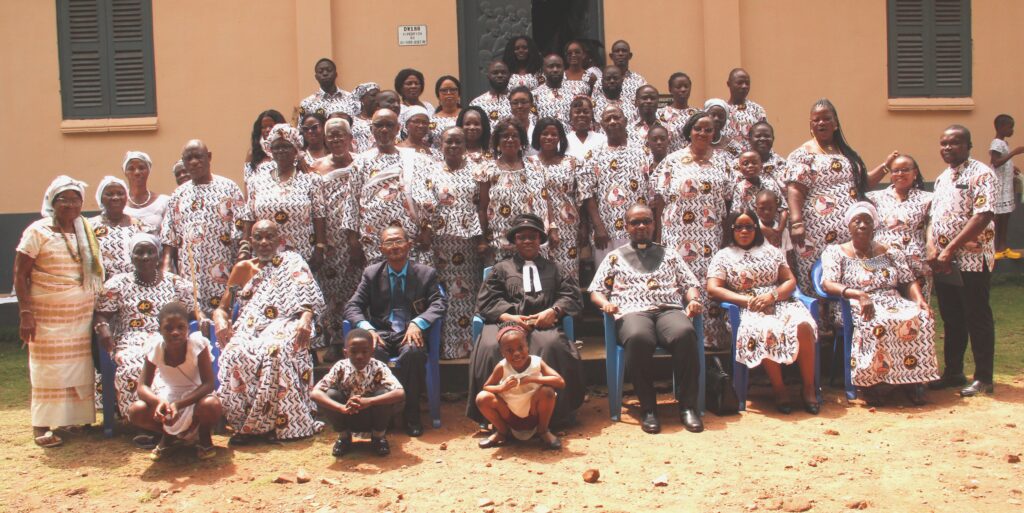
He made the call at the 40th anniversary remembrance service for the late Wesley Kwasi Kwadzo at the Evangelical Presbyterian Church, Ghana, Maranatha Congregation at Awudome Avenui in the Volta Region.
Speaking on the theme, “The Church Built on a Living Confession,” Rev. Affram said life would continually present challenges capable of testing Christians’ faith, making it necessary for believers to hold firmly to their confession that Jesus Christ is Lord.
He explained that accepting Jesus Christ as Lord and Saviour required Christians to live according to His teachings, stressing that their faith must be evident in their conduct.
“A living confession listens to God and not man,” he said, urging Christians to remain obedient to God even when faced with difficulties and pressures.
Rev. Affram further encouraged the congregation to care for vulnerable people and demonstrate concern for others, adding that such acts were practical expressions of Christian faith.
He also urged Christians to identify and use their God-given gifts to build the Church.
He said every member of the Church had a role to play and cautioned Christians against looking down on others because of their status or abilities.
The remembrance service brought together family members, friends, members of the congregation and sympathisers to commemorate the 40th anniversary of the late Wesley Kwasi Kwadzo.
By Lizzy Okai