News
Half of infertility cases traceable to men — Dr.Edem Hiadzi


- /home/u249204778/domains/spectator.com.gh/public_html/wp-content/plugins/mvp-social-buttons/mvp-social-buttons.php on line 27
https://spectator.com.gh/wp-content/uploads/2021/05/Dr.-Edem-Hiadzi.jpg&description=Half of infertility cases traceable to men — Dr.Edem Hiadzi', 'pinterestShare', 'width=750,height=350'); return false;" title="Pin This Post">
- Share
- Tweet /home/u249204778/domains/spectator.com.gh/public_html/wp-content/plugins/mvp-social-buttons/mvp-social-buttons.php on line 72
https://spectator.com.gh/wp-content/uploads/2021/05/Dr.-Edem-Hiadzi.jpg&description=Half of infertility cases traceable to men — Dr.Edem Hiadzi', 'pinterestShare', 'width=750,height=350'); return false;" title="Pin This Post">
A more credible medical source has asked men not to put the blame of childlessness wholly on the door steps of women.
Men should also bear part of the blame.
“About half of the causes of infertility are due to or include male factors and infertility is one of the commonest conditions affecting reproductive age group between 20 and 45 years,”
Dr. Edem K. Hiadzi, a Consultant Obstetrician Gynaecologist and Fertility Specialist at the Lister Hospital and Family Centre in Accra brought these to the fore at a Merck Media Training for Journalists in Asia and Africa via video conference.
He said that there had been unjustifiable condemnation of women who were unable to conceive stressing that women alone should not be blamed but men could also be contributive factor to the problem.
Dr. Hiadzi who is the President of the Fertility Society of Ghana (FERSOG) pointed out that infertility had been a major cause of marital problems in Africa, and had exposed women to ostracisation, social discrimination as well as physical violence.
He revealed that in Sub-Saharan Africa male factor causes of infertility constituted 40 per cent, while that of female causes of infertility also constituted 40 per cent, with 15 percent being male and female factors and the remaining five per cent being inexplicable factors.
He said fertility was a shared responsibility and ,therefore, it was important for men to equally get tested with their wives when there was a delay in childbirth.
Dr. Hiadzi said it was unfortunate that, due to lack of knowledge, some women had to carry the burden as the main cause of childlessness of a couple when in fact, the man was the cause and stated that it was important for men to support their wives by getting tested with them.
Giving tips on how to avoid infertility, he advised men to avoid high temperatures as this could affect sperm production and motility temporary.
He mentioned riding motorbikes, hot tubs and steam baths as some of the activities which should be avoided but men should instead resort to showers, wear loose pants, limit their alcohol intake, refrain from drugs and smoking.
He noted that viral infections like mumps may also affect the testes leading to infertility, and gave other causes in the male infertility as previous hernia repair which may accidentally damage the vast deferens and varicose which may also lead to low sperm count.
Dr. Hiadzi further advised men to seek early medical treatment for sexually transmitted diseases especially gonorrhoea and chlamydia which he said, accounted for a significant proportion of cases.
“These infections cause chronic epididymitis and occlusion of the vast deferens leading to oligospermia (low sperm count) and azoospermia (no sperms in semen)” he disclosed, and
encouraged the media to highlight the need for childless couples to seek help and also for society to stop stigmatising them.


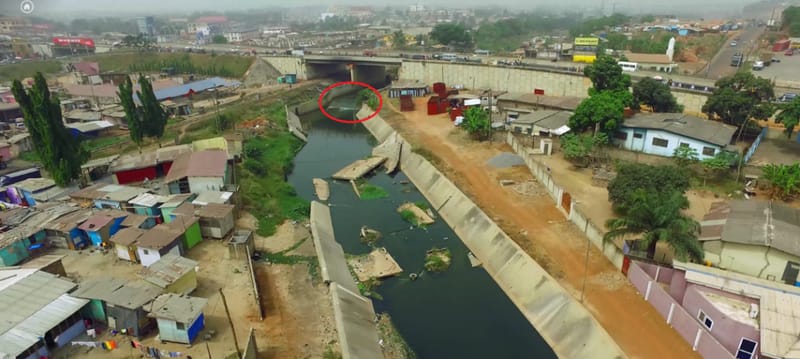
Construction of a major underground stormwater drain along the Dr. Busia Highway within the Kaneshie enclave will commence on September 7, 2026.
The Project Coordinator for the Greater Accra Resilient and Integrated Development (GARID) Project, Dr. Kwadwo Ohene Sarfo, announced this at a special media briefing on Wednesday.
According to him, the works will involve the construction of a double-cell underground rectangular drain measuring approximately 10 metres wide and 1.95 kilometres long, stretching from Pamprom Junction to First Light Junction.
The new drain will replace the existing two 1.2-metre diameter pipes, which are inadequate to carry the volume of stormwater in the area.
Dr. Sarfo said the drain will connect at one end to the recently completed section within the Accra Academy campus and at the other end to the existing drain at Pamprom Junction.
He said the construction is expected to run from September 2026 to October 2027.
The project forms part of government’s broader flood prevention and mitigation programme aimed at addressing perennial flooding in Accra.
By Edem Mensah-Tsotorme
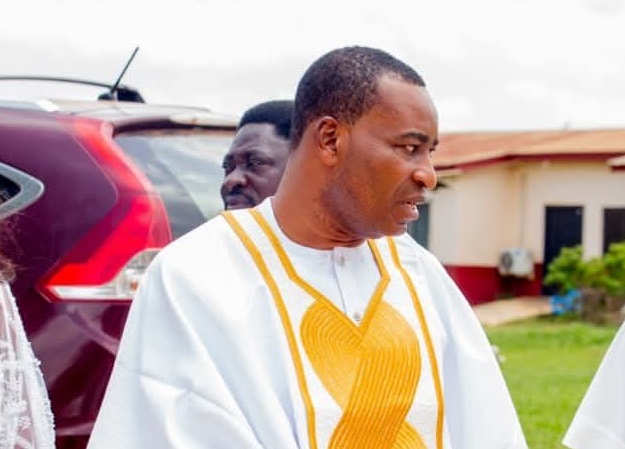
The former Ashanti Regional Chairman of the New Patriotic Party (NPP), Bernard Antwi Boasiako, popularly known as Chairman Wontumi, has withdrawn from the party’s National Chairmanship race.
In a statement issued yesterday, Chairman Wontumi who is currently serving a 20-year jail term said his decision was driven by his love for the party and his unwillingness to let his personal circumstances distract the NPP from its rebuilding efforts.
“There are moments in the life of a man when the heart wants to continue, but duty demands sacrifice. Moments when one must quietly set aside personal ambition, not because the dream has died, but because the family he loves must not be made to carry his burden. Today, I find myself at such a painful moment,” he wrote.
He disclosed that after many nights of prayer, sober reflection and consultations with his family, legal team, party elders, campaign team and trusted supporters, he concluded that his present situation must not become an additional burden on the NPP.
“This is not the decision my heart desired, but sometimes, true love requires us to release what we deeply want in order to protect what we love even more,” he added.
Recounting his years of service, Chairman Wontumi said he had served the party with everything within him, walking through heat and rain, travelling to remote communities and standing with the grassroots in both victory and defeat.
“For many years, I have served the NPP with everything within me… The NPP is not merely a political party to me. It is my family. It is my home. It is a cause to which I have dedicated a significant part of my life,” he stated.
He explained that the party, already carrying the pain of electoral defeat and the huge responsibility of preparing for the future, should not be made to carry his personal weight.
“That is why I cannot allow my present situation or personal ambition to distract the party from the difficult work of rebuilding. I cannot ask the party to carry my weight when it is already carrying the pain of defeat and the enormous responsibility of preparing for the battle ahead. I would rather carry this pain quietly than allow the party I love to suffer because of me,” he said.
He further sympathized with his supporters across the 16 regions, acknowledging that the decision would be painful for many who had sacrificed for his campaign.
“To my teeming supporters across all sixteen regions, I know this message will hurt. I know many of you will read it with tears in your eyes because I understand the sacrifices you have made for this journey,” he said.
By Edem Mensah-Tsotorme