News
Netright advocates creation of National Care Policy for unpaid care workers


- /home/u249204778/domains/spectator.com.gh/public_html/wp-content/plugins/mvp-social-buttons/mvp-social-buttons.php on line 27
https://spectator.com.gh/wp-content/uploads/2025/07/Mrs-Patricia-Blankson-Akakpo-700x600.jpeg&description= Netright advocates creation of National Care Policy for unpaid care workers', 'pinterestShare', 'width=750,height=350'); return false;" title="Pin This Post">
- Share
- Tweet /home/u249204778/domains/spectator.com.gh/public_html/wp-content/plugins/mvp-social-buttons/mvp-social-buttons.php on line 72
https://spectator.com.gh/wp-content/uploads/2025/07/Mrs-Patricia-Blankson-Akakpo-700x600.jpeg&description= Netright advocates creation of National Care Policy for unpaid care workers', 'pinterestShare', 'width=750,height=350'); return false;" title="Pin This Post">
The Network for Women’s Right in Ghana (Netright) has called for the formation of a National Care Policy to address the unequal burden of unpaid care work on women and adolescent girls in Ghana.
It has also asked the Government to place value on unpaid care work and quantify its contribution to national development in Gross Domestic Product (GDP).
Unpaid care work refers to all the non-remunerated tasks and responsibilities carried out within households and communities that support the well-being of others.
These include caring for children, the elderly, and sick or disabled family members, cooking, cleaning, laundry, and other household chores, collecting water and firewood (especially in rural settings) and volunteering in community care.
Ms Patricia Blankson Akakpo, the Executive Director, Netright, who made the call at a meeting in Accra on Tuesday, said in Ghana women disproportionately bore the burden of unpaid care work, contributing to time poverty and hindering their economic empowerment.
“Women perform three times more unpaid work than men, this unequal distribution of care responsibilities restricts women’s access to education, employment, and political and social participation while also impacting their health and well-being,” she stated.
The meeting, organised in partnership with Alinea International, a development consultancy firm, brought together civil society organisations, women’s rights groups, and government institutions to make input into Netright’s work on unpaid care work and mobilise support for policy reforms.
To address the negative impact of unpaid work on women and girls, Netright was implementing the United for Care Sensitive Approaches to Rights and Empowerment (UCARE) project with funding from Global Affairs Canada.
The project, Ms Akakpo said, aimed to reduce the unequal and unfair burden of unpaid care work on women and adolescent girls in northern Ghana.
“UCARE is being implemented in 10 districts across the three regions of the north – Northern, North-East and Savannah – to inform policy reforms,” she said.
Ms Lydia Dogee, the representative of Alinea International Ghana, said recent field studies the organisation conducted showed that unpaid care work remained largely regarded as feminine work.
“Out of an 18-hour workday for a woman, about 7.8 hours are devoted to unpaid care work. You can imagine what kind of paid work this woman is involved in and how she gets economically empowered,” she said.
She explained that the UCARE project was using an integrated approach to engage families and communities to recognise unpaid care work and encourage fair redistribution of house chores.
“We believe that a good meal served at home, that child that is guided, the sick that is comforted, or that clean room are not just acts of love, but acts of labour,” Ms Dogee said.
– GNA


The Commercial National Motor Riders Union (CNMRU) has dismissed claims that the government has failed commercial motorbike riders after receiving their support during the 2024 general election campaign.
The union described allegations by a group known as the Okada Riders Association (ORAG) as false and misleading, insisting that the government has taken concrete steps towards legalising and regulating commercial motorcycle operations.
In a statement issued after a press conference on August 18, the CNMRU stated that the government established a technical committee after the 2024 elections to conduct research and engage stakeholders on the regulation of Okada operations.
According to the union, it has been actively involved in the process, representing the interests of commercial motor riders across the country.
It added that a delegation of stakeholders travelled to Rwanda to study that country’s system for regulating commercial motorcycle operations.
The delegation included representatives of the CNMRU, the National Road Safety Authority, the Driver and Vehicle Licensing Authority (DVLA) and the Ministry of Transport, the statement noted.
The union further stated that the bill on the regulation of commercial motorcycle operations has been laid before Parliament and is going through the legislative process.
“This is concrete progress, and it demonstrates that the government has not abandoned the Okada riders,” the CNMRU stated.
It also said sensitisation programmes were ongoing across the country to educate riders on road safety, licensing, responsible riding and the expected legal framework for commercial motorcycle operations.
The union noted that it was working with the government and the DVLA to bring mobile licensing services closer to riders and assist them in obtaining driving licences at subsidised rates.
It also welcomed plans to establish an electric motorcycle initiative in Ghana, which it said would provide commercial riders with access to environmentally friendly motorcycles under a work-and-pay arrangement.
The CNMRU explained that it supported President John Dramani Mahama and the National Democratic Congress (NDC) during the 2024 election campaign because of their commitment to address the legal and regulatory challenges facing commercial motor riders.
“We supported a commitment, and today we are witnessing concrete steps toward fulfilling that commitment,” it stated.
However, the union acknowledged that not all the challenges facing Okada riders had been resolved.
It urged commercial motor riders, the media and the public to distinguish between what it described as political propaganda and the work being undertaken to regulate the sector.
By: Jacob Aggrey
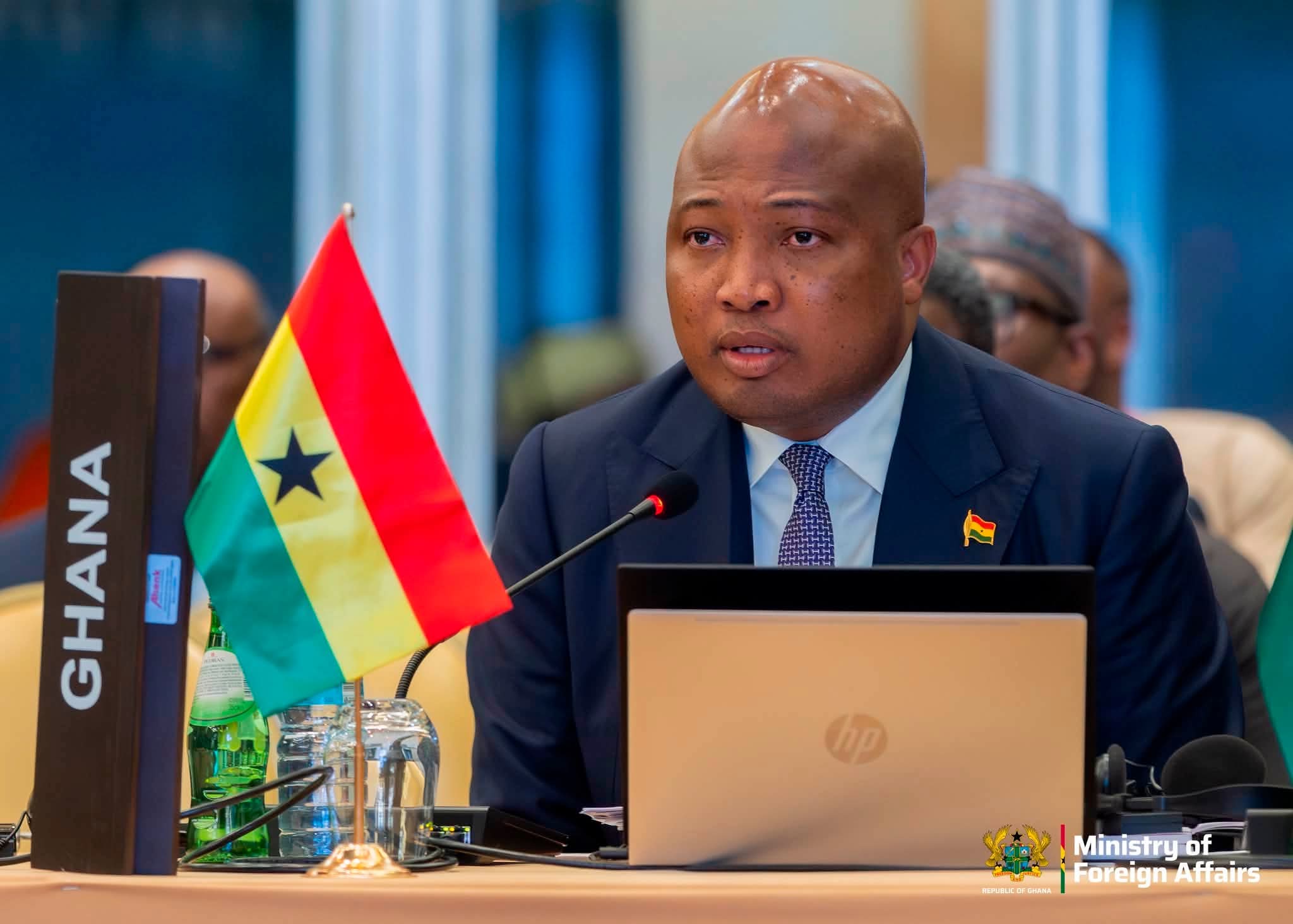
The Ministry of Foreign Affairs has commended The Fourth Estate for its investigative report into the attestation process, while announcing measures to improve the service and prevent the activities of middlemen.
The Ministry, in a press statement issued on Thursday, September 3, 2026, acknowledged an online report published by The Fourth Estate on September 2 concerning an undercover investigation into attestation services provided by state institutions.
It praised the media organisation for its investigative work, noting that such efforts contribute to good governance, public accountability and improved service delivery.
The Ministry, however, clarified that the man implicated in the investigation is not a staff member of the Ministry of Foreign Affairs.
According to the Ministry, the individual has been sanctioned by his respective institution and reported to law enforcement agencies for further investigation and possible prosecution.
It added that he has also been prohibited from entering the premises of the Ministry.
The Ministry maintained that it has a zero-tolerance policy towards middlemen and third-party facilitators who seek to profit from the acquisition of attestation documents.
It condemned the activities of what it described as unscrupulous middlemen who take advantage of vulnerable members of the public.
The Ministry explained that the attestation process involves several institutions across different arms of government, making coordination important to maintaining the integrity of the process.
It said efforts to strengthen coordination among the institutions involved had been ongoing for several months, even before The Fourth Estate’s investigation.
Attestation process to go digital
The Ministry disclosed that comprehensive reforms are underway to make the attestation process more efficient and reduce direct human interaction.
According to it, plans are being pursued to make payments for attestation services cashless, while digital platforms are also being developed to support the entire process.
The Ministry expressed confidence that the reforms would produce results similar to improvements achieved in Ghana’s passport application and administration processes.
It further reminded the public that the Parliament-approved fee for attestation is GH¢200.
The fee, it explained, is collected by officials of the Controller and Accountant-General’s Department, who issue the appropriate receipts.
The Ministry warned the public against using middlemen, stressing that engaging their services is strictly illegal.
It encouraged anyone with information, enquiries or complaints concerning the attestation process to contact the Ministry.
The Ministry reaffirmed its commitment to maintaining transparency, integrity and ethical standards in the delivery of its services.
By: Jacob Aggrey