News
A new dawn for Ghana’s Agribusiness sector and export value chain

- /home/u249204778/domains/spectator.com.gh/public_html/wp-content/plugins/mvp-social-buttons/mvp-social-buttons.php on line 27
https://spectator.com.gh/wp-content/uploads/2025/02/Silver-720x600.png&description=A new dawn for Ghana’s Agribusiness sector and export value chain', 'pinterestShare', 'width=750,height=350'); return false;" title="Pin This Post">
- Share
- Tweet /home/u249204778/domains/spectator.com.gh/public_html/wp-content/plugins/mvp-social-buttons/mvp-social-buttons.php on line 72
https://spectator.com.gh/wp-content/uploads/2025/02/Silver-720x600.png&description=A new dawn for Ghana’s Agribusiness sector and export value chain', 'pinterestShare', 'width=750,height=350'); return false;" title="Pin This Post">
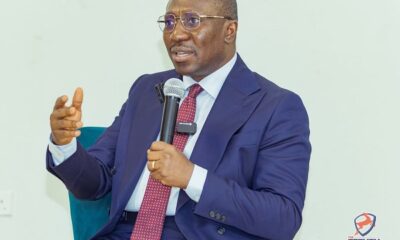
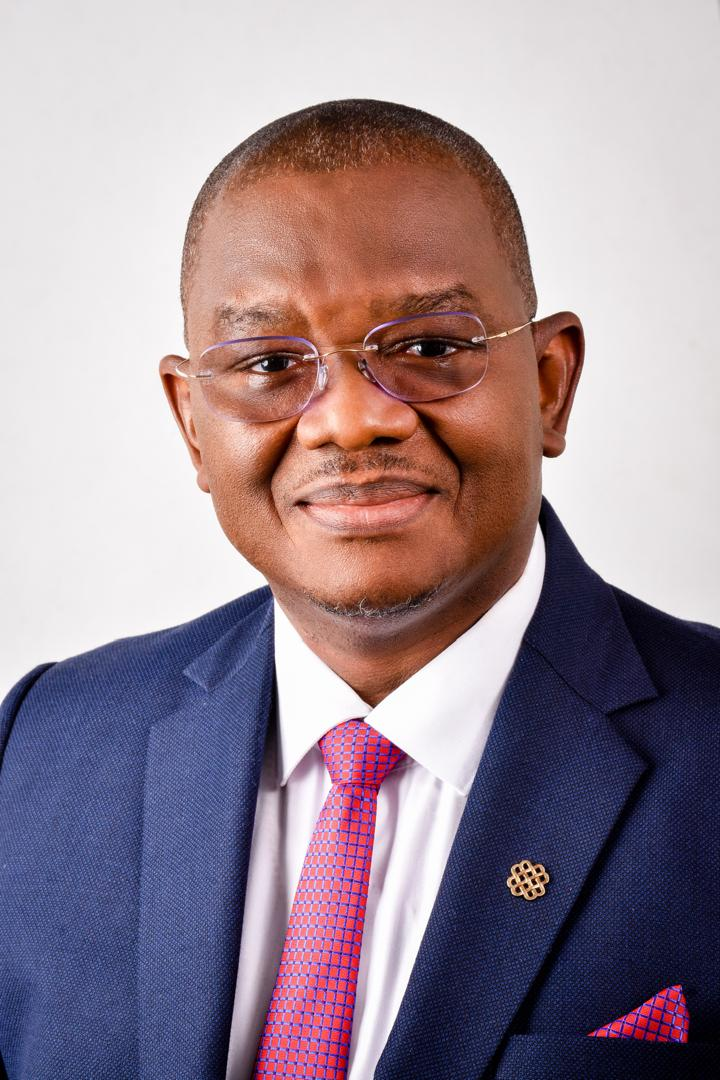
Players within the agricultural sector and export value chain have a lot to cheer about following President John Dramani Mahama’s appointment of Hon. Sylvester Adinam Mensah as Acting Chief Executive of the country’s leading policy and development bank, the Ghana Export – Import Bank (GEXIM).
News of the appointment of the consummate finance professional and former senior banker, prominent for his expertise in public sector banking, fund management, strategic financial management, and governance with a proven record of accomplishment of delivering innovative financial solutions was received with excitement across various sectors.
The Ghana Export-Import Bank Act 2016 (Act 911) was promulgated to establish the Ghana Export – Import Bank with a mandate to facilitate international trade, improve export competitiveness, enhance foreign exchange earnings and improve balance of trade. In addition, the Bank is to play a pivotal role in Ghana’s quest for a feasible and sustainable export led economy.
Under Hon. Mensah’s leadership, the Bank’s core strategic direction, is expected to focus on prioritizing agribusiness and introducing carefully designed initiatives to bridge the export gap to foster Ghana’s greater participation in global export value chains, from small and medium-sized enterprises to larger corporations.
Over the years, agriculture has remained the major driver of Ghana’s economy and the primary way the majority of Ghanaians earn their living. As an agrarian economy, it has become important to focus on agribusiness in order to enhance the development of the value chain, and build the ecosystem to our advantage.
Agribusiness, as we are aware, examines the structure and organization of the agricultural food sector as well as the entire value chain extending from farm inputs, through on-farm businesses, to processing, transportation, credit and marketing.
In addition, Agribusiness plays a crucial role in the world economy, responsible for producing, packaging, preserving and distributing food and other agricultural products to consumers and industries worldwide. For this reason, we cannot afford to neglect agribusiness as a priority for the country.
Low and medium income countries always battle with currency depreciation due to unfavourable balance of trade (BoT) which also serves as a major indicator of economic growth potential and an important part of the Gross Domestic Product (GDP). To reduce our trade deficit will require a bold step to increase exports to earn more foreign currency from the goods and services exported.
In realizing this, Ghanaian businesses are to be aided to leverage on innovation and technology to improve their processes to be able to compete favourably in the global marketplace.
This will ultimately lead to the building of local capacity, enormously contribute to Ghana’s industrialisation, and export drive agenda. Without a doubt, these will certainly culminate into job creation and the introduction of special purpose initiatives targeting the youth and women to benefit from jobs to bae created.








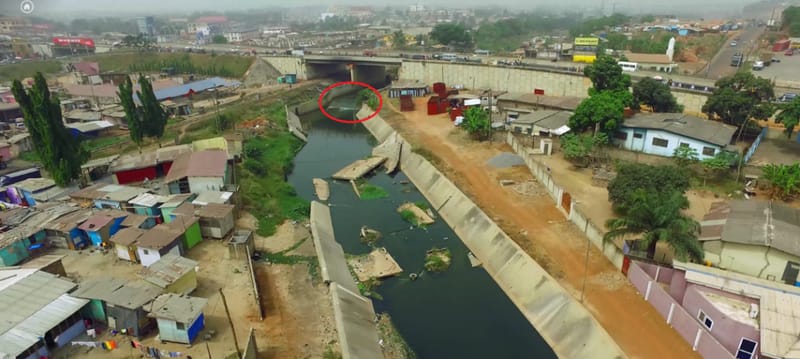
Construction of a major underground stormwater drain along the Dr. Busia Highway within the Kaneshie enclave will commence on September 7, 2026.
The Project Coordinator for the Greater Accra Resilient and Integrated Development (GARID) Project, Dr. Kwadwo Ohene Sarfo, announced this at a special media briefing on Wednesday.
According to him, the works will involve the construction of a double-cell underground rectangular drain measuring approximately 10 metres wide and 1.95 kilometres long, stretching from Pamprom Junction to First Light Junction.
The new drain will replace the existing two 1.2-metre diameter pipes, which are inadequate to carry the volume of stormwater in the area.
Dr. Sarfo said the drain will connect at one end to the recently completed section within the Accra Academy campus and at the other end to the existing drain at Pamprom Junction.
He said the construction is expected to run from September 2026 to October 2027.
The project forms part of government’s broader flood prevention and mitigation programme aimed at addressing perennial flooding in Accra.
By Edem Mensah-Tsotorme
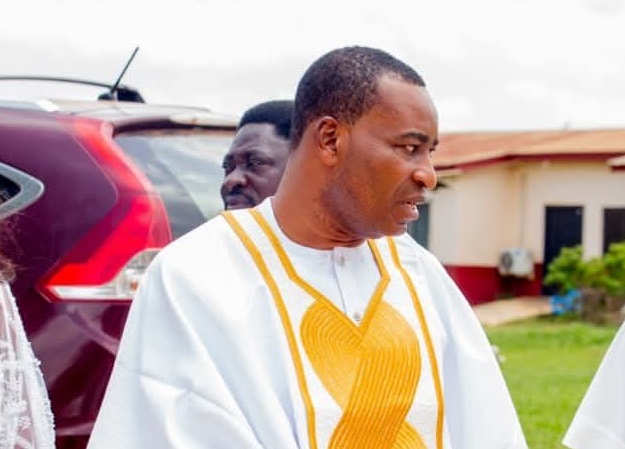
The former Ashanti Regional Chairman of the New Patriotic Party (NPP), Bernard Antwi Boasiako, popularly known as Chairman Wontumi, has withdrawn from the party’s National Chairmanship race.
In a statement issued yesterday, Chairman Wontumi who is currently serving a 20-year jail term said his decision was driven by his love for the party and his unwillingness to let his personal circumstances distract the NPP from its rebuilding efforts.
“There are moments in the life of a man when the heart wants to continue, but duty demands sacrifice. Moments when one must quietly set aside personal ambition, not because the dream has died, but because the family he loves must not be made to carry his burden. Today, I find myself at such a painful moment,” he wrote.
He disclosed that after many nights of prayer, sober reflection and consultations with his family, legal team, party elders, campaign team and trusted supporters, he concluded that his present situation must not become an additional burden on the NPP.
“This is not the decision my heart desired, but sometimes, true love requires us to release what we deeply want in order to protect what we love even more,” he added.
Recounting his years of service, Chairman Wontumi said he had served the party with everything within him, walking through heat and rain, travelling to remote communities and standing with the grassroots in both victory and defeat.
“For many years, I have served the NPP with everything within me… The NPP is not merely a political party to me. It is my family. It is my home. It is a cause to which I have dedicated a significant part of my life,” he stated.
He explained that the party, already carrying the pain of electoral defeat and the huge responsibility of preparing for the future, should not be made to carry his personal weight.
“That is why I cannot allow my present situation or personal ambition to distract the party from the difficult work of rebuilding. I cannot ask the party to carry my weight when it is already carrying the pain of defeat and the enormous responsibility of preparing for the battle ahead. I would rather carry this pain quietly than allow the party I love to suffer because of me,” he said.
He further sympathized with his supporters across the 16 regions, acknowledging that the decision would be painful for many who had sacrificed for his campaign.
“To my teeming supporters across all sixteen regions, I know this message will hurt. I know many of you will read it with tears in your eyes because I understand the sacrifices you have made for this journey,” he said.
By Edem Mensah-Tsotorme