Profile
Dr Gloria Agyeiwaa Antwi Botchway


- /home/u249204778/domains/spectator.com.gh/public_html/wp-content/plugins/mvp-social-buttons/mvp-social-buttons.php on line 27
https://spectator.com.gh/wp-content/uploads/2024/12/IMG_9792-1000x600.jpg&description=Dr Gloria Agyeiwaa Antwi Botchway', 'pinterestShare', 'width=750,height=350'); return false;" title="Pin This Post">
- Share
- Tweet /home/u249204778/domains/spectator.com.gh/public_html/wp-content/plugins/mvp-social-buttons/mvp-social-buttons.php on line 72
https://spectator.com.gh/wp-content/uploads/2024/12/IMG_9792-1000x600.jpg&description=Dr Gloria Agyeiwaa Antwi Botchway', 'pinterestShare', 'width=750,height=350'); return false;" title="Pin This Post">
In a historic milestone for the University of Ghana, Dr Gloria Agyeiwaa Antwi Botchway has become the first woman to earn a PhD in Mathematics from the University of Ghana.
Dr Botchway’s journey from the village of Akaa Buem in the Oti region to becoming the first female to earn a PhD in Mathematics is a demonstration of her resilience and determination.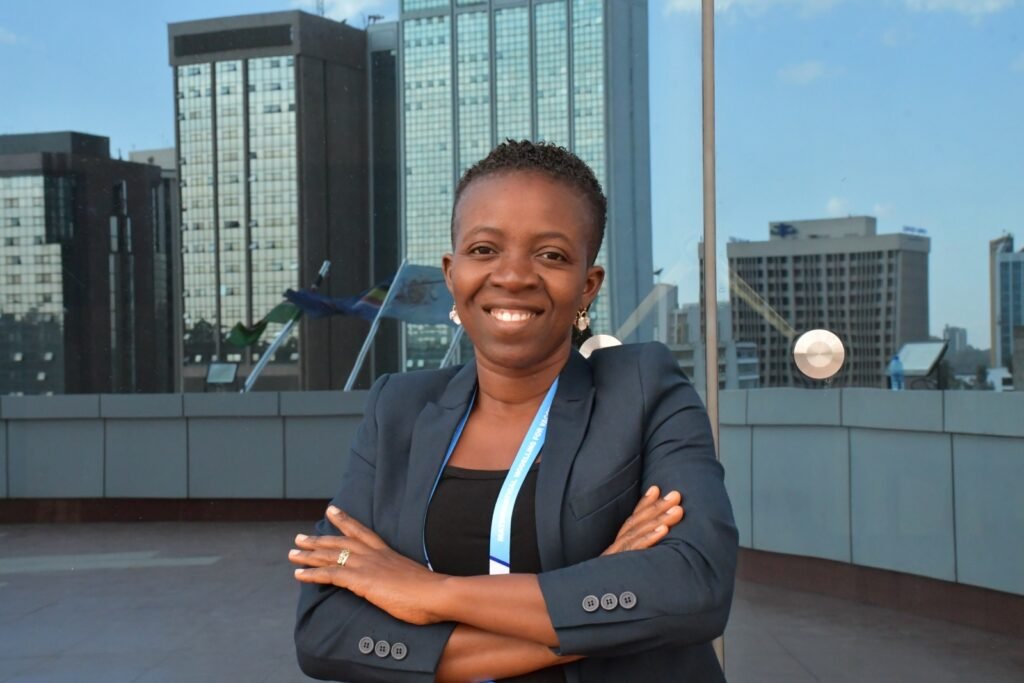
Born into a family of four, she is the second child of her parents. When her family moved to Accra for her mother’s education, they faced significant hardships, living with an aunt who struggled to make an ends meet while living in a crowded compound where the challenges of life were evident.
Her childhood years were not without challenges. At just seven years old, Dr Botchway began hawking goods to help make ends meet.
Her school life was equally challenging. While her classmates brought a variety of foods to school, Dr Botchway often packed leftover banku, which she and her brother would hide to avoid teasing.
After four years in Accra, the family moved to Asamankese, where she attended Life Preparatory School. Following another move to Winneba, she continued her education at University Primary on North Campus.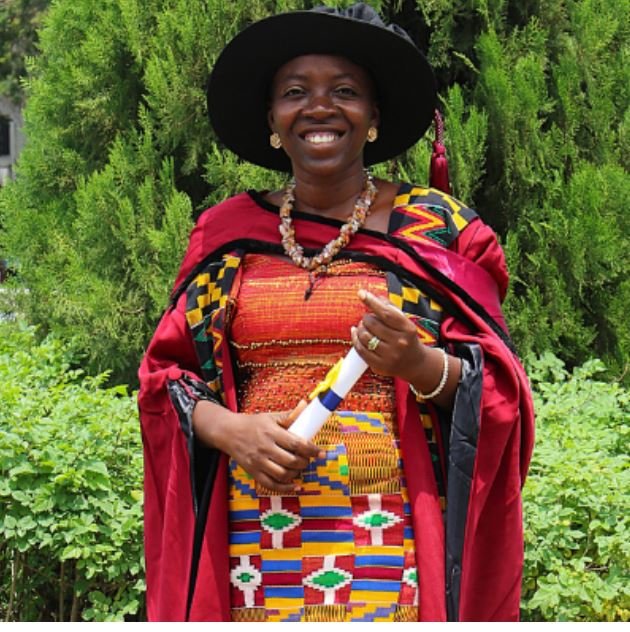
Her experiences in Accra were marked by crime and instability, where gunshots from nearby gang members and police conflicts were a common occurrence.
Despite these hardships, Dr Botchway’s determination never declined. She completed her basic education wearing the same uniform from class four through to Junior High School, as financial constraints made it impossible to buy new clothes.
Transitioning to secondary school at Accra Girls, Gloria initially focused on Business subjects but soon discovered her true passion for
Mathematics. “I’ve always loved. Maths – It challenges me, and I wanted to be in a field where few people ventured,” she said.
Her secondary school math teacher recognised her potential and urged her to pursue a career in academia. “He just told me that, Gloria, you have to be a Lecturer,” she remembers. This encouragement, coupled with her innate love for the subject, set Dr Botchway on a path that would ultimately lead her to make history.
It was this passion that led her to the University of Ghana, where she not only excelled academically but also forged a path for future generations of female mathematicians. When she began her studies at the University of Ghana, she initially opted for a Business Administration course but quickly chose Mathematics.
Inspired by mentors like Prof. Elsie Kaufmann and Dr Adu Gyamfi, who advised her on the advantages of a mathematics degree, she ultimately committed to the subject. “I wanted a challenging field where few people ventured,” she explained. “I realised that with a Math degree, I could still pursue Accounting if I wanted”, she added.
As she progressed through her undergraduate and graduate studies, she faced numerous challenges, both academic and personal. “Math is challenging. It’s not easy,” she admits. “But if you love it, you would do it.”
One of the most significant challenges was the lack of female role models in her field. “People do not expect that you would go on with the Math,” Gloria explains. “Sometimes they were very discouraging.” However, these doubts only fueled her determination to succeed.
In an interview with Dr Botchway’s colleague, Justine Johnson, he described her as a dedicated and ambitious individual who is practical and determined.
He mentioned her leadership skills and how she helped set up a Maths study group, which helped him become proficient in Math. He also praised her determination, stating that “nothing is impossible, and she always strives to solve problems.”
Balancing her academic pursuits with her personal life presented another set of challenges. Dr Botchway got married during her Master’s programme and had two children before graduation.
She went on to have two more children during her PhD studies. “Life has to go on,” she says, crediting her supportive husband and family for helping her manage her multiple roles.
In 2024, Dr Botchway’s perseverance paid off when she became the first woman to earn a PhD in Mathematics from the University of Ghana. This achievement is not just a personal triumph but a significant milestone for gender representation in STEM fields in Ghana.
Now with her PhD, she is focused on making a lasting impact in her field and inspiring the next generation of female Mathematicians. Dr Botchway is involved in a project called “Enhancing M in STEM,” which aims to improve Mathematics education for girls in secondary schools.
Professor Deborah Atobrah, Director of the Centre for Gender Studies and Advocacy (CEGENSA) at the University of Ghana, underscores the importance of Gloria’s achievement. “This is a very big achievement. It’s a huge feat in gender work for STEM. However, you know, we think this has taken too long for us to get here. But nevertheless, we still celebrate this very important achievement”, she stated.
Speaking to the Head of the Department of Mathematics, Dr Chisara Peace Ogbogbo, she showered praises on Dr Botchway and applauded her work ethic.
Through her academic journey, Dr Botchway has shown determination and persistence, setting the stage for her groundbreaking achievement. Her story is one of perseverance, representing the spirit of a woman who rose above her circumstances to achieve groundbreaking success.
Dr Botchway in her appreciation remarks thanks God for seeing her through it all. She also acknowledged her supervisor, Professor Anthony Yaw Aidoo of Eastern Connecticut State University, for being supportive throughout her PhD journey.
She extended appreciation to her Department and the University of Ghana for providing an enabling environment with waived fees.

She also acknowledged Dr Twum, Professor Seba and Dr Ogbogbo, for being instrumental in the journey. Carnegie Corporation, through Professor Yaa Ntimoa-Baidu, supported her through the Carnegie Next Generation of Academics, Africa and Banga project. Dr Botchway also thanked their family, especially her mother, Madam Margaret Aduam and her husband for their encouragement. She also thanked her friends for their selfless support throughout their journey.
As Ghana strives to increase female participation in STEM fields, stories like Dr Botchway’s serve as both inspiration and a call to action. Her journey from the market stalls of Teshie to the lecture halls of the University of Ghana demonstrates that with determination, support and access to education barriers can be broken and new paths created. -ug.edu.gh

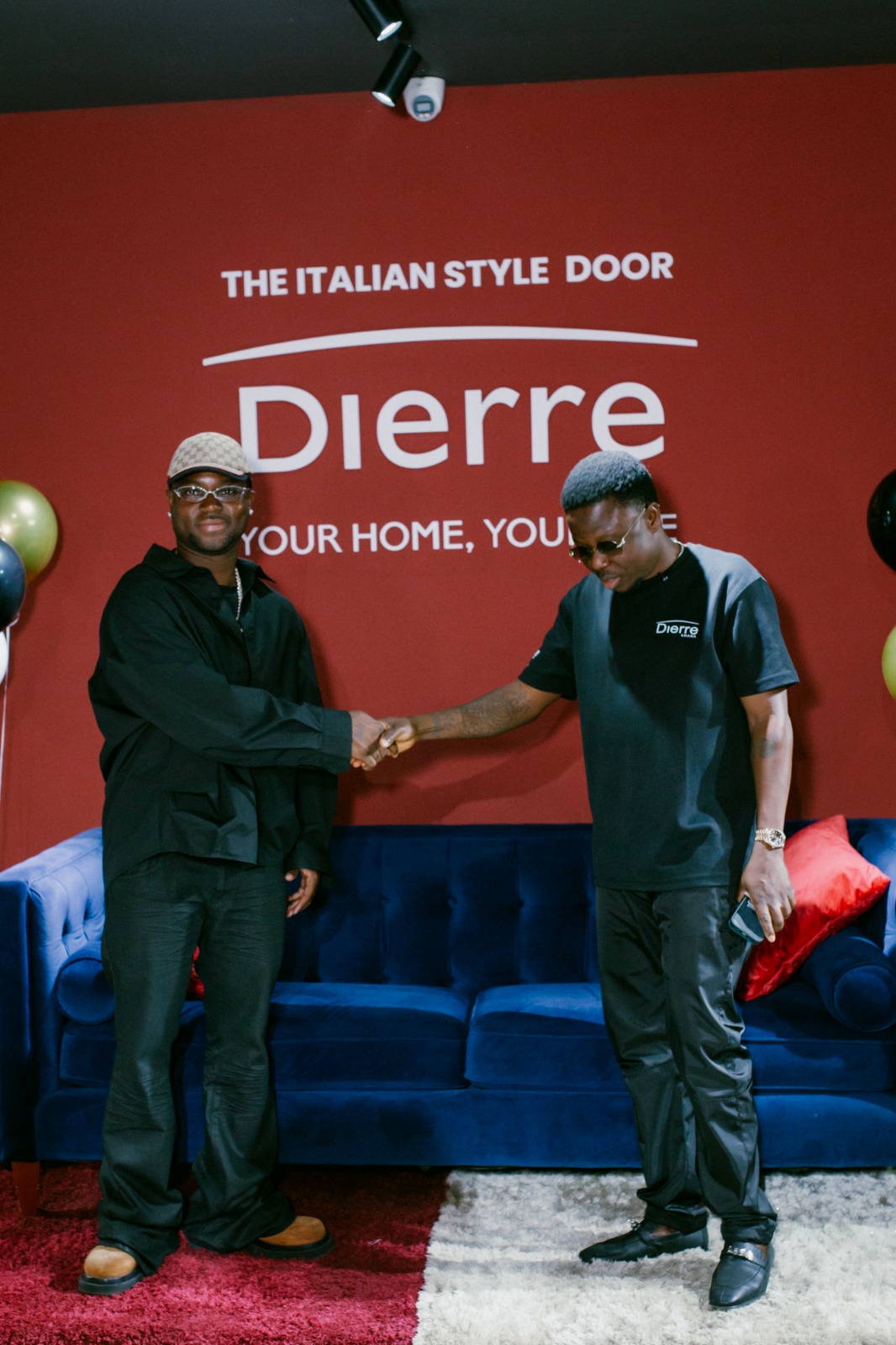
Italian premium security door manufacturer Dierre S.p.A. has named award-winning Ghanaian Afrobeats and Highlife artiste King Promise (Gregory Bortey Newman) as the face of its new Ghana and West Africa marketing campaign.
The partnership, managed by Regiments Management Company Limited, forms part of Dierre’s efforts to strengthen its presence in the West African market.
The two-week campaign, themed “Secure What Matters,” will run across digital, outdoor and influencer platforms, with King Promise featuring in a campaign film showcasing Dierre’s Prestige and Synergy security door ranges.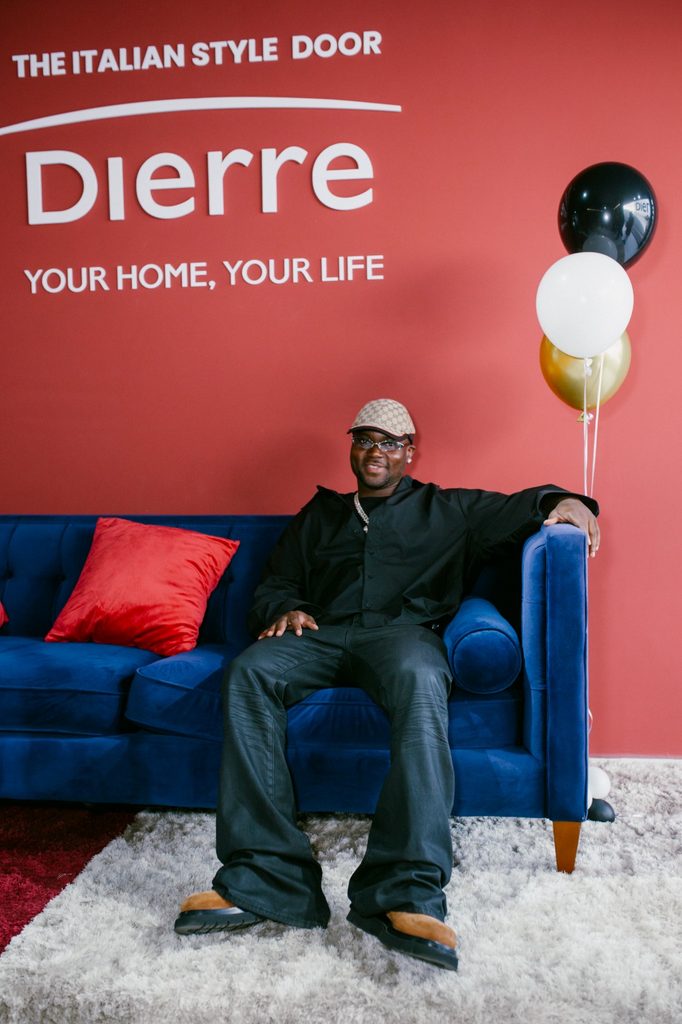
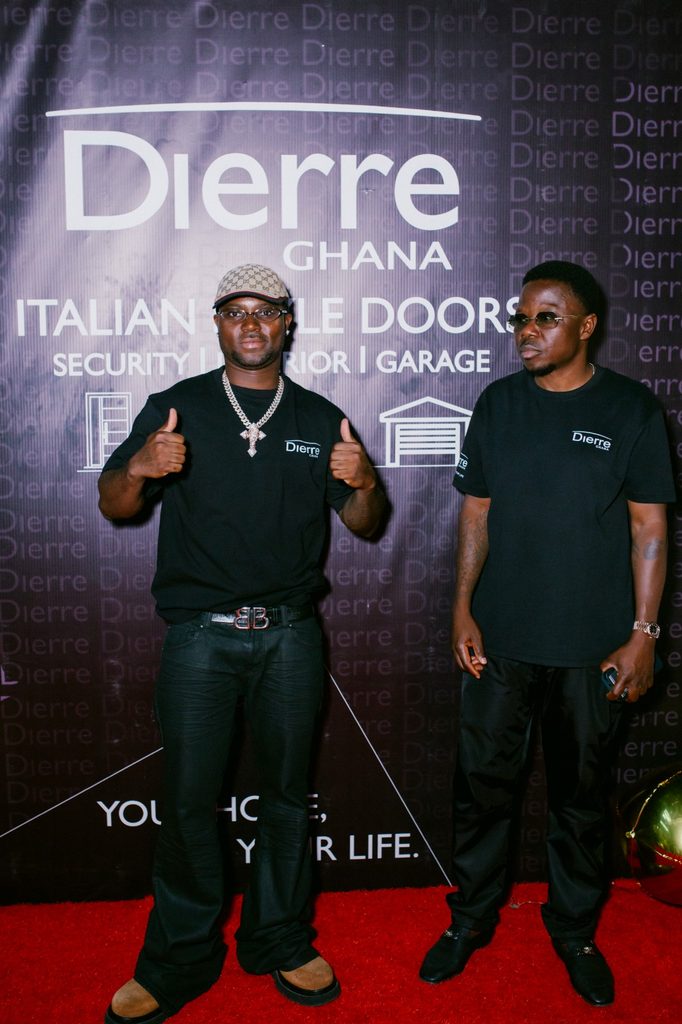
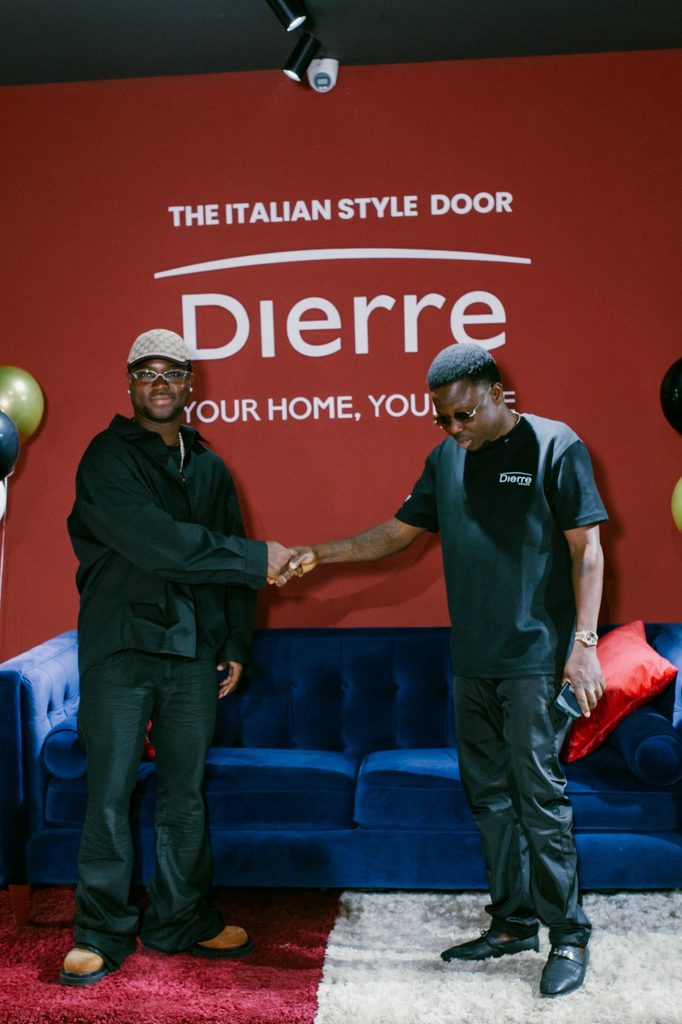

“Home is everything. It is where you protect the people and things that matter most. Dierre builds doors that reflect exactly that security, quality and style without compromise. I am proud to represent a brand that stands for those values,” King Promise said.
Founded in Italy, Dierre is a global manufacturer of armoured security doors, interior doors and fire-protection systems. Its products carry international anti-burglary certifications across Classes 3, 4 and 5, with the company producing hundreds of thousands of doors, locks and safes annually.
King Promise is one of Ghana’s leading Afrobeats and Highlife artistes, known for his distinctive sound, international collaborations and growing global audience.
The partnership combines Dierre’s security and design expertise with King Promise’s influence in contemporary African music and culture, as the brand expands its consumer engagement in Ghana and across West Africa.
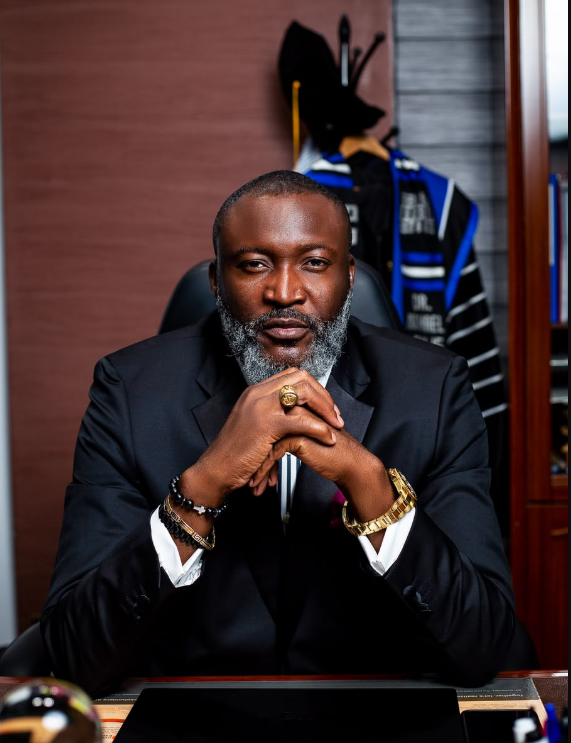
From humble beginnings to building an enterprise with global ambitions, Michael L. Bartlett-Vanderpuye’s journey is a story of discipline, independence, resilience and the belief that businesses should be built to outlive their founders.
Long before he became the Group Chairman of M&C Group, Michael L. Bartlett-Vanderpuye was building from modest beginnings.
His entrepreneurial journey did not start in a sophisticated corporate office or with a large team behind him.
At one stage, he was working from his room with limited resources, focused on turning an idea into a viable business.
That beginning became an important part of his philosophy: build the business first, then let the infrastructure grow with it.
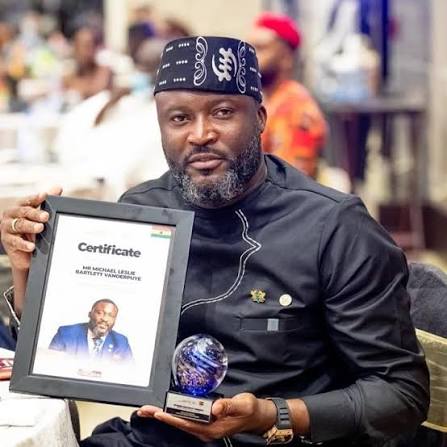
Michael’s early experiences shaped his determination to become an entrepreneur. After university and periods of professional employment, including banking, accounting, marketing, packaging and logistics, he developed a deeper understanding of how businesses operate and how different industries connect.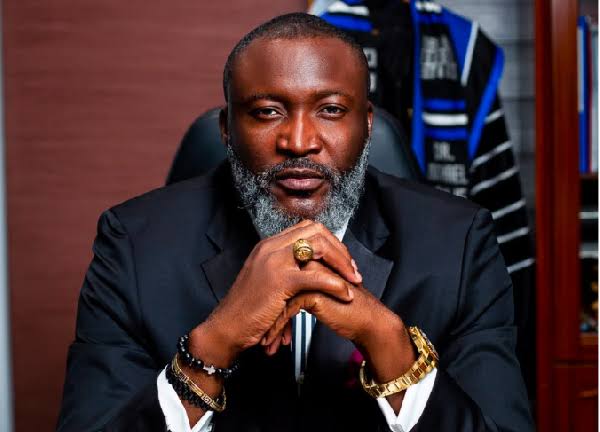
His exposure to mining advisory work, property and other commercial opportunities broadened his perspective and helped him identify opportunities beyond a single sector.
But the journey was far from easy.
He recalls the uncertainty of sending proposal after proposal without knowing which one would eventually open a door.
Even after establishing an office in East Legon, some people assumed he was working for someone else because they could not imagine that the business belonged to him.
The confidence and corporate presence associated with success today were built through years of uncertainty, rejection, experimentation and persistence.
His evolution from working out of a room to leading M&C Group reflects a broader philosophy that has guided his business life: do not build an image before you build the substance.
For Michael, entrepreneurship is not simply about owning a company. It is about learning how to turn knowledge, relationships, opportunities and resources into sustainable value.
He believes professionals in every field can develop an entrepreneurial mindset by creating assets, building networks, investing in opportunities and developing additional sources of value alongside their careers.
That philosophy has influenced the way he approaches business expansion. Rather than viewing companies as isolated entities, Michael sees opportunities to create connections between industries, people and services.
Strategic partnerships, in his view, can create greater value than treating every other business as a competitor.
His approach has also been shaped by research and international exposure. He argues that entrepreneurs must understand the markets they enter rather than simply copy businesses they see succeeding elsewhere.
Behind every successful enterprise, he believes, are structures, regulations, relationships, research and decisions that may not be immediately visible from the outside.
As his business interests have grown, so has his ambition. M&C Group represents a significant chapter in that evolution, reflecting his drive to build an enterprise that extends beyond a single venture.
His vision is rooted not merely in personal wealth, but in creating businesses capable of generating employment, developing people, building partnerships and contributing to the wider economy.
Michael is particularly concerned about the role of the private sector in addressing unemployment and creating sustainable opportunities. For him, a successful business should ultimately do more than enrich its owner. It should employ people, develop skills, support suppliers and create opportunities that extend beyond the founder.
That long-term perspective is central to his understanding of success.
He is cautious about equating visibility with achievement. In an age where social media can make a business appear larger than it is, Michael believes the real measure of an enterprise lies in its systems, customers, assets, operations and results. The brand should be supported by substance.
His personal journey has therefore become a lesson in patience and discipline. The man who once had to convince people that the business was actually his now speaks about building systems, protecting capital, understanding markets and thinking beyond the immediate reward.
And his ambitions do not stop with the present generation.
Michael describes legacy as something that should extend beyond his children to future generations. His objective is to build something sustainable-something that can continue creating value after he is no longer at the centre of it.
From a modest room and limited resources to the boardroom and the development of a growing business group, Michael L. Bartlett-Vanderpuye’s story is ultimately about building before displaying, learning before expanding and creating something designed to last.
His journey is a reminder that global ambition does not necessarily begin with global resources. Sometimes, it begins with little more than an idea, discipline, persistence and the willingness to start where you are. – MyStoryMagazine

 Entertainment1 week ago
Rhythms On Da Runway returns November 28 with 16th edition themed ‘Unbound’
- Entertainment1 week ago
Ohemaa Mercy’s Tehillah Experience outfit was priestly regalia, not costume – Management clarifies
 News1 week ago
Janet Asana Nabla criticises Mahama over China curriculum controversy involving Haruna Iddrisu